

BRAZIL-Natural – Fazenda Sertão – Yellow Bourbon-Carmo de Minas
Carmo de Minas, Minas Gerais, Brasile
- Naturale
- Monorigine
BRAZIL-Natural – Fazenda Sertão – Yellow Bourbon-Carmo de Minas è un caffè da Brasile, venduto da Coffee Bouteaque (Stati Uniti). Regione: Carmo de Minas, Minas Gerais. Lavorazione: naturale. Varietà: Yellow Bourbon. Prezzo: 19,99 USD.
Ancora senza voti · Scrivi la prima recensione
da19,99 USD
Completerai l’acquisto nello shop della torrefazione.
- Sede della torrefazione
- Stati Uniti
- Consegna in
- Italia · Verifica nello shop della torrefazione
The Cup: Salted peanut with mild fruit flavor, a soft mouthfeel, and mild fruit-like sweetness.
Country: Brazil
Region: Carmo de Minas, Minas Gerais
Farm: Sertao
Variety: Yellow Bourbon
Altitude: 1100-1400 MASL
Processing Method: Natural
Harvest-May-August
Formati e prezzi
| Macinatura | Prezzo |
|---|---|
| In grani | 19,99 USD ↗ |
| Macinato per espresso | 19,99 USD ↗ |
| Macinato per filtro | 19,99 USD ↗ |
| Macinato per French Press | 19,99 USD ↗ |
| Macinato per ibrik | 19,99 USD ↗ |
| fine | 19,99 USD ↗ |
| Perk | 19,99 USD ↗ |
Descrizione
Brazil
It’s hard to imagine the “beginnings” of coffee in Brazil, as the two things have become so synonymous. The first coffee plants were reportedly brought in the relatively early 18th century, spreading from the northern state of Pará in 1727 all the way down to Rio de Janerio within 50 years. In 1820, Brazil was already producing 30 percent of the world’s coffee supply, but by 1920, it accounted for 80 percent of the global total. Since the 19th century, the weather in Brazil has been one of the liveliest topics of discussion among traders and brokers, and a major deciding factor in the global market trends and pricing that affect the coffee-commodity market. Incidents of frost and heavy rains have caused coffee yields to wax and wane over the past few decades, but the country is holding strong as one of the two largest coffee producers annually, along with Colombia. Brazil’s post-harvest processing is also somewhat unique, and has been adopted largely in response to a combination of productivity, climate, and desired profile: Pulped Natural and Natural processing still dominates the industry here. Pulped Natural coffees are depulped and allowed to dry with their mucilage still intact; while Naturals are typically either dried on the trees before harvesting (called Boya) or picked and laid out on patios in order to finish drying before being hulled. Both processes tend to lend the coffees a nutty creaminess that has a more tempered fruit tone than the bright and acidic Washed or even Honey coffees we see elsewhere from Mesoamerica.
Sertao
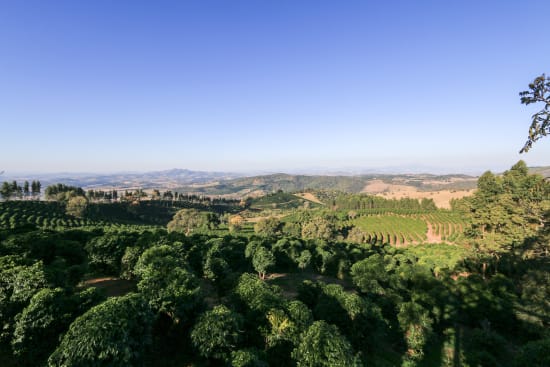
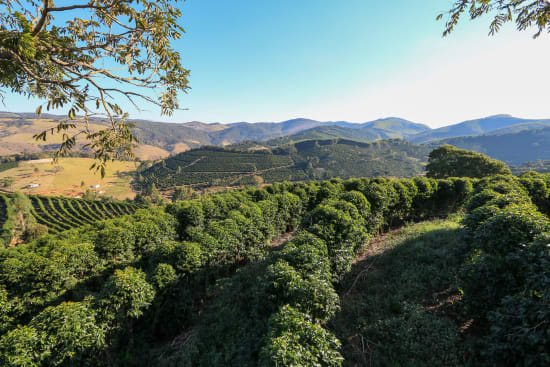
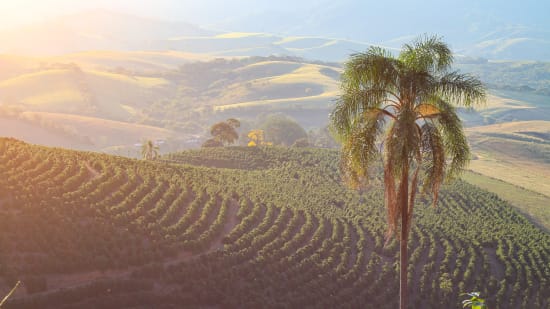
Fazenda Sertão is an 850-hectare farm with 330 hectares planted in coffee trees of several varieties, including Red and Yellow Bourbon, Yellow Catucai, and Yellow Catuai. The farm also grows bananas and corn and is used to raise dairy livestock. This farm has a love story behind it: Among the first generation of coffee growers in this area was Jose Isidro Pereira, a dentist-turned–coffee producer who inherited Fazenda Sertão from his mother when she passed away—an incident that ended his dentistry career but put him on a path to coffee farming. In 1949, Jose Isidro met the “love of his life,” Nazareth, who continues to run the farm her husband left in her care. Nazareth and Jose Isidro’s children—Francisco, Luiz Paulo, Clycia, and Sandra—are also coffee producers, carrying on the family tradition.
Natural
Brazilian Naturals are picked either selectively by hand or strip-picked by hand or mechanically for more commercial quality. They are then typically spread to dry on patios or, in the production of some specialty coffees, dried on raised beds. Drying can take 20–25 days, depending on the weather.
Yellow Bourbon
Naturally occurring Typica mutation; selected from Ethiopian coffee cultivated in Yemen transplanted to Bourbon Island (now Réunion) in 18c
Minas Gerais
Minas Gerais is the largest state for coffee production, accounting for half of the country’s coffee. It contains many subregions with varying elevations and climates, all part of the Brazilian highlands. Brazil’s largest rivers and mountains are in this state, with the southern portion producing the most coffee due to the forested hills and cool weather. Coffee is also produced in the highland savannah in the west, the Mantiqueira Mountains in the south, and the Atlantic forest in the east.
Domande su BRAZIL-Natural – Fazenda Sertão – Yellow Bourbon-Carmo de Minas
Da dove viene BRAZIL-Natural – Fazenda Sertão – Yellow Bourbon-Carmo de Minas?
Origine: Brasile. Regione: Carmo de Minas, Minas Gerais. Produttore: Sertao. Altitudine: 1100–1400 m. Varietà: Yellow Bourbon.
Come viene lavorato BRAZIL-Natural – Fazenda Sertão – Yellow Bourbon-Carmo de Minas?
Metodo di lavorazione: naturale.
Quanto costa BRAZIL-Natural – Fazenda Sertão – Yellow Bourbon-Carmo de Minas?
Prezzo: 19,99 USD. I prezzi vengono dal negozio e possono cambiare; il negozio ha quelli attuali.
Dove posso comprare BRAZIL-Natural – Fazenda Sertão – Yellow Bourbon-Carmo de Minas?
Nel negozio online di Coffee Bouteaque: i prezzi di questa pagina rimandano lì. Cafendo non vende caffè.
Recensioni
Ancora nessuna recensione.
Se ti piace questo caffè, prova questi
Scelti tra altre torrefazioni per origine, lavorazione, tostatura, note di gusto e prezzo in comune. Contano di più i caffè salvati o votati bene dalle stesse persone.

Oetterli Coffee
HAUS KAFFEE - SITIO VARGEM GRANDE
13,28 USD
ChiaraPerché: BrasileNaturalePrezzo simile
Villa Myriam
Brazil Oberon
16,22 USD
MediaPerché: BrasileNaturalePrezzo simile

Daybreak Coffee Roasters
Brazil Natural
23,00 USD
Perché: BrasileNaturalePrezzo simile

Falcon Micro
Castanhas Do Brazil, Cocatrel, Minas Gerais, Brazil | Natural FSC-9256
17,09 £
Perché: BrasileNaturalePrezzo simile

Falcon Micro
Fazenda Pinhal, Gabarra Teixeria Family, Brazil | Natural FSC-9035
17,52 £
Perché: BrasileNaturalePrezzo simile

The Right Roast
Nossa Senhora de Fatima (Distinction Release)
19,00 £
Perché: BrasileNaturalePrezzo simile

The Flat Cap Coffee Roasting Company
Brazil - Fazenda São José
10,45 £
ScuraPerché: BrasileNaturalePrezzo simile

Horsham Coffee Roaster
Brazil Single Origin
11,95 £
Perché: BrasileNaturalePrezzo simile


