


 Square One Coffee Roasters
Gititu, Kenya — Washed Filter
Kenia
- Lavado
- Origen único
Aún sin valoraciones · Escribe la primera reseña
desde27,00 AUD
≈ 94,00 AUD / kg
Completarás la compra en la tienda del tostador.
- Sede del tostador
- Australia
- Envío a
- España · Compruébalo en la tienda del tostador
Formatos y precios
| Molienda | Tamaño | Por kg | Precio |
|---|---|---|---|
| Molido para filtro | 250g | 108,00 AUD | 27,00 AUD ↗ |
| Molido para prensa francesa | 250g | 108,00 AUD | 27,00 AUD ↗ |
| Wholebean | 250g | 108,00 AUD | 27,00 AUD ↗ |
| Batchbrew | 250g | 108,00 AUD | 27,00 AUD ↗ |
| Other (Add instructions to order) | 250g | 108,00 AUD | 27,00 AUD ↗ |
| Molido para filtro | 500g | 104,00 AUD | 52,00 AUD ↗ |
| Molido para prensa francesa | 500g | 104,00 AUD | 52,00 AUD ↗ |
| Wholebean | 500g | 104,00 AUD | 52,00 AUD ↗ |
Ver los 15
| Molienda | Tamaño | Por kg | Precio |
|---|---|---|---|
| Batchbrew | 500g | 104,00 AUD | 52,00 AUD ↗ |
| Other (Add instructions to order) | 500g | 104,00 AUD | 52,00 AUD ↗ |
| Molido para filtro | 1kg | 94,00 AUD | 94,00 AUD ↗ |
| Molido para prensa francesa | 1kg | 94,00 AUD | 94,00 AUD ↗ |
| Wholebean | 1kg | 94,00 AUD | 94,00 AUD ↗ |
| Batchbrew | 1kg | 94,00 AUD | 94,00 AUD ↗ |
| Other (Add instructions to order) | 1kg | 94,00 AUD | 94,00 AUD ↗ |
Descripción
At Gititu in Kenya’s Nyeri County, coffee is shaped by a landscape long associated with clarity, structure, and vivid fruit. Operated as one of the factories within the Aguthi Farmers Cooperative Society, the mill sits in a productive growing corridor framed by Mount Kenya to the west and the Aberdare Ranges to the east — a setting of red volcanic soils, reliable rainfall, and cool elevation that supports slow cherry development and dense seed formation. Around 800 smallholder farmers deliver to Gititu, each tending modest plots with an average of roughly 300 coffee trees, while the wider cooperative structure is represented by elected committee members and permanent factory staff who oversee cherry intake, processing, and payment. 
At harvest, the work is methodical rather than embellished. Cherries are delivered to the factory and hand sorted by colour before being separated again by ripeness, ensuring only the best fruit moves forward. For washed lots, the coffee is pulped and cleaned through washing channels to remove mucilage, then dried carefully on raised beds for around 15 to 20 days until it reaches a stable moisture content of 10 to 12 percent. What stands out at Gititu is not novelty for its own sake, but the discipline of the system: cooperative oversight, careful sorting, and a processing approach designed to preserve transparency and precision rather than obscure them. 
In the cup, Gititu reads as distinctly Kenyan, but with composure as much as intensity. Expect a profile built on citrus brightness and dark-fruited depth, often carrying notes in the range of grapefruit, blackcurrant or berry fruit, with a sweetness that can lean toward brown sugar, depending on the lot. There is liveliness, but also shape: acidity that feels pointed rather than aggressive, sweetness that settles the palate, and a finish that stays clean and structured. It is a coffee that shows why Nyeri remains so prized — expressive, layered, and confident, with clarity doing the heavy lifting.
Reseñas
Aún no hay reseñas.
Si te gusta este café, prueba estos
Elegidos de otros tostadores por origen, proceso, tueste, notas de cata y precio en común. Lo que más cuenta: los cafés que las mismas personas guardaron o valoraron bien.
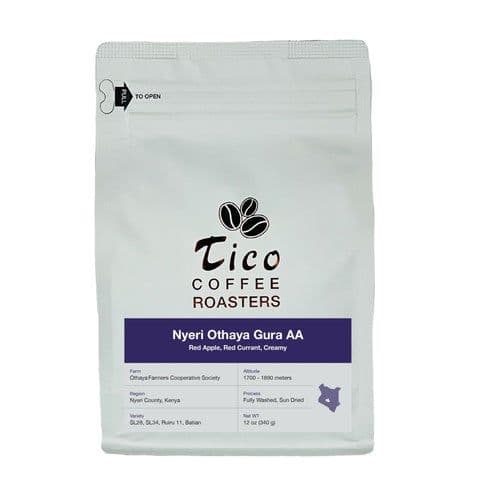
Tico Coffee Roasters
Kenya Nyeri Othaya Gura AA
22,06 US$
MedioPor qué: KeniaLavadoPrecio parecido
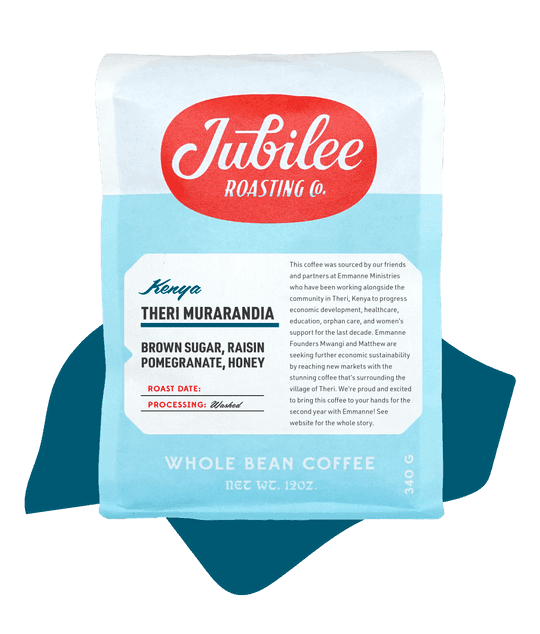
Jubilee Roasting Co.
KENYA THERI MURARANDIA
16,58 US$
Por qué: KeniaLavadoPrecio parecido
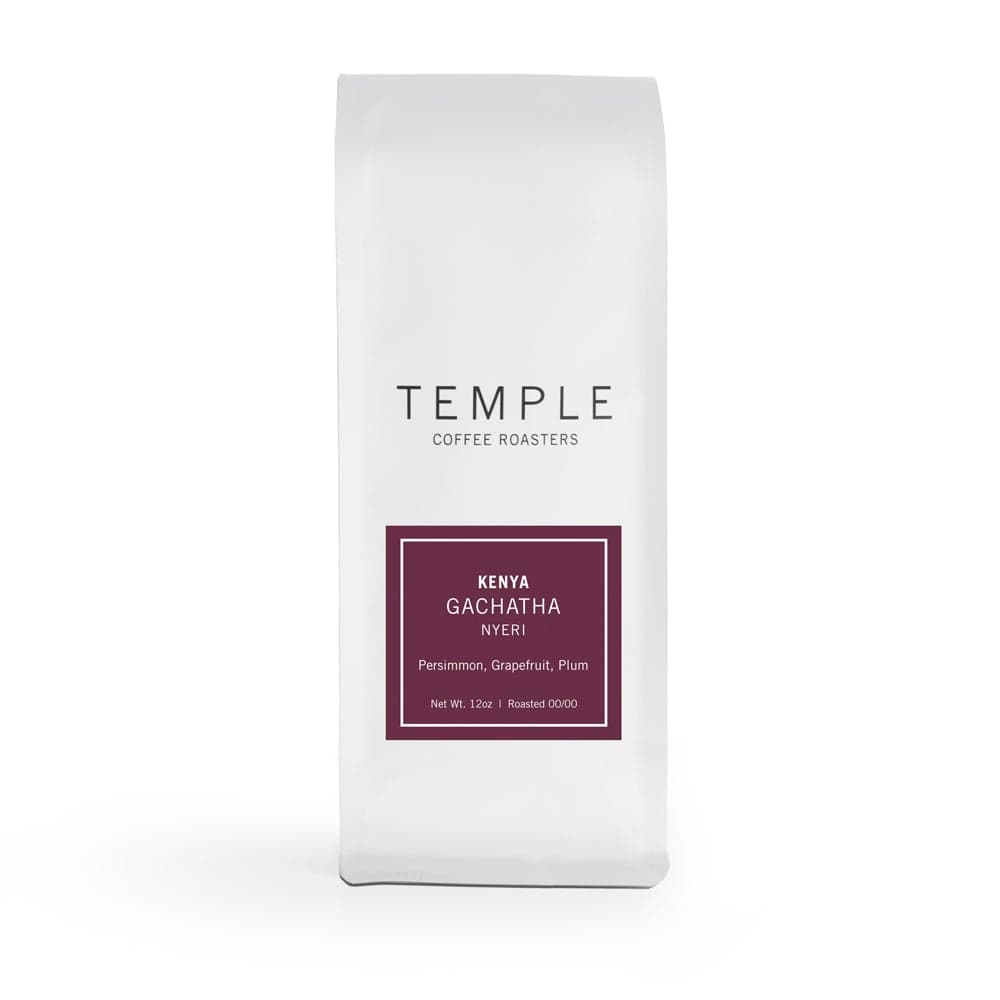
Temple Coffee Roasters
KENYA GACHATHA
20,71 US$
Por qué: KeniaLavadoPrecio parecido
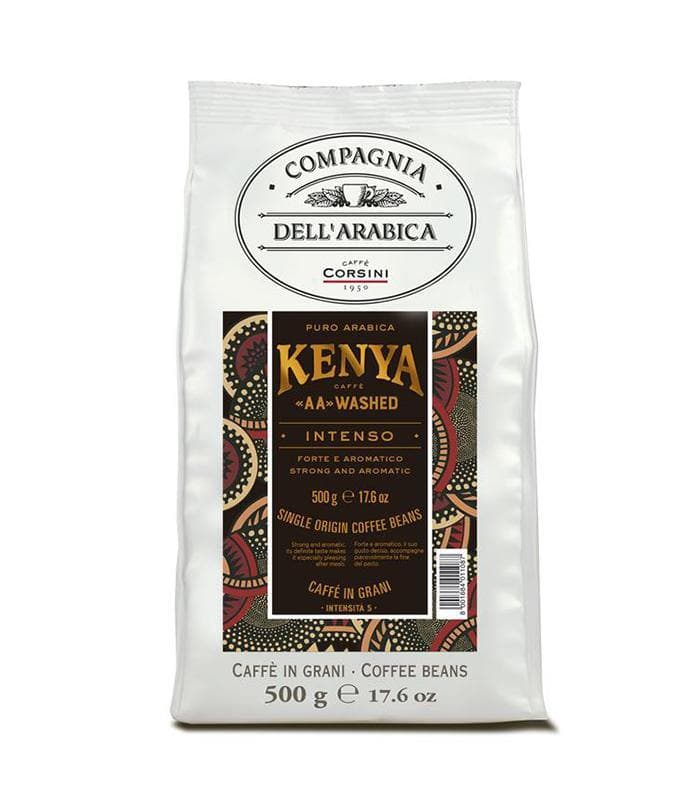
Caffe Corsini
Corsini Kenya AA Washed
19,39 US$
MedioPor qué: KeniaLavadoPrecio parecido

Kuma Coffee
Kenya Karatu *NEW*
25,00 US$
ClaroPor qué: KeniaLavadoPrecio parecido

Volcanica Coffee
Kenya Peaberry Coffee
28,99 US$
MedioPor qué: KeniaLavadoPrecio parecido
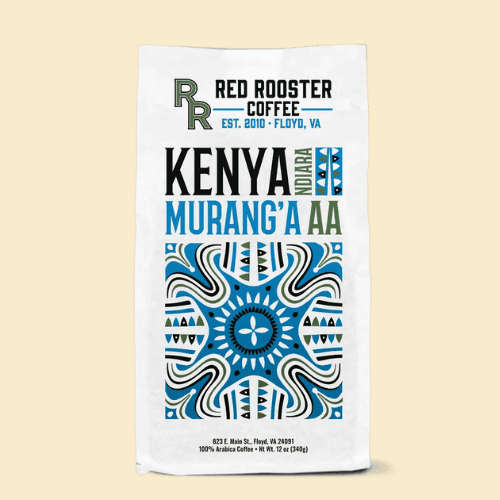
Red Rooster
Kenya Ndiara Murang'a Washed
21,61 US$
MedioPor qué: KeniaLavadoPrecio parecido
High Point Coffee
Kenya AA
16,25 US$
MedioPor qué: KeniaLavadoPrecio parecido


