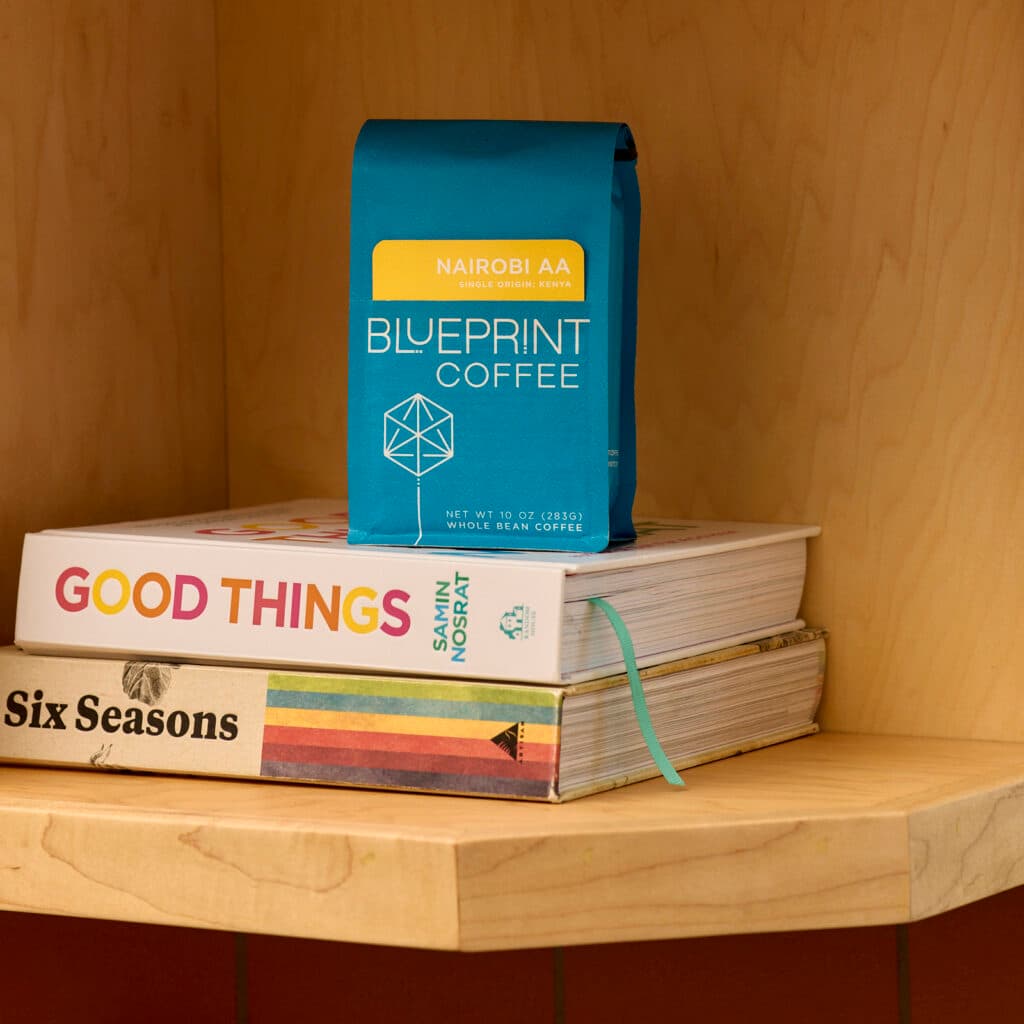
 Blueprint Coffee Delmar
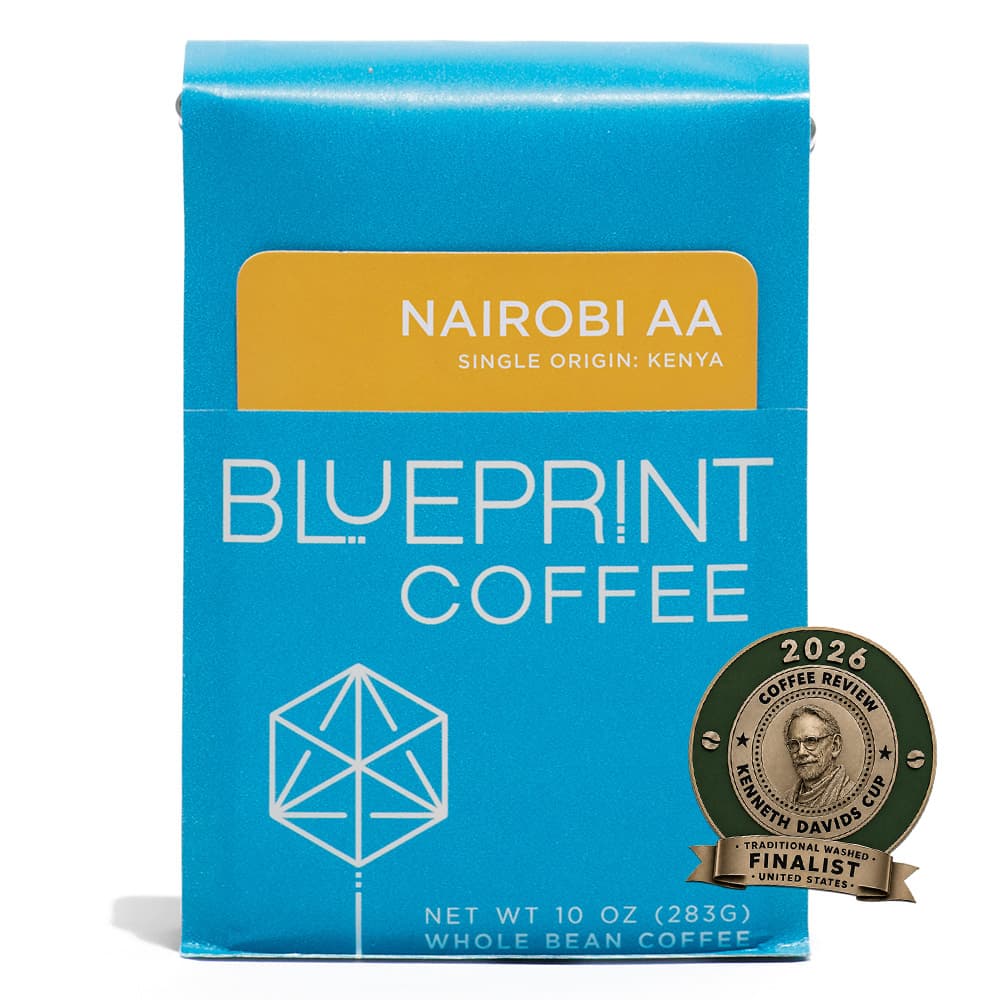
Nairobi AA, Kenya
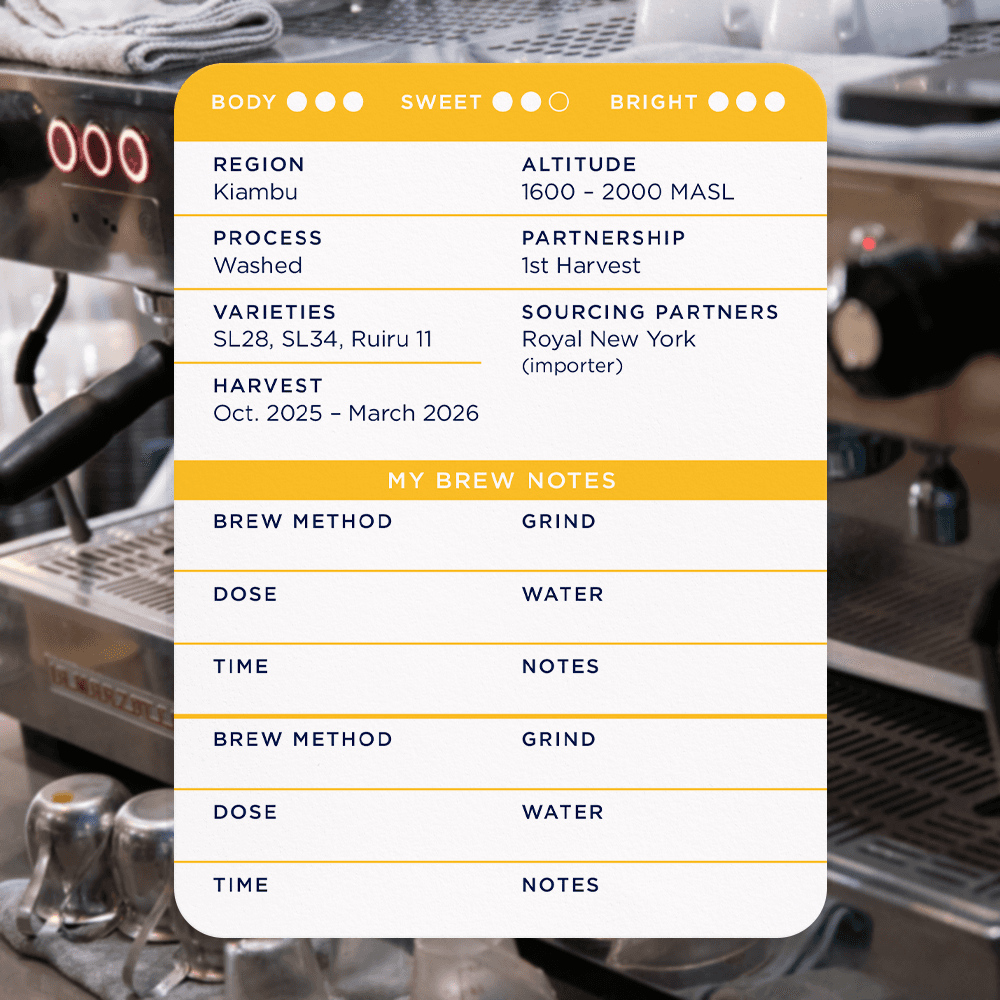
Kenia
- Origen único
Aún sin valoraciones · Escribe la primera reseña
desde24,00 US$
≈ 51,92 US$ / kg
Completarás la compra en la tienda del tostador.
- Sede del tostador
- Estados Unidos
- Envío a
- España · Compruébalo en la tienda del tostador
TASTING NOTES
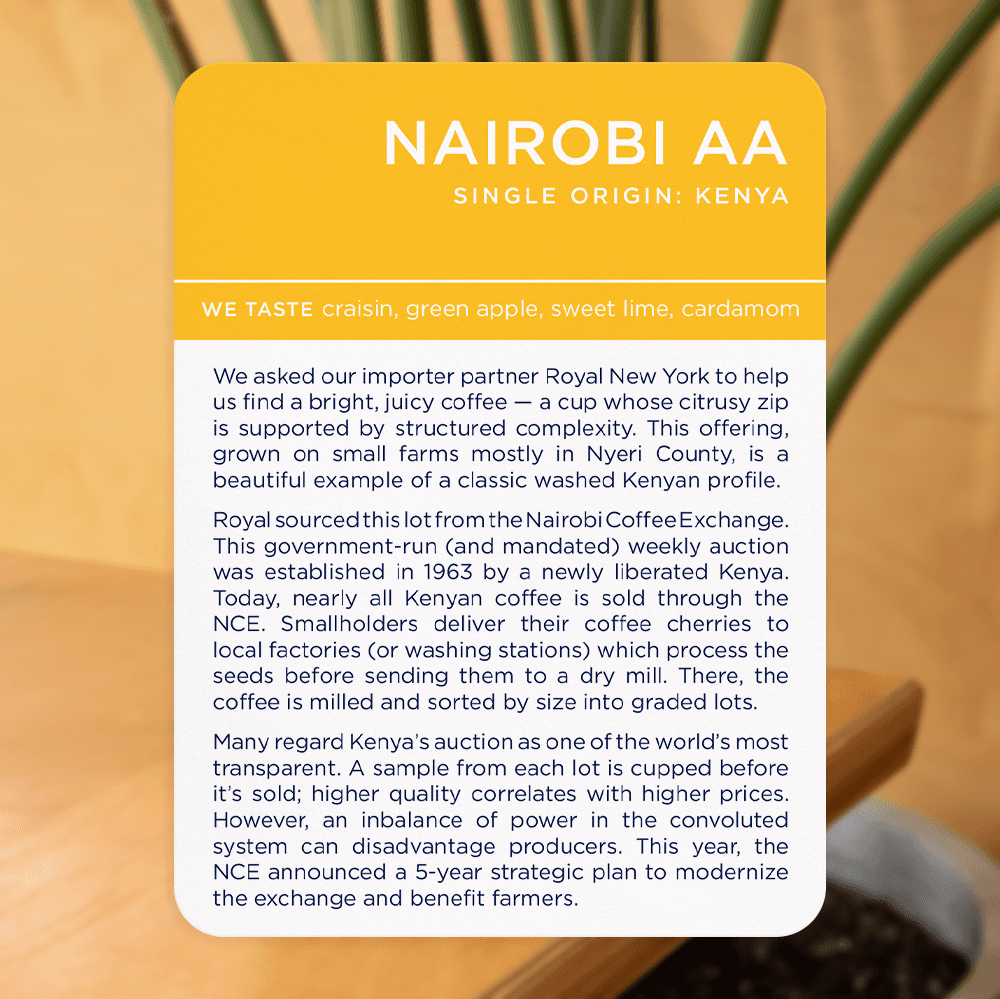
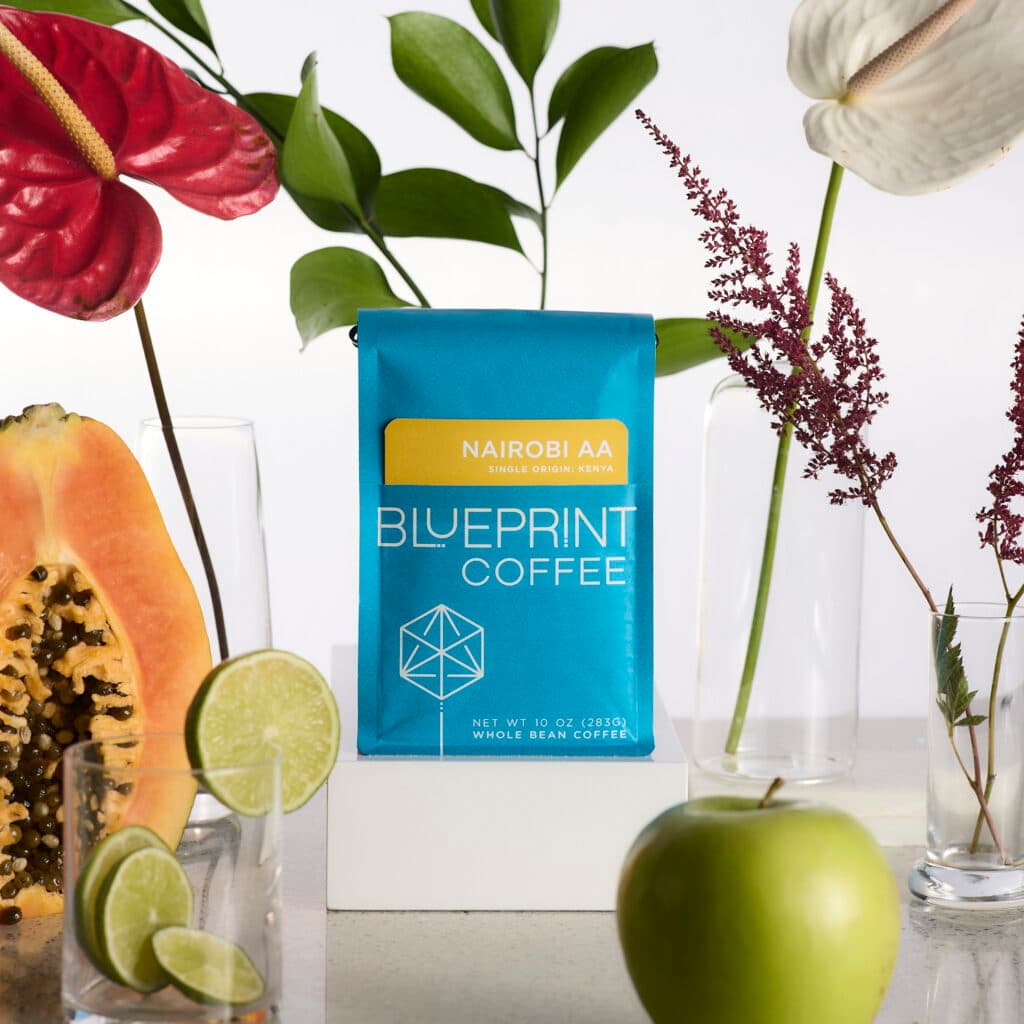
craisin, green apple, sweet lime, cardamom
Formatos y precios
| Tamaño | Molienda | Por kg | Precio |
|---|---|---|---|
| 10oz | – | 84,66 US$ | 24,00 US$ ↗ |
| 10oz | En grano | 84,66 US$ | 24,00 US$ ↗ |
| 2lb | – | 65,04 US$ | 59,00 US$ ↗ |
| 2lb | En grano | 65,04 US$ | 59,00 US$ ↗ |
| 5lb | En grano | 51,92 US$ | 117,75 US$ ↗ |
Descripción
TASTING NOTES
craisin, green apple, sweet lime, cardamom
COFFEE BACKGROUND
This season, we asked our partners Royal New York to help us source a coffee that would fit well in our “Tangy” profile. We were looking for a bright and juicy cup, with a citrusy zip supported by a structured complexity. This offering comes from a number of small farms, mostly in Nyeri county; it beautifully exemplifies the classic washed Kenyan profile. Royal sourced this lot from the Kenyan open auction system, which is part of the Nairobi Coffee Exchange.
Smallholder farmers deliver their freshly harvested coffee cherries to local washing stations — known as “factories” — which process and dry the seeds before sending them to a dry mill. There, the coffee is milled, then sorted by size into graded lots. Each Tuesday, the lots are sold on the trading floor of the NCE.
THE NAIROBI COFFEE EXCHANGE
British colonizers introduced coffee to Kenya in the late 19th century, and they held the first coffee auctions there in 1935. Following Kenya’s independence from England in 1963, the newly liberated nation established the Nairobi Coffee Exchange as a government-run (and mandated) weekly auction. Today, nearly all Kenyan coffee sells through this system.
Many regard the NCE as one of the world’s most transparent green coffee trading systems. The auction model generally results in higher green coffee prices. Exporters and marketing agents cup samples from each lot before selling it; higher cup quality correlates with higher prices. The exchange also buffers against the instability of the fluctuating futures market (often called the “C market”).
The auction also draws critiques from many members of the value chain, including farmers who often don’t see much of their coffees’ profits, and whose payments often arrive after long delays. The convoluted system includes layers of middlemen between the coffee’s producers and buyers. And the long shadow of Kenya’s colonial history means that an imbalance of power that disadvantages smallholder farmers is baked into the system.
Earlier this year, the NCE announced a 5-year strategic plan. This major reform aims to modernize the exchange, provide greater value and transparency to coffee farmers, and protect farmers from exploitation. We’re excited to see how the system evolves in the upcoming years.
Reseñas
Aún no hay reseñas.
Si te gusta este café, prueba estos
Elegidos de otros tostadores por origen, proceso, tueste, notas de cata y precio en común. Lo que más cuenta: los cafés que las mismas personas guardaron o valoraron bien.
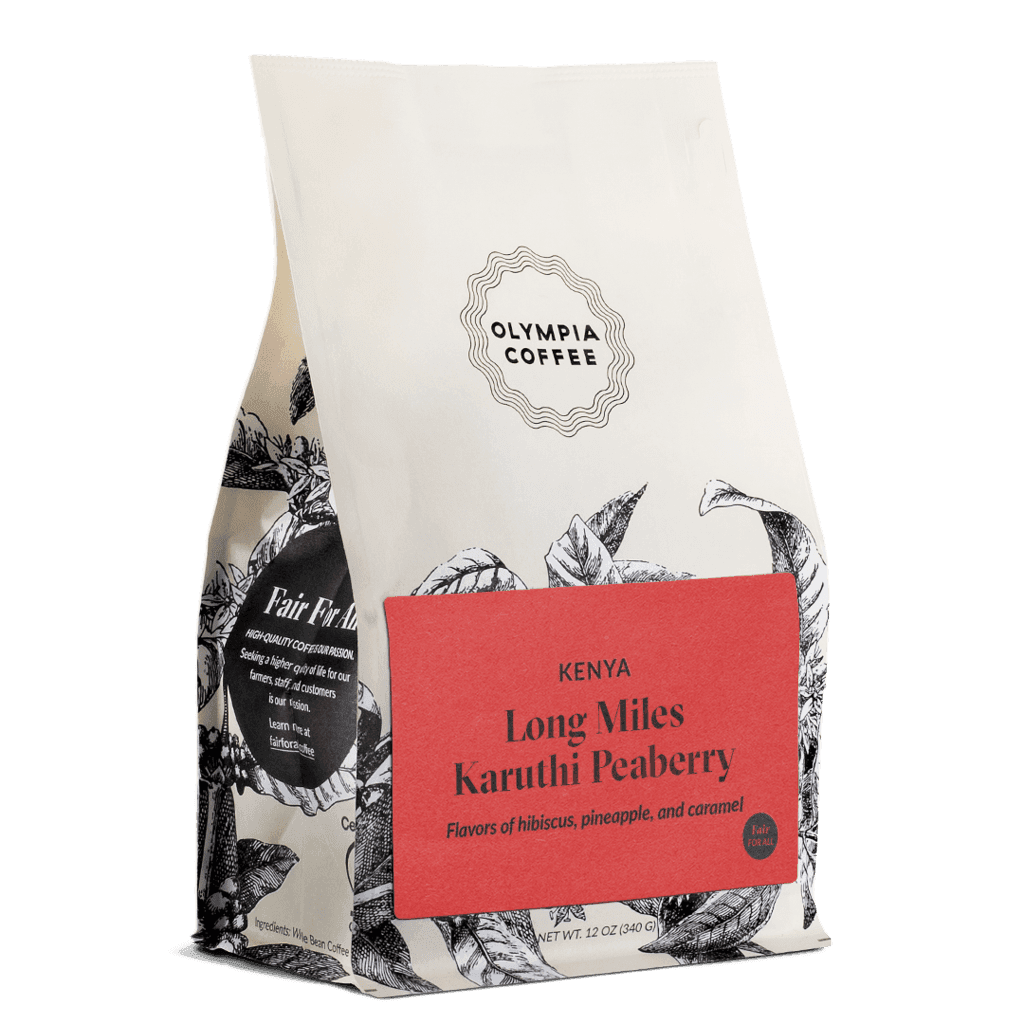
Olympia Coffee
KENYA Long Miles Karuthi Peaberry
20,02 US$
Por qué: KeniaPrecio parecido
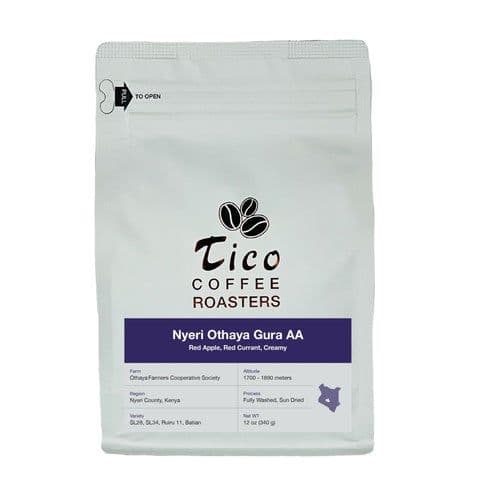
Tico Coffee Roasters
Kenya Nyeri Othaya Gura AA
22,06 US$
MedioPor qué: KeniaPrecio parecido
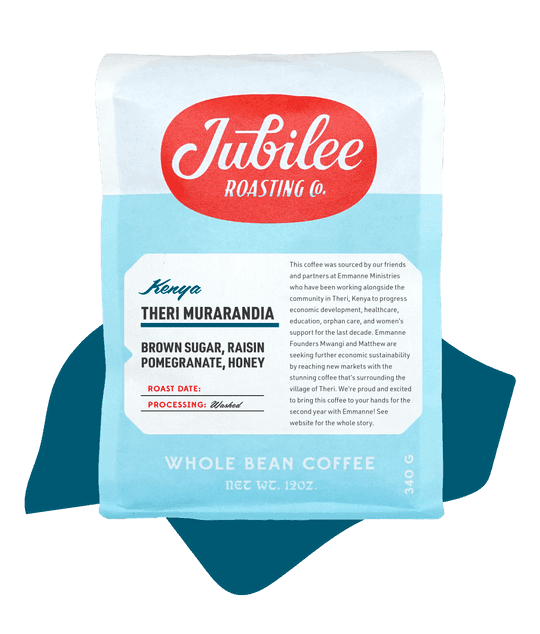
Jubilee Roasting Co.
KENYA THERI MURARANDIA
16,58 US$
Por qué: KeniaPrecio parecido
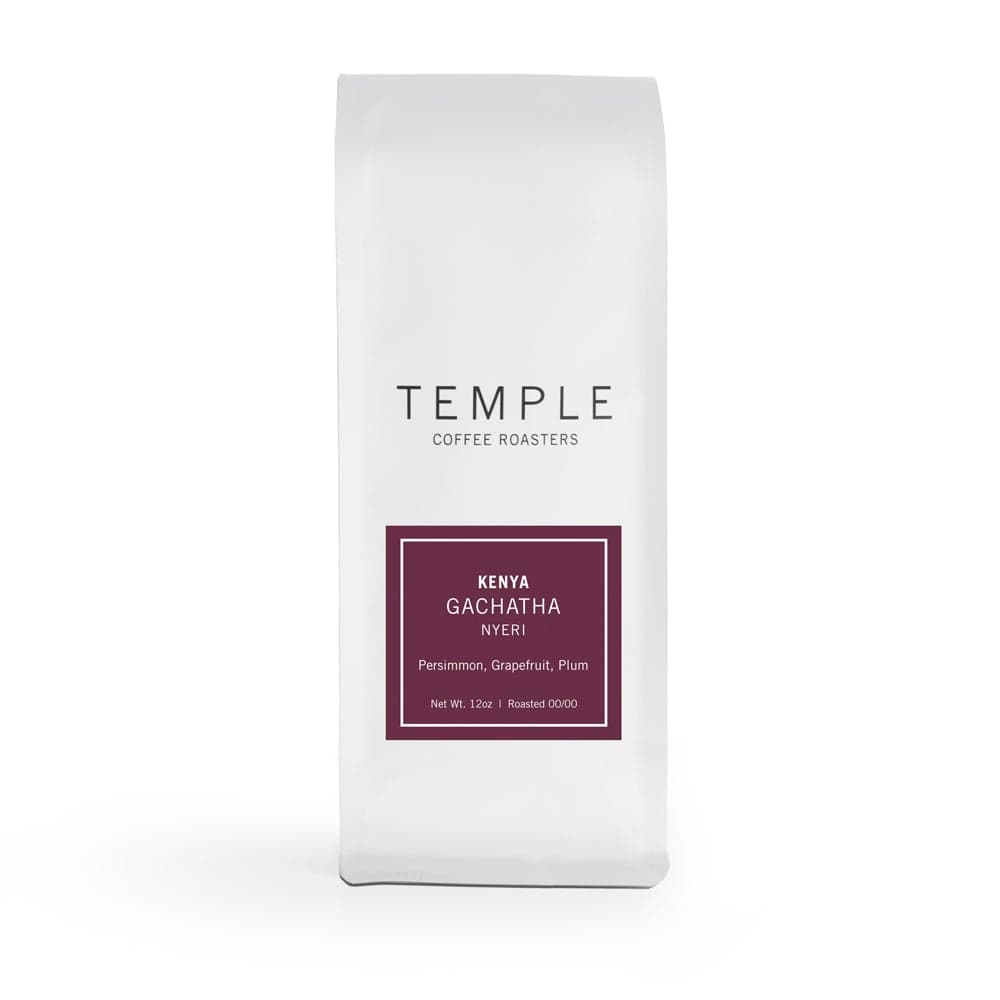
Temple Coffee Roasters
KENYA GACHATHA
20,71 US$
Por qué: KeniaPrecio parecido
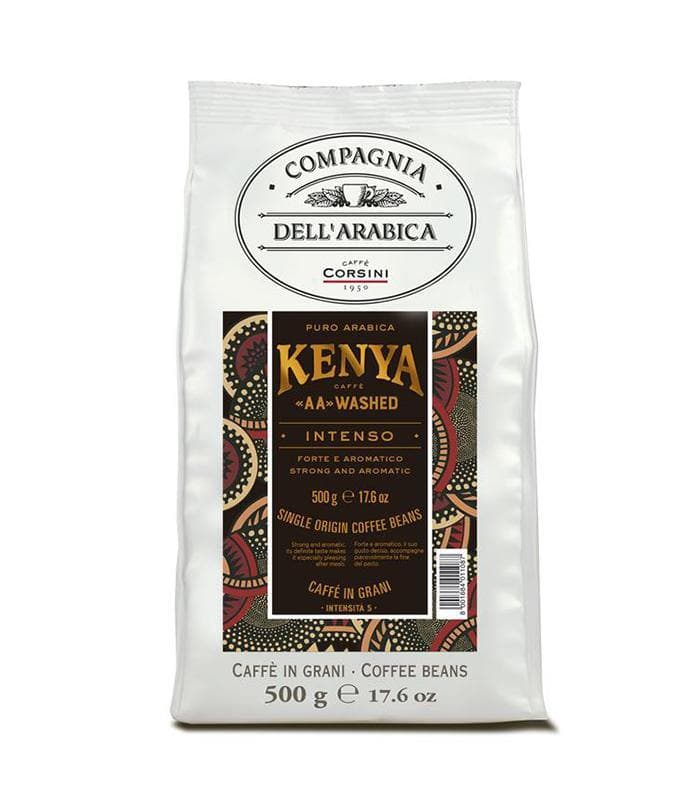
Caffe Corsini
Corsini Kenya AA Washed
19,39 US$
MedioPor qué: KeniaPrecio parecido

Kuma Coffee
Kenya Karatu *NEW*
25,00 US$
ClaroPor qué: KeniaPrecio parecido

West Oak Coffee
Kenya - Kirinyaga Baragwi
15,75 US$
Por qué: KeniaPrecio parecido

Volcanica Coffee
Kenya Peaberry Coffee
28,99 US$
MedioPor qué: KeniaPrecio parecido