Steampunk Coffee
Merk: Steampunk Coffee Roasters
El Salvador Los Chelazos
La Palma, Chalatenango, El Salvador
- Natural
- Single origin
El Salvador Los Chelazos is een koffie uit El Salvador, verkocht door Steampunk Coffee (Verenigd Koninkrijk). Regio: La Palma, Chalatenango. Verwerking: natural. Variëteit: Pacas. Prijs: £ 13,00 tot £ 48,00, afhankelijk van de verpakking. Dat is vanaf £ 48,00 per kilo.
Nog geen beoordelingen · Schrijf de eerste review
vanaf£ 13,00
≈ £ 48,00 / kg
Je gaat naar de shop van de brander om je aankoop af te ronden.
- Brander gevestigd in
- Verenigd Koninkrijk
- Bezorgen in
- Nederland · ✓ Ja, volgens de shop van de brander
Formaten en prijzen
Beschrijving
Region: La Palma, Chalatenango
Altitude: 1400-1600 m.a.s.l.
Variety: Pacas
Processing: Natural
UK Arrival: July 2026
Tasting Notes: Chelazos gives roasted almonds and stewed cherry, reminding us of a classic fruit cake when served with milk. A chocolate ganache texture and caramel sweetness round out the cup.
This is the second time we have released a coffee from Los Chelazos, the previous one being a mixed Bourbon and Pacas lot in 2024. This season we have their naturally processed single cultivar Pacas to enjoy as espresso and in milk based coffees throughout winter. We’ve found this coffee gives notes of roasted almonds, dried fruits and a rich caramel-like sweetness that pairs perfectly with steamed milk in a flat white or cortado style beverage.
Los Chelazos is a community of 25 small coffee producers in the mountains around La Palma, Chalatenango. Farmers including Marco, Ana, José Roberto and Eric each oversee their own harvest from picking through to processing, whilst sharing knowledge and best practice across the wider community.
Since 2012 the Chelazos have been working closely with importer Caravela, every harvest is cupped, discussed and refined together at Caravela's cupping lab in La Palma. This helps producers continually improve quality whilst protecting the unique character of their coffees year after year.
Los Chelazos and Caravela
Chelazos refers to the people who live in Chalatenango, a northern district of El Salvador bordering Honduras. The people in this part of the country have lighter-colored skin and green or blue eyes. This is a bit of a rarity when compared to the rest of the population and because of these characteristics, they are referred to as Chelitos (or the feminine Chelitas), which is where the name Los Chelazos comes from. Los Chelazos is a mixed lot of coffees from two main cantons: Citalá and La Palma, both of these are part of the Montecristo Trifinio, a tri-border national park shared between El Salvador, Guatemala, and Honduras. Designated as a biosphere reserve in 2011, this is a protected area of incredibly rich biodiversity.
Caravela started developing relationships with producers in this area in 2012 and opened a buying station and cupping lab in La Palma in December 2015 for better interaction with the producers. Today, the producers behind this community lot have become long-standing partners who harvest after harvest deliver highly consistent coffees.
The coffee growers who contribute to this lot own small to medium-sized farms that have the privilege of sharing very similar agro-climatic conditions that favor excellent plant development, in addition to the good fertility of the soils. Because it is an area with average elevations between 1,200 and 1,800 meters above sea level, traditional varieties adapt well so coffee farmers can obtain outstanding cup complexity. The main varieties that make up this coffee are Pacas, Bourbon, and Catuai, but growers also grow other varieties such as Pacamara, Cuscatleco, Costa Rica 95, and Ana-cafe 14.
Pacas
Pacas is a natural mutation of Bourbon, similar to Caturra in Brazil and Villa Sarchi in Costa Rica, Pacas has a single-gene mutation commonly known as Dwarfism. It was first identified in 1949 on a farm belonging to the Pacas family in Santa Ana, El Salvador. Because it originated as a natural mutation, early populations showed variation in plant appearance, yield, flavor, and disease resistance, making systematic selection necessary to stabilize the genetics. According to the World Coffee Research (WCR), the Instituto Salvadoreño de Investigaciones del Café (ISIC) launched a formal selection program in 1960. By tracking superior mother plants and their offspring, researchers identified stable, high-quality lines. Today, Pacas is one of El Salvador’s most widely planted coffee varieties, making up almost 25% of local production. It is also grown in Honduras and other parts of Central America.
El Salvador
In the 1970s coffee made up 90 percent of El Salvador’s exports and it was the fourth largest producer of coffee in the world. But in 1980 political unrest, guerrilla warfare and land reform severely impacted coffee farming and export. During this period, properties owned by individuals with over 500 hectares were reorganised into cooperatives managed by the properties’ former workers. The reform meant that the country’s large estates were broken up and although that land was redistributed among workers, the government maintained control, with no single farmer permitted to own more than 245 hectares. Today, the reform is still intact, with more than 90 percent of production supplied by smallholders with fewer than 20 hectares of land.
According to Global Coffee Report, despite the impacts of land reform and nationalisation, which disrupted the industry’s preexisting structure and efficiency, coffee was still very lucrative through 2000. But the turn of the century brought several natural disasters and economic blows in quick succession. In 1998 Hurricane Mitch left millions homeless. Then, the country was hit by a major earthquake in 2001. That same year the global price of coffee fell to only $0.43 per pound. Simultaneously there was a blight of coffee leaf rust that swept through Central America in the early 2000’s. According to International Coffee Organization data, in 2001 El Salvador’s production dropped by more than 34 percent.
It took a decade to recover from the coffee price crisis and the leaf rust epidemic, and still today, along with labour shortages and other impacts of climate change, coffee leaf rust, or la roya, is cited as the biggest challenge facing Salvadoran coffee farmers.
A note about packaging
Our bags are #4 (LDPE—Low Density Polyethylene) made with 30% post consumer recycled plastic which can be recycled with carrier bags. These are widely collected at supermarkets and may even be collected by your local council. Find out how to refill or dispose of your Steampunk packaging HERE.
Vragen over El Salvador Los Chelazos
Waar komt El Salvador Los Chelazos vandaan?
Herkomst: El Salvador. Regio: La Palma, Chalatenango. Hoogte: 1.400–1.600 m. Variëteit: Pacas.
Hoe wordt El Salvador Los Chelazos verwerkt?
Verwerking: natural.
Wat kost El Salvador Los Chelazos?
Prijs: £ 13,00 tot £ 48,00, afhankelijk van de verpakking. Dat is vanaf £ 48,00 per kilo. De prijzen komen uit de winkel en kunnen veranderen; de winkel heeft de actuele.
Waar kan ik El Salvador Los Chelazos kopen?
In de webwinkel van Steampunk Coffee: de prijzen op deze pagina linken ernaar. Volgens de winkel wordt geleverd in Verenigd Koninkrijk, Andorra, Albanië, Armenië, Oostenrijk, Australië en 59 andere landen. Cafendo verkoopt zelf geen koffie.
Reviews
Nog geen reviews.
Vind je deze koffie lekker? Probeer dan deze
Gekozen bij andere branderijen op gedeelde herkomst, verwerking, branding, smaaknoten en prijs. Koffies die dezelfde mensen bewaarden of goed beoordeelden tellen het zwaarst.
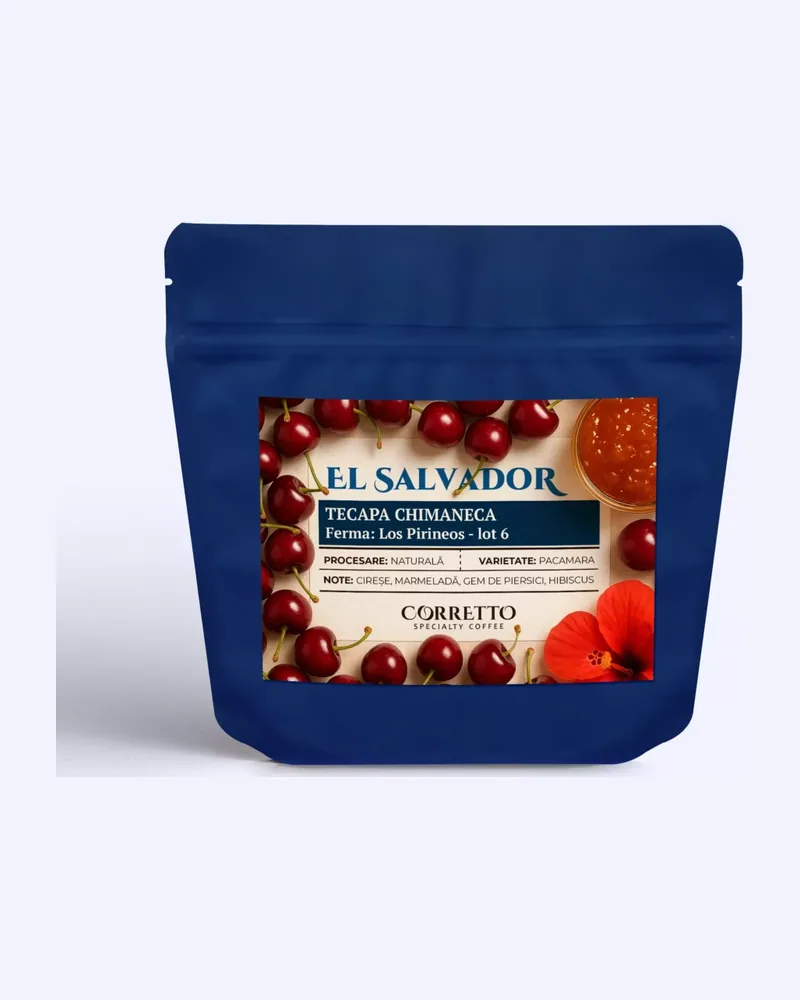
Caffè Corretto
de Specialitate Corretto, El Salvador Tecapa Chimaneca, Natural, 100% Arabica, 88 puncte SCA
RON 80,00
MediumWaarom: El SalvadorNaturalVergelijkbare prijs
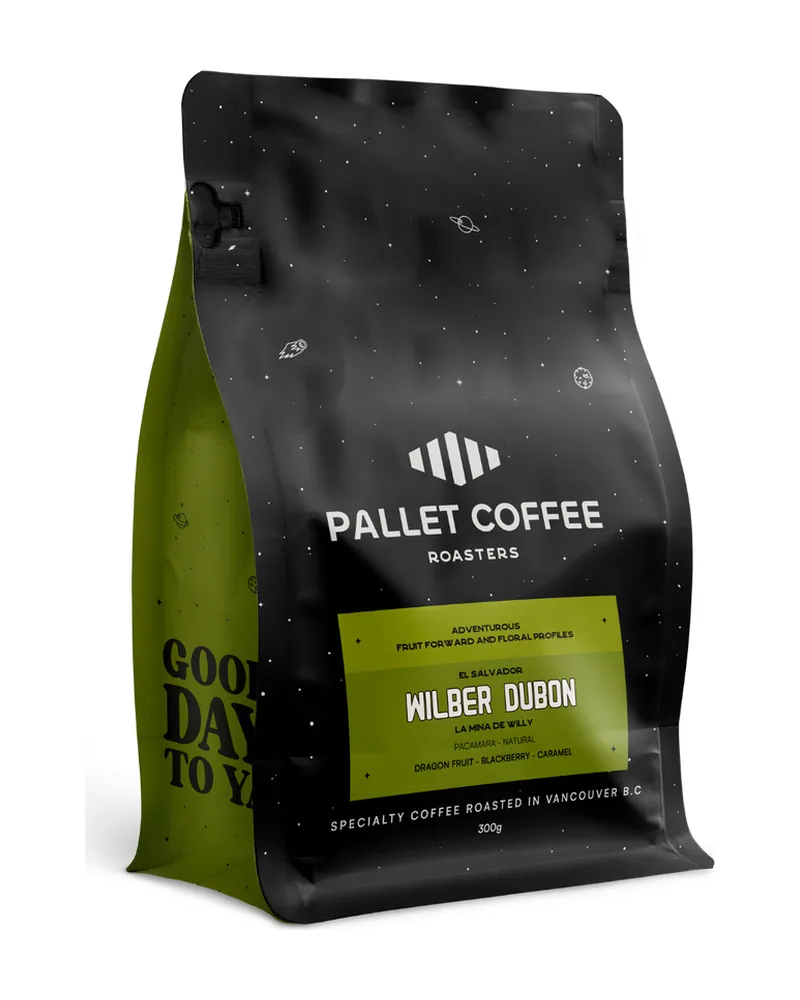
Pallet Coffee Roasters
El Salvador - Wilber Dubon - Natural
C$ 27,00
Waarom: El SalvadorNaturalVergelijkbare prijs
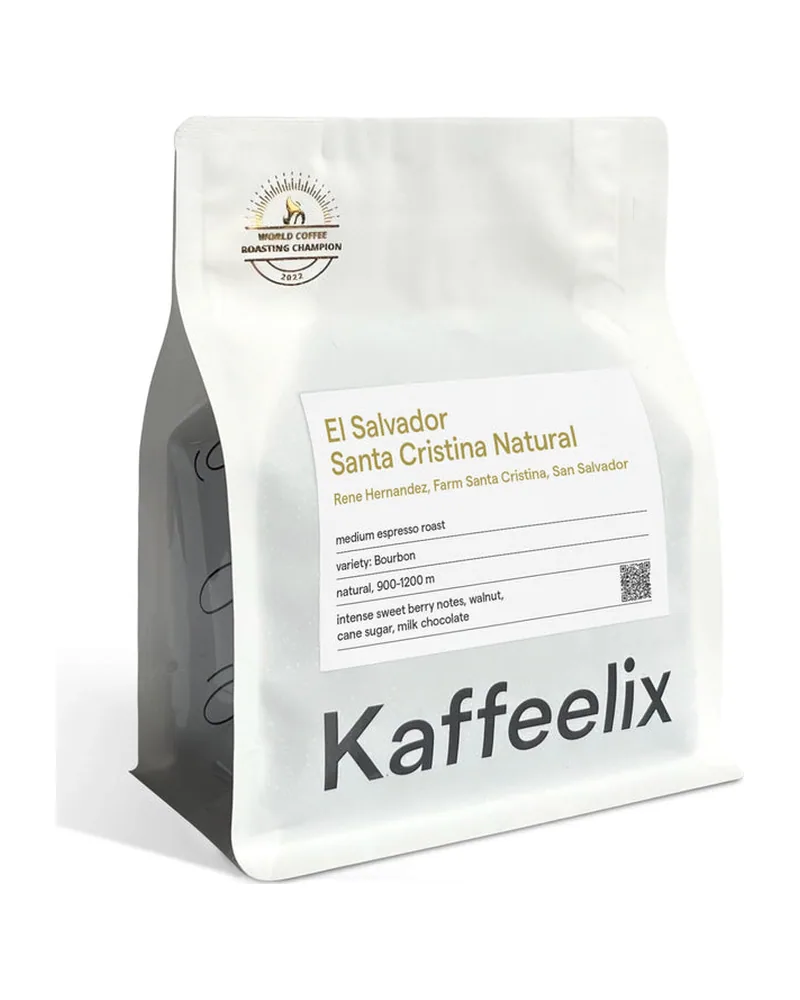
Kaffeelix
El Salvador Santa Cristina - natural
€ 15,77
Waarom: El SalvadorNaturalVergelijkbare prijs
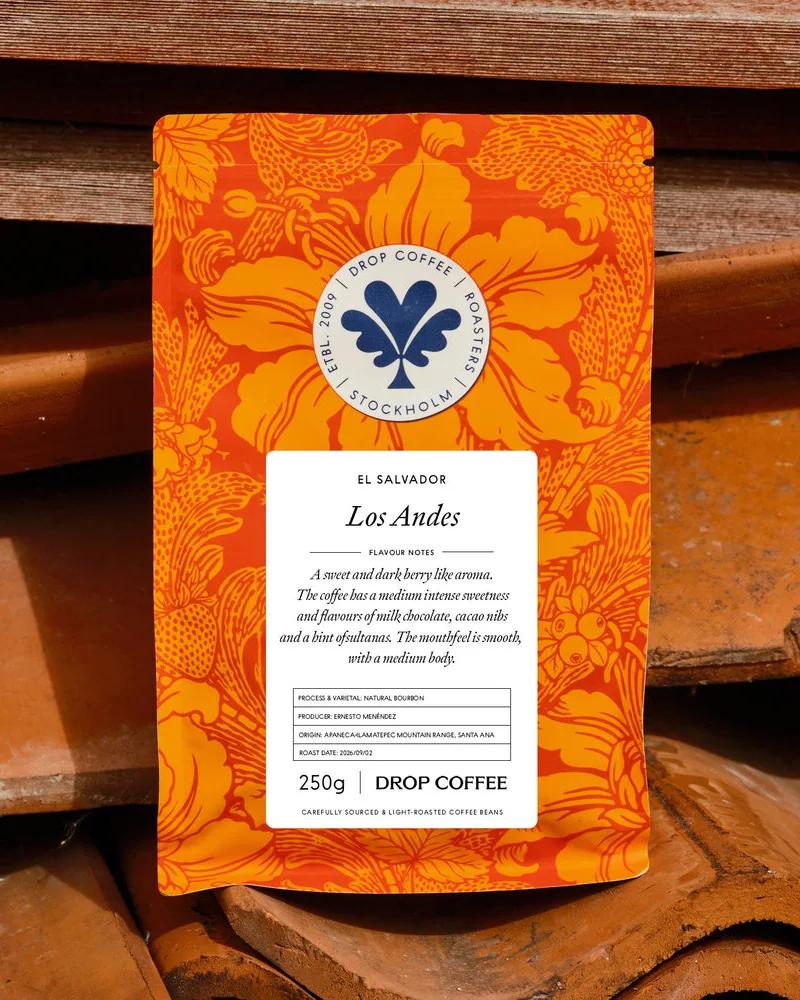
Drop Coffee Roasters
Los Andes, Natural Bourbon, El Salvador
SEK 220,00
Waarom: El SalvadorNaturalVergelijkbare prijs
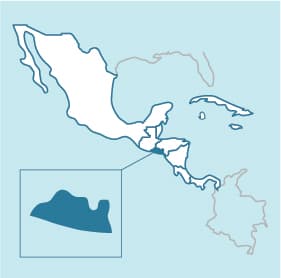
Roasting
El Salvador Natural
US$ 21,95
Waarom: El SalvadorNaturalVergelijkbare prijs
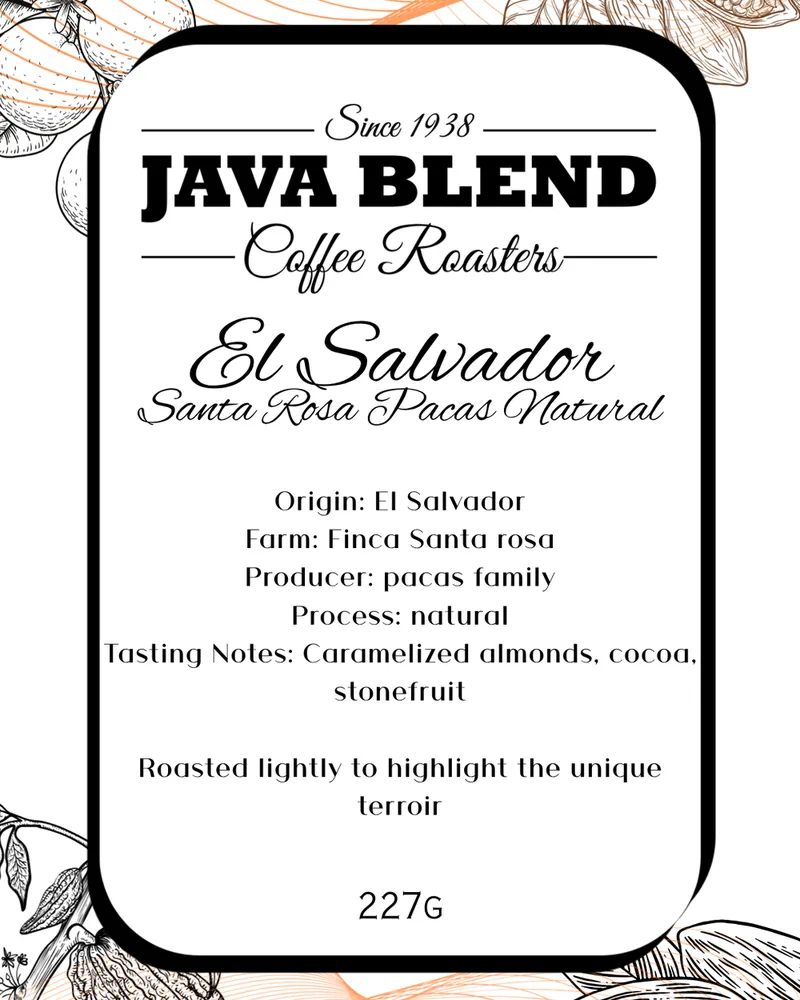
Java Blend Coffee
El Salvador: Santa Rosa Pacas Natural
C$ 19,00
LichtWaarom: El SalvadorNaturalVergelijkbare prijs

Passero's Coffee
El Salvador - Natural, Finca El Milagro
US$ 21,50
MediumWaarom: El SalvadorNaturalVergelijkbare prijs
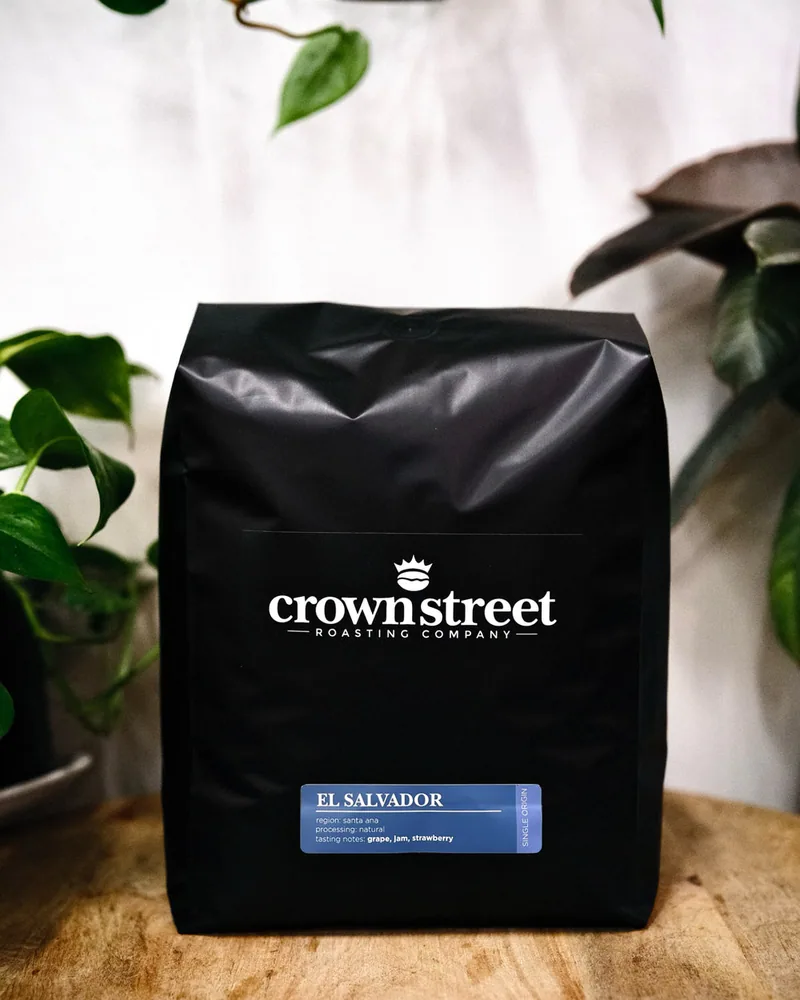
Crown Street Roasting Company
El Salvador
US$ 13,57
Waarom: El SalvadorNaturalVergelijkbare prijs