


Vietnam Microlot Liberica - Nguyen Van Que Liberica Farm
Vietnam
- Blend
Vietnam Microlot Liberica - Nguyen Van Que Liberica Farm is een koffie uit Vietnam, verkocht door Parchmen & Co (Singapore). Prijs: SGD 8,00 tot SGD 70,00, afhankelijk van de verpakking. Dat is vanaf SGD 70,00 per kilo.
Nog geen beoordelingen · Schrijf de eerste review
vanafSGD 8,00
≈ SGD 70,00 / kg
Je gaat naar de shop van de brander om je aankoop af te ronden.
- Brander gevestigd in
- Singapore
- Bezorgen in
- Nederland · Check de shop van de brander
Formaten en prijzen
| Maling | Inhoud | Per kg | Prijs |
|---|---|---|---|
| Hele bonen | 50g | SGD 160,00 | SGD 8,00 ↗ |
| Gemalen voor espresso | 50g | SGD 160,00 | SGD 8,00 ↗ |
| Gemalen voor percolator | 50g | SGD 160,00 | SGD 8,00 ↗ |
| Gemalen voor filter | 50g | SGD 160,00 | SGD 8,00 ↗ |
| Gemalen voor French press | 50g | SGD 160,00 | SGD 8,00 ↗ |
| Hele bonen | 150g | SGD 80,00 | SGD 12,00 ↗ |
| Gemalen voor espresso | 150g | SGD 80,00 | SGD 12,00 ↗ |
| Gemalen voor percolator | 150g | SGD 80,00 | SGD 12,00 ↗ |
Toon alle 25
| Maling | Inhoud | Per kg | Prijs |
|---|---|---|---|
| Gemalen voor filter | 150g | SGD 80,00 | SGD 12,00 ↗ |
| Gemalen voor French press | 150g | SGD 80,00 | SGD 12,00 ↗ |
| Hele bonen | 250g | SGD 80,00 | SGD 20,00 ↗ |
| Gemalen voor espresso | 250g | SGD 80,00 | SGD 20,00 ↗ |
| Gemalen voor percolator | 250g | SGD 80,00 | SGD 20,00 ↗ |
| Gemalen voor filter | 250g | SGD 80,00 | SGD 20,00 ↗ |
| Gemalen voor French press | 250g | SGD 80,00 | SGD 20,00 ↗ |
| Hele bonen | 500g | SGD 72,00 | SGD 36,00 ↗ |
| Gemalen voor espresso | 500g | SGD 72,00 | SGD 36,00 ↗ |
| Gemalen voor percolator | 500g | SGD 72,00 | SGD 36,00 ↗ |
| Gemalen voor filter | 500g | SGD 72,00 | SGD 36,00 ↗ |
| Gemalen voor French press | 500g | SGD 72,00 | SGD 36,00 ↗ |
| Hele bonen | 1kg | SGD 70,00 | SGD 70,00 ↗ |
| Gemalen voor espresso | 1kg | SGD 70,00 | SGD 70,00 ↗ |
| Gemalen voor percolator | 1kg | SGD 70,00 | SGD 70,00 ↗ |
| Gemalen voor filter | 1kg | SGD 70,00 | SGD 70,00 ↗ |
| Gemalen voor French press | 1kg | SGD 70,00 | SGD 70,00 ↗ |
Beschrijving
For much of the early 20th century, Vietnam’s coffee landscape was a patchwork of species. Arabica dominated the colonial plantations, while Liberica - known locally as cà phê Mít for its jackfruit-like aroma (cà phê meaning coffee and Mít meaning jackfruit) - thrived in smallholder plots across central provinces such as Quảng Trị, Quảng Nam and parts of the Tây Nguyên foothills. But by the turn of the millennium, Robusta gradually replaced Arabica and Liberica.
French colonial agronomists introduced Arabica in the late 1800s, but the species struggled in Vietnam’s humid lowlands. Robusta, brought in soon after, proved far more resilient. It tolerated heat, pests, and irregular rainfall and produced significantly higher yields. Liberica remained a local curiosity - tall, labor-intensive, and less productive - while Robusta quietly became the preferred crop for farmers seeking a reliable income.
After 1975, Vietnam’s rural economy was in crisis. Farmers needed crops that could withstand neglect, produce heavily and generate cash quickly. Robusta fit this survival logic perfectly. Liberica, with its towering trees and lower yields, offered neither efficiency nor market demand. Even in regions like Khe Sanh, where Liberica had deep cultural roots, families began replacing it with Robusta simply to endure the economic hardship of the years after Vietnam War.
The reform policies launched in Vietnam in 1986 known as Đổi Mới, translated literally as "restoration," have brought profound changes to the country. The Vietnamese government specifically identified Robusta coffee as a strategic export crop. International development loans funded irrigation systems, road networks and agricultural extension programs. High-yield Robusta clones from the Western Highlands Research Institute spread rapidly. When global coffee prices surged in the 1990s, Vietnam’s Robusta production exploded, turning the country into one of the world’s largest coffee exporters within a decade. Liberica, lacking government support, export buyers, or improved cultivars, faded into obscurity. By the early 2000s, it accounted for less than 1% of national production.
Today, Liberica persists only in pockets - Khe Sanh among the most notable - where smallholders like Nguyễn Văn Quế maintain the species as a heritage crop. Its revival is driven not by industrial policy but by individual farmer's craftmanship. In a sense, Liberica’s survival mirrors Vietnam’s broader agricultural resilience: a species once overshadowed now finding new relevance in a changing global market.
What exactly is the Liberica species? For the longest time, farmers and coffee professionals in Philippines have argued that their "Liberica" looks and behaves differently from the Malaysian ones, though both are identified to be Liberica scientifically. Indeed, the research of Dr Aaron Davis of Kew Gardens London has published a new genetic study in Nature Plants in August 2025 that has spoken up for them. Liberica, which is gaining popularity for the distinctive flavour of its beans, is actually three species, namelyexcelsa (C. dewevrei), Liberica coffee (C. liberica), and the lesser-known C. klainei. With this, the number of coffee species in the world increases from 131 to 133. It is official - Philippines has excelsa and Malaysia has liberica, sometimes dubbed as the true Liberica. Curiously, our other Liberica on our list that is from Malaysia is actually a Libex, yet another curious interspecies hybrid.
Liberica has large seeds, producing a heavy body and distinctive woody, smoky, floral flavors. Excelsa has smaller, more elongated seeds and tends to produce a lighter, brighter cup with tart, fruity, and berry-like flavors. Both are hardy and relatively rare compared with Arabica and Robusta. Based on this description, our Vietnamese Liberica seems to be an Excelsa. However, to respect the nomenclature in Vietnam, we are sticking to calling it Liberica until an appropriate time to change after confirmation.
Back to Mr Que. In his own words, it all began in 2015 when he first ventured into the world of specialty coffee. Armed with nothing but a 16-horsepower diesel engine, a grinder from a friend, and a modest 75-square-meter greenhouse made of bamboo and plastic sheeting - lit by just 15 incandescent bulbs - he managed to process 3.2 tons of semi-washed (elsewhere known as 'honey' process) green beans. Yet, the venture ended in financial loss; the failure raised many questions, forcing him to rethink his path and find the right direction while steadfastly pursuing his passion for "Quê Hương“ (hometown, in Vietnamese) coffee. Looking back, he marvelled at the sheer determination that allowed him to overcome such turbulent challenges - trading his own health for the path he has walked.
Beside Liberica, Mr Que also plants arabica in his farm.
Roast Level
The small size of this coffee, coupled with its hardness, high density and high moisture make it a challenge to roast. On one hand, we need to ensure enough heat to remove enough moisture and allow heat penetration to promote the necessary Maillard reaction; on the other hand, if heat is too much, the coffee will be burnt. Parchmen's usual strategy of a low ROR upon cracking works for this coffee, but this time with a slightly shorter time after crack to preserve the fruity characteristics that define it. We tread carefully so that the coffee is not too sour from this shorter roast time.
Brew Flavour
Grind size, brewer, kettle, filter paper, water characteristics, speed and height of pour - all these factors and probably more affect the final cup. We are cognizant that brew recipe can only serve as a guide.
We are using the Abaca paper on a Timemore Crystal Eye dripper, at 15g @ 800 μm to 220ml to brew this coffee. To contextualise the grind size, it is close to the size of sugar. On a 3-day-old roast, the dry fragrance is a sugary with yellow fruit characteristics.
Since 2026, we have been experimenting with 2-part pour, using 2 temperatures. Our method is seldom practised in cafes as it is unfriendly towards training for the brewer's cup competition requiring serving 3 coffees simultaneously.
Our method is simple, as follows:
A shorter 1st part at a higher temperature followed by a longer 2nd part at a lower temperature. This is in recognition that enzymatic chemical compounds are smaller molecules that are easily extractable; these compounds produce our favorite notes of fruits and flowers, and are the first to be extracted. The first brewing water has to fight the interference of the escaping roasting gases that are getting out of the coffee particles as the water is trying to get in. A higher water temperature carries more energy to maximise the extraction of these enzymatic compounds. However, this first part will be more sour as it consists predominantly of easily extractable acids.
Subsequently, the longer time lapsed after the start of brewing allow capillary actions and diffusion to bring chemical compounds that are deeper inside the coffee particle to the surface to be eroded by the fresh brewing water. Again, the enzymatic smaller molecules will be more mobile and first to be extracted, contributing to the flavour profile of the brew. Adding to this will be the heavier and less mobile compounds, contributing sweet and then bitter notes to the brew. But because the human tongue is approximately 1 million times more sensitive to bitterness than sweetness, we choose to use a lower temperature but at a longer time (higher volume) to achieve a delicate flavour balance.
The roast and this brew method bring forth a fruity and winey note like fruit wine, overlaid with a clear strawberry aroma on a medium mouthfeel. The top notes are of this coffee betrayed its species. Only when the coffee cools and a jackfruit aroma becomes obvious that one gets a hint of its true origin.
This is our brew recipe, with 2 pours:
0th sec - Add 80g of 92°C water
(Within 5 days of roast) 45th sec for 30 sec - Add 140g of 86°C water to reach 220g
(After 5 days of roast) 30th sec for 30 sec - Add 140gof 86°C water to reach 220g
Bypass 5-10g if needed
Savouring our world in a cup!
Enjoy!
Vragen over Vietnam Microlot Liberica - Nguyen Van Que Liberica Farm
Waar komt Vietnam Microlot Liberica - Nguyen Van Que Liberica Farm vandaan?
Herkomst: Vietnam.
Wat kost Vietnam Microlot Liberica - Nguyen Van Que Liberica Farm?
Prijs: SGD 8,00 tot SGD 70,00, afhankelijk van de verpakking. Dat is vanaf SGD 70,00 per kilo. De prijzen komen uit de winkel en kunnen veranderen; de winkel heeft de actuele.
Waar kan ik Vietnam Microlot Liberica - Nguyen Van Que Liberica Farm kopen?
In de webwinkel van Parchmen & Co: de prijzen op deze pagina linken ernaar. Cafendo verkoopt zelf geen koffie.
Reviews
Nog geen reviews.
Vind je deze koffie lekker? Probeer dan deze
Gekozen bij andere branderijen op gedeelde herkomst, verwerking, branding, smaaknoten en prijs. Koffies die dezelfde mensen bewaarden of goed beoordeelden tellen het zwaarst.
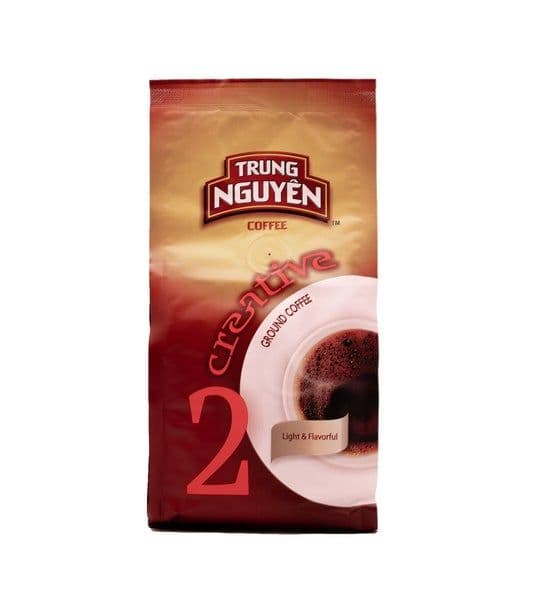
Craft Beans
Creative 2
US$ 6,07
MediumWaarom: VietnamVergelijkbare prijs
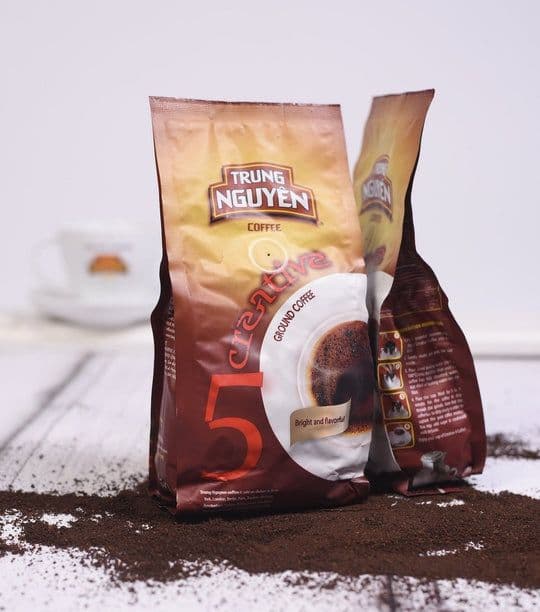
Craft Beans
Creative 5
US$ 9,10
MediumWaarom: VietnamVergelijkbare prijs

Röstwerk Herzogkaffee
CONGAU Vietnam 🥇
€ 9,30
Waarom: VietnamVergelijkbare prijs
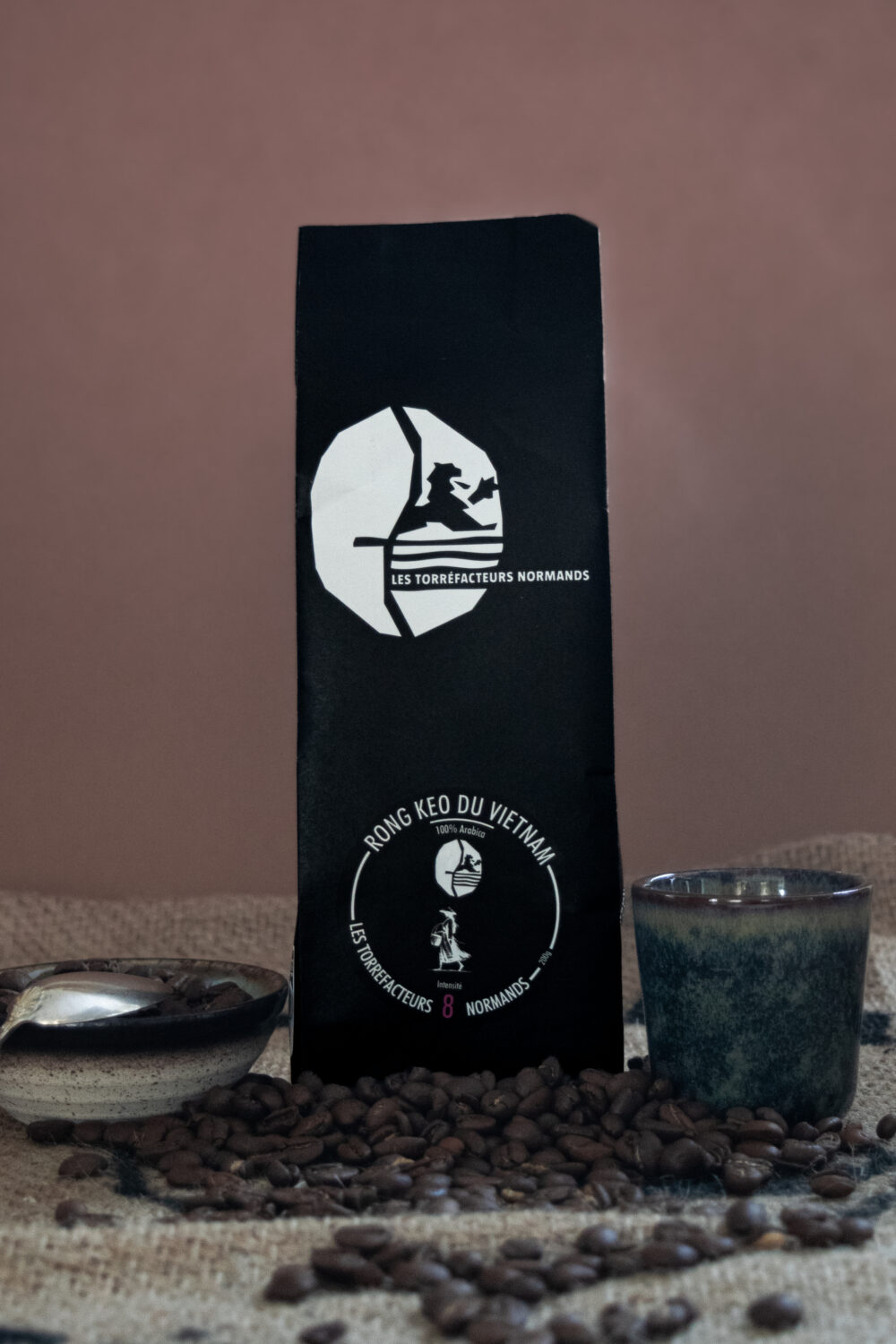
Les Torréfacteurs Français
Le café du Vietnam Rong Keo
€ 9,00€ 12,40
Waarom: VietnamVergelijkbare prijs
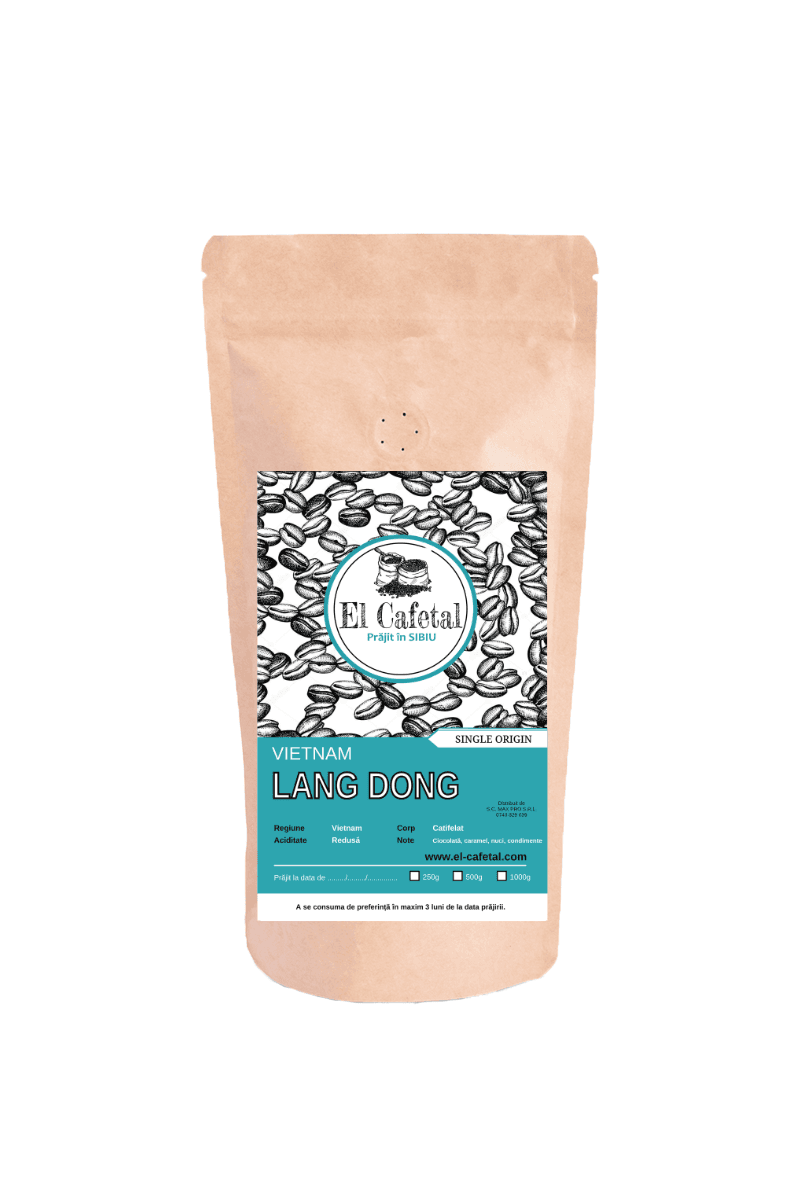
El-Cafetal
VIETNAM LANG DONG
RON 51,00
Waarom: VietnamVergelijkbare prijs

Tugboat
Buio Espresso
£ 7,50
DonkerWaarom: VietnamVergelijkbare prijs

Copper Coffee Roasters
Morning Blend | Speciality Coffee Blend
£ 8,95
DonkerWaarom: VietnamVergelijkbare prijs
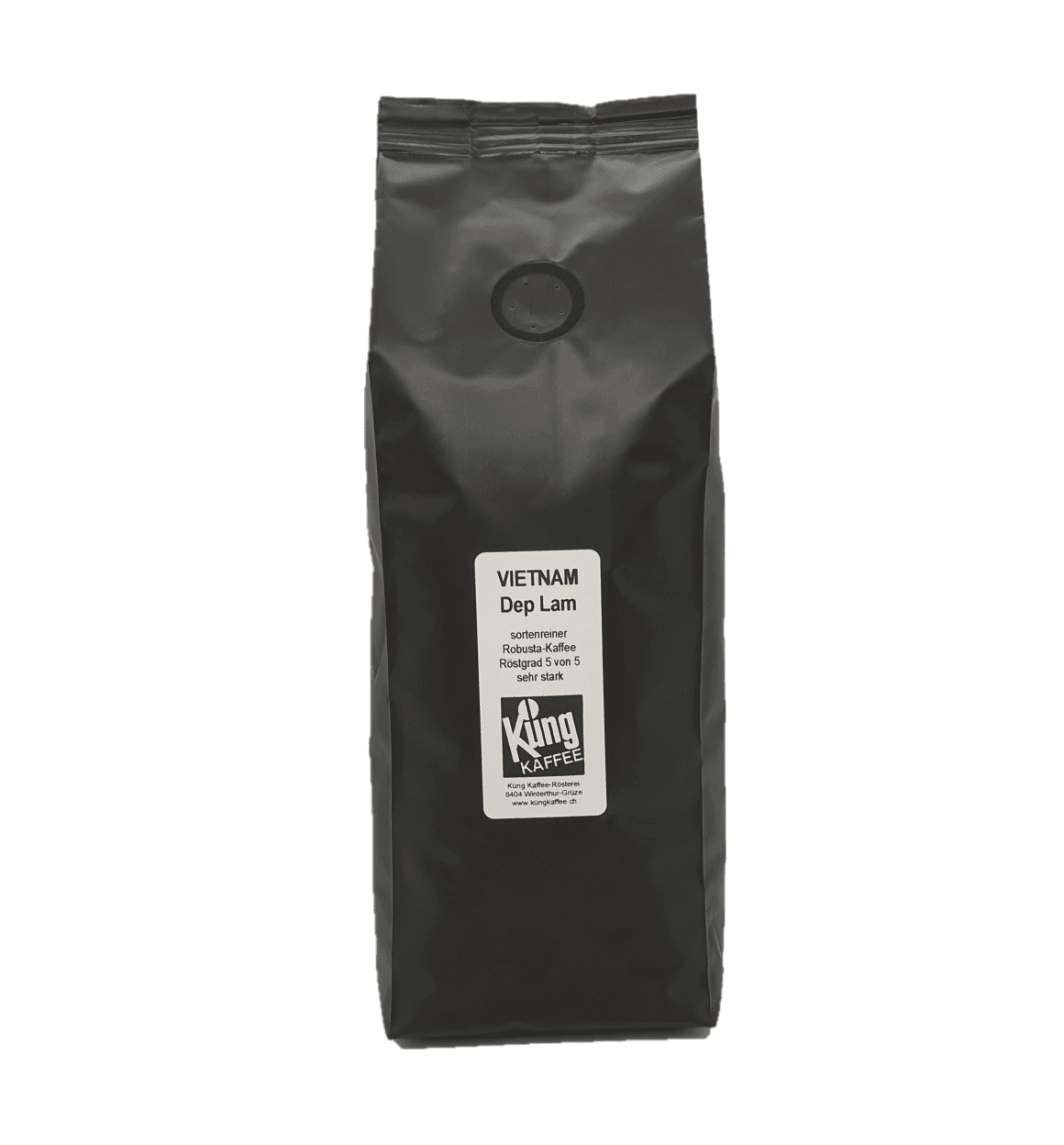
Küng Kaffee
VIETNAM Dep Lam
CHF 6,00
Waarom: VietnamVergelijkbare prijs


