


 Rio Coco Beans
Sky Larkin
- Grad de prăjire: Medie
- Blend
Sky Larkin este o cafea vândută de Rio Coco Beans (Vero Beach, Statele Unite ale Americii). Prăjire: medie. Notele de degustare ale prăjitorului: sweet lemon, chocolate, caramel. Preț: între 20,50 USD și 112,00 USD, în funcție de gramaj. Adică de la 49,38 USD pe kilogram.
Încă fără note · Scrie prima recenzie
de la20,50 USD
≈ 49,38 USD / kg
Comanda o finalizezi în magazinul prăjitoriei.
- Sediul prăjitoriei
- Statele Unite ale Americii
- Livrare în
- România · Verifică în magazinul prăjitoriei
Profil de gust
După detaliile din magazinul prăjitoriei.
Note de gust
- Sweet Lemon
- Chocolate
- Caramel
- Grad de prăjireMedie
- DeschisăÎnchisă
Variante și prețuri
| Măcinare | Cantitate | Pe kg | Preț |
|---|---|---|---|
| Boabe | 12oz | 60,26 USD | 20,50 USD ↗ |
| Măcinată pentru espresso | 12oz | 60,26 USD | 20,50 USD ↗ |
| Măcinată pentru French press | 12oz | 60,26 USD | 20,50 USD ↗ |
| Chemex | 12oz | 60,26 USD | 20,50 USD ↗ |
| Auto/Drip | 12oz | 60,26 USD | 20,50 USD ↗ |
| Pour Over | 12oz | 60,26 USD | 20,50 USD ↗ |
| Boabe | 2.5lb | 52,03 USD | 59,00 USD ↗ |
| Măcinată pentru espresso | 2.5lb | 52,03 USD | 59,00 USD ↗ |
Arată toate cele 18
| Măcinare | Cantitate | Pe kg | Preț |
|---|---|---|---|
| Măcinată pentru French press | 2.5lb | 52,03 USD | 59,00 USD ↗ |
| Chemex | 2.5lb | 52,03 USD | 59,00 USD ↗ |
| Auto/Drip | 2.5lb | 52,03 USD | 59,00 USD ↗ |
| Pour Over | 2.5lb | 52,03 USD | 59,00 USD ↗ |
| Boabe | 5lb | 49,38 USD | 112,00 USD ↗ |
| Măcinată pentru espresso | 5lb | 49,38 USD | 112,00 USD ↗ |
| Măcinată pentru French press | 5lb | 49,38 USD | 112,00 USD ↗ |
| Chemex | 5lb | 49,38 USD | 112,00 USD ↗ |
| Auto/Drip | 5lb | 49,38 USD | 112,00 USD ↗ |
| Pour Over | 5lb | 49,38 USD | 112,00 USD ↗ |
Descriere
A blend of Organic Nicaragua Dark, Organic Timor, and Ethiopia Yirgacheffe Medium
Cupping Notes: Sweet Lemon, Chocolate, Caramel
This is an Organic S.H.G. (Strictly High Grown) Specialty Grade Coffee
One of the most extraordinary characters in my life was my friend Keith Larkin, the inventor of the lightweight headset.
Keith was a young World War II Army Air Corps pilot who flew almost every fighter and bomber aircraft in the U.S. inventory during the war, and served as a MATS (Military Air Transport Service) pilot afterward, flying a weekly route from Paris through Europe, North Africa, and the Middle East. Keith flew B-24 bombers loaded with fuel over “The Hump” (the Himalayas) from India to Burma and China supplying General Joe Stillwell’s army fighting the Japanese. Later he participated in the Berlin Airlift, the largest air transport operation in history, delivering needed supplies to the blockaded city of Berlin in 1947-8. It was one of Keith’s pilot buddies who began the practice of dropping small parachutes holding chocolate candy to the children who stood at the approach end of the runway at Templehoff Airport. Soon Keith and most all the pilots were dropping candy to these children.
After Keith got out of the Air Force, he purchased eight P-47 Tomahawk fighters and began a cloud seeding business in California, which proved unsuccessful in provoking rain for the farmers of the Central Valley.
It was then that one of Keith’s friends, a pilot for United Airlines, complained to Keith about the heavy headset/microphone which was required for all airline pilots that became very uncomfortable on long flights. Remembering from flight school the hollow tube used for communicating from the front cockpit to the instructor in the rear cockpit of the biplane trainer, Keith came upon a revolutionary concept: connecting a thin hollow tube to a hearing aid receiver and bending it to position the opening of the tube next to the mouth. The sound attenuated up the hollow tube to the receiver in the hearing aid! It worked very well. He was awarded a patent for his discovery, and started a company called “Plantronics”. He began manufacturing these light weight headsets, which soon replaced the bulky older models. NASA purchased Keith’s headsets for their Mercury, Gemini, and Apollo programs, and Neil Armstrong’s famous first words from the surface of the Moon were transmitted through Keith’s microphone/headset.
Keith was a deeply spiritual man, who had a dynamic relationship with God. He recognized that his profits from Plantronics had to do more than fund his private air force which was extensive: B-25 bombers, P-38 Lightnings, P-51 Mustangs, Catalina PBY’s, and other assorted World War 2 airplanes which he collected, restored, flew, and rented to movie production companies (Midway, Catch 22). Keith bought a Gloster Meteor jet fighter from the Canadian government, and became the first American private citizen to own a jet fighter.
Keith sold Plantronics, and invested the money in a large piece of property in the Sierra Mountains, where he built Deer Valley, a free summer camp experience for many underprivileged kids from the San Francisco Bay Area. Keith brought thousands of children from the inner city to the mountains for an often life changing experience.
When Keith ran out of Plantronics money, he started another headset company, and made more millions. It was then in 1985 that I met Keith in Ft. Pierce Florida. He had just bought a ferry/freighter from the Canadian government and had it loaded with food to take to Haiti. Over the next 20 years Keith and his wife Cyndo sold almost all their possessions and devoted themselves to serving Haitian children, pastors in India, and supporting various third world ministries through often spontaneous donations. He realized that it was really not his money, but rather His Lord’s, and all he was doing was distributing it when the Lord directed.
Keith and I became friends, and ministry partners. We flew often in his twin engine Seneca, with trips to Honduras, and around Florida. Keith was the smoothest and coolest pilot I ever had the experience to fly with. Nothing rattled him, be it bad weather or aircraft malfunctions. I flew with him for hours where he never used the autopilot, but with a steady hand maintained the assigned altitude plus or minus 20 feet. He was unconsciously steady in his flying. With a coffee cup full of coffee sitting on the dashboard of his Aero Commander, Keith could do 360 degree roll and not spill a drop.
One time we loaded the Seneca at our short airstrip in Auka Honduras with an extra passenger who needed to get back to civilization. We had seven on board plus many bags in the back. I began to have my doubts if the airstrip was long enough with this extra weight. “Can we make the takeoff?” I asked Keith. He looked around at all the Miskito kids who had gathered at the airstrip, smiled, and said “When I asked a British pilot in a mountain airstrip in Ethiopia if my fully loaded C-54 Skymaster would make it off the short runway and not fall off the cliff at the end, he replied ‘You have a sporting chance’”. With Keith’s smooth touch, the Seneca made it off with about 200 feet to spare.
One flight to Haiti was especially noteworthy when it came to Keith’s coolness under pressure. The Seneca had just had its annual inspection, and inadvertently the mechanic had installed a bolt in the nose wheel assembly backward, with the bolt head protruding into the nose gear mechanism. In this position the landing gear would go up, but the bolt head would jam the downward movement. Keith loaded the Seneca with five missionaries, their bags, and some cargo. They took off for Haiti, with a refueling stop at Georgetown on Exuma Island in the Bahamas. As they approached for landing, Keith lowered the landing gear handle, but only the main wheels came down. The nose wheel was stuck in the up position. After attempting alternate ways to get the nose wheel down, Keith suddenly realized what the mechanic had done, and knew that he was going to have to land on just two wheels. He knew this type of landing would damage the nose of the airplane with the skidding on the cement runway. Also there was the probability of ruining both engines with “sudden stoppage” of the engines when the rotating propellers hit the runway. This usually required complete replacements of both engines. With a loaded airplane hundreds of miles from home, this was a very serious situation.
Keith asked the airport to spread anti-fire foam on the runway. He made his approach to the runway steep with much excess airspeed. As he lined up on the final approach, he shut down both engines, and “feathered” the propellers to reduce the drag. As he glided to the runway, he tapped the starter switches on both engines to move the propellers to a horizontal position, to keep them from hitting the cement of the runway. Then he touched down on the two main landing gear, and held the nose off during the roll out as the Seneca slowed down. Finally the nose dropped, and the fiberglass bottom of the nose hit the runway and was smoothly sheared off.
Keith unloaded his passengers, and had the fire crew pull down on the tail of the Seneca, lifting off the nose. He grabbed the nose wheel and manually forced it down to the “down and locked” position. Now the Seneca sat normally on the runway. Keith saw that the damage was minimal, and the sheared off bottom of the nose was only an area about 24 inches long and 12 inches wide. With a roll of duck tape, he wrapped the nose of the Seneca, covering the gaping hole in front of the nose wheel.
Then he refueled, loaded up his passengers, and flew back to Florida slowly, with the landing gear down. (I have found duck tape to be good up to 145 kts.)
A few weeks later, Keith created a fiberglass mold for the bottom of the nose, and my wife Laura (because of her small stature and small hands) laid the fiberglass fabric and applied the resin, and the hole was patched in a most professional manner.
This photo was taken the moment the fiberglass mold dropped off, revealing a perfectly smooth patch! We were all happy!
Keith loved a good cup of coffee, and we shared many cups at airport restaurants around Florida, Cozumel, and Honduras. He also loved the idea of making millions of dollars and then giving it all away. I watched him do it three times. His last company was ProTech Communications, where he sold lightweight headsets to McDonalds and other fast food restaurants. He continued to sell his headsets to NASA for their Space Shuttle program.
We created the Sky Larkin blend from Keith’s favorite coffees from Ethiopia, Timor, and Honduras.
Întrebări despre Sky Larkin
Ce gust are Sky Larkin?
Notele de degustare ale prăjitorului: sweet lemon, chocolate, caramel. Grupe de arome: citrice, ciocolată și caramel și dulce.
Ce grad de prăjire are Sky Larkin?
Grad de prăjire: medie.
Cât costă Sky Larkin?
Preț: între 20,50 USD și 112,00 USD, în funcție de gramaj. Adică de la 49,38 USD pe kilogram. Prețurile vin din magazin și se pot schimba; magazinul are prețul actual.
De unde pot cumpăra Sky Larkin?
Din magazinul online Rio Coco Beans: prețurile de pe această pagină au link către el. Cafendo nu vinde cafea.
Răspunsuri construite din datele magazinului și din catalogul Cafendo.
Recenzii
Încă nu există recenzii.
Dacă îți place cafeaua asta, încearcă și
Alese de la alte prăjitorii după origine, proces, prăjire, note de gust și preț comune. Cântăresc cel mai mult cafelele salvate sau notate bine de aceiași oameni.

Tico Coffee Roasters
Costa Rica Finca San Luis
17,64 USD
MedieDe ce: Ciocolată · CitricePreț apropiatAceeași prăjire
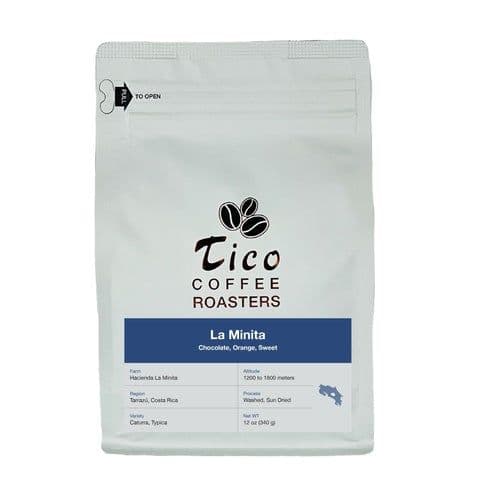
Tico Coffee Roasters
Costa Rica La Minita
17,64 USD
MedieDe ce: Ciocolată · CitricePreț apropiatAceeași prăjire
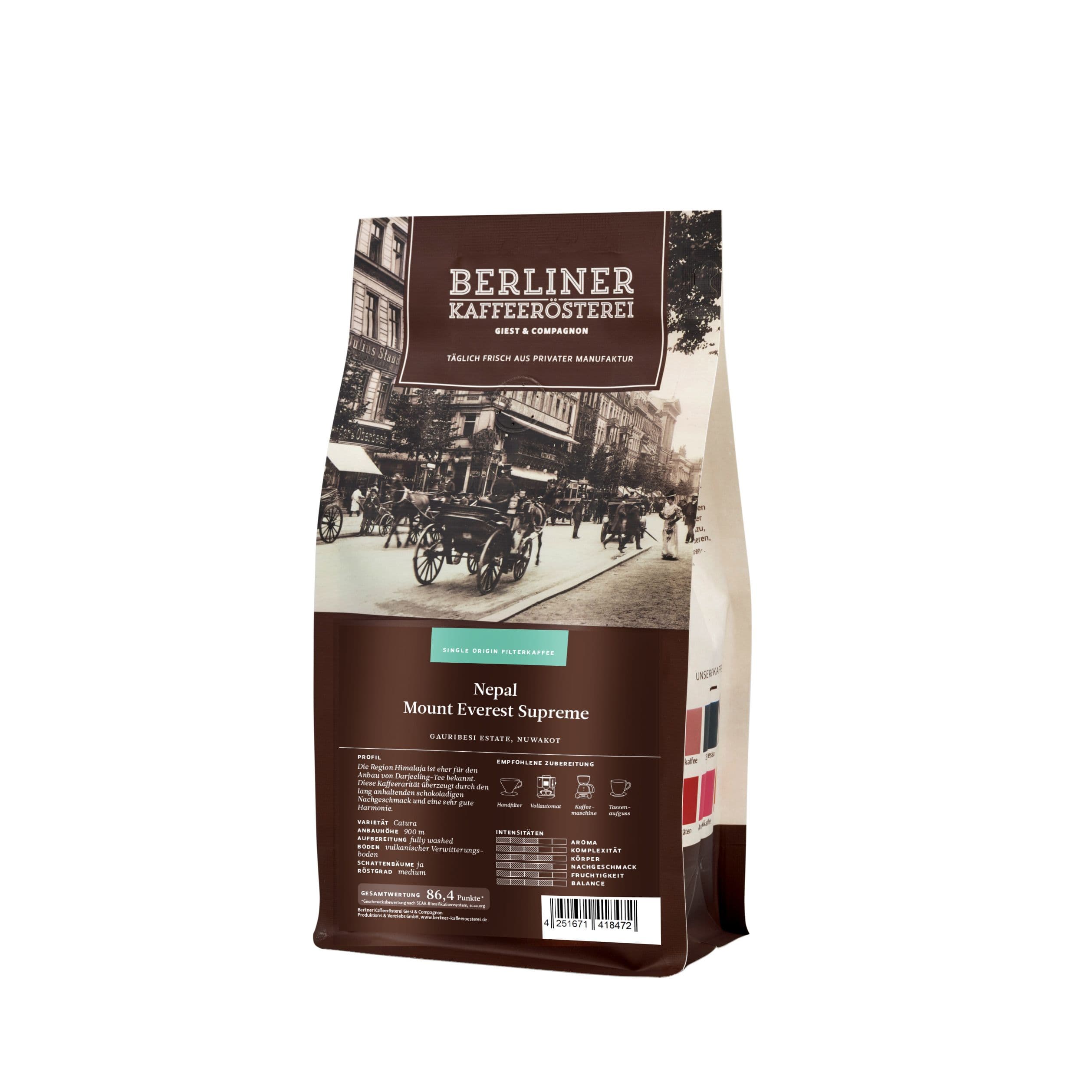
Berliner Kaffeerösterei
Nepal Mount Everest Supreme
14,95 USD
MedieDe ce: Ciocolată · CitricePreț apropiatAceeași prăjire
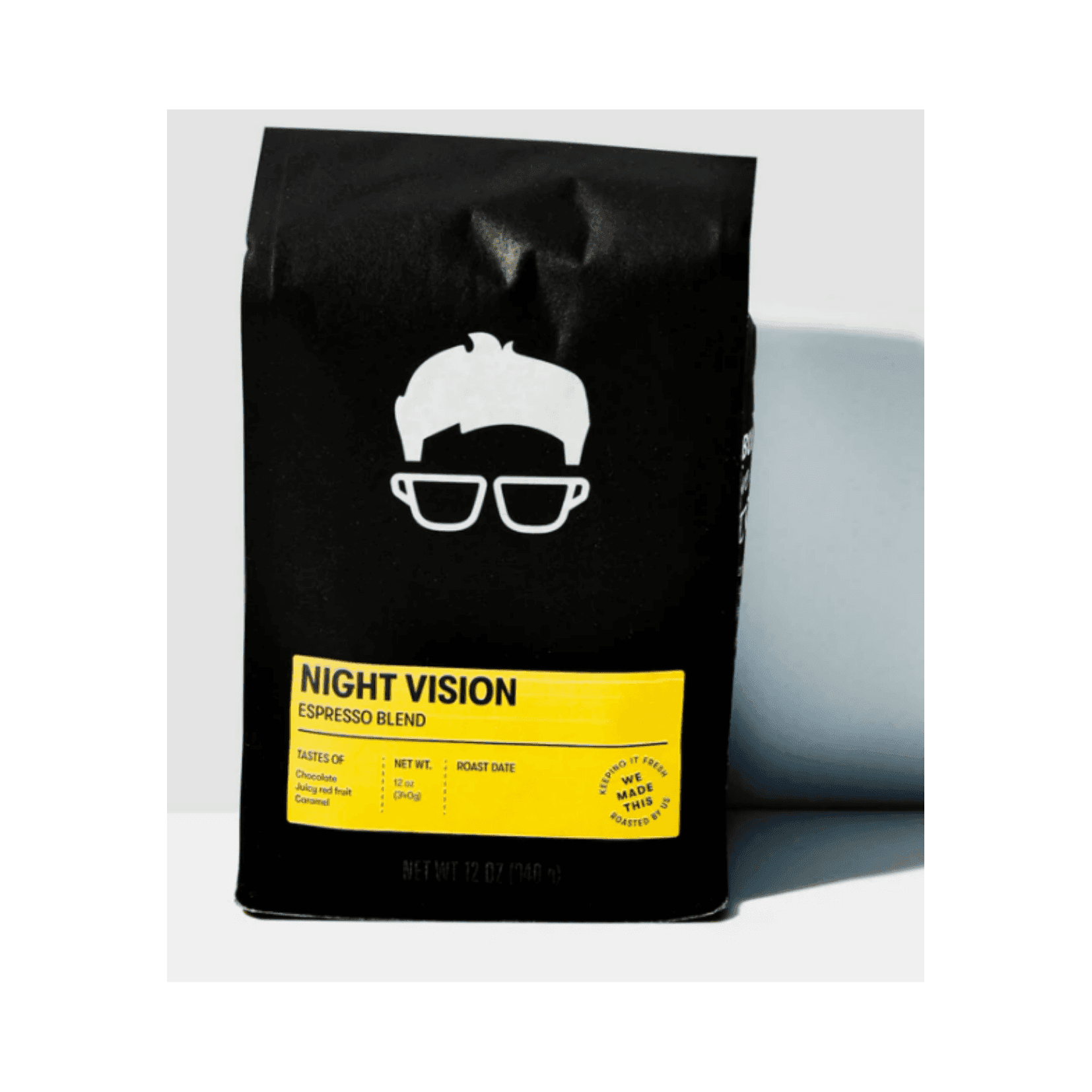
Gregorys Coffee
NIGHT VISION ESPRESSO
13,50 USD
MedieDe ce: Ciocolată · CitricePreț apropiatAceeași prăjire

Stumptown Coffee Roasters
Guatemala El Injerto Bourbon
20,53 USD
MedieDe ce: Ciocolată · CitricePreț apropiatAceeași prăjire
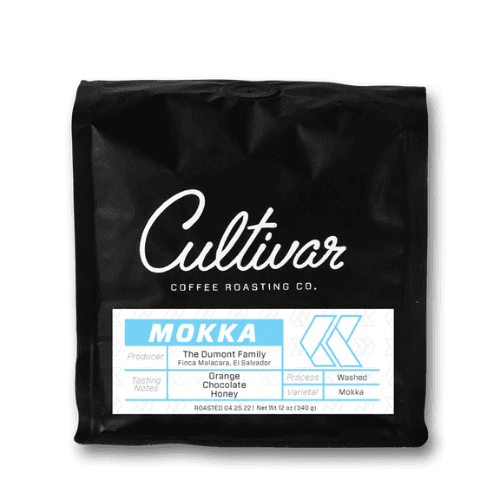
Cultivar Coffee
EL SALVADOR MALACARA MOKKA
26,20 USD
MedieDe ce: Ciocolată · CitricePreț apropiatAceeași prăjire

Passion House
LSD Blend
20,00 USD
MedieDe ce: Ciocolată · CitricePreț apropiatAceeași prăjire

Highwire
Jose Maria Rivera, Colombia
20,06 USD
MedieDe ce: Ciocolată · CitricePreț apropiatAceeași prăjire


