


Bharath - Espresso aus Indien
India
- Blend
Bharath - Espresso aus Indien is a coffee from India, sold by Kaffeemacher (Germany). Price: €9.50 to €35.00, depending on the size. That is from €35.00 per kilo.
Not rated yet · Be the first to review it
from€9.50
≈ €35.00 / kg
You’ll be taken to the roaster’s shop to complete your purchase.
- Roaster based in
- Germany
- Ship to
- United States · Not listed by the roaster’s shop
Sizes and prices
Description
Bharath - Coffee Information
| Taste: | Hot chocolate, marble cake, walnut, creamy |
| Bean origin: | Craigmore Tinyspot, Karnataka, India |
| Producer: | Bharath Belliappa |
| Varieties: | Old Peridenia (Robusta) |
| Post-harvest process: | washed |
| Growing philosophy: | In harmony with nature, under the dense natural shade of native trees |
| All our coffees are sold as whole beans. | |
How we prepare the coffee
This Old Peridenia is a powerhouse. It has a creamy, smooth texture that perfectly supports this Robusta's delicate acidity. Extracted skillfully, it makes a sweet, dense, balanced espresso that catapults Nadja straight to a winter fireside. Don't let it brew for more than 30 seconds, or it slowly develops an unpleasant, slightly metallic bitterness.
We’re completely convinced by the recipe with the vibratory pump. In Michel's words: “I’ve never had a Robusta with acidity this incredibly well integrated.” This is his comment on our brew with 18.5 g in and 43 ml out in 24 seconds. That gives us an extremely smooth, dense, creamy, balanced cup with incredibly well-integrated acidity. If we pull the shot for 32 seconds or longer, over-extraction brings out acidity that stands on its own—similar to Arabica. The slightly longer pre-infusion that comes with the vibratory pump works well for this coffee.
Our recipe for the vibratory pump (18.5 g in, 43 ml out in 24 sec.) doesn't quite work for the rotary pump. The cup isn't balanced enough for our taste. That's why we pull the shot 3–5 seconds longer, with the same brew ratio. Now we get that smooth, dense texture again, with aromas of walnut, vanilla, and pastry. This raises the question of whether a vibratory pump really does need a longer brew time—a widely accepted theory that deserves to be questioned and explored.
Why does the coffee taste the way it does?
This coffee comes from Coorg in India, specifically the community of Palestina, at an elevation of 1,000 meters. The Old Peridenia variety has been grown here for generations.
The cherries are hand-picked and then passed through a flotation system at the washing station on Bharath's farm, Craigmore Tinyspot, to remove low-density beans and defects. They are then depulped and washed, before drying on sun-warmed concrete.
Why did we source this coffee?
Nestled in the foothills of the Western Ghats, Craigmore Tinyspot is a third-generation family coffee farm in the gentle hills of Coorg, Karnataka. Bharath Belliappa is committed to producing sustainably grown coffee under the dense natural shade of native Western Ghats trees.
We met Bharath through Komal and Akshey of the South India Coffee Company (SICC). The two run a sixth-generation coffee farm in Coorg and, with their expertise and wet mill, serve as a knowledge hub for the region.
Our collaboration with SICC and Bharath grew out of an exchange of ideas. We were looking for a producer who shared our understanding of coffee and produced high-quality Robusta. Bharath grows this Old Peridenia and processes it at his own wet mill; it is exported through Komal and Akshey, imported by Lennart and his company This Side Up, and roasted by us.
How do we roast this coffee?
As a 20-kg batch on our 30-kg roaster. We usually roast our somewhat darker coffees at full capacity, 30 kg, but this coffee is very hard—Canephoras have hard cell walls and need a lot of heat for a faster roast. So we roast the coffee at 70% energy until just before first crack, which is a lot. We roast it for a total of 13:30 minutes to the same end temperature as our APAS. The roast level is therefore similar, but the color is lighter because Canephoras don't get as dark as Arabicas at the same temperature.
Questions about Bharath - Espresso aus Indien
Where does Bharath - Espresso aus Indien come from?
It comes from India.
How much does Bharath - Espresso aus Indien cost?
Price: €9.50 to €35.00, depending on the size. That is from €35.00 per kilo. Prices come from the shop and can change; the shop has the current ones.
Where can I buy Bharath - Espresso aus Indien?
In the online shop of Kaffeemacher: the prices on this page link to it. According to its shop, it delivers to Germany, Austria, Spain, France, Italy, Luxembourg and 1 other country. Cafendo does not sell coffee itself.
Answers built from the shop’s own data and the Cafendo catalog.
Reviews
No reviews yet.
If you like this coffee, try these
Picked from other roasters for a shared origin, process, roast, tasting notes and price. Coffees that the same people saved or rated highly count the most.
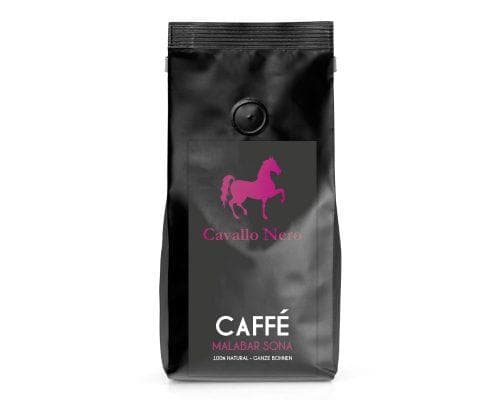
Biotiva
Coffee Malabar Sona
$12.90
MediumWhy: IndiaSimilar price
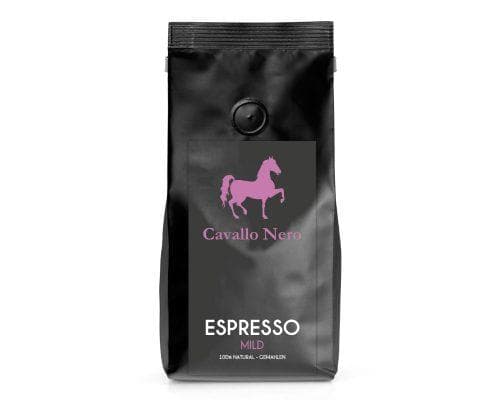
Biotiva
Cavallo Nero Espresso Mild
$12.90
MediumWhy: IndiaSimilar price
Hallingers
The legendary from India
$13.90
Very darkWhy: IndiaSimilar price
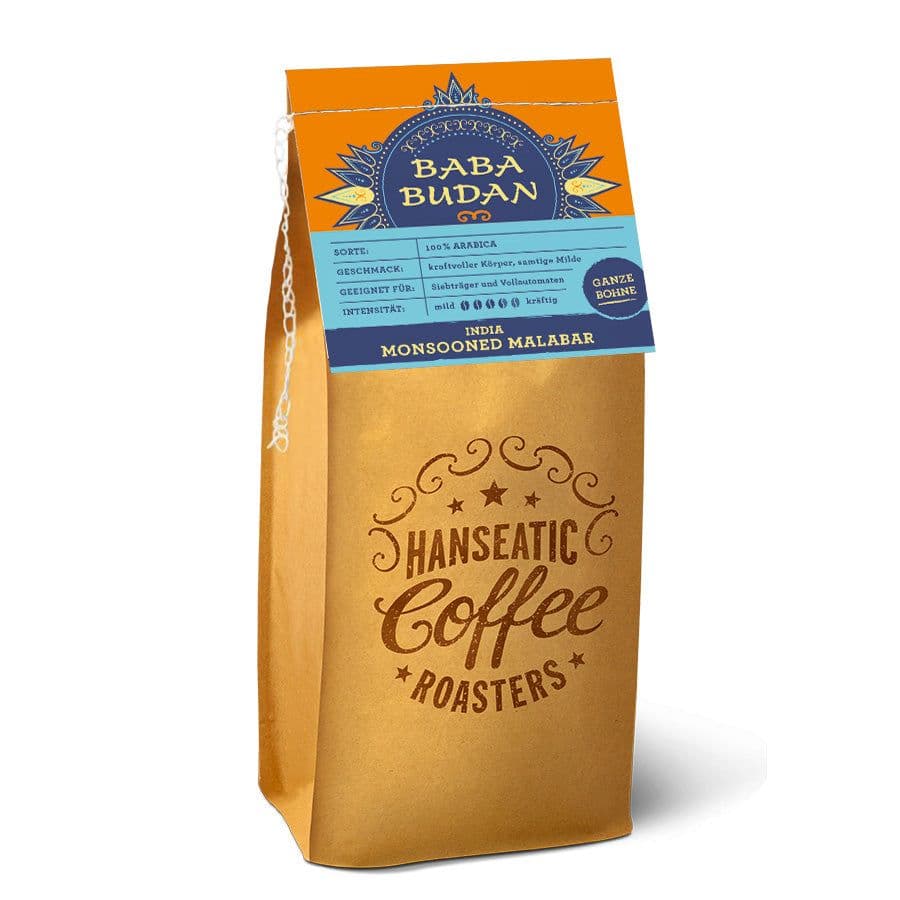
Hanseatic Coffee Roasters
BABA BUDAN Indian Monsooned Malabar
$8.50
Why: IndiaSimilar price
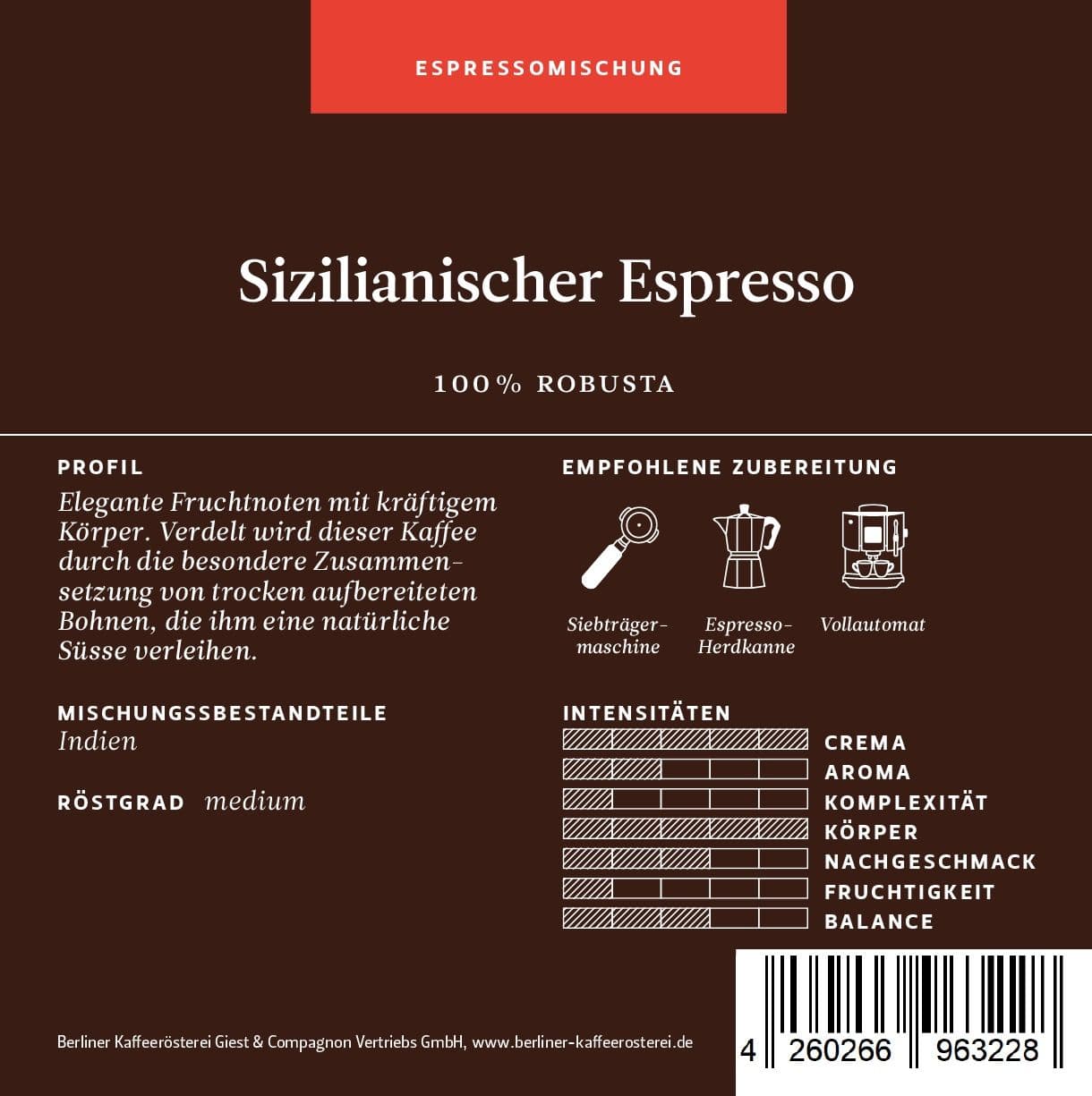
Berliner Kaffeerösterei
Sicilian Espresso
$6.45
MediumWhy: IndiaSimilar price
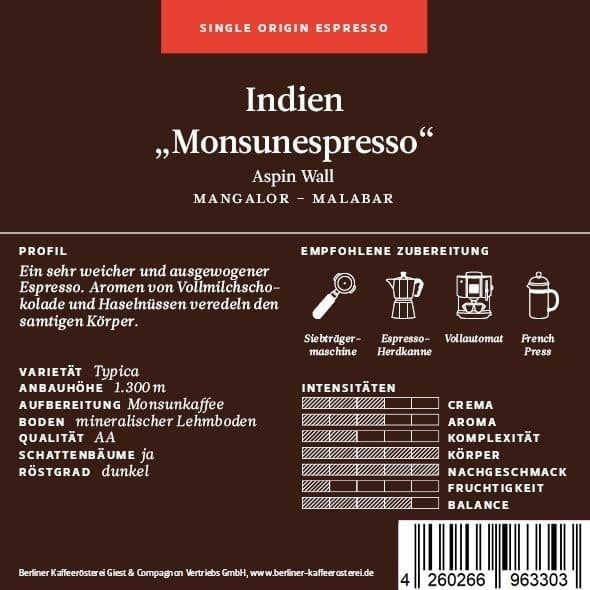
Berliner Kaffeerösterei
Indian Monsunespresso Aspin Wall
$7.45
MediumWhy: IndiaSimilar price

Hannoversche Kaffeemanufaktur
Zoo Collection Tin - India Monsooned Malabar
$9.95
MediumWhy: IndiaSimilar price
Hannoversche Kaffeemanufaktur
Indian Pearl Mountain
$8.40
MediumWhy: IndiaSimilar price


