November 5, 2026 · By Darius Stan
Coffee grind size chart for every brew method
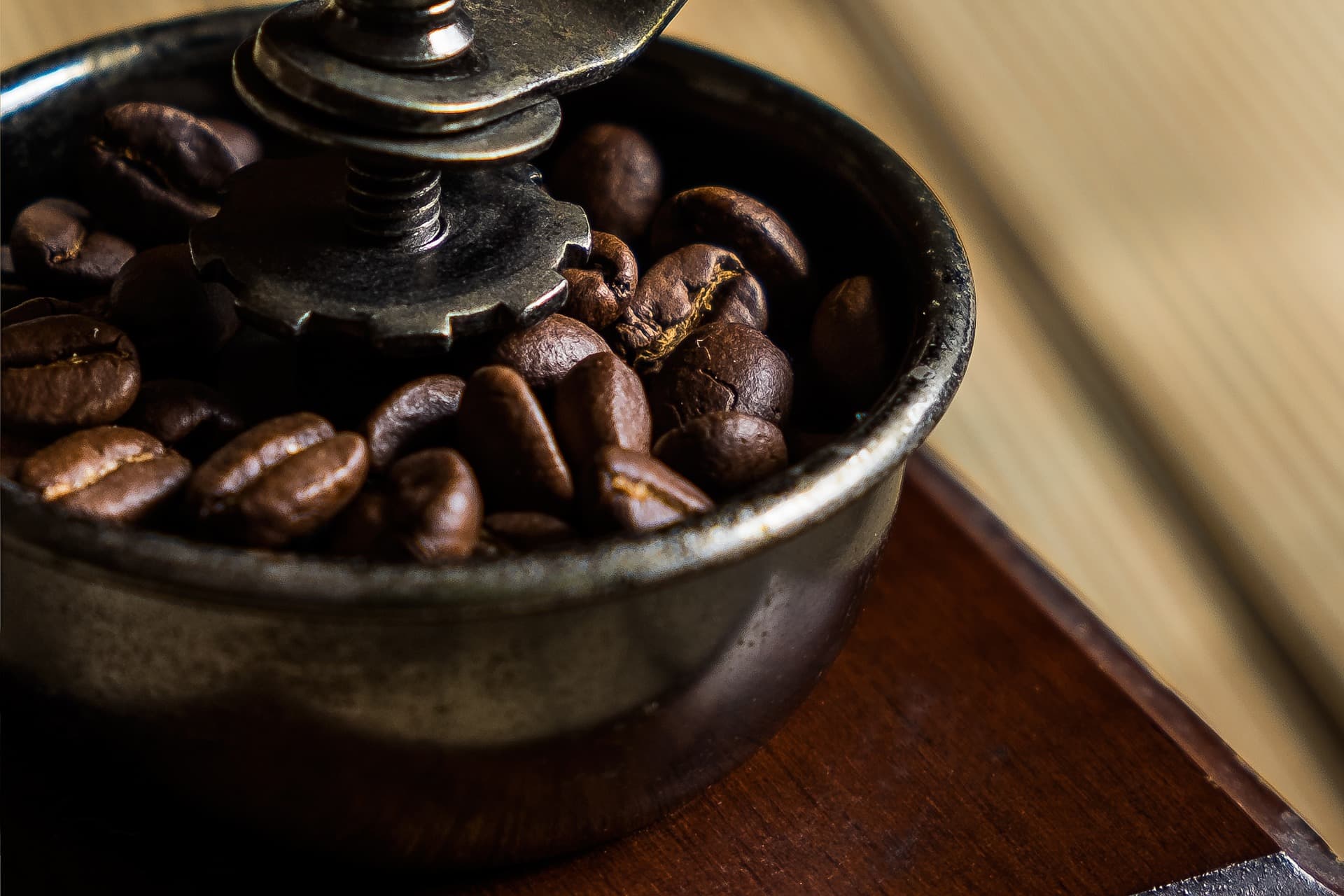
Grind size is the setting that changes your coffee the most, and the one most people never touch. The finer the grind, the faster water pulls flavour out of the coffee; the coarser, the slower. Every brew method has a range that works, and once you know it, fixing a sour or bitter cup becomes simple.
Why grind size matters
Water dissolves flavour from the surface of the coffee particles. Fine particles have more surface, so they extract quickly; coarse particles extract slowly. A method with short contact (espresso, about 25 to 30 seconds) needs a fine grind. A method with long contact (French press, four minutes; cold brew, half a day) needs a coarse grind. Get it wrong and you get one of two problems:
- Under-extracted (grind too coarse for the method): sour, thin, salty, finishes quickly.
- Over-extracted (grind too fine): bitter, dry, harsh, hollow.
Coffee grind size chart
| Grind | Looks like | Brew method | Contact time |
|---|---|---|---|
| Extra fine | Flour, powder | Turkish coffee (cezve, ibrik) | 2–4 min, boiled |
| Fine | Fine table salt, slightly finer | Espresso machine | 25–30 s |
| Fine to medium-fine | Table salt | Moka pot; AeroPress (short) | 1–4 min |
| Medium-fine | Fine sand | Pour-over cone (V60, Kalita), AeroPress | 2–4 min |
| Medium | Regular sand | Filter coffee machine, flat-bottom drippers | 4–6 min |
| Medium-coarse | Rough sand | Chemex, clever dripper | 4–5 min |
| Coarse | Coarse sea salt | French press, cupping | 4 min |
| Extra coarse | Crushed peppercorns | Cold brew | 12–24 h |
Use it as a starting point. Grinders differ, and "number 15" on one grinder is not "15" on another. Start in the middle of the range for your method, taste, then adjust.
How to dial in, one step at a time
- Keep the dose, the water amount and the temperature the same.
- Brew and taste. Sour and thin? Grind finer. Bitter and dry? Grind coarser.
- Change the grind by one small step and brew again.
- Watch the time as a second signal: an espresso that runs in 15 seconds or a pour-over that drains in a minute is almost always ground too coarse.
If your coffee is both bitter and sour at once, the grind is probably uneven, not wrong: a mix of dust and boulders. That is a grinder problem.
Burr or blade grinder?
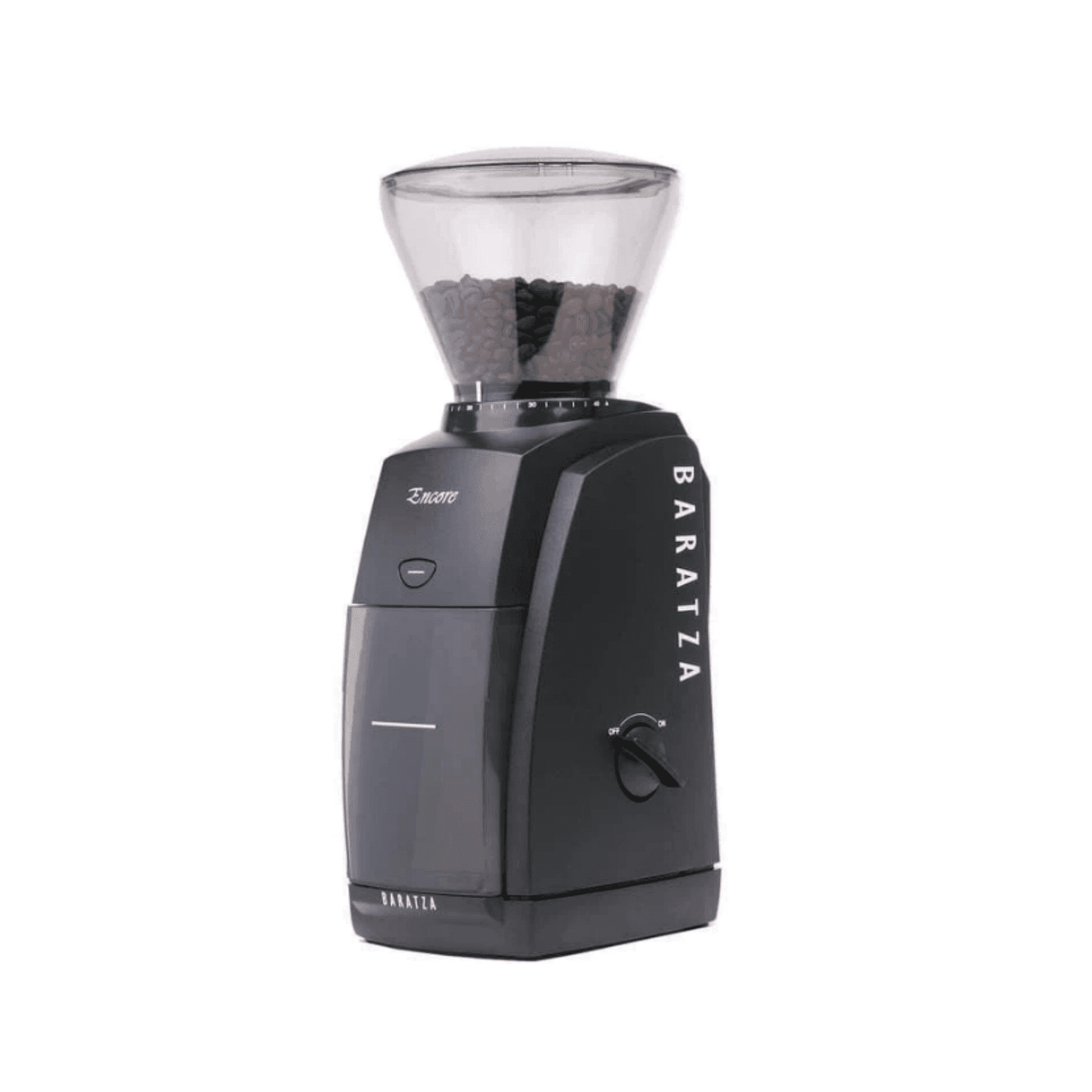
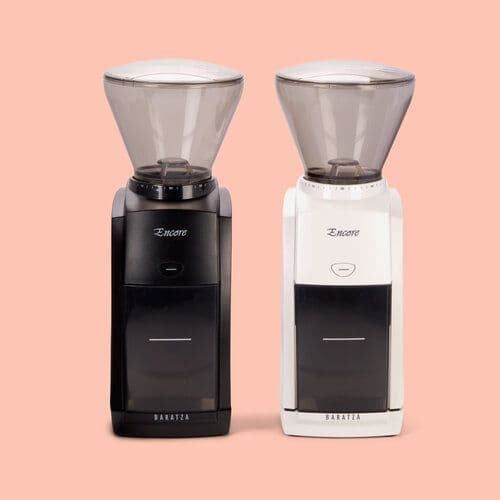
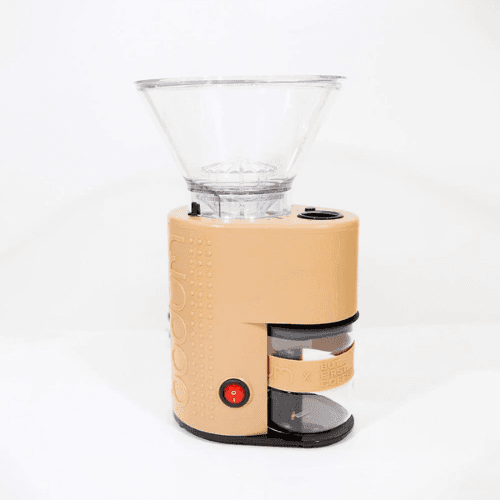
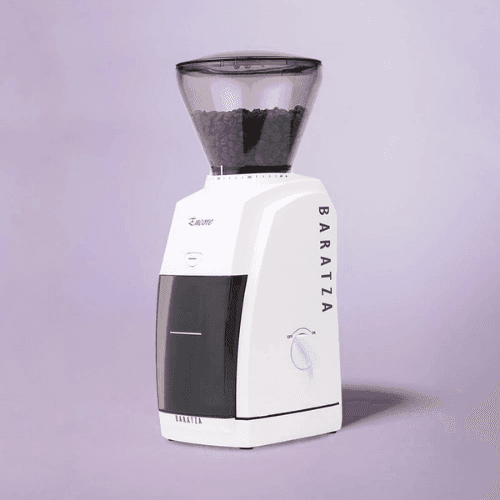
A blade grinder chops beans with a spinning blade, like a blender. It is cheap, but produces a mix of powder and chunks, and you can only control it by time. A burr grinder crushes beans between two burrs set at a fixed distance, so the particles come out much more even and the setting is repeatable. For anything beyond occasional French press, a burr grinder is the most worthwhile upgrade in coffee. Read choosing a grinder, or browse manual grinders (quiet, affordable, great for filter and travel) and electric grinders in the catalog.
When to grind
Grind right before brewing. Ground coffee loses much of its aroma within the first hour as volatile compounds escape and oxygen gets in. If you buy ground coffee, keep it airtight and choose the grind for your method: most pre-ground coffee is medium, made for filter machines, which is too coarse for espresso and too fine for a French press.
Grind size by method: quick links
- French press: coarse. Full guide: French press coffee.
- Moka pot: fine, a little coarser than espresso. Full guide: how to use a moka pot.
- Pour-over: medium-fine. Full guide: pour-over coffee.
- AeroPress: fine to medium. Full guide: AeroPress coffee.
- Espresso: fine. Full guide: espresso at home.
- Bean-to-cup machines: set it once, then fine-tune. See beans for bean-to-cup machines.
Quick answers
Does grind size change caffeine?
A little: finer grinds and longer contact extract more of everything, caffeine included. But the dose of coffee and the bean (robusta has about twice the caffeine of arabica) matter far more. See caffeine per cup.
Can I grind coffee in a blender or spice mill?
In an emergency, yes, in short pulses. Expect an uneven grind; it works best for French press or cold brew, where a little dust matters less.
From the catalog
From independent roasters and makers. Each one links to the shop that sells it.