November 5, 2026 · By Darius Stan
Which coffee beans for a bean-to-cup machine?
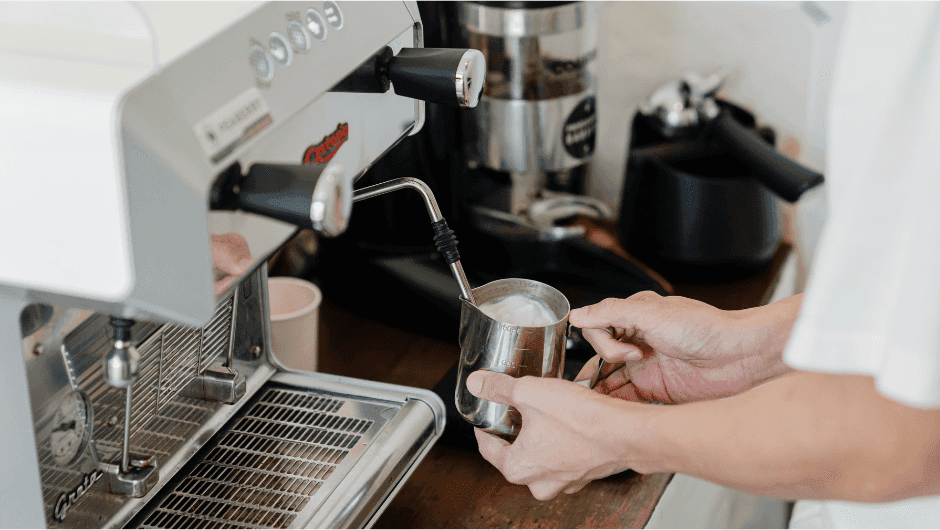
A bean-to-cup machine (also called a fully automatic or super-automatic machine) grinds, doses, tamps and brews at the press of a button. It makes good coffee easy, but it is also picky about beans. The wrong beans can taste flat, clog the grinder or leave oily residue in the brewing unit. The right ones make a cup that comes close to a café espresso. Here is how to choose.
What makes a bean good for a bean-to-cup machine
Medium roast, dry surface
Choose beans with a matt, dry surface. Very dark roasts push oils to the surface of the bean. In a bean-to-cup machine those oils stick to the hopper, the burrs and the brewing unit, slow the flow of beans and turn rancid. A medium or medium-dark roast gives enough body and sweetness for milk drinks without the oil problem. If you are curious why beans get oily, read oily coffee beans.
No flavoured or glazed beans
Beans coated with flavourings or sugar (caramel, vanilla, hazelnut aromas) stick in the grinder and are best kept for a separate grinder or a French press.
Fresh, but not too fresh
Beans a week or two after roasting are ideal. Very fresh beans release a lot of gas, which can make the shot uneven; old beans taste flat and give little crema. Look for a roast date on the bag.
Espresso or caffè crema?
Many roasters offer two styles. Espresso beans are roasted a little darker for a short, intense shot and milk drinks. Caffè crema beans (popular in Germany, Austria and Switzerland, also called Schümli) are often roasted lighter for a longer, milder cup with a fine layer of crema. If you mostly drink long coffees, choose crema beans; for cappuccino and latte macchiato, espresso beans. The difference is explained in espresso, lungo, americano and caffè crema.
Arabica or a little robusta?
100% arabica tastes rounder and more aromatic. Blends with some robusta give more crema, more body and more caffeine, and stand up well to milk. Both work in a bean-to-cup machine; it is a question of taste. See arabica or robusta.
Flavour profiles that work well
- Chocolate, nuts, caramel: the classic, for black coffee and milk drinks. Often blends with Brazil as a base.
- Balanced and sweet: single origins from Colombia, Guatemala or Honduras.
- Fruity: medium roasts from Ethiopia can be lovely as caffè crema, but very light filter roasts often taste sour from a bean-to-cup machine, which brews hotter and faster than a filter.
Browse beans for bean-to-cup machines, where roasters recommend their coffees for these machines, or all espresso coffees.
Set the machine up for new beans
- Grind size. Most machines come set fairly coarse. Go finer one step at a time until the coffee runs slower and tastes sweeter, not sour. On many machines the grind can only be changed while the grinder is running; check your manual. After a change, the first one or two cups still use the old setting.
- Strength (dose). Use a higher dose for espresso and milk drinks.
- Cup size. Less water means more flavour. A large cup from one dose tastes thin; many machines can brew a large coffee as two doses.
- Temperature. Medium to high for darker roasts, high for lighter ones.
More on what each setting does in the grind size chart.
Keep beans and machine fresh
- Fill the hopper only for a few days. Most hoppers are not airtight. Keep the rest of the bag sealed, cool and dark.
- Rinse and clean the brewing unit as the manual says, often weekly if it is removable, and use cleaning tablets regularly. Old coffee oils are the most common reason a machine's coffee starts to taste bitter.
- Descale when the machine asks; filtered or softer water means fewer descaling cycles. See cleaning products.
- Empty the grounds container and drip tray daily to avoid mould.
Quick answers
Can I use any espresso beans in a bean-to-cup machine?
Most, yes, as long as they are not very oily or flavoured. Very light, acidic filter roasts often taste better from a filter.
Can I use ground coffee?
Many machines have a bypass chute for one portion of ground coffee, useful for decaf. Never put ground coffee in the bean hopper. For decaf beans, see how decaf coffee is made.
Why does my coffee taste watery?
Usually too coarse a grind, too low a dose or too large a cup. Fix the grind first.
From the catalog
From independent roasters and makers. Each one links to the shop that sells it.