Kaffeemacher
Bharath - Espresso aus Indien
Índia
- Blend
Bharath - Espresso aus Indien é um café de Índia, vendido por Kaffeemacher (Alemanha). Preço: de 9,50 € a 35,00 €, consoante o tamanho. Isso equivale a partir de 35,00 € por quilo.
Ainda sem classificação · Seja o primeiro a avaliá-lo
de9,50 €
≈ 35,00 € / kg
Vai ser levado à loja da torrefação para concluir a compra.
- Torrefação sediada em
- Alemanha
- Enviar para
- Portugal · Não indicado pela loja da torrefação
Tamanhos e preços
Descrição
Bharath - Coffee Information
| Taste: | Hot chocolate, marble cake, walnut, creamy |
| Bean origin: | Craigmore Tinyspot, Karnataka, India |
| Producer: | Bharath Belliappa |
| Varieties: | Old Peridenia (Robusta) |
| Post-harvest process: | washed |
| Growing philosophy: | In harmony with nature, under the dense natural shade of native trees |
| All our coffees are sold as whole beans. | |
How we prepare the coffee
This Old Peridenia is a powerhouse. It has a creamy, smooth texture that perfectly supports this Robusta's delicate acidity. Extracted skillfully, it makes a sweet, dense, balanced espresso that catapults Nadja straight to a winter fireside. Don't let it brew for more than 30 seconds, or it slowly develops an unpleasant, slightly metallic bitterness.
We’re completely convinced by the recipe with the vibratory pump. In Michel's words: “I’ve never had a Robusta with acidity this incredibly well integrated.” This is his comment on our brew with 18.5 g in and 43 ml out in 24 seconds. That gives us an extremely smooth, dense, creamy, balanced cup with incredibly well-integrated acidity. If we pull the shot for 32 seconds or longer, over-extraction brings out acidity that stands on its own—similar to Arabica. The slightly longer pre-infusion that comes with the vibratory pump works well for this coffee.
Our recipe for the vibratory pump (18.5 g in, 43 ml out in 24 sec.) doesn't quite work for the rotary pump. The cup isn't balanced enough for our taste. That's why we pull the shot 3–5 seconds longer, with the same brew ratio. Now we get that smooth, dense texture again, with aromas of walnut, vanilla, and pastry. This raises the question of whether a vibratory pump really does need a longer brew time—a widely accepted theory that deserves to be questioned and explored.
Why does the coffee taste the way it does?
This coffee comes from Coorg in India, specifically the community of Palestina, at an elevation of 1,000 meters. The Old Peridenia variety has been grown here for generations.
The cherries are hand-picked and then passed through a flotation system at the washing station on Bharath's farm, Craigmore Tinyspot, to remove low-density beans and defects. They are then depulped and washed, before drying on sun-warmed concrete.
Why did we source this coffee?
Nestled in the foothills of the Western Ghats, Craigmore Tinyspot is a third-generation family coffee farm in the gentle hills of Coorg, Karnataka. Bharath Belliappa is committed to producing sustainably grown coffee under the dense natural shade of native Western Ghats trees.
We met Bharath through Komal and Akshey of the South India Coffee Company (SICC). The two run a sixth-generation coffee farm in Coorg and, with their expertise and wet mill, serve as a knowledge hub for the region.
Our collaboration with SICC and Bharath grew out of an exchange of ideas. We were looking for a producer who shared our understanding of coffee and produced high-quality Robusta. Bharath grows this Old Peridenia and processes it at his own wet mill; it is exported through Komal and Akshey, imported by Lennart and his company This Side Up, and roasted by us.
How do we roast this coffee?
As a 20-kg batch on our 30-kg roaster. We usually roast our somewhat darker coffees at full capacity, 30 kg, but this coffee is very hard—Canephoras have hard cell walls and need a lot of heat for a faster roast. So we roast the coffee at 70% energy until just before first crack, which is a lot. We roast it for a total of 13:30 minutes to the same end temperature as our APAS. The roast level is therefore similar, but the color is lighter because Canephoras don't get as dark as Arabicas at the same temperature.
Perguntas sobre Bharath - Espresso aus Indien
De onde vem Bharath - Espresso aus Indien?
Vem de Índia.
Quanto custa Bharath - Espresso aus Indien?
Preço: de 9,50 € a 35,00 €, consoante o tamanho. Isso equivale a partir de 35,00 € por quilo. Os preços vêm da loja e podem mudar; a loja tem os preços atuais.
Onde posso comprar Bharath - Espresso aus Indien?
Na loja online de Kaffeemacher: os preços desta página ligam a ela. Segundo a sua loja, entrega em Alemanha, Áustria, Espanha, França, Itália, Luxemburgo e 1 outro país. A Cafendo não vende café.
Avaliações
Ainda sem avaliações.
Se gosta deste café, experimente estes
Escolhidos entre outras torrefações por origem, processo, torra, notas de prova e preço em comum. Os cafés que as mesmas pessoas guardaram ou classificaram bem contam mais.
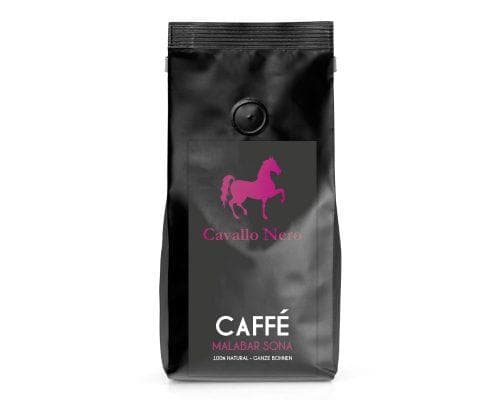
Biotiva
Coffee Malabar Sona
12,90 US$
MédiaPorquê: ÍndiaPreço semelhante
Biotiva
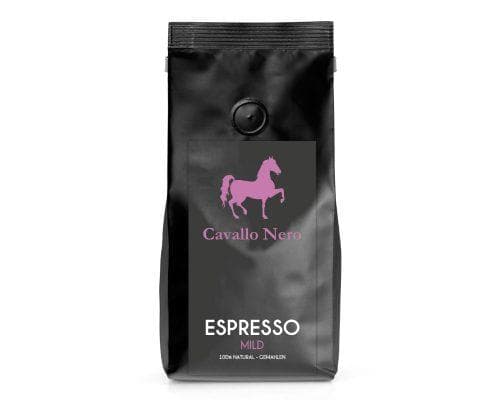
Cavallo Nero Espresso Mild
12,90 US$
MédiaPorquê: ÍndiaPreço semelhante
Hallingers
The legendary from India
13,90 US$
Muito escuraPorquê: ÍndiaPreço semelhante
Berliner Kaffeerösterei
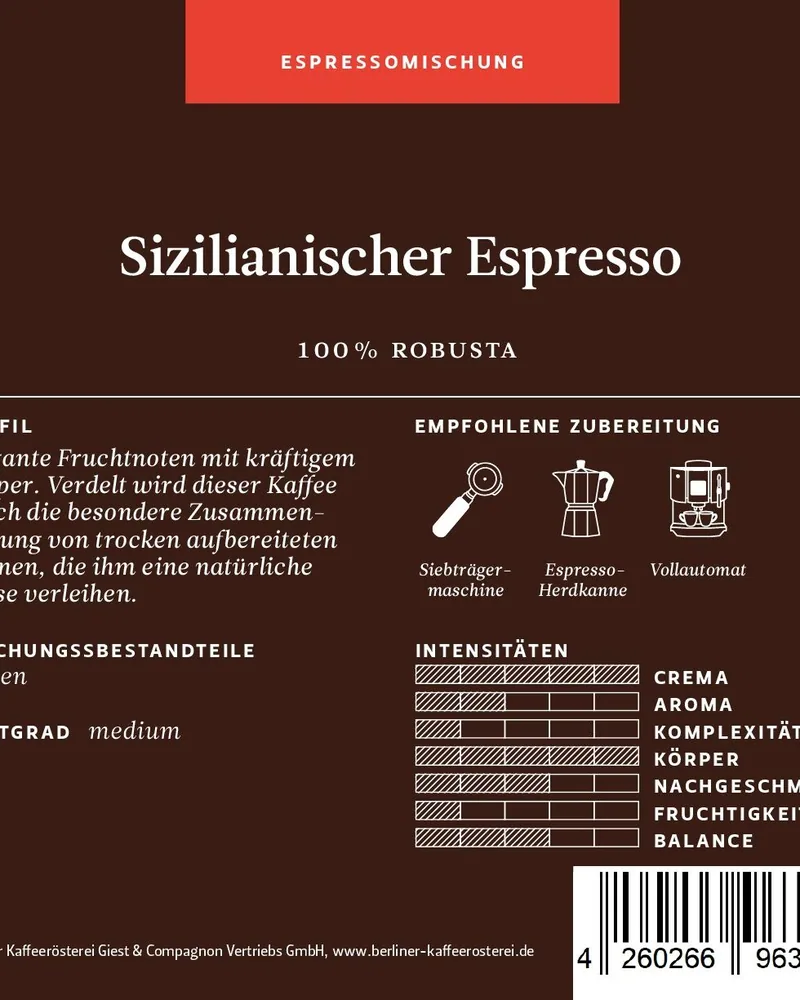
Sicilian Espresso
6,45 US$
MédiaPorquê: ÍndiaPreço semelhante
Berliner Kaffeerösterei
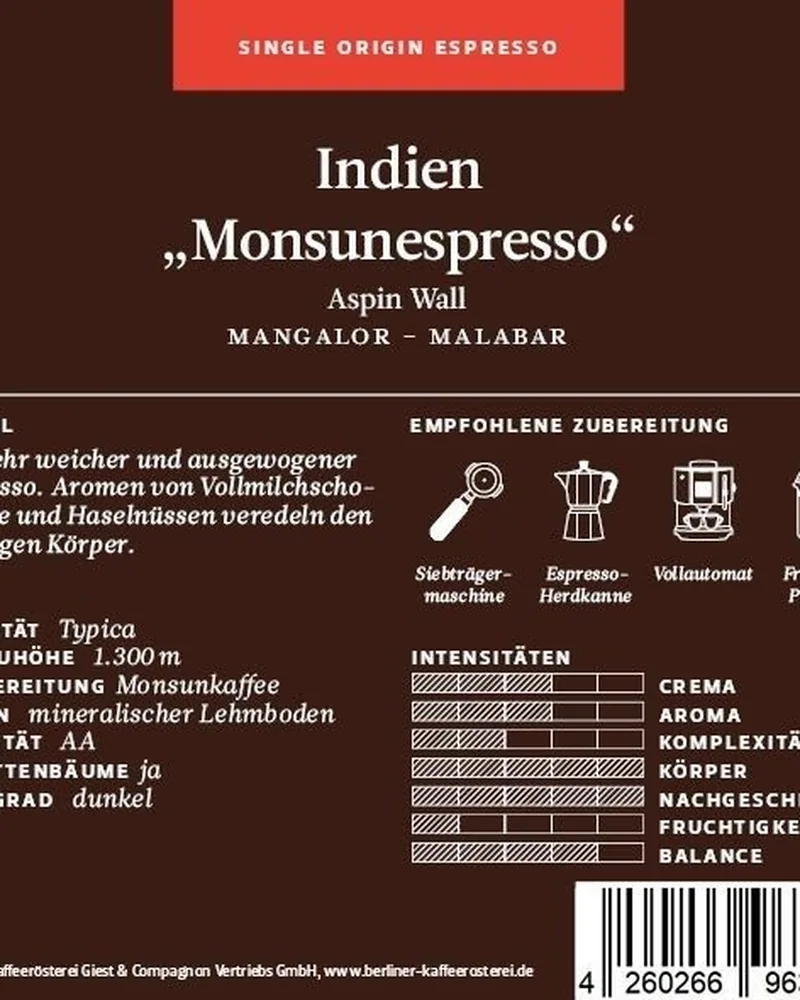
Indian Monsunespresso Aspin Wall
7,45 US$
MédiaPorquê: ÍndiaPreço semelhante
Hannoversche Kaffeemanufaktur
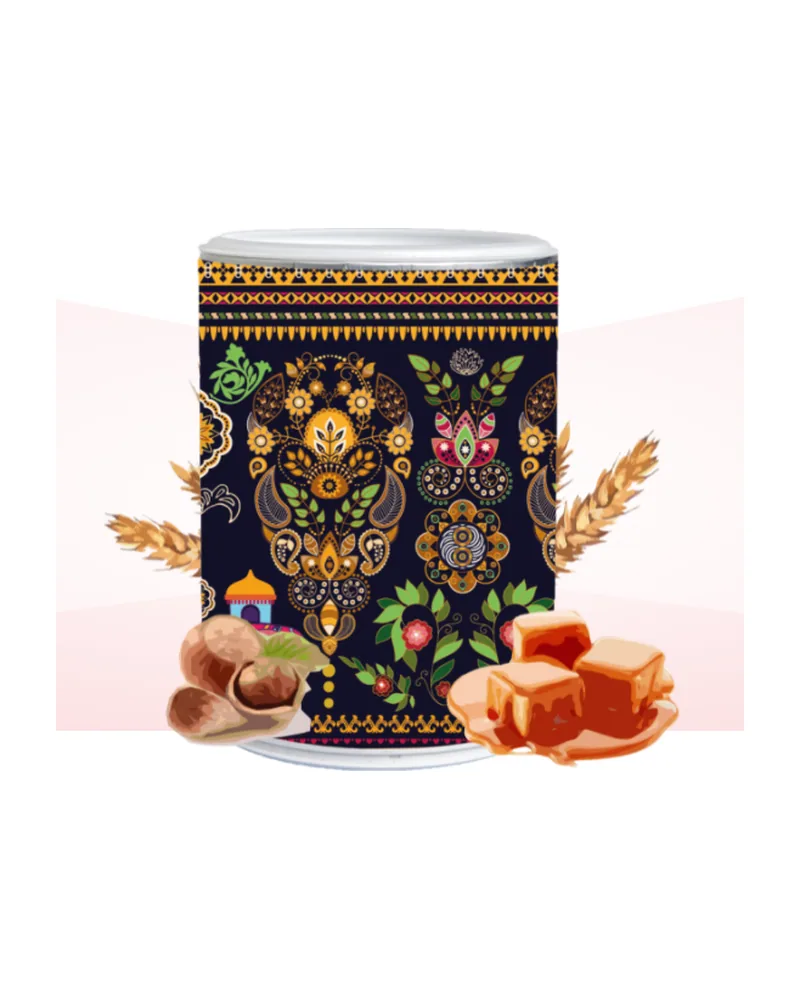
Zoo Collection Tin - India Monsooned Malabar
9,95 US$
MédiaPorquê: ÍndiaPreço semelhante
Hannoversche Kaffeemanufaktur
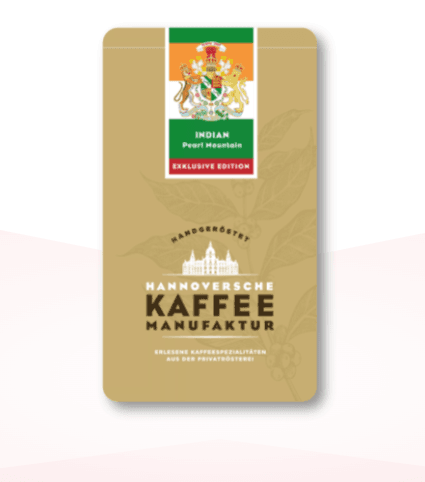
Indian Pearl Mountain
8,40 US$
MédiaPorquê: ÍndiaPreço semelhante
Gourvita Trends
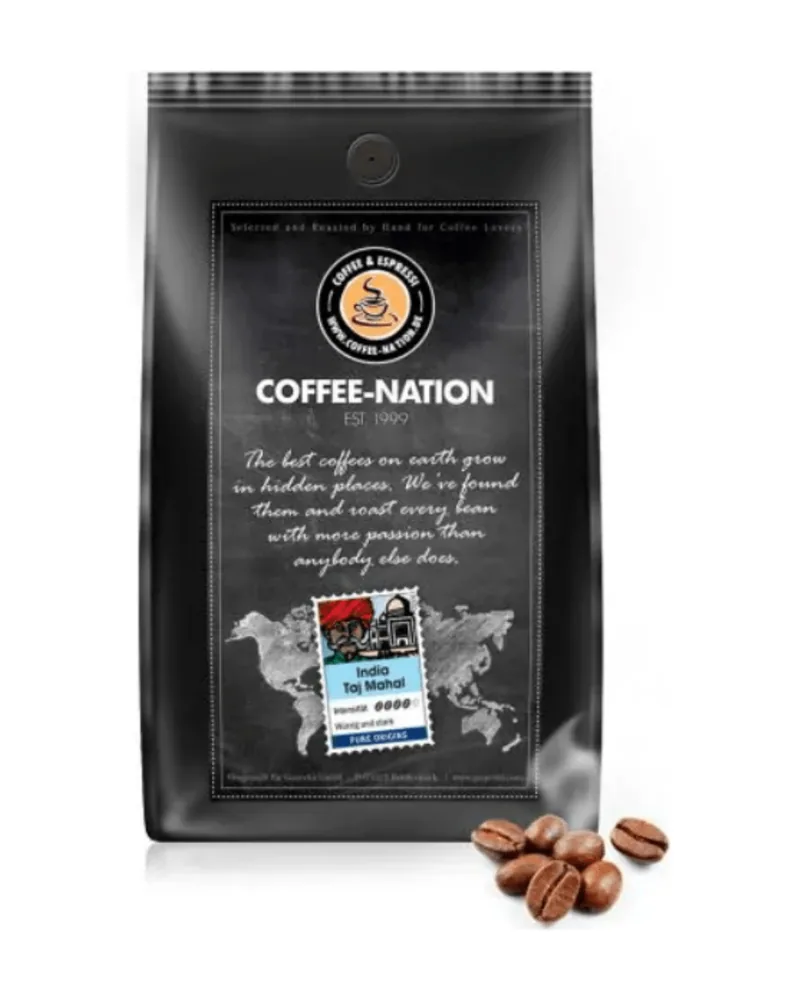
INDIA TAJ MAHAL - von Coffee-Nation
13,90 US$
EscuraPorquê: ÍndiaPreço semelhante