


Kenia Gondo 06
Muranga, Kenya
- Washed
- Single Origin
Not rated yet · Be the first to review it
from€17.95
≈ €57.50 / kg
You’ll be taken to the roaster’s shop to complete your purchase.
- Roaster based in
- Spain
- Ship to
- United States · Check on the roaster’s shop
Free shipping to mainland Spain on orders over €35.
TASTING NOTES: Blackberry, apricot, milk chocolate.
Origin: Kenya
Region: Muranga
Producer: Gondo Washing Station (New Kiriti Farmers Cooperative Society)
Variety: SL28, SL34, K7, Ruiru 11 (100% Arabica)
Altitude: 1,900 masl
Process: Fully washed (double fermentation)
SCA Score: 88 points
Roast: Light
☕ Recommended for filter methods (V60, Chemex, Aeropress).
Taste profile
From the details listed by the roaster’s shop.
Tasting notes
- Blackberry
- Apricot
- Milk chocolate
Sizes and prices
Description
Kenya Gondo 06 specialty coffee. Give it a try!
Traceability of Kenya Gondo 06
This African coffee comes from Murang’a County in central Kenya. It is a very green and fertile mountainous area. Several important rivers originate here and flow down from the Aberdare Mountains. The county produces specialty coffees with an authentic character, shaped by the influence of the Aberdare range and its rich reddish volcanic soils.
Gondo is one of the three washing stations managed by New Kiriti Farmers Cooperative Society. The cooperative was established in 1998 and also manages the Kayu and Kirimahiga plants. The cooperative's main office is in Kayu, in Mathioya District.
Gondo has 560 active members, about 40% of whom are women. The farmers deliver hand-picked cherries from plots located at around 1,900 masl. The high altitude, combined with consistent rainfall, produces highly dense and complex beans.
At the washing station, after processing, the dry parchment coffee is taken to a dry mill. There it is hulled, sorted by size, and assigned its unique lot number. This lot is the cornerstone of traceability in the Kenyan system, linking each bag to the Gondo processing plant, New Kiriti FCS cooperative, and that year's harvest.
Varieties in this African specialty coffee
The blend of varieties in this African specialty coffee reflects the evolution of coffee farming in Kenya over nearly a century.
SL28 and SL34 are highly valued varieties for their cup quality. They were developed by Scott Agricultural Laboratories in the 1930s. K7 is an older Bourbon-type cultivar developed to adapt to lower altitudes and with partial resistance to leaf rust. Finally, Ruiru 11 is a compact, high-yielding variety introduced in 1985 to combat the spread of coffee berry disease and leaf rust.
Selection process for this specialty coffee
At the processing plant, the cherries are hand-sorted by ripeness and graded by density through flotation before being depulped. The coffee then undergoes a double fermentation process, followed by a thorough wash in sorting channels. The parchment coffee is also continually and carefully hand-sorted to preserve the integrity of the lot.
The selection process for this African coffee involves many cupping sessions. Kilimanjaro Specialty Coffee is our African specialty coffee supplier. More than that, they are our trusted partners on the continent. They are responsible for verifying the traceability and selection of this Kenyan African coffee, Gondo 06. To do so, they visit the cooperatives during harvest and meet with the farmers. About one month after the harvest ends, they cup around 500 samples a week to pre-select the coffees.
Finally, cooperatives and exporters send them samples of the lots pre-selected at origin. They analyze these samples and make a final selection before signing the contract.
Once the specialty coffee arrives at the Barcelona warehouse, they handle quality control. To do this, they take new samples from each lot to ensure the coffee has arrived in optimal condition.
Origin: Kenya, the country and its coffee
Kenya was one of the last countries in Africa to introduce coffee. Today, however, it is known for producing some of the world's highest-quality specialty coffees. Among African coffees, Kenyan coffees have a highly prized cup profile for their delicate aroma and good body.
Only 100% Arabica coffee is grown in Kenya. Most coffee farms are located at elevations above 1,500 masl. This, together with the microclimate and red volcanic soils, gives this African coffee its unique characteristics. Did you know that practically all coffee in Kenya is produced without mechanical systems? And, thanks to the resilience of the varieties grown and the fertility of the land, chemical fertilizers are not used.
Kenya has a highly efficient, centralized system through the Nairobi Coffee Exchange. Coffee farms around the world produce a blend of beans of varying quality. That's why separating beans by density and quality and removing defective beans is a priority for maximizing the producer's profitability.
In Kenya, once each lot has been processed, the producer or cooperative delivers the parchment coffee to the marketing agent (MA). The MA then processes and grades the coffee according to shape and size. Each lot is assigned a unique identifying number called an *Outturn Number* (ON). This ON is the basis for ensuring transparency and traceability throughout the system.
Once a lot has an ON, it is divided into several different categories according to bean size. This selective approach helps uncover exceptional coffees from remote areas of the country. Otherwise, these coffees would be almost impossible to find, even by traveling throughout Kenya. The Nairobi Coffee Exchange encourages healthy competition and rewards the best lots with higher prices.
The double fermentation process in Kenyan coffee
In Kenya, specialty coffee is processed using the fully washed, double fermentation. system. This is a unique process developed in Kenya and also used in other countries such as Rwanda and Burundi.
The processing of this African coffee at origin is as follows:
- First, the cherries are hand-sorted to check their ripeness.
- The sorted, ripe cherries are placed in the hopper of the depulper.
- The pulp is removed from the beans, which then fall into receiving tanks or water channels to check their density. Less dense (defective) beans float and are discarded. Denser beans sink and are pumped directly into the fermentation tank.
- Next, the water is drained, and the African coffee beans undergo dry fermentation overnight, which can last around 12–24 hours.
- When fermentation is complete and the mucilage has loosened, the parchment is washed in concrete channels and sorted by density again.
- The denser coffee beans are separated and soaked in clean water for up to 24–48 hours. This removes any remaining mucilage that may have adhered to the parchment, which could produce undesirable flavors during drying.
- Afterward, the coffee is dried on African beds (*) in the shade for up to one day.
- Finally, the coffee beans are placed in the sun on traditional African beds. Drying African coffee can take between 12 and 25 days, depending on the weather.
You can watch a video here showing how this process is carried out for African specialty coffees.
This method involves longer fermentation times, which in some cases can reach 72 hours. That's three times as long as in most coffee-growing regions. The combination of wet and dry fermentation, followed by a soaking period, is key. This process contributes to the remarkable richness and intensity found in many African coffees from the region. Some people argue that amino acids and proteins develop better during longer fermentation periods, which could affect the flavor.
The water used to process this African coffee comes from local rivers. Once processing is complete, the water is reused to prevent contamination of nearby waterways.
(*) Structures 60 to 90 centimeters above the ground, with a base made of wood, metal, bamboo, or plastic. The bases have permeable mesh or fabric such as saran netting, allowing airflow above and below. They prevent direct contact with moisture from the ground, soil, and dirt, resulting in more even and efficient coffee drying. They also reduce the development of mold and sour flavors. Their use has spread to coffee farms in Latin America and other tropical regions.
African coffee beds used for specialty coffee in Kenya – photo by Kilimanjaro Specialty Coffees
Reviews
No reviews yet.
If you like this coffee, try these
Picked from other roasters for a shared origin, process, roast, tasting notes and price. Coffees that the same people saved or rated highly count the most.

Gorilla Coffee
Kenya Giakanja AA
$17.50
Why: KenyaChocolate · FruityWashed

The Flat Cap Coffee Roasting Company
Kenya - Zawadi Peaberry
£10.45
MediumWhy: KenyaChocolate · FruityWashed

Carrara Coffee Roasters
Kakindu Estate, Kenya - Single Estate Peaberry
£14.00
Why: KenyaChocolate · FruityWashed

EXE Coffee Roasters
Kenya - Kericho
£15.75
Why: KenyaChocolate · FruityWashed
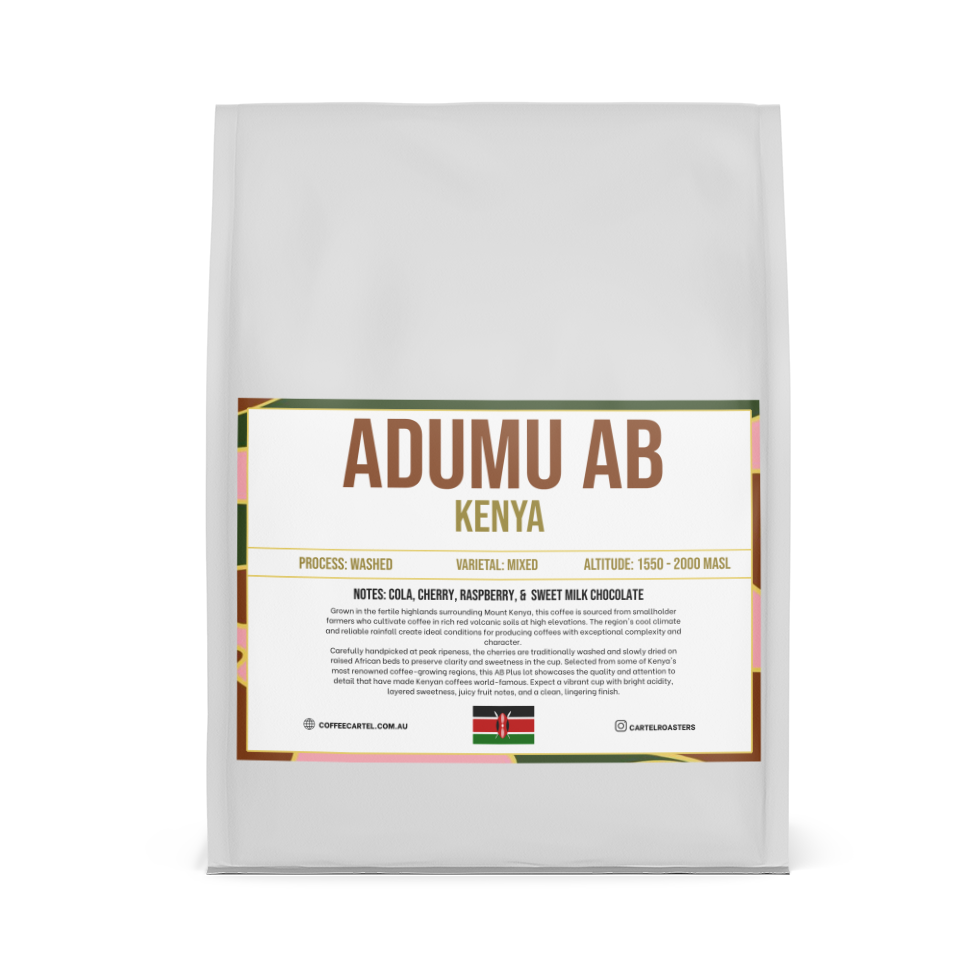
Coffee Cartel
KENYA – ADUMU AB – WASHED PROCESS
A$27.00
Why: KenyaChocolate · FruityWashed

The Proper Coffee Co
Kenya, Aberdare Peak AA Speciality Coffee
£15.49
Why: KenyaChocolate · FruityWashed

Copan Coffee Roasters
OTOÑO WEATHER
$14.49
MediumWhy: KenyaChocolate · FruityWashed
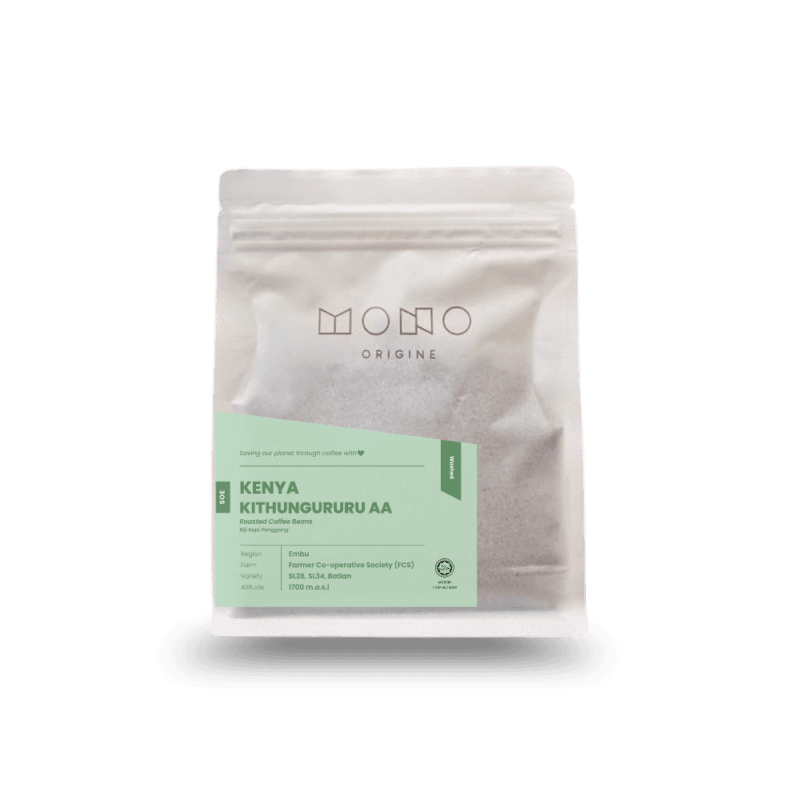
Coffex Coffee
Kenya – Kithungururu AA SOE
MYR 37.00
Why: KenyaChocolate · FruityWashed


