
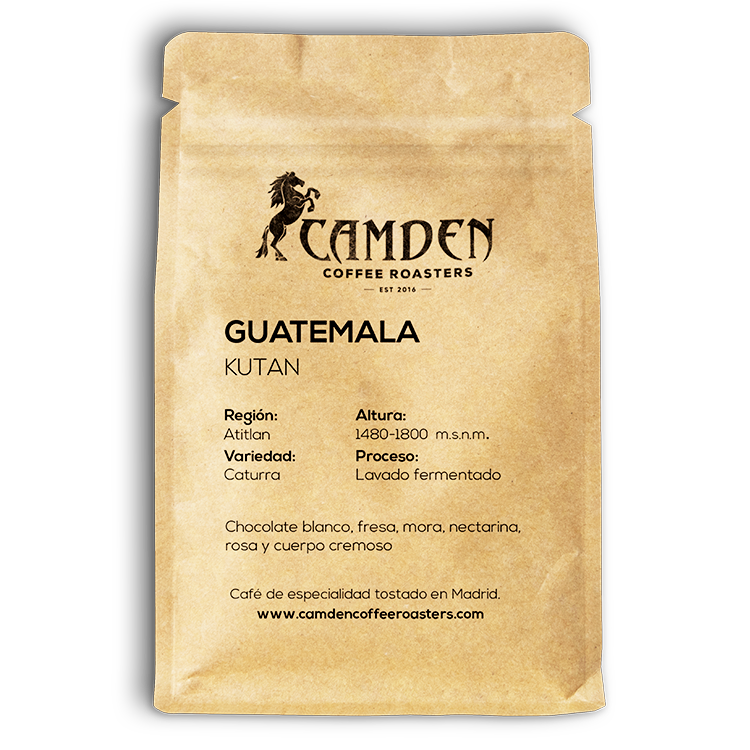
Guatemala – Kutan
Atitlan, Guatemala
- Washed
- Single Origin
Not rated yet · Be the first to review it
from€13.50
≈ €45.20 / kg
You’ll be taken to the roaster’s shop to complete your purchase.
- Roaster based in
- Spain
- Ship to
- United States · Check on the roaster’s shop
SKU: N/A
CATEGORY: COFFEE
COUNTRY: Guatemala
REGION: Atitlan
ALTITUDE: 1,400–1,800 m.a.s.l.
VARIETY: Caturra
PROCESS: Fermented washed
Sizes and prices
Description
Guatemala is one of the biggest names in specialty coffee in Central America. Its volcanic soils, high elevations, and diverse microclimates—from Huehuetenango to Antigua, from Cobán to Atitlán—produce beans with lively acidity, full body, and highly recognizable aromatic profiles.
The Atitlán region stands out for its unique setting: coffee farms grow on the slopes of volcanoes surrounding a lake of volcanic origin, where natural mist protects the coffee trees and the temperature range between day and night concentrates sugars in the cherries. This terroir translates directly into the cup.
Kutan is a specialty coffee produced by Alex Herrera at his farm, Pampojilá, in the Atitlán coffee-growing region. Each lot from the farm stands out for its flavor profile, aroma, and process—a coffee with a personality of its own.
Alex Herrera represents the fifth generation of a Guatemalan coffee-growing family whose roots run deep in the foothills of Volcán de Atitlán. He grew up among coffee trees, following his parents in their cultivation and processing work, and this everyday learning sparked his attention to detail. Later, he added technical training and experience abroad, allowing him to unite his family heritage with contemporary approaches to production and marketing.
His leadership is built on a simple, demanding idea: producing high-quality, traceable, and sustainable specialty coffee without abandoning his roots. And it goes beyond coffee. Pampojilá farm practices a distinctive polyculture—in addition to more than a century of coffee growing, it cultivates macadamia, honey, rubber, and quinine, the traditional remedy for malaria—and much of its land is designated a private nature reserve to preserve the area's endemic wildlife. The farm is Rainforest Alliance certified and audited annually against rigorous criteria.
Socially, the family follows a principle of responsibility that translates into competitive wages, a safe working environment, and access to health care and education for its workers and their families.
That dedication is evident on every farm they cultivate. Pampojilá, whose name means “land where misty clouds rise” in the Mayan language, was registered in the late 19th century and has been producing coffee for more than 150 years on the southern slope of Lake Atitlán. In 2012, the Herrera family acquired it and renovated it following floods caused by tropical storm Agatha, replanting Arabica varieties and modernizing the processing facility to improve coffee fermentation and drying. Located high on the volcano, with volcanic soils and natural mist that protects the coffee trees, it grows Strictly Hard Bean and has received several distinctions from Anacafé, the Guatemalan Coffee Association.
Nearby is Finca Panamá, where the family diversifies its crops—including coffee—and combines tradition and modernity on the volcano's slopes. belco.fr and pampojila.com
Fermented washed processing starts with pulped coffee, which ferments with its mucilage for a controlled period before washing. It includes two process families: the aerobic method (the traditional method, in the presence of oxygen and with careful control of temperature, pH, and time) and the anaerobic method (in sealed tanks, without oxygen), which accentuates fruity and floral notes.
In any form, the goal is the same: to enhance the bean's sweetness, bright acidity, and aromatic clarity. Compared with conventional washed processing, the difference is that the producer doesn't leave fermentation to chance—they direct it. At Pampojilá, this carefully monitored fermentation is precisely what gives its coffees lively acidity and remarkable flavor clarity. The result is a clean coffee with a defined profile and expressive fruit notes of white chocolate, strawberry, blackberry, orange, nectarine, and rose, with a creamy body.
The cup unfolds with these sweet, fruity notes and a creamy feel and medium body. White chocolate and milky notes create an enveloping, indulgent base; strawberry, blackberry, and nectarine add juicy, ripe red fruit; orange brings brightness and juiciness, providing a fresh, distinctive contrast; rose lifts the floral profile, all supported by a creamy body.
We recommend several brewing methods and show you what you can expect from each one:
|
Method |
Why it works |
|---|---|
|
V60 / Chemex |
Brings out rose, floral notes, and orange; highlights strawberry, blackberry, and nectarine in a clean, aromatic cup. |
|
Aeropress |
Highly versatile: highlights white chocolate and red fruit without losing the creamy body. |
|
Espresso |
White chocolate, a milky base, and a creamy body make for a sweet, silky, lingering shot. |
|
Siphon |
Explore the floral and fruity complexity in an elegant, aromatic cup. |
Tip: To preserve the citrus acidity and floral notes, use a medium grind, water at 90–93 °C, and a 1:16 ratio. A profile for those seeking sweetness, red fruit, and elegance in a balanced cup.
Reviews
No reviews yet.
If you like this coffee, try these
Picked from other roasters for a shared origin, process, roast, tasting notes and price. Coffees that the same people saved or rated highly count the most.

Jubilee Roasting Co.
GUATEMALA FINCA LAS NUBES
$14.82
Why: GuatemalaWashedSimilar price
Temple Coffee Roasters
GUATEMALA HUNAPU
$17.63
MediumWhy: GuatemalaWashedSimilar price
Matchstick
Chejoj — Guatemala
$19.28
MediumWhy: GuatemalaWashedSimilar price

Theory Collaborative
Dark Side of the Bloom Blend
$21.50
DarkWhy: GuatemalaWashedSimilar price

Dancing Goats
Organic Fair-Trade Guatemala El Volcan
$20.50
Why: GuatemalaWashedSimilar price

Gorilla Coffee
Ixil A'achimbal, Guatemala
$17.00
Why: GuatemalaWashedSimilar price
Cultivar Coffee
CREAM & SUGAR DARK ROAST
$14.03
DarkWhy: GuatemalaWashedSimilar price
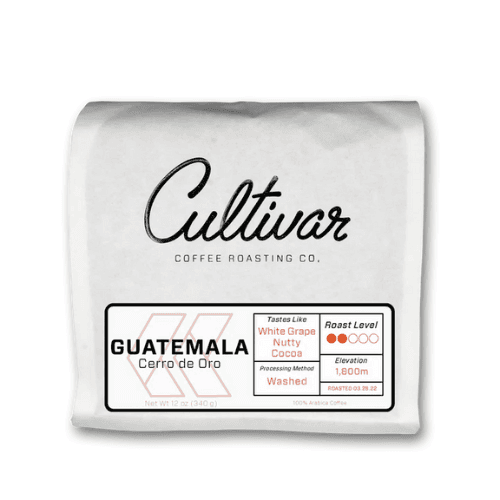
Cultivar Coffee
GUATEMALA CERRO DE ORO
$14.03
MediumWhy: GuatemalaWashedSimilar price


