


Indonesia | Burni Grade 1 [organic]
Indonesia
- Roast Level: Light
- Single Origin
Indonesia | Burni Grade 1 [organic] is a coffee from Indonesia, sold by NANO Kaffee (Germany). Roast: light. The roaster’s tasting notes: cantaloupe, caramel, chocolate. Price: €5.00 to €57.80, depending on the size. That is from €67.20 per kilo.
Not rated yet · Be the first to review it
from€5.00
≈ €67.20 / kg
You’ll be taken to the roaster’s shop to complete your purchase.
- Roaster based in
- Germany
- Ship to
- United States · ✓ Yes, according to the roaster’s shop
Taste profile
From the details listed by the roaster’s shop.
Tasting notes
- Cantaloupe
- Caramel
- Chocolate
- Roast LevelLight
- LightDark
Sizes and prices
Description
High-quality organic specialty coffee – freshly roasted at the NANO KAFFEE roastery in Berlin Kreuzberg.
A product of the highest quality. Grown, sourced, and roasted in respectful partnership with people, plants, and the planet.
NANO KAFFEE – Conscious Coffee from Berlin.
• 100% Arabica
• 100% organic roasted coffee (DE-ÖKO-070)
• Filter coffee
• dry-processed (natural)
• whole beans
• Tasting notes: cantaloupe, caramel, chocolate, mild red wine
This filter coffee is a light roast that also makes an excellent fruity espresso.
Stats
ORIGIN Indonesia
REGION Curah Tatal & Kayumas, Java
ALTITUDE 1,100–1,600 m above sea level
FARM/GROWER Smallholder cooperative (Koperasi Surya Abada Kayumas)
FOB 8.71 eur / kg
VARIETY sln795, USDA 762
Quick Info
In the ideal climate of the Indonesian island of Java, about 180 smallholder farmers live in close proximity to the Ijen volcanic complex. The soil is loose and retains plenty of water. This fertile volcanic loam is rich in minerals and trace elements—nutrients that contribute to a full flavor. Unique natural conditions and careful cultivation make Java coffees so special. Unusual for Java: BURNI GRADE 1 is dry-processed coffee.
Our roast brings out a fruity note of cantaloupe, with flavors of caramel and chocolate and a finish of smooth red wine.
• Volcanic soil (valuable minerals and trace elements, nutrients for a full flavor)
• Shade trees (sun protection and better soil for coffee plants, plus additional income for farmers)
• Smallholder cooperative (stronger together)
* Unusual for Java: This coffee is naturally processed.
THE FARMERS – A Few Families with Small Plots
This coffee comes from small family farms in the neighboring villages of Curah Tatal and Kayumas on the island of Java—the average farm is only 0.5 to 2 hectares (!). These farms are so small that most of the harvest is picked by hand, and the farmers don’t own the machinery to process their own harvest. That’s why they joined a cooperative that consolidates processing, allowing an important part of the value created to remain in the local community. In addition, these cooperatives support their members with technical assistance, seedlings, knowledge sharing, infrastructure development, and other benefits.
Climate change in the region has significantly affected weather patterns. Sustainable agriculture is in the farmers’ own interest.
They raise cattle, goats, and poultry, and use the manure as organic fertilizer on their coffee farms.
They often grow other crops as well, such as cloves, jackfruit, and avocados. This benefits the environment, the coffee plants, and the soil, which is not depleted by monoculture. This can mean lower coffee yields each year, but more income for the farmers overall.
NATURE – Right by the Volcanoes
Curah Tatal and Kayumas are in eastern Java, Indonesia. They are close to the Ijen volcanic complex, home to Indonesia’s most active volcano, Raung.
Java has a humid tropical climate and is known for its fertile volcanic soil, rich in valuable minerals and trace elements. These nutrients are essential for developing a full flavor. In addition, volcanic soil is very loose and can retain large amounts of water, essentially acting as a moisture reserve.
Shade Trees
Using shade trees on the plantation is a traditional way to protect coffee plants and cherries from direct sunlight while preserving soil moisture and biodiversity. This practice promotes a healthy ecosystem in which coffee plants can thrive naturally. It also generates additional sources of income at other times of the year, as farmers grow other crops such as cloves, jackfruit, and avocados.
FUN FACT: The “pearl tree frog” (Nyctixalus margaritifer) is an endangered frog species endemic to Java, Indonesia. It lives in undisturbed highland forests, but has also been found on coffee plantations with sufficient forest cover, as is the case on the farms that grow this coffee. The frogs and coffee plants share the same ecosystem, so it’s very important for the frogs that coffee is grown organically and in harmony with the surrounding environment.
THE IMPACT – Mutual Support
The farmers traditionally grow organic coffee in harmony with the environment. Together, they form the Koperasi Surya Abada Kayumas cooperative, which provides each farmer with technical support as well as knowledge about irrigation systems, landslide prevention, spacing between trees, planting shade and fruit trees, hunting bans, and protecting biodiversity. Resources are pooled for the benefit of the group.
Above all, the cooperative handles the coffee harvest and processing. This means that a large part of the value created involves the farmers.
In addition, a cooperative is a larger player with more influence in negotiations and trade with other major business partners. One of them is Indokom (a private exporter), which, together with ICCRI (Indonesia Coffee and Cocoa Research Institute), helped the cooperative obtain Fairtrade and organic certification (opening up new and more profitable market segments). They also provide ongoing technical, agricultural, and marketing support and pay for new seedlings.
Last but not least, funding helps develop the community’s infrastructure (roads, toilets, warehouses, and waste tanks). This leads to greater efficiency and a stronger local community.
About 60 of the 180 members are women, and the cooperative’s leader, Ms. Siti, continues to work toward increasing the proportion of women. Training is offered to address gender inequalities while respecting cultural diversity.
Being a member of the cooperative means earning more money, but also being part of something bigger. This encourages more and more young people to stay in the villages, which is vital to the community’s continued existence.
Choosing this organic, fairly traded coffee helps shape a dynamic coffee economy and protect the people and environment of Indonesia, which were brutally exploited for so long by Dutch colonists in the past.
TASTE – Java, but Different
The unique interplay of natural conditions and careful cultivation make Java coffee so special, and BURNI GRADE 1 is no exception. Java coffee has a full, smooth, and complex flavor. It offers a full-bodied experience with earthy undertones and a hint of spice.
Unusual for Java, where the mountain climate is often too humid, this is a dry-processed coffee (the coffee cherries are dried with the fruit still attached to the bean). This process creates a different flavor profile from typical wet-hulled Mandheling.
We present a unique coffee processed in an unconventional way. We roasted it to bring out a fruity note of cantaloupe, surrounded by the more typical Java flavors of caramel and chocolate, with a special finish of smooth red wine.
-
High-quality organic specialty coffee – freshly roasted at the NANO KAFFEE roastery in Berlin Kreuzberg.
A product of the highest quality. Grown, sourced, and roasted in respectful partnership with people, plants, and the planet.
NANO KAFFEE – Conscious Coffee from Berlin.
Organic certification: DE-ÖKO-070
– Please note: Some information on the packaging is incorrect. We apologize for the inconvenience. –
Questions about Indonesia | Burni Grade 1 [organic]
What does Indonesia | Burni Grade 1 [organic] taste like?
The roaster’s tasting notes: cantaloupe, caramel, chocolate. Flavour groups: chocolate and caramel & sweet.
Where does Indonesia | Burni Grade 1 [organic] come from?
It comes from Indonesia.
What roast level is Indonesia | Burni Grade 1 [organic]?
Roast level: light.
How much does Indonesia | Burni Grade 1 [organic] cost?
Price: €5.00 to €57.80, depending on the size. That is from €67.20 per kilo. Prices come from the shop and can change; the shop has the current ones.
Where can I buy Indonesia | Burni Grade 1 [organic]?
In the online shop of NANO Kaffee: the prices on this page link to it. According to its shop, it delivers to Germany, Austria, Belgium, Bulgaria, Canada, Czechia and 25 other countries. Cafendo does not sell coffee itself.
Answers built from the shop’s own data and the Cafendo catalog.
Reviews
No reviews yet.
If you like this coffee, try these
Picked from other roasters for a shared origin, process, roast, tasting notes and price. Coffees that the same people saved or rated highly count the most.
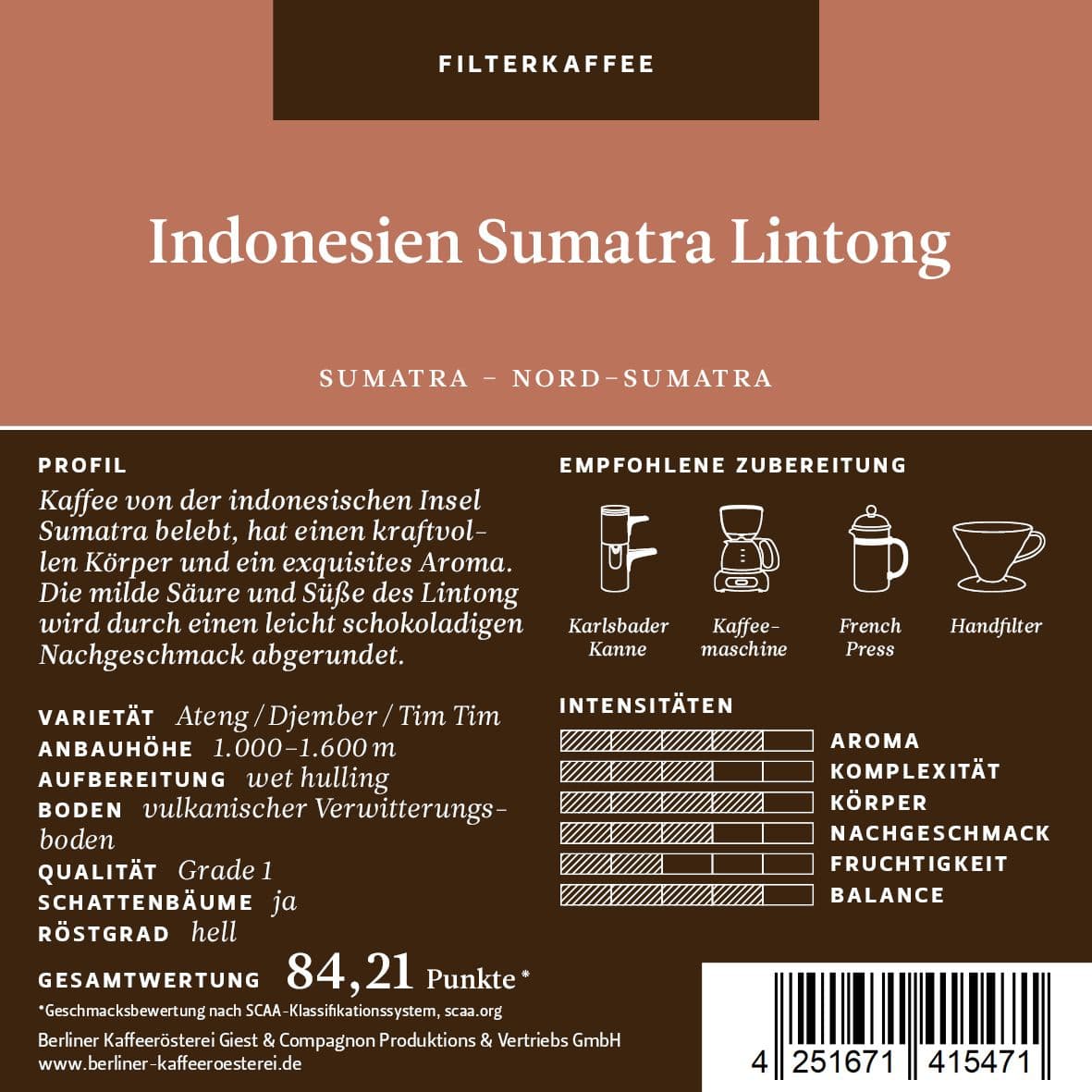
Berliner Kaffeerösterei
Indonesia Sumatra Lintong
$7.25
LightWhy: IndonesiaChocolate · Caramel & sweetSimilar price

Berliner Kaffeerösterei
Indonesian Flores Bajawa Da´ Gabo Estate Bio
$8.95
MediumWhy: IndonesiaChocolate · Caramel & sweetSimilar price
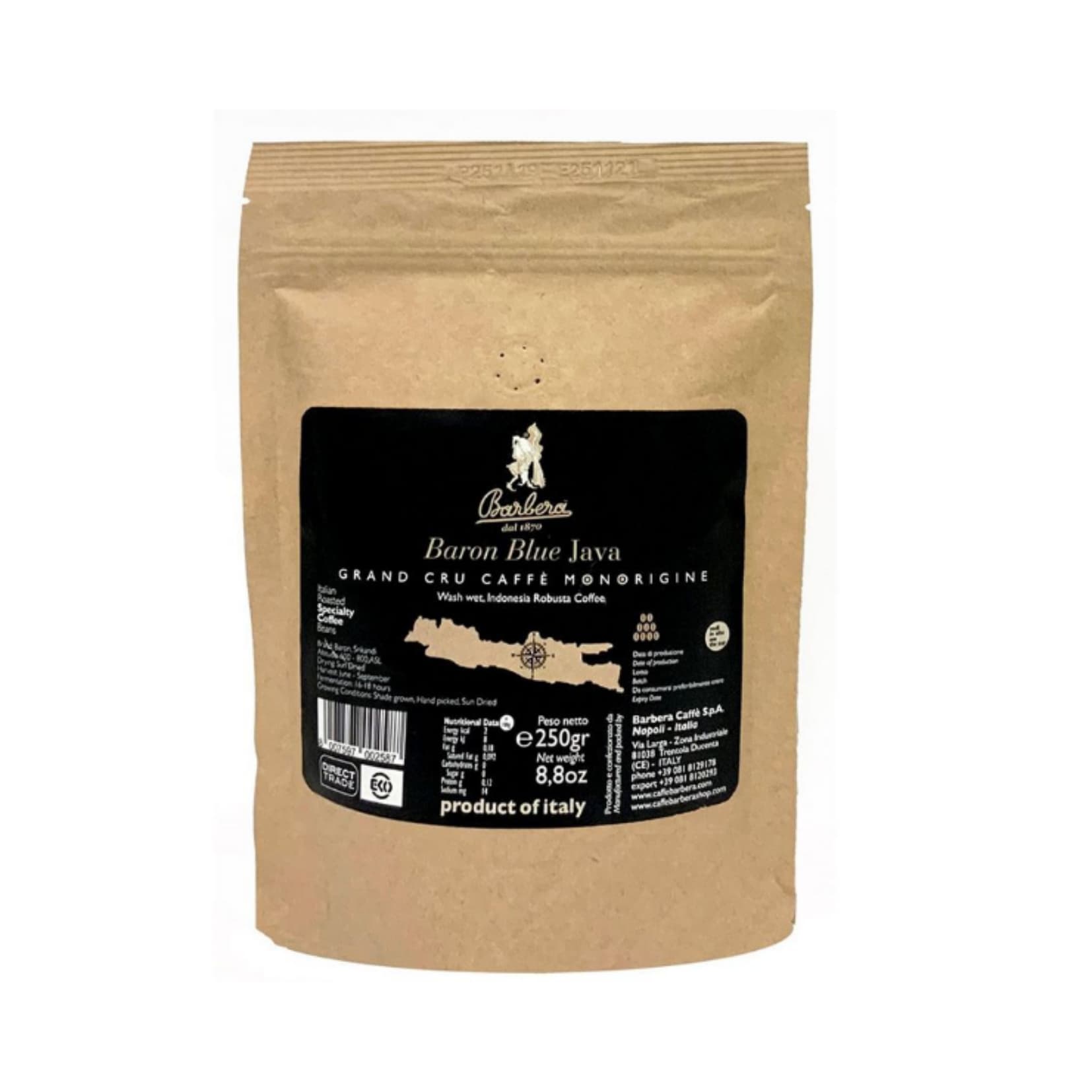
Caffè Barbera
BARON BLUE JAVA - CAFFE' IN GRANI
$8.00
MediumWhy: IndonesiaChocolate · Caramel & sweetSimilar price

Contrebande Bean
Deux Mondes
€4.00
Why: IndonesiaChocolate · Caramel & sweetSimilar price

Contrebande Bean
Deux Mondes Eco
€3.30
Why: IndonesiaChocolate · Caramel & sweetSimilar price

RhoadsRoast Coffees
Indo-Pacific Java Estate Kayumas Fresh Light Roast 100% Arabica Coffee
$51.90
LightWhy: IndonesiaChocolate · Caramel & sweetSame roast

Union Roasters
Sumatra - Lintong
$3.50
DarkWhy: IndonesiaChocolate · Caramel & sweetSimilar price

Rio Coco Beans
Sumatra Mountain Rain Light
$20.75
LightWhy: IndonesiaChocolate · Caramel & sweetSame roast


