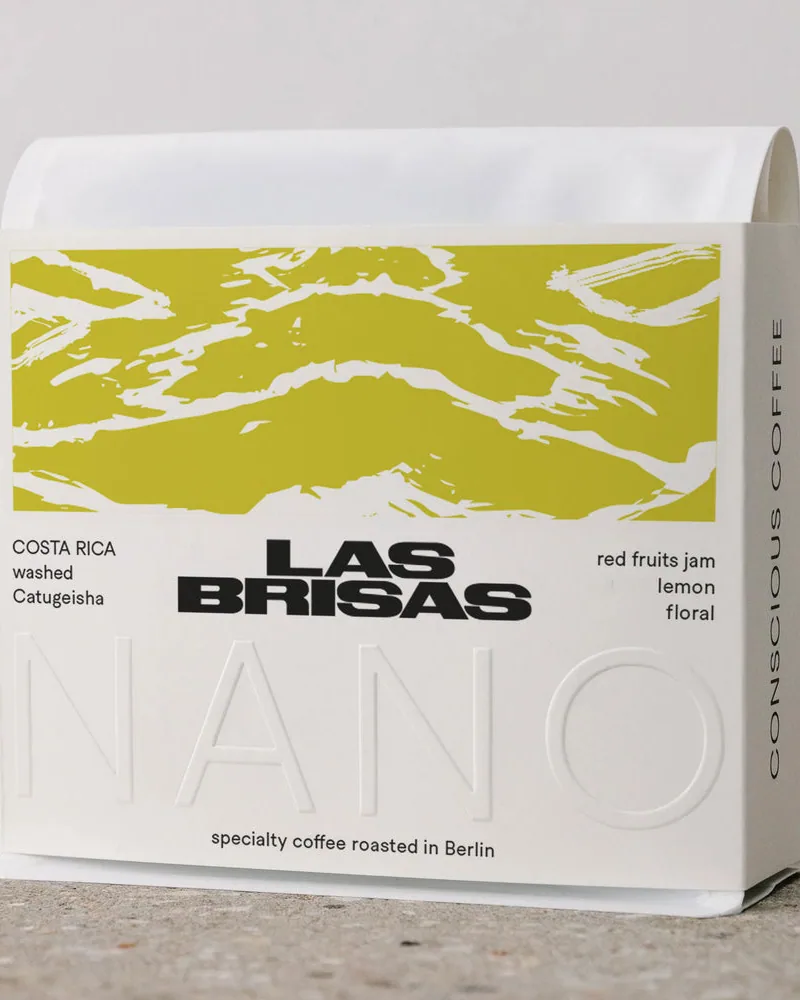
NANO Kaffee
Indonesia | Burni Grade 1 [organic]
Indonesia
- Paahtoaste: Vaalea
- Single origin
Indonesia | Burni Grade 1 [organic] on kahvi, jonka alkuperä on Indonesia. Myyjä on NANO Kaffee (Saksa). Paahto: vaalea. Paahtajan makuhuomiot: cantaloupe melon, caramel, chocolate. Hinta: 5,00 €–57,80 €, koosta riippuen. Kilohinta alkaen 67,20 €.
Ei vielä arvosteltu · Ole ensimmäinen arvostelija
alkaen5,00 €
≈ 67,20 € / kg
Sinut ohjataan paahtimon kauppaan ostoksen loppuunsaattamiseksi.
- Paahtimon sijainti
- Saksa
- Toimitusmaa
- Suomi · ✓ Kyllä, paahtimon kaupan mukaan
Makuprofiili
Paahtimon kaupan ilmoittamien tietojen perusteella.
Makuhuomiot
- Cantaloupe melon
- Caramel
- Chocolate
- PaahtoasteVaalea
- VaaleaTumma
Koot ja hinnat
Kuvaus
High-quality organic specialty coffee – freshly roasted at the NANO KAFFEE roastery in Berlin Kreuzberg.
A product of the highest quality. Grown, sourced, and roasted in respectful harmony with people, plants, and the planet.
NANO KAFFEE – Conscious Coffee from Berlin.
• 100% Arabica
• 100% organic roasted coffee (DE-ÖKO-070)
• Filter coffee
• Dry-processed (natural)
• Whole beans
• Tasting notes: Cantaloupe melon, caramel, chocolate, mild red wine
This filter coffee is a light roast that also works wonderfully as a fruity espresso.
Stats
ORIGIN Indonesia
REGION Curah Tatal & Kayumas, Java
ALTITUDE 1,100–1,600 m above sea level
FARM/GROWER Smallholder cooperative (Koperasi Surya Abada Kayumas)
FOB 8.71 euros / kg
VARIETY sln795, USDA 762
Packaging note:
The product image shows the 250-g package. The 60-g and 1,000-g sizes come in coffee bags with a front label and no belly band.
Quick Info
In the ideal climate of the Indonesian island of Java, around 180 smallholder farmers live in close proximity to the Ijen volcanic complex. The soil is loose and retains plenty of water. Fertile volcanic loam, rich in minerals and trace elements, provides nutrients for a full flavor. Unique natural conditions and careful cultivation make Java coffees so special. Unusual for Java: BURNI GRADE 1 is dry-processed coffee.
Our roast brings out fruity notes of Cantaloupe melon, with flavors of caramel and chocolate and a finish of smooth red wine.
• Volcanic soil (valuable minerals and trace elements, nutrients for a full flavor)
• Shade trees (sun protection and better soil for coffee plants, plus additional income for farmers)
• Smallholder cooperative (stronger together)
* Unusual for Java: This is a naturally processed coffee.
THE FARMERS – A few families with small plots of land
This coffee comes from small family farms in the neighboring villages of Curah Tatal and Kayumas on the island of Java – the average farm is just 0.5 to 2 hectares (!). These farms are so small that most of the harvest is picked by hand, and the farmers do not own equipment to process their harvest themselves. That’s why they joined a cooperative that pools processing, keeping an important part of the value chain local. In addition, these cooperatives support their members with technical assistance, seedlings, knowledge sharing, infrastructure development, and other benefits.
Climate change in the region has significantly affected weather patterns. Sustainable farming is in the farmers’ own interest.
They keep cattle, goats, and poultry, and use the manure as organic fertilizer on their coffee farms.
They often grow other crops such as cloves, jackfruit, and avocados, which is good for the environment, the coffee plants, and the soil, as it is not depleted by monoculture. This can lead to lower coffee yields per year, but more income for farmers overall.
NATURE – Right by the volcanoes
Curah Tatal and Kayumas are in eastern Java, Indonesia. They are very close to the Ijen volcanic complex, home to Indonesia’s most active volcano, Raung.
Java has a humid tropical climate and is known for its fertile volcanic soil, rich in valuable minerals and trace elements. These nutrients are essential to developing a full flavor. The volcanic soil is also very loose and can therefore retain large amounts of water, acting like a moisture reservoir.
Shade trees
Using shade trees on the plantation is a traditional way to protect coffee plants and cherries from direct sunlight while maintaining soil moisture and biodiversity. This practice promotes a healthy ecosystem in which coffee plants can thrive naturally. In addition, it generates extra sources of income at other times of the year, as farmers also grow other crops such as cloves, jackfruit, and avocados.
FUN FACT: The “pearl tree frog” (Nyctixalus margaritifer) is an endangered frog species endemic to Java, Indonesia. It is found in undisturbed highland forests, but is also known to live on coffee plantations with sufficient forest cover, as is the case on the farms that grow this coffee. The frogs and coffee plants share the same ecosystem, so it is very important for the frogs that coffee is grown organically and in harmony with the surrounding nature.
THE IMPACT – Helping each other
The farmers have traditionally grown organic coffee in harmony with the environment. Together, they form the Koperasi Surya Abada Kayumas cooperative, which provides technical support to every farmer, as well as knowledge about irrigation systems, landslide prevention, spacing between trees, planting shade and fruit trees, hunting bans, and protecting biodiversity. Resources are pooled for the benefit of the group.
Above all, the cooperative takes care of the coffee harvest and processing. This means that a large part of the value chain involves the farmers.
Furthermore, a cooperative is a larger player and has more influence in negotiations and trade with other large business partners. One of them is Indokom (a private exporter), which, together with ICCRI (Indonesia Coffee and Cocoa Research Institute), helped the cooperative obtain Fairtrade and organic certification (opening up new and more profitable market segments). They also provide ongoing technical, agricultural, and marketing support, and pay for new seedlings.
Last but not least, funding helps develop the community’s infrastructure (roads, toilets, warehouses, and waste tanks). This leads to greater efficiency as well as a stronger local community.
Of the 180 members, about 60 are women, while the cooperative’s leader, Ms. Siti, continues to work to increase the proportion of women. Training is offered to address gender inequalities while also taking cultural diversity into account.
Being a member of the cooperative means earning more money, but also being part of something bigger. This encourages more and more young people to stay in the villages, which is crucial to the community’s continued existence.
Choosing this organic, fairly traded coffee helps shape a dynamic coffee economy and protect the people and environment of Indonesia, which were brutally exploited for so long by Dutch colonizers.
TASTE – Java, but different
The unique combination of natural conditions and careful cultivation make Java coffee so special, and BURNI GRADE 1 is no exception. Java coffee has a full, smooth, and complex flavor. It offers a full-bodied experience with earthy undertones and a hint of spice.
Unusual for Java, where the mountain climate is often too humid, this coffee is dry-processed (the coffee cherries are dried with the fruit still on the bean). This process creates a different flavor profile from the typical wet-hulled Mandheling.
We’re presenting a unique coffee processed in an unconventional way. We roasted it to bring out fruity notes of Cantaloupe melon, surrounded by the more typical Java flavors of caramel and chocolate, with a distinctive finish of smooth red wine.
-
High-quality organic specialty coffee – freshly roasted at the NANO KAFFEE roastery in Berlin Kreuzberg.
A product of the highest quality. Grown, sourced, and roasted in respectful harmony with people, plants, and the planet.
NANO KAFFEE – Conscious Coffee from Berlin.
Organic certification: DE-ÖKO-070
– Please note: Some information on the packaging is incorrect. We apologize for the inconvenience. –
Usein kysyttyä: Indonesia | Burni Grade 1 [organic]
Miltä tuote Indonesia | Burni Grade 1 [organic] maistuu?
Paahtajan makuhuomiot: cantaloupe melon, caramel, chocolate. Makuryhmät: hedelmäinen, suklainen ja karamelli ja makea.
Mistä tuote Indonesia | Burni Grade 1 [organic] on peräisin?
Alkuperä: Indonesia.
Mikä on tuotteen Indonesia | Burni Grade 1 [organic] paahtoaste?
Paahtoaste: vaalea.
Paljonko Indonesia | Burni Grade 1 [organic] maksaa?
Hinta: 5,00 €–57,80 €, koosta riippuen. Kilohinta alkaen 67,20 €. Hinnat tulevat kaupasta ja voivat muuttua; kaupalla on ajantasaiset hinnat.
Mistä voin ostaa tuotteen Indonesia | Burni Grade 1 [organic]?
Myyjän NANO Kaffee verkkokaupasta: tämän sivun hinnat linkittävät sinne. Verkkokaupan mukaan toimitus onnistuu seuraaviin maihin: Saksa, Itävalta, Belgia, Bulgaria, Kanada, Tšekki ja 25 muuta maata. Cafendo ei itse myy kahvia.
Arvostelut
Ei vielä arvosteluja.
Jos pidät tästä kahvista, kokeile näitä
Valittu muilta paahtimoilta yhteisen alkuperän, käsittelyn, paahdon, makuhuomioiden ja hinnan perusteella. Eniten painavat kahvit, joista samat ihmiset ovat pitäneet tai joille he ovat antaneet korkean arvosanan.
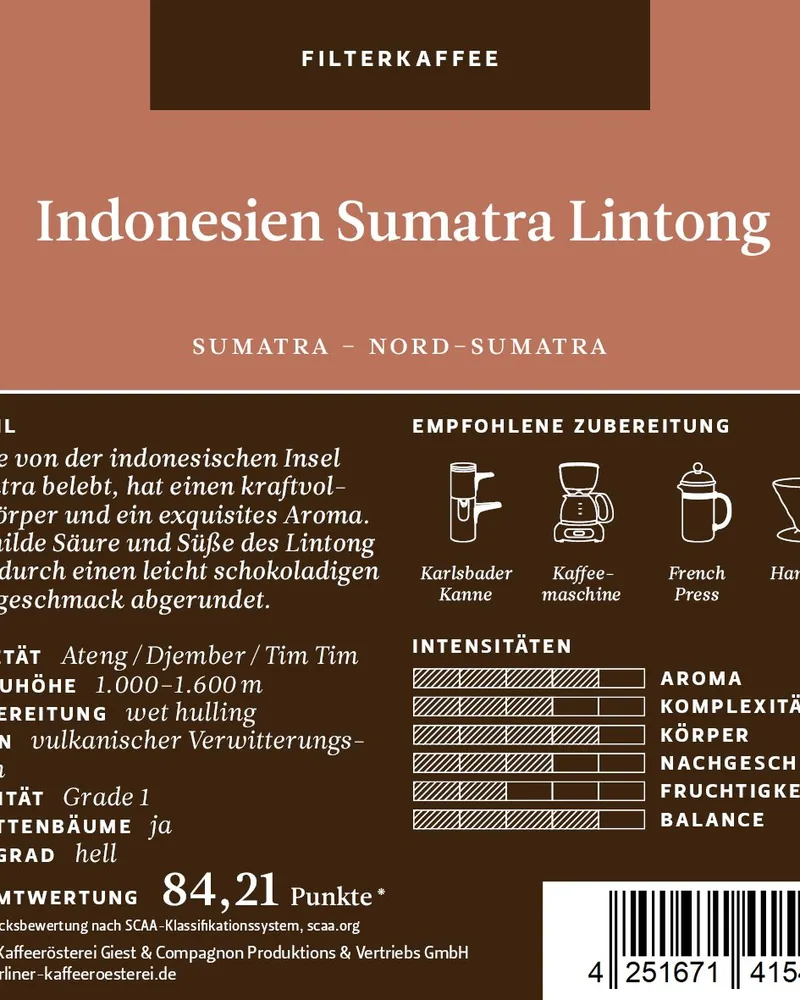
Berliner Kaffeerösterei
Indonesia Sumatra Lintong
7,25 $
VaaleaMiksi: IndonesiaSuklainen · Karamelli ja makeaSamanlainen hinta

Contrebande Bean
Deux Mondes
4,00 €
Miksi: IndonesiaSuklainen · Karamelli ja makeaSamanlainen hinta

Contrebande Bean
Deux Mondes Eco
3,30 €
Miksi: IndonesiaSuklainen · Karamelli ja makeaSamanlainen hinta
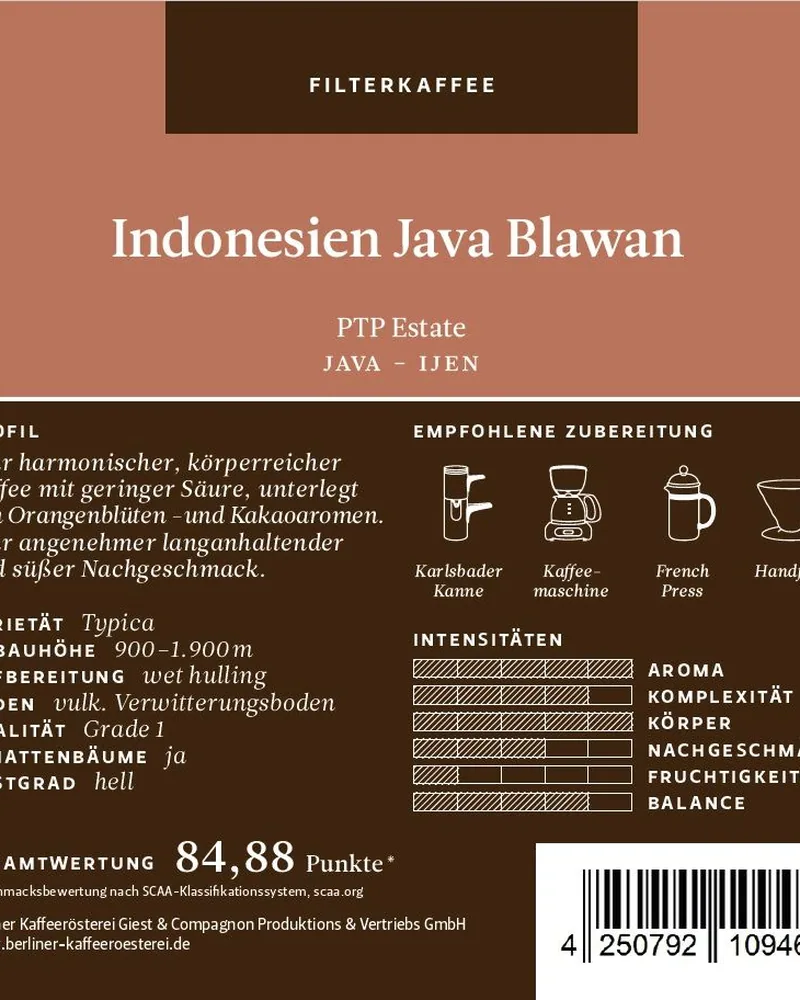
Berliner Kaffeerösterei
Indonesia Java Blawan
7,45 $
VaaleaMiksi: IndonesiaSuklainen · HedelmäinenSamanlainen hinta
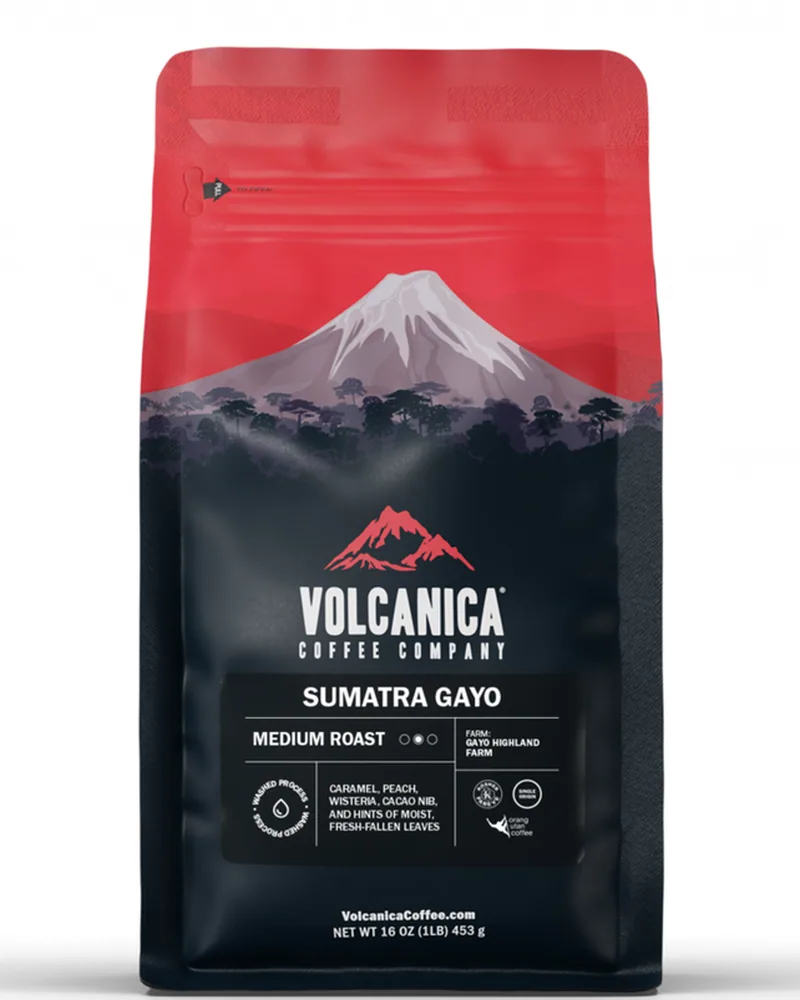
Volcanica Coffee
Sumatra Coffee Gayo
24,99 $
KeskipaahtoMiksi: IndonesiaSuklainen · Karamelli ja makea

Copan Coffee Roasters
SUMATRA MANDHELING
18,00 $
KeskipaahtoMiksi: IndonesiaSuklainen · Karamelli ja makea
PT'S Coffee
Takengon Atu Lintang Organic
19,00 $
KeskipaahtoMiksi: IndonesiaSuklainen · Karamelli ja makea
Backroom Coffee Roasters
Sumatra
16,50 $
KeskipaahtoMiksi: IndonesiaSuklainen · Karamelli ja makea