

 Presta costa rosters
El Salvador - Finca Los Naranjos - Anaerobic Honey
Apaneca, El Salvador
- Anaerobic
- Single Origin
El Salvador - Finca Los Naranjos - Anaerobic Honey is a coffee from El Salvador, sold by Presta costa rosters (Tucson, United States). Region: Apaneca. Process: anaerobic. Variety: Gesha, Pacas, Bourbon, Pacamara, SL-28, Typica. Price: $27.00 to $140.00, depending on the size. That is from $61.73 per kilo.
Not rated yet · Be the first to review it
from$27.00
≈ $61.73 / kg
You’ll be taken to the roaster’s shop to complete your purchase.
- Roaster based in
- United States
- Ship to
- United States · ✓ Yes, the roaster is based there
Sizes and prices
Description
Process: Anaerobic Honey
Variety: Gesha, Pacas, Bourbon, Pacamara, SL-28, Typica
Elevation: 1750 MASL
Region: Apaneca Farm: Finca Los Naranjos
Finca Los Naranjos began in 2015 as a hobby by a group of high school friends. When they acquired the 38.5-hectare farm, it had been abandoned for many years and was in a state of chaos. It was a challenge to transform a forgotten farm into a center that now employs more than 200 families in the surrounding communities. They went through many stages of learning along the way to make the dream of running a successful farm a reality. From here they hope to continue building on their progress to make Los Naranjos a well-known and respected farm that stands out in the world. Currently, the farm also boosts coffee appreciation and consumption through a tourist center called Entre Café Experience. Their coffee is 100% shade-grown with different species of shade trees native to the mountainous area. Their farm converges with the protected area of the mountains so they have native wildlife such as deer, cotuza, armadillo, toucans, parakeets, and squirrels, among others. Los Naranjos faces struggles seen across the industry. Their crops are no strangers to pests and diseases such as rust. However, they make many efforts to understand the soil and overall environment of their farm. By using soil studies to evaluate nutritional properties, they can make informed decisions to help their crops thrive. They apply 4-6 fertilizer doses depending on the soil study results and administer treatment for rust if needed. Weed maintenance is done manually with tools such as machete or cuma, so no chemicals are used. They thank their collaborators in this process. The results they've seen from this work wouldn't be possible without them. As part of their environmental protection practices, they take care of the groundwater through soil conservation work, curtains, water collection pits, and more. Harvest typically runs from January through March. Managers train the coffee pickers on how to cut the coffee cherry with the optimal degree of maturity for a suitable raw material. Before harvesting, areas of the farm are sampled through Brix measurements to best determine ideal ripeness. Picked coffee then heads to the mill where the following classifications are made ahead of processing:
From 0 to 20 degrees brix classification A = Processes: Full Washed or Semi-Washed
From 21 to 30 degrees brix AA or AAA classification = Processes: Honey, Natural, or Experimental
Country: El Salvador
Known as “the land of volcanoes,” El Salvador is the smallest Central American country (roughly the same size as New Jersey), but its reputation among specialty-coffee-growing regions has grown larger-than-life, especially since the early 2000s. While coffee was planted and cultivated here mostly for domestic consumption starting in the mid-1700s, it became a stable and significant crop over the next 100 years, notably increasing in national importance during the late 1800s, when the country’s indigo exports were threatened by the development and widespread marketability of synthetic dyes. As coffee grew in economic importance, different government programs designed to increase production through land, tax, and military exemption incentives created a small but strong network of wealthy landowners who gained control over the coffee market, in addition to the individual smallholders who were growing coffee as part of their subsistence farming and would sell their cherry to the larger estates or mills. By the late 1970s, coffee exports accounted for 50 percent of the GDP, but socioeconomic and political unrest hurled the country into civil war for more than a decade, and in the 1980s various land redistribution projects and agrarian reform disjointed the coffee industry and caused the market to decline. Lacking the resources to continue farming, producers abandoned their coffee farms, and many were left overgrown and unharvested for years until a peace agreement was reached in the 1990s. It is often said that the Cup of Excellence competition, which came to El Salvador in 2003, was the beginning of the new “wave” of interest in Salvadoran coffee, shining the first light on some of the special varieties the small country grows.
Questions about El Salvador - Finca Los Naranjos - Anaerobic Honey
Where does El Salvador - Finca Los Naranjos - Anaerobic Honey come from?
It comes from El Salvador. Region: Apaneca. Producer: Finca Los Naranjos. Altitude: 1,750 m. Variety: Gesha, Pacas, Bourbon, Pacamara, SL-28, Typica.
How is El Salvador - Finca Los Naranjos - Anaerobic Honey processed?
Processing method: anaerobic.
How much does El Salvador - Finca Los Naranjos - Anaerobic Honey cost?
Price: $27.00 to $140.00, depending on the size. That is from $61.73 per kilo. Prices come from the shop and can change; the shop has the current ones.
Where can I buy El Salvador - Finca Los Naranjos - Anaerobic Honey?
In the online shop of Presta costa rosters: the prices on this page link to it. Cafendo does not sell coffee itself.
Answers built from the shop’s own data and the Cafendo catalog.
Reviews
No reviews yet.
If you like this coffee, try these
Picked from other roasters for a shared origin, process, roast, tasting notes and price. Coffees that the same people saved or rated highly count the most.

Süssmund Kaffee
El Salvador - Finca El Salvador Direct Trade / Filterkaffee
€16.90
Why: El SalvadorAnaerobicSimilar price

Drop Coffee Roasters
Las Brumas, WFC, Anaerobic Natural SL28, El Salvador
SEK 25.95
Why: El SalvadorAnaerobicSimilar price

Proud Mary Coffee USA
LIMITED | EL SALVADOR | Los Bellotos | Bernardina | Anaerobic Honey Sunset
$38.95
Why: El SalvadorAnaerobicSimilar price

Williams & Johnson
El Carmen Anaerobic Natural Orange Bourbon, El Salvador | FILTER
£20.95
Why: El SalvadorAnaerobicSimilar price

Proud Mary coffee
El Salvador | Los Bellotos | Bernardina | Anaerobic Honey Sunset
A$31.95
Why: El SalvadorAnaerobicSimilar price

Crosby Coffee
El Salvador, Apaneca-Ilamatepec
£12.80
Why: El SalvadorAnaerobicSimilar price
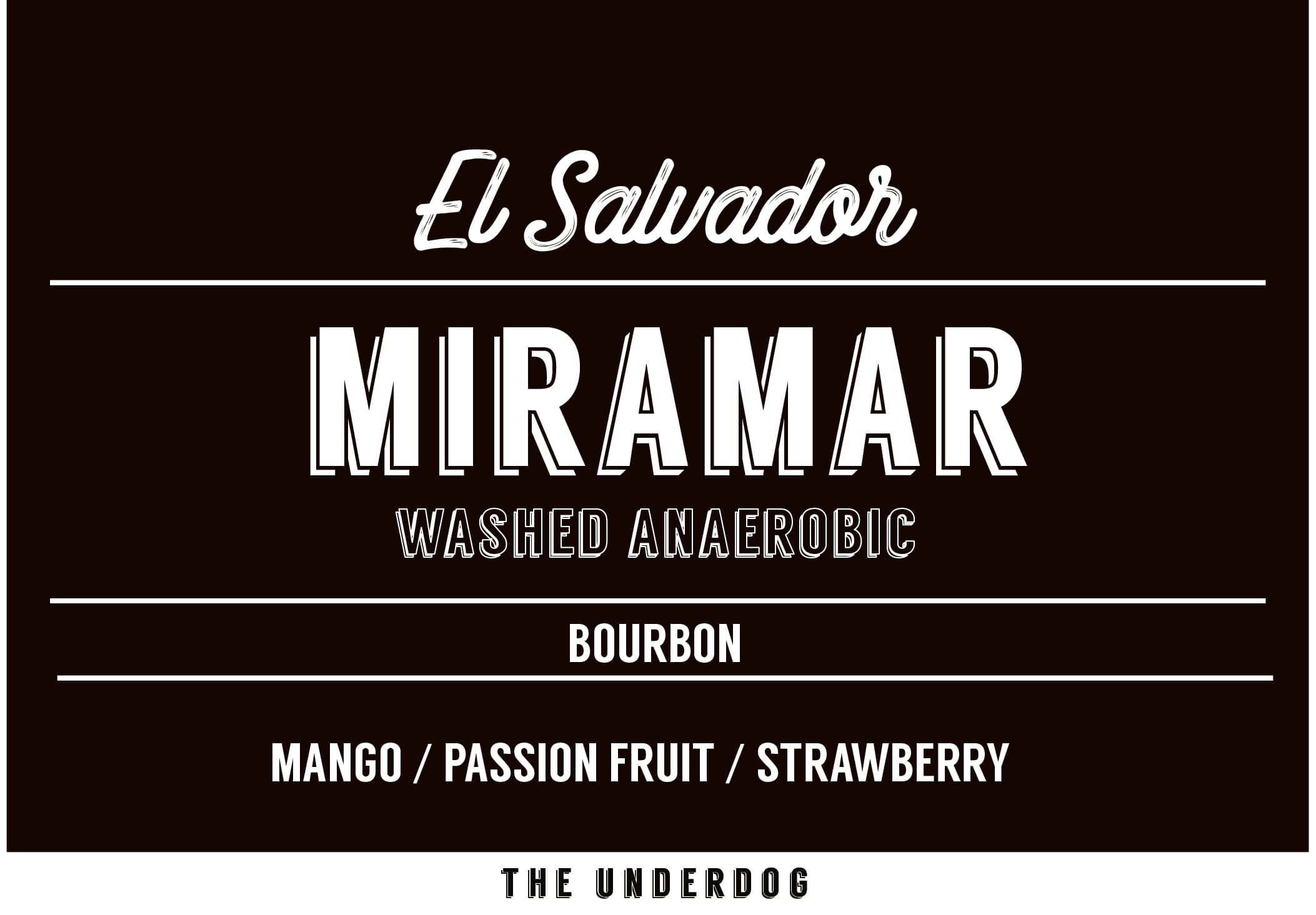
The Underdog
El Salvador, Miramar
€16.00
Why: El SalvadorAnaerobicSimilar price

Klatch
El Salvador Las Mercedes Pacamara Anaerobic Natural
$19.95
MediumWhy: El SalvadorAnaerobicSimilar price


