 Topeca Coffee
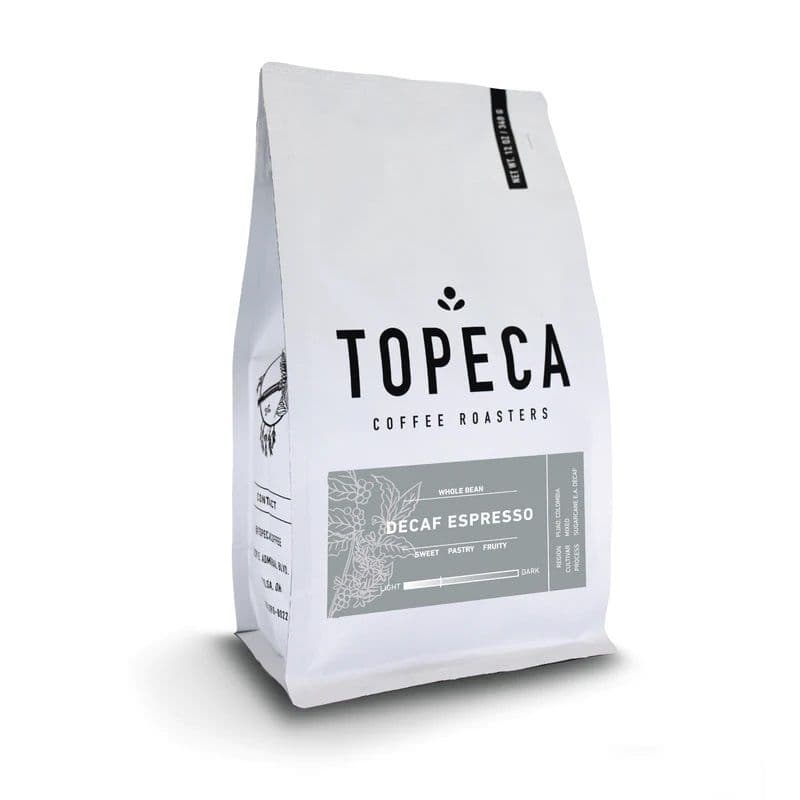
Decaf Espresso
- Roast Level: Light
- Decaffeinated Coffee
Not rated yet · Be the first to review it
from$13.60
≈ $35.00 / kg
Indicative price: the roaster’s shop has the current one.
You’ll be taken to the roaster’s shop to complete your purchase.
- Roaster based in
- United States
- Ship to
- United States · ✓ Yes, the roaster is based there
Taste profile
From the details listed by the roaster’s shop.
Tasting notes
- Sweet
- Pastry
- Fruity
- Roast LevelLight
- LightDark
- IntensityMild
- MildIntense
Sizes and prices
| Grind | Coffee Size | Per kg | Price |
|---|---|---|---|
| Whole Beans | 12oz | $39.98 | $13.60 |
| Medium Fine (Pourover) | 12oz | $39.98 | $13.60 |
| Drip | 12oz | $39.98 | $13.60 |
| Ground (French Press) | 12oz | $39.98 | $13.60 |
| Espresso | 12oz | $39.98 | $13.60 |
| Medium Fine (Pourover) | 2lb | $35.00 | $31.75 |
| Whole Beans | 2lb | $35.00 | $31.75 |
| Drip | 2lb | $35.00 | $31.75 |
Show all 10
| Grind | Coffee Size | Per kg | Price |
|---|---|---|---|
| Ground (French Press) | 2lb | $35.00 | $31.75 |
| Espresso | 2lb | $35.00 | $31.75 |
Description
The same as our wildly popular House Decaf, but roasted to produce an optimal balance of sweetness in espresso extraction.
First off, we source our decaf from Café Imports, whose producer partners are based in Colombia. They start by selecting high-quality Specialty grade coffees, grown by small producers. Then the coffee undergoes a direct-solvent-based decaffeination process using naturally derived Ethyl Acetate from sugar cane. This method is often referred to as the “Sugar Cane E.A. process.”
Sugar Cane E.A. processing starts by fermenting molasses derived from sugar cane to create ethanol (so basically rum). This alcohol is then mixed with acetic acid (vinegar), to create the compound ethyl acetate.
In Colombia, where sugar cane is readily available, it makes great economic sense to use this plentiful resource to complement the coffee industry. E.A. is also found in wine, beer, fruit, vegetables, and much other food and beverage.
When the coffee is received at the decaffeination plant, it is first submitted to a condition of water and steam. This elevates the moisture content in the seed and swells the interior porous structure in order to facilitate the extraction of the caffeine. It is at this point, that the bean experiences an E.A. wash, which molecularly binds with and dissolves the caffeine. The seeds are then cleaned with freshwater, followed by steam, to clean the innermost pours of the seed. Finally, the seeds are dried until reaching the moisture similar to what they had prior to the process. This method avoids excessive heat or pressure, which can radically disrupt a green coffee’s cellular structure, thus degrading the flavor quality of the coffee.
Out of all the processes, we find it to have the least impact on flavor quality. It is considered a safe to consume method, as after the cleaning/steaming/roasting process there is typically less than 1 part per million of E.A. residue left on the coffee. EA is only harmful to humans in excess of 400 parts per million.
Reviews
No reviews yet.
If you like this coffee, try these
Picked from other roasters for a shared origin, process, roast, tasting notes and price. Coffees that the same people saved or rated highly count the most.
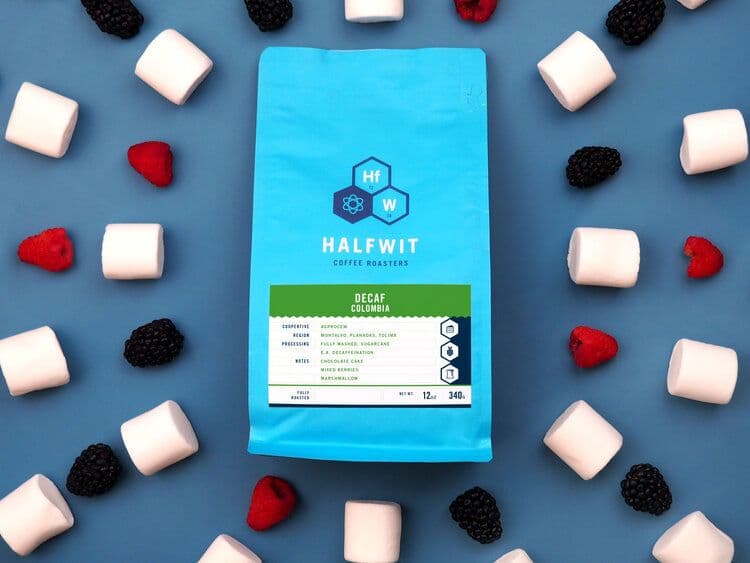
HalfWit Coffee Roasters
Decaf Colombia
$12.98
LightWhy: Caramel & sweet · FruitySimilar priceSame roast

Rum Baba Coffeeroasters
Decaf Light Roast
€10.90
LightWhy: Caramel & sweet · FruitySimilar priceSame roast

Salford Roasters
Kenya Decaf (Kericho County) Sugar Cane Process
£13.75
LightWhy: Caramel & sweet · FruitySimilar priceSame roast
Bridgehead Coffee
DARN TASTY DECAF
$15.57
MediumWhy: Caramel & sweet · FruitySimilar price
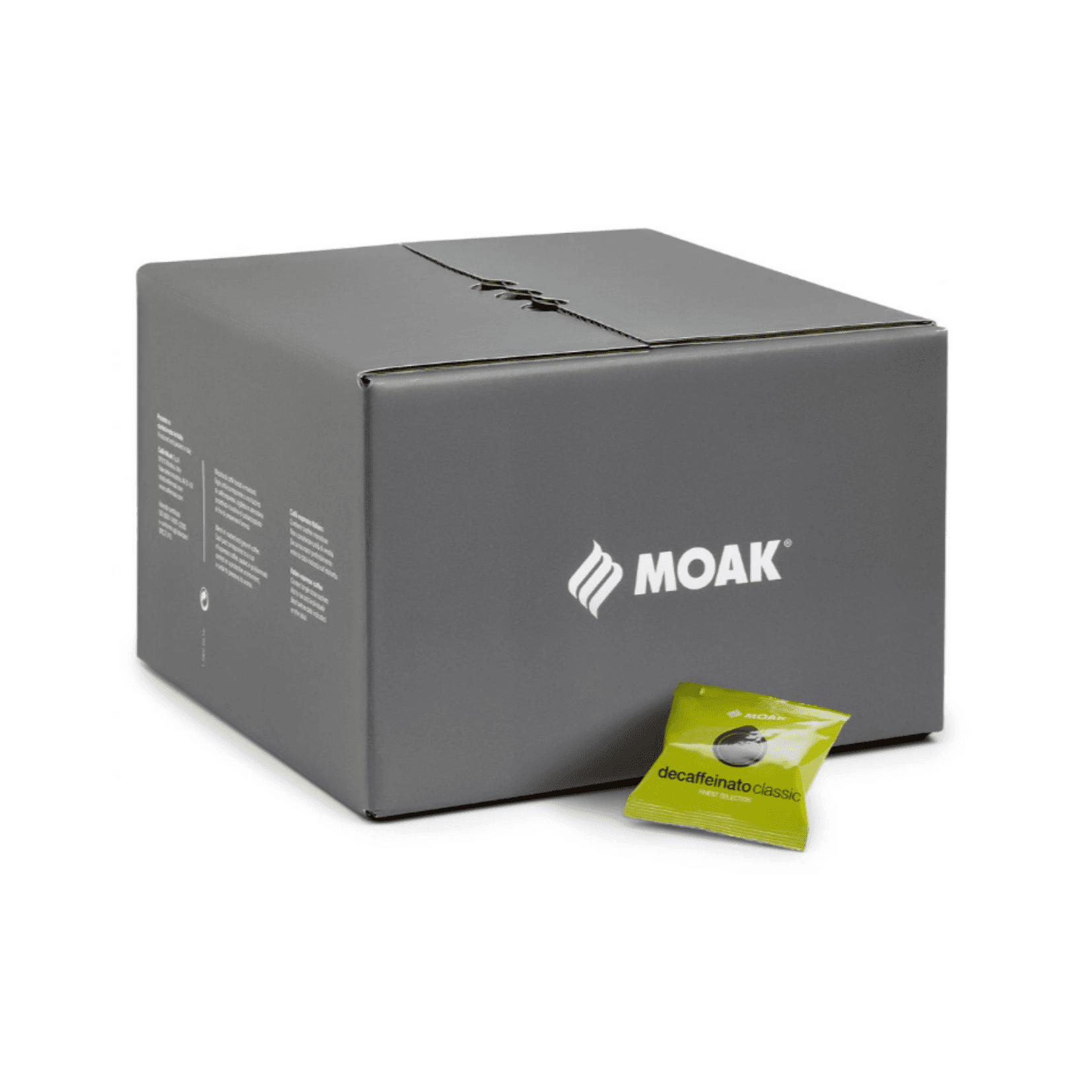
Caffè Moak
Decaffeinato Classic Cialde
$16.40
MediumWhy: Caramel & sweet · FruitySimilar price
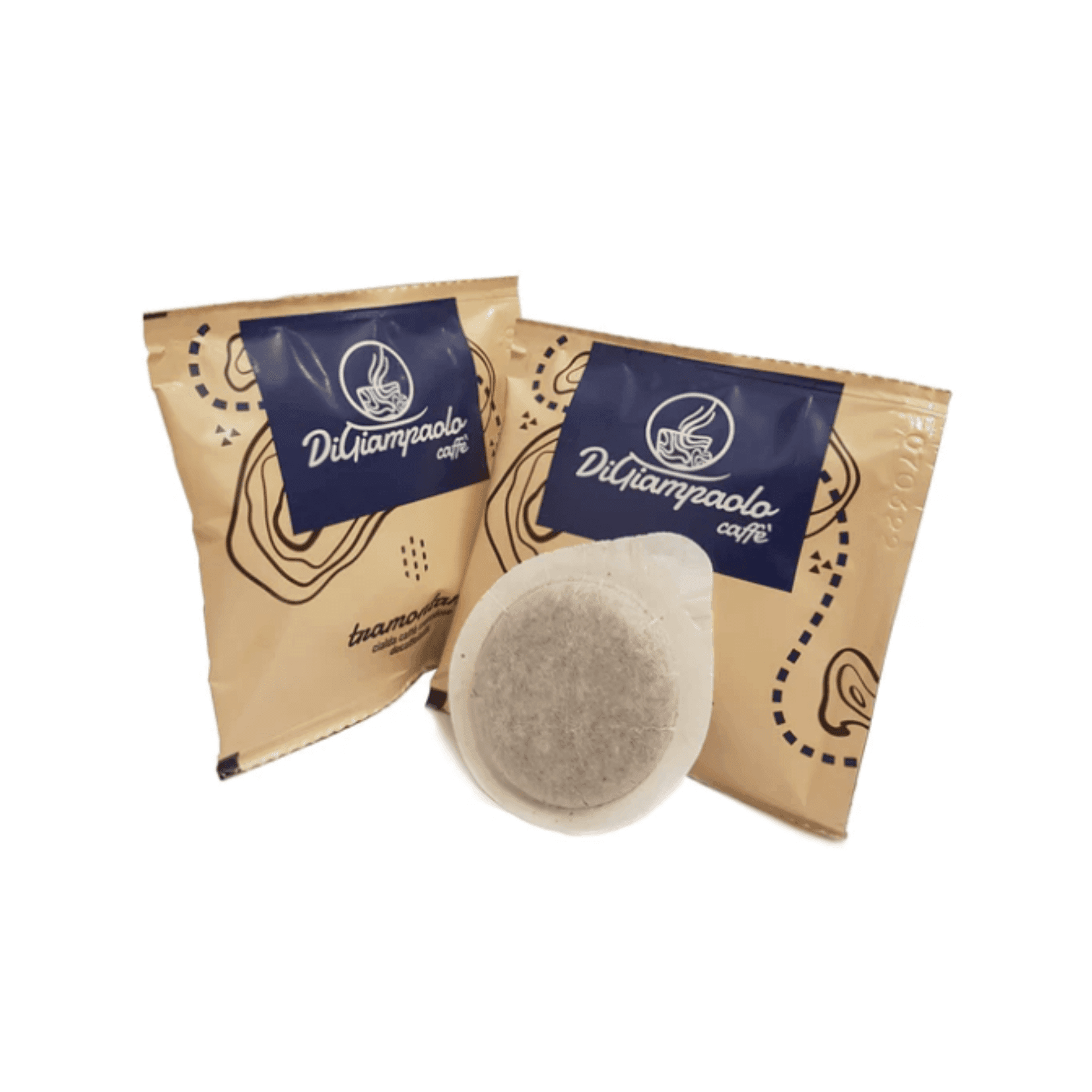
Di Giampaolo Caffè
TRAMONTANA caffè decaffeinato
$18.10
MediumWhy: Caramel & sweet · FruitySimilar price

MacBeans
Swiss Water™ Decaf Sumatra
£9.50
MediumWhy: Caramel & sweet · FruitySimilar price
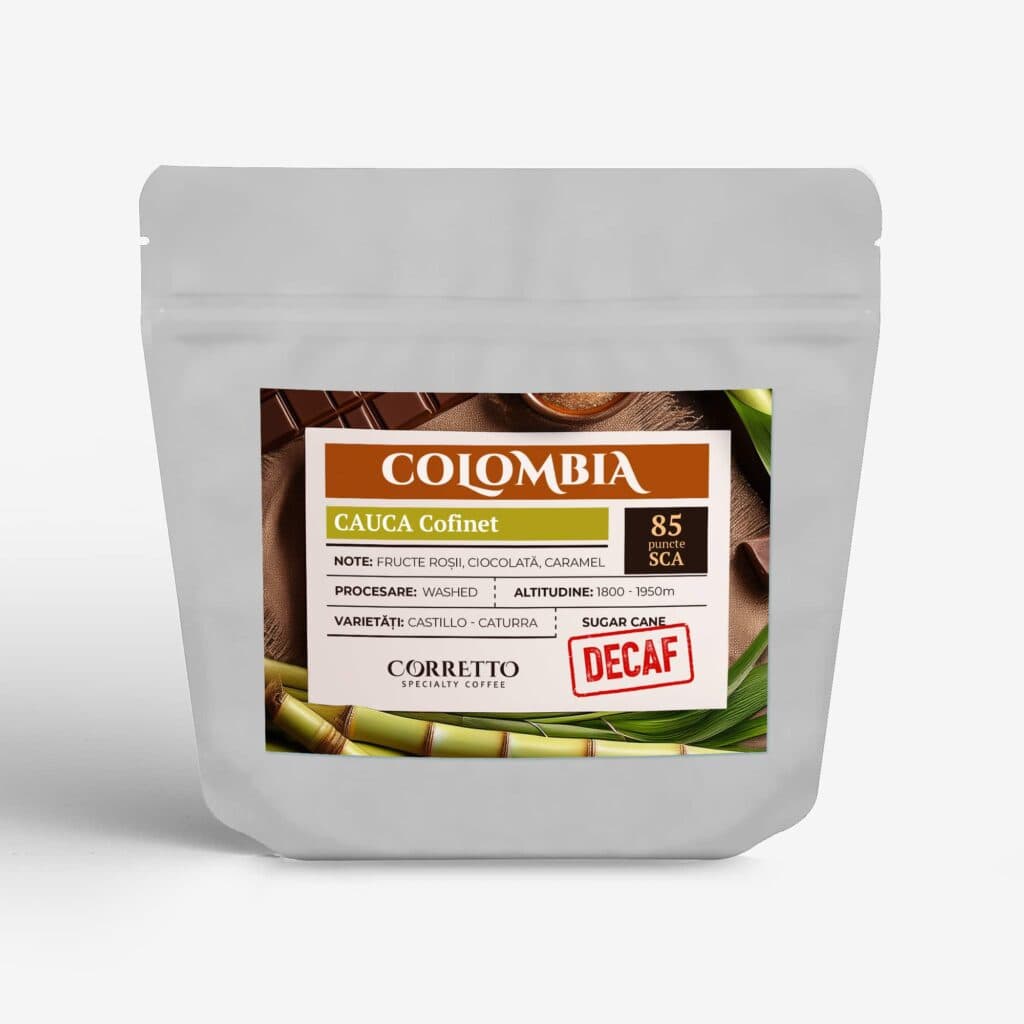
Caffè Corretto
de Specialitate Corretto, Columbia Cauca Cofinet, Decofeinizată, Washed, 100% Arabica, 85 puncte SCA
RON 55.00
MediumWhy: Caramel & sweet · FruitySimilar price