


Colombia | Cordillera
Colombia
- Roast Level: Light
- Single Origin
Colombia | Cordillera is a coffee from Colombia, sold by NANO Kaffee (Germany). Roast: light. The roaster’s tasting notes: red wine, strawberry, cacao nibs. Price: €5.00 to €57.80, depending on the size. That is from €67.20 per kilo.
Not rated yet · Be the first to review it
from€5.00
≈ €67.20 / kg
You’ll be taken to the roaster’s shop to complete your purchase.
- Roaster based in
- Germany
- Ship to
- United States · ✓ Yes, according to the roaster’s shop
Taste profile
From the details listed by the roaster’s shop.
Tasting notes
- Red wine
- Strawberry
- Cacao nibs
- Roast LevelLight
- LightDark
Sizes and prices
Description
High-quality specialty coffee – freshly roasted at the NANO KAFFEE roastery in Berlin Kreuzberg.
A product of the highest quality. Grown, sourced, and roasted in respectful harmony with people, nature, and the planet.
NANO KAFFEE – Conscious Coffee from Berlin.
• 100% Arabica
• dry processed (natural)
• anaerobically fermented
• whole beans
• Tasting notes: red wine, strawberry, cacao nibs
Stats
ORIGIN Colombia
REGION Tolima, Planadas
ALTITUDE 1,600–2,000 m above sea level
FARM/GROWER ASOCIACIÓN ASCI´SP
FAS 7.15 euros / kg
VARIETY Colombia, Pacamara, Caturra, Bourbon, Geisha
PROCESSING dry, anaerobic
TASTING NOTES red wine, strawberry, cacao nibs
Quick Info
This coffee arrived by sailboat, a relatively new practice and the lowest-carbon way to transport coffee (four times less CO2 emissions), with no impact on aquatic biodiversity. CORDILLERA was also grown sustainably in volcanic soil and hand-picked by Indigenous farmers who pool their strengths and knowledge in an association. The anaerobic processing is the icing on the cake; combined with our roast, it brings out notes of red wine, strawberry, and cacao nibs. It’s clear: from terroir to cup, CORDILLERA is something special.
• Volcanic soil (valuable minerals and trace elements, nutrients for a full flavor)
• Shade trees (protection from the sun and better soil for coffee plants, plus additional income for farmers)
• Small-farmer cooperative (stronger together and better protected)
• Innovative fermentation method (anaerobic)
* Unique: This coffee was transported aboard a sailing ship.
WIND — crossing the Atlantic on a two-masted schooner
It takes about three weeks for the wind to carry the coffee beans from Colombia to Europe by sailboat.
This relatively new mode of transport has many positive effects. There is no longer any dependence on oil prices or shipping monopolies, biodiversity in ports and at sea is not disturbed or damaged, and the transport has a low CO₂ footprint. Taking into account the ship’s construction-related CO₂ emissions, transport under sail produces four times fewer emissions over the ship’s entire lifetime than a conventional cargo ship.
Low-carbon coffee transported to us aboard a two-masted schooner—at first it sounds crazy, but ultimately it also feels traditional, dreamy, and somehow innovative after all.
FARMERS — an Indigenous community working together
The ASCI'SP cooperative belongs to the Indigenous NASA WE'SX community. It was formed at the initiative of a few coffee farmers who realized they could achieve more by joining forces. Together, they can assert their rights and strengthen their influence in the markets. This enables them to work for the well-being of the Indigenous community in their Resguardo (reservation, a self-governing zone with collective land ownership for an Indigenous community), while following their traditions and respecting Mother Earth.
ASCI'SP now has 79 members—23 coffee farmers and 56 farmers—from the seven villages that make up the Resguardo.
NATURE — perfect conditions, two harvests
The terroirs of Planadas and Gaitania, where this coffee comes from, are part of Nevado del Huila National Park and lie in the south of the Tolima region in the central mountain range of the Colombian Andes.
Tolima is at the heart of Colombia’s most important coffee-growing region and benefits from excellent geographic and climatic conditions: fertile volcanic soils, ideal altitudes, and a temperate tropical climate.
The coffee is grown high in the mountains by Indigenous farmers using sustainable, traditional methods. The varieties grown are well adapted to the climate and environment.
The plots are planted with a variety of crops, which results in healthier plants. Corn, beans, and staple crops also provide food for the farmers and additional sources of income.
Why is Colombia so special for coffee?
The country gets a lot of sunshine because of its proximity to the equator. Three branches of the Andes run through it, creating a variety of microclimates and providing nutrients from volcanic soil. Winds from the Pacific and Atlantic contribute to moderate temperatures. All this creates perfect climatic conditions for growing coffee and also results in two rainy seasons, which in turn lead to two harvest seasons (!)—a rarity in the coffee world.
IMPACT — coffee as a symbol of peace
In recent years, coffee in Tolima has become a driving force for change, boosting the local economy while helping to move away from an economy shaped by armed conflict.
Hundreds of associations and cooperatives have made coffee a springboard for improving living conditions. As Carlos Guillermo Ospina points out: “In southern Tolima, coffee has become a symbol cultivated not only by coffee farmers, but also by victims, Indigenous communities, and former combatants. Thanks to this crop, the community has grown closer and made an important contribution to peacebuilding.”
Cooperatives like these are important because people support one another. When coffee farmers in Colombia fall too deeply into poverty, they can quickly switch from growing coffee to growing coca. This naturally leads to dangerous dependencies, as they end up working with the drug mafia. When things get even worse, people fight for left-wing guerrillas, right-wing paramilitaries, or the drug mafia’s gunmen. Whoever it is, as long as there’s food for the day.
FLAVOR — a journey all the way to our cups
Colombia has been growing coffee since the early 19th century. Its coffee is known for its full body, lively acidity, and rich aftertaste.
The fertile volcanic soils provide the mineral foundation for developing complex flavors.
The ideal altitudes and temperate tropical climate allow the plants to flower beautifully and produce splendid coffee cherries.
The plots where the coffee is grown are too steep or too overgrown for large machinery, so the cherries are carefully hand-picked, selecting only the ripest ones.
They are then anaerobically fermented for 24 hours, enhancing their complexity and deepening their aromatic structure, before being dried.
Our roast creates a full body with red wine notes, lively acidity and strawberry sweetness, along with a more typical note of cacao nibs. Distinctive flavors that have made their way from an Indigenous community in cloud-covered mountains, across the Atlantic by sailboat, and all the way here to our cups. Impressive.
FORMAL FOOTNOTE
This coffee is usually certified organic. Unfortunately, the cooperative made a bit of a mess of the paperwork, so its organic certification has been revoked for one year.
We had a lab analysis done, which confirms that the coffee is of organic quality. However, we are not allowed to call it organic coffee.
-
High-quality specialty coffee – freshly roasted at the NANO KAFFEE roastery in Berlin Kreuzberg.
A product of the highest quality. Grown, sourced, and roasted in respectful harmony with people, plants, and the planet.
NANO KAFFEE – Conscious Coffee from Berlin.
Questions about Colombia | Cordillera
What does Colombia | Cordillera taste like?
The roaster’s tasting notes: red wine, strawberry, cacao nibs. Flavour groups: fruity and chocolate.
Where does Colombia | Cordillera come from?
It comes from Colombia.
What roast level is Colombia | Cordillera?
Roast level: light.
How much does Colombia | Cordillera cost?
Price: €5.00 to €57.80, depending on the size. That is from €67.20 per kilo. Prices come from the shop and can change; the shop has the current ones.
Where can I buy Colombia | Cordillera?
In the online shop of NANO Kaffee: the prices on this page link to it. According to its shop, it delivers to Germany, Austria, Belgium, Bulgaria, Canada, Czechia and 25 other countries. Cafendo does not sell coffee itself.
Answers built from the shop’s own data and the Cafendo catalog.
Reviews
No reviews yet.
If you like this coffee, try these
Picked from other roasters for a shared origin, process, roast, tasting notes and price. Coffees that the same people saved or rated highly count the most.

Docent Coffee
Epiphany
$9.00
MediumWhy: ColombiaChocolate · FruitySimilar price

Snowy Elk Coffee Co.
Moose Bell Espresso Sample
$7.50
MediumWhy: ColombiaChocolate · FruitySimilar price

Rothrock Coffee
Creekside Blend Coffee Beans Medium Roast Whole Bean, Medium Roast Coffee Beans, Specialty Coffee, Coffee Beans, 340g Bag – Rothrock Coffee
$0.00
LightWhy: ColombiaChocolate · FruitySame roast

Atomic Coffee Roasters
Colombia Huila
$17.50
LightWhy: ColombiaChocolate · FruitySame roast
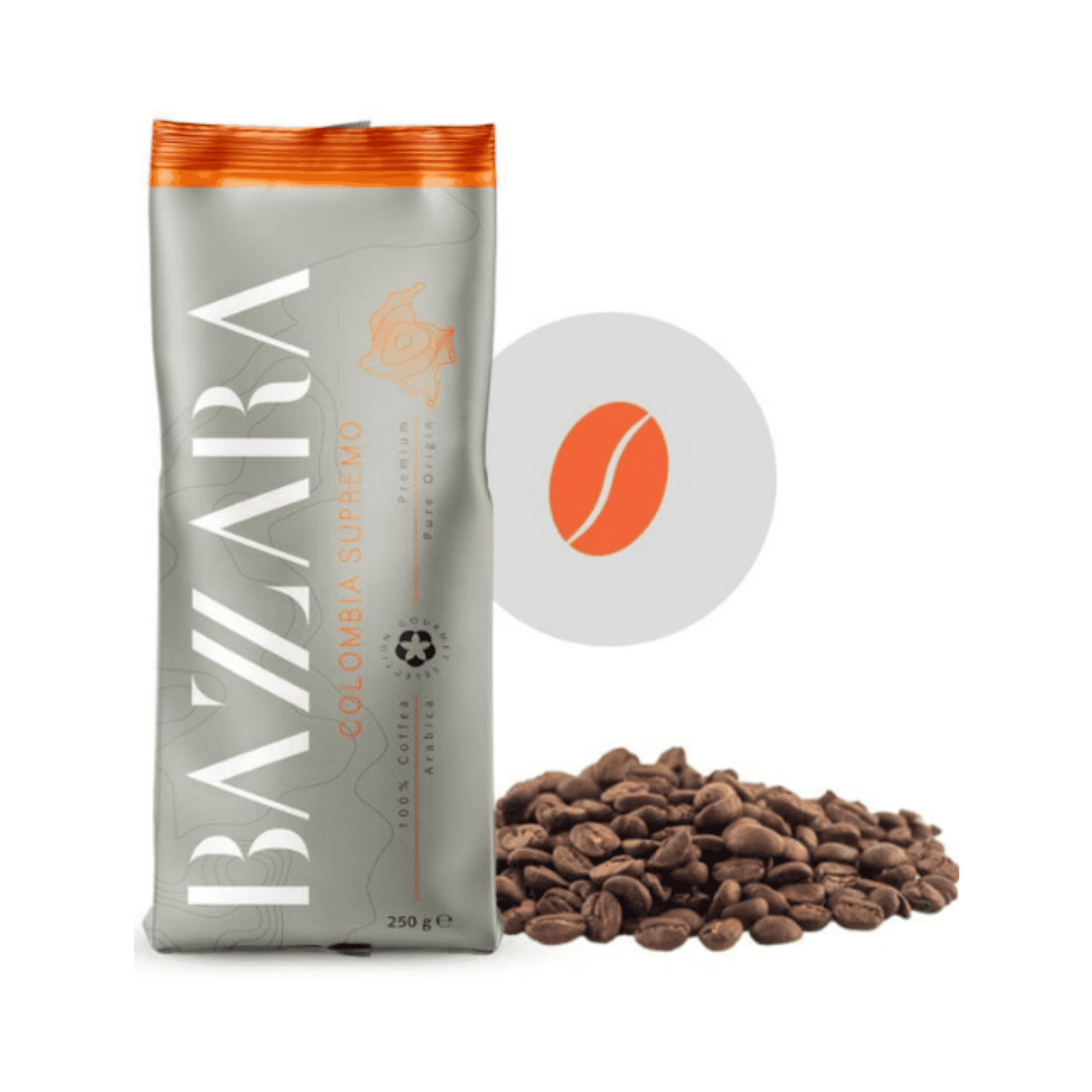
Bazzara
Colombia Supremo
$8.50
DarkWhy: ColombiaChocolate · FruitySimilar price
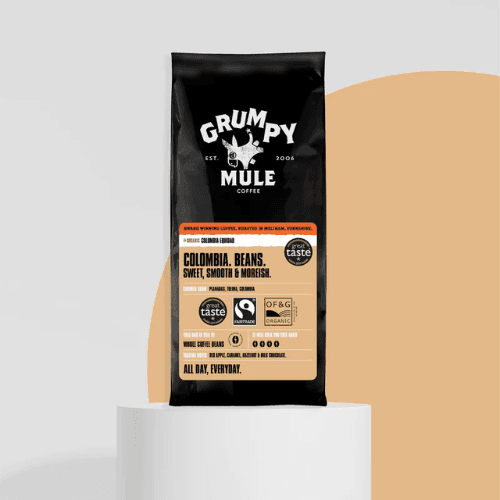
Grumpy Mule
COLOMBIA CAFE EQUIDAD COFFEE BEANS
$6.22
DarkWhy: ColombiaChocolate · FruitySimilar price

CAFESSI
Columbia Supremo – Cafessi
RON 48.50RON 63.90
LightWhy: ColombiaChocolate · FruitySame roast
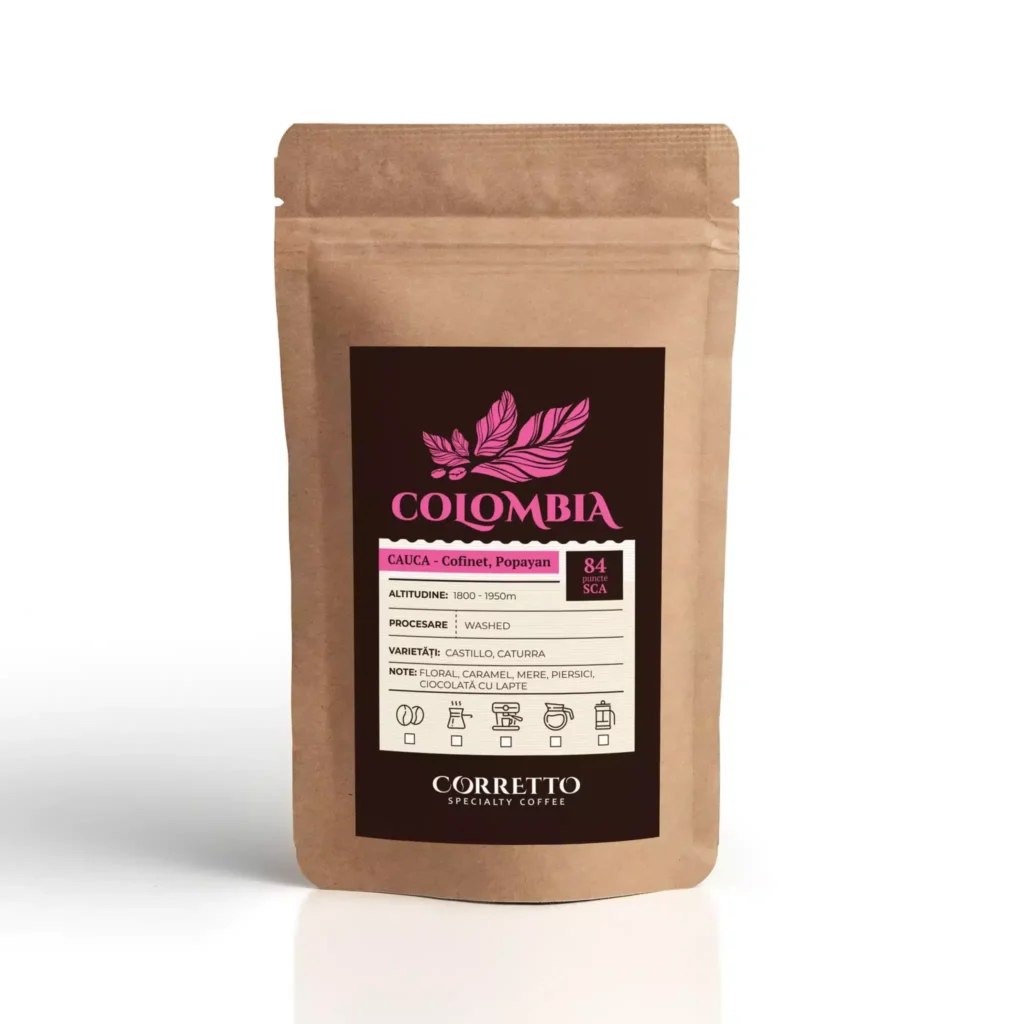
Caffè Corretto
de Specialitate Corretto, Columbia Cauca Popayan, Washed, 100% Arabica, 84 puncte SCA
RON 36.00
Why: ColombiaChocolate · FruitySimilar price


