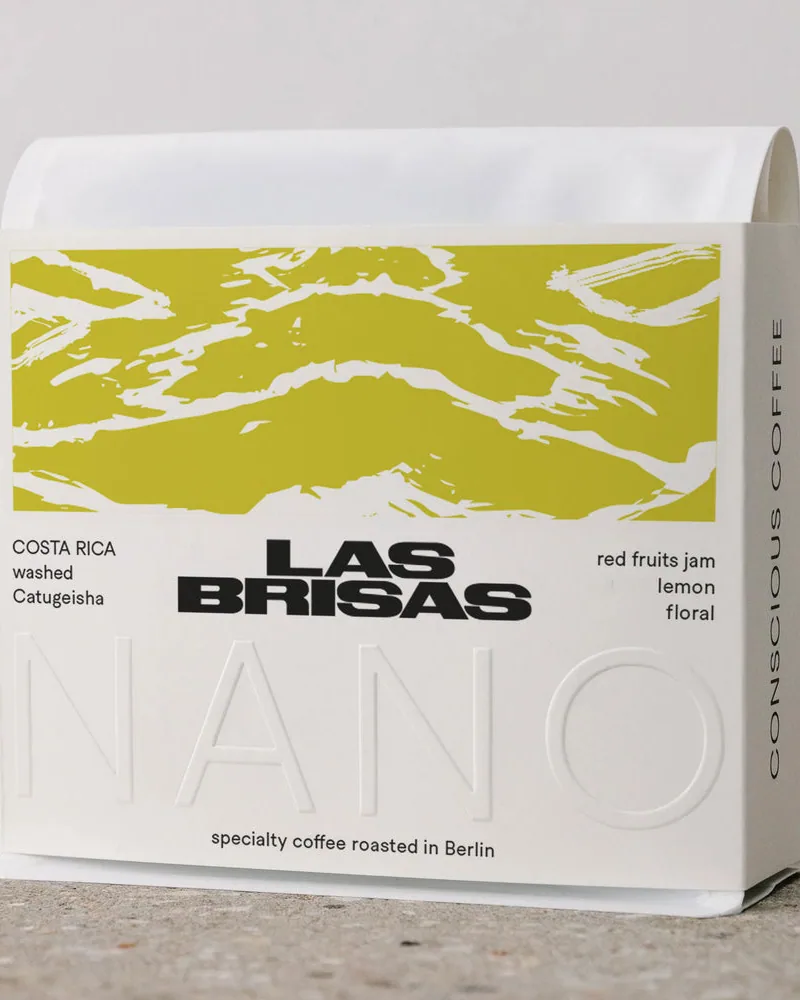
NANO Kaffee
Colombia | Cordillera
Colombia
- Ristningsgrad: Lys
- Single origin
Colombia | Cordillera er en kaffe fra Colombia, som sælges af NANO Kaffee (Tyskland). Ristning: lys. Risteriets smagsnoter: red wine, strawberry, cacao nibs. Pris: 5,00 € til 57,80 €, afhængigt af størrelsen. Det svarer til fra 67,20 € pr. kilo.
Endnu ikke bedømt · Vær den første til at anmelde den
fra5,00 €
≈ 67,20 € / kg
Du føres til risteriets webshop for at gennemføre dit køb.
- Risteri med base i
- Tyskland
- Levér til
- Danmark · ✓ Ja, ifølge risteriets webshop
Smagsprofil
Ud fra de oplysninger, risteriets webshop har angivet.
Smagsnoter
- Red wine
- Strawberry
- Cacao nibs
- RistningsgradLys
- LysMørk
Størrelser og priser
Beskrivelse
High-quality specialty coffee – freshly roasted at the NANO KAFFEE roastery in Berlin Kreuzberg.
A product of the highest quality. Grown, sourced, and roasted in respectful harmony with people, nature, and the planet.
NANO KAFFEE – Conscious Coffee from Berlin.
• 100% Arabica
• natural process
• anaerobically fermented
• whole beans
• Flavor notes: red wine, strawberry, cacao nibs
Stats
ORIGIN Colombia
REGION Tolima, Planadas
ALTITUDE 1,600–2,000 m above sea level
FARM/GROWER ASOCIACIÓN ASCI´SP
FAS 7.15 eur / kg
VARIETY Colombia, Pacamara, Caturra, Bourbon, Geisha
PROCESSING natural, anaerobic
FLAVOR NOTES red wine, strawberry, cacao nibs
Packaging note:
The product image shows the 250-g package. The 60-g and 1,000-g sizes come in coffee bags with a front label, without a sleeve
Quick Info
This coffee arrived by sailboat, a relatively new practice and the lowest-carbon method (four times less CO2 emissions), with no impact on aquatic biodiversity. CORDILLERA was also grown sustainably in volcanic soil and hand-picked by Indigenous farmers who pool their strength and knowledge in an association. The anaerobic process is the finishing touch; combined with our roasting, it brings out flavors of red wine, strawberry, and cacao nibs. Clearly, CORDILLERA is something special, from terroir to cup.
• Volcanic soil (valuable minerals and trace elements, nutrients for a full flavor)
• Shade trees (sun protection and better soil for coffee plants, plus additional income for farmers)
• Smallholder cooperative (stronger together and better protected)
• Innovative fermentation method (anaerobic)
* Unique: This coffee was transported by sailboat.
WIND — across the Atlantic on a two-masted sailing ship
It takes about three weeks for the wind to carry the coffee beans from Colombia to Europe by sailboat.
This relatively new mode of transportation has many positive effects. There is no longer any dependence on oil prices or shipping monopolies; biodiversity in ports and at sea is not disturbed or damaged, and the transport produces low CO₂ emissions. Taking into account the ship's construction footprint, transport under sail produces four times fewer emissions over the ship's entire lifetime than a conventional cargo ship.
Coffee transported with low CO₂ emissions by bringing it to us on a two-masted sailing ship—it sounds crazy at first, but in the end it's also traditional, dreamy, and somehow innovative.
FARMERS — an Indigenous community working together
The ASCI'SP cooperative is part of the NASA WE'SX Indigenous community. It was founded at the initiative of a few coffee farmers who realized that by joining forces, they could achieve more. Together, they can assert their rights and strengthen their influence in the markets. This enables them to work for the well-being of the Indigenous community in their Resguardo (reservation, a self-governing area with collective land ownership for an Indigenous community) and to follow their traditions and respect Mother Earth.
ASCI'SP now has 79 members—23 coffee farmers and 56 farmers—from the seven villages that make up the Resguardo.
NATURE — perfect conditions, two harvests
The terroirs of Planadas and Gaitania, where this coffee comes from, are part of Nevado del Huila National Park and lie in the south of the Tolima region in the central mountain range of the Colombian Andes.
Tolima is at the heart of Colombia's most important coffee-growing region and benefits from excellent geographical and climatic conditions: fertile volcanic soils, ideal altitudes, and a temperate tropical climate.
The coffee is grown high in the mountains by Indigenous farmers using sustainable, traditional methods that are environmentally friendly. The varieties grown are well adapted to the climate and environment.
The plots are planted with a diversity of crops, which results in healthier plants. Corn, beans, and staple foods also provide for the farmers' own needs and create additional sources of income.
Why is Colombia so special for coffee?
The country gets plenty of sunshine because of its proximity to the equator. Three branches of the Andes run through it, creating diverse microclimates and providing nutrients from volcanic soil. Winds from the Pacific and Atlantic help moderate temperatures. All of this creates perfect climatic conditions for growing coffee and also results in two rainy seasons, which in turn lead to two harvest seasons (!)—a rarity in the world of coffee.
IMPACT — coffee as a symbol of peace
In recent years, coffee in Tolima has become a driving force for change, boosting the local economy while enabling a shift away from an economy shaped by armed conflict.
Hundreds of associations and cooperatives have made coffee a springboard for improving living conditions. As Carlos Guillermo Ospina points out: “In southern Tolima, coffee has become a symbol grown not only by coffee farmers, but also by victims, Indigenous communities, and former combatants. Thanks to this crop, the community has grown closer and made an important contribution to peacebuilding.”
Cooperatives like these are important because people support one another. When coffee farmers in Colombia fall too deeply into poverty, they can quickly switch from growing coffee to growing coca. This naturally leads to dangerous dependencies, since they end up working with the drug mafia. When things get even worse, people fight for left-wing guerrillas, right-wing paramilitaries, or the gunmen of the drug mafia. It doesn't matter who for, as long as there's food for the day.
TASTE — a journey all the way to our cups
Colombia has been growing coffee since the early 19th century. Its coffee is known for its full body, lively acidity, and rich finish.
The fertile volcanic soils provide the mineral foundation for developing complex flavors.
The ideal altitudes and temperate tropical climate allow the plants to blossom beautifully and produce magnificent coffee cherries.
The plots where the coffee is grown are too steep or too overgrown for large machinery, so the cherries are carefully hand-picked, with only the ripest selected.
They are then anaerobically fermented for 24 hours, which increases complexity and deepens the aromatic profile, and finally dried.
Our roasting creates a full body with red wine notes, lively acidity and strawberry sweetness, as well as a more typical cacao nib note. Distinctive flavors that have made their way from an Indigenous community in cloud-covered mountains, across the Atlantic by sailboat, and all the way into our cups. Impressive.
FORMAL FOOTNOTE
This coffee is usually certified organic. Unfortunately, the cooperative made a bit of a mess of the paperwork, so its organic certification has been suspended for a year.
We had a lab analysis done, which states that the coffee is organic quality. However, we are not allowed to say that it is organic coffee.
-
High-quality specialty coffee – freshly roasted at the NANO KAFFEE roastery in Berlin Kreuzberg.
A product of the highest quality. Grown, sourced, and roasted in respectful harmony with people, plants, and the planet.
NANO KAFFEE – Conscious Coffee from Berlin.
Spørgsmål om Colombia | Cordillera
Hvordan smager Colombia | Cordillera?
Risteriets smagsnoter: red wine, strawberry, cacao nibs. Smagsgrupper: frugtig og chokolade.
Hvor kommer Colombia | Cordillera fra?
Den kommer fra Colombia.
Hvilken ristningsgrad har Colombia | Cordillera?
Ristningsgrad: lys.
Hvad koster Colombia | Cordillera?
Pris: 5,00 € til 57,80 €, afhængigt af størrelsen. Det svarer til fra 67,20 € pr. kilo. Priserne kommer fra webshoppen og kan ændre sig; webshoppen har de aktuelle.
Hvor kan jeg købe Colombia | Cordillera?
I webshoppen hos NANO Kaffee: priserne på denne side linker dertil. Ifølge webshoppen leverer den til Tyskland, Østrig, Belgien, Bulgarien, Canada, Tjekkiet og 25 andre lande. Cafendo sælger ikke selv kaffe.
Anmeldelser
Ingen anmeldelser endnu.
Hvis du kan lide denne kaffe, så prøv disse
Udvalgt blandt andre risterier ud fra fælles oprindelse, forarbejdning, ristning, smagsnoter og pris. Kaffe, som de samme personer har gemt eller bedømt højt, tæller mest.
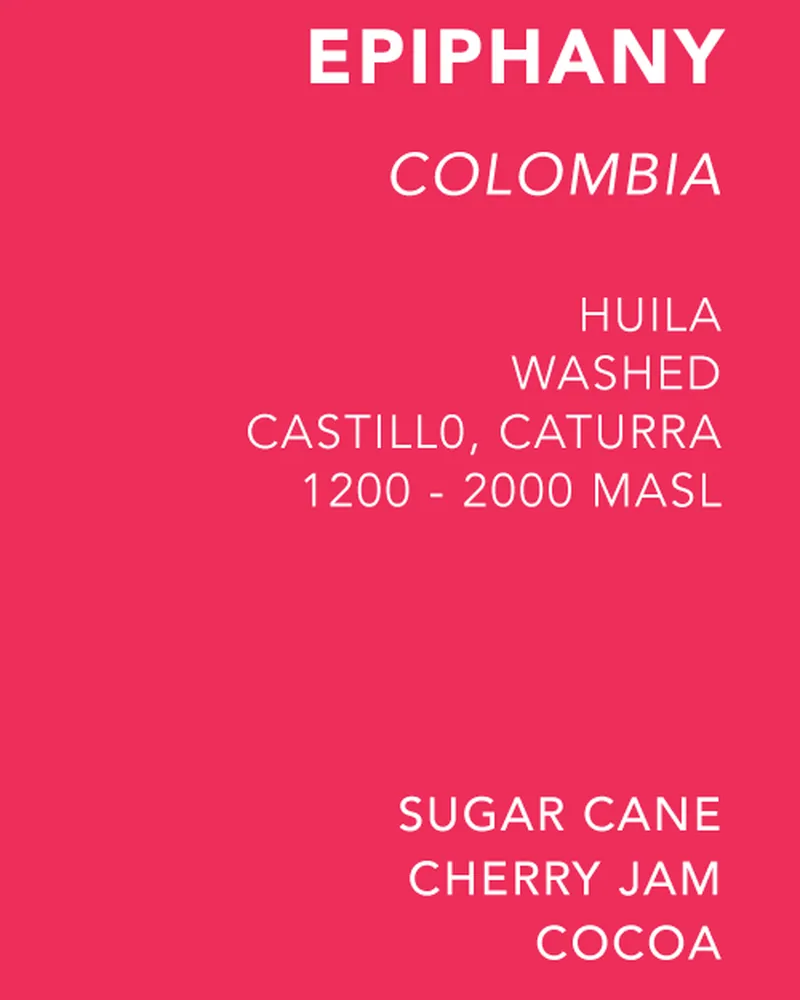
Docent Coffee
Epiphany
9,00 US$
MediumHvorfor: ColombiaChokolade · FrugtigLignende pris
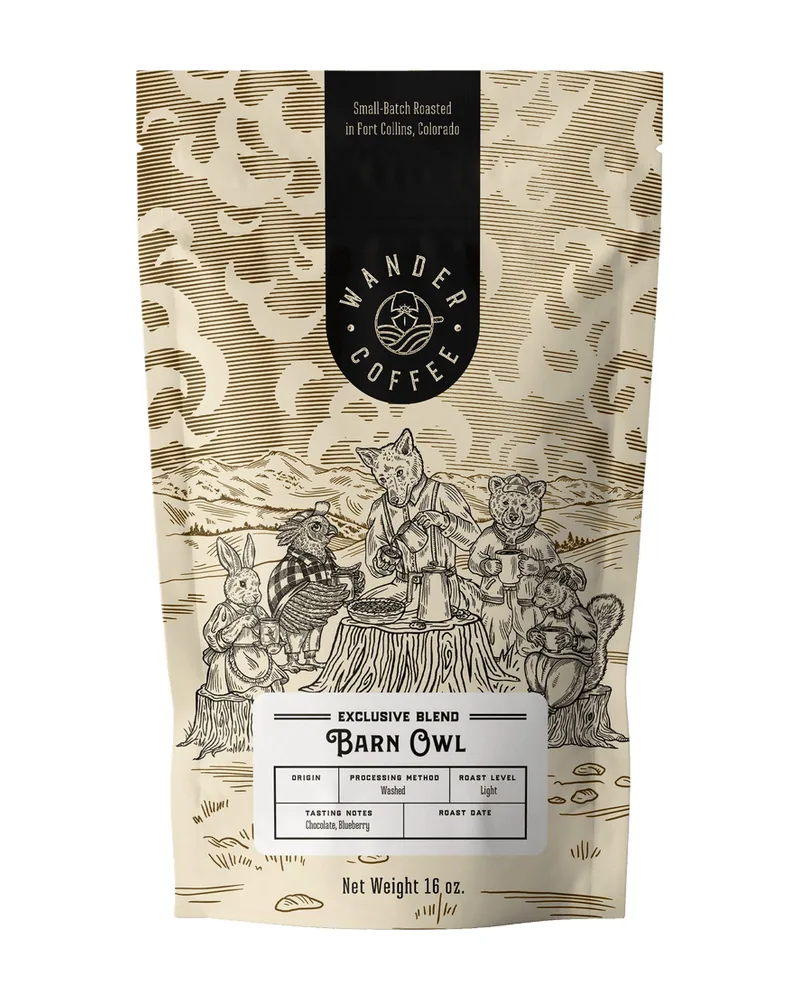
Wander Coffee
Barn Owl
7,00 US$
MediumHvorfor: ColombiaChokolade · FrugtigLignende pris
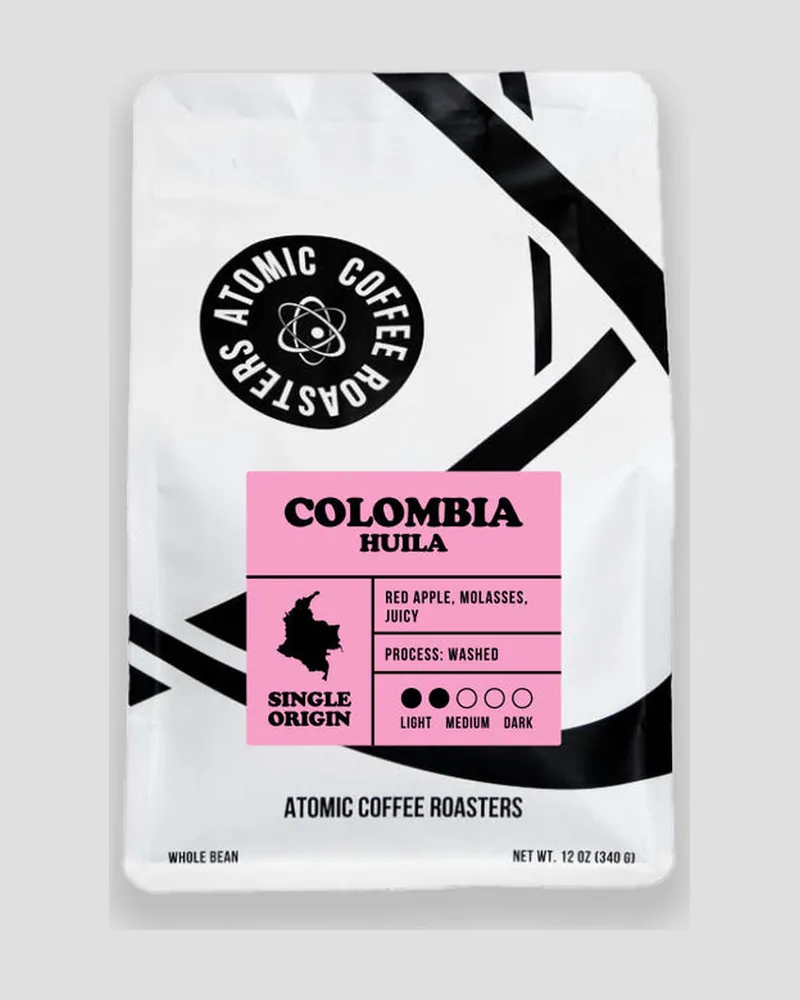
Atomic Coffee Roasters
Colombia Huila
17,50 US$
LysHvorfor: ColombiaChokolade · FrugtigSamme ristning
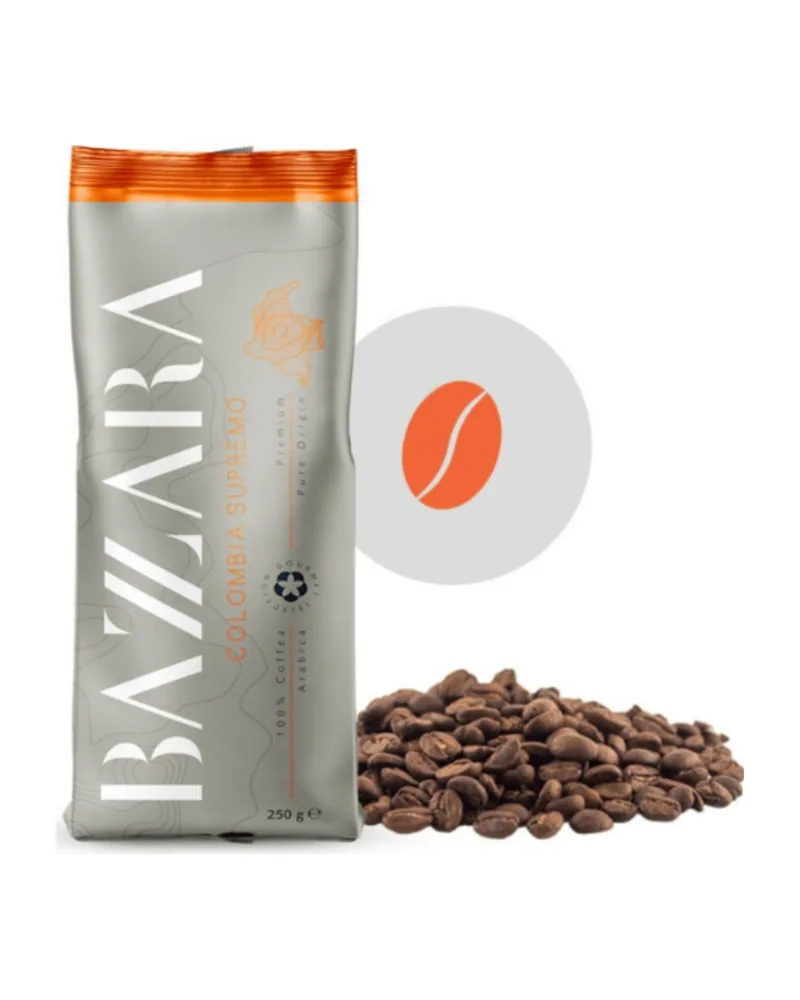
Bazzara
Colombia Supremo
8,50 US$
MørkHvorfor: ColombiaChokolade · FrugtigLignende pris
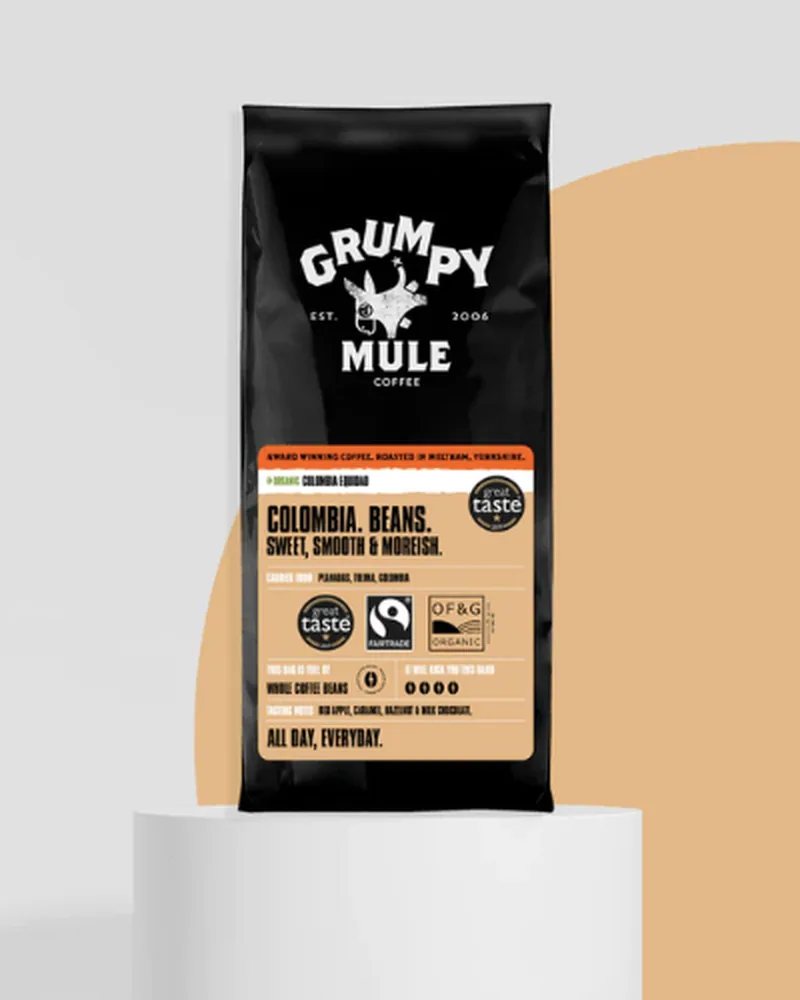
Grumpy Mule
COLOMBIA CAFE EQUIDAD COFFEE BEANS
6,22 US$
MørkHvorfor: ColombiaChokolade · FrugtigLignende pris
CAFESSI
Columbia Supremo – Cafessi
53,90 RON63,90 RON
LysHvorfor: ColombiaChokolade · FrugtigSamme ristning
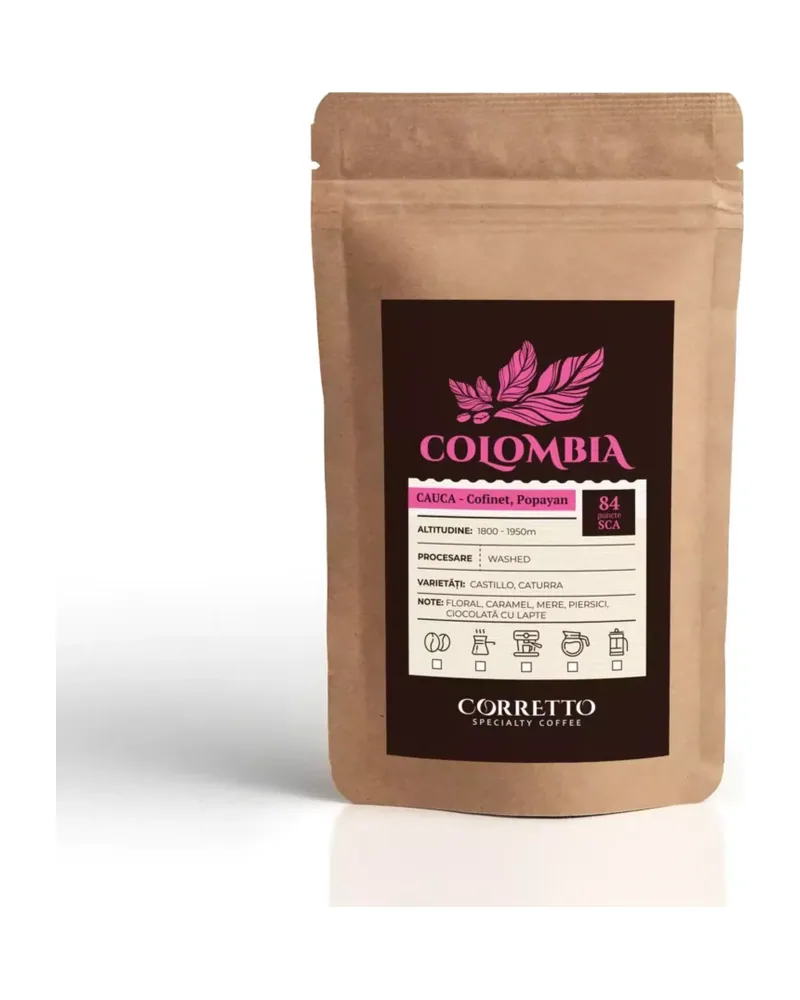
Caffè Corretto
de Specialitate Corretto, Columbia Cauca Popayan, Washed, 100% Arabica, 84 puncte SCA
36,00 RON
Hvorfor: ColombiaChokolade · FrugtigLignende pris
Docent Coffee
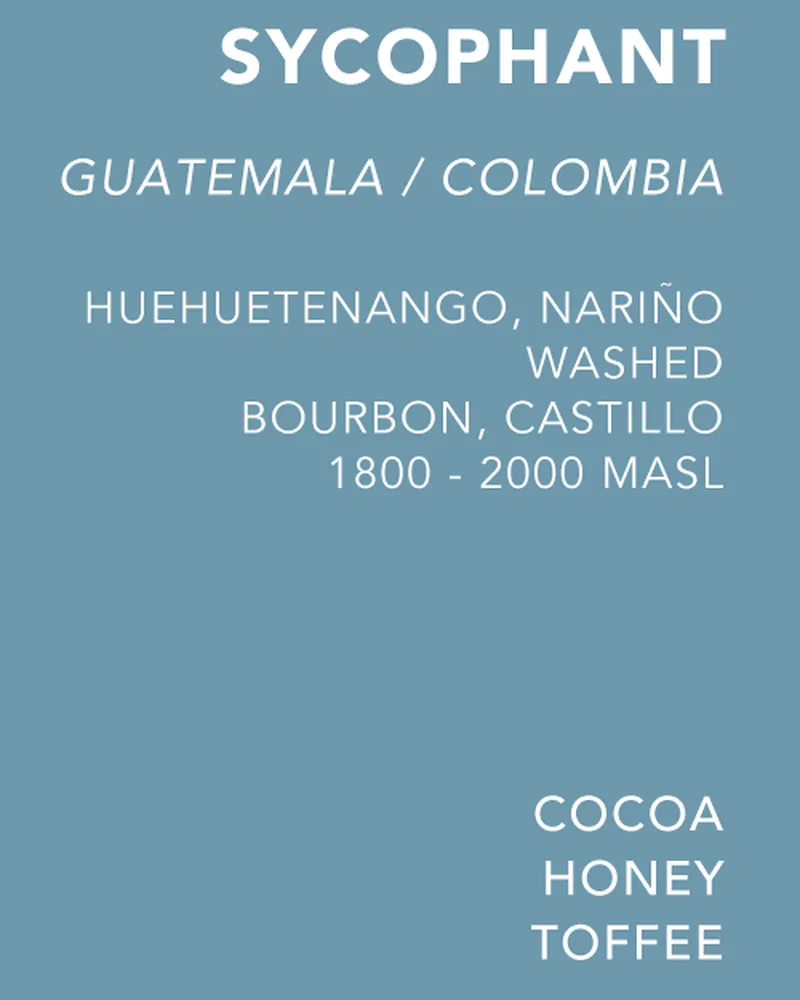
Sycophant
9,00 US$
MørkHvorfor: ColombiaChokolade · FrugtigLignende pris