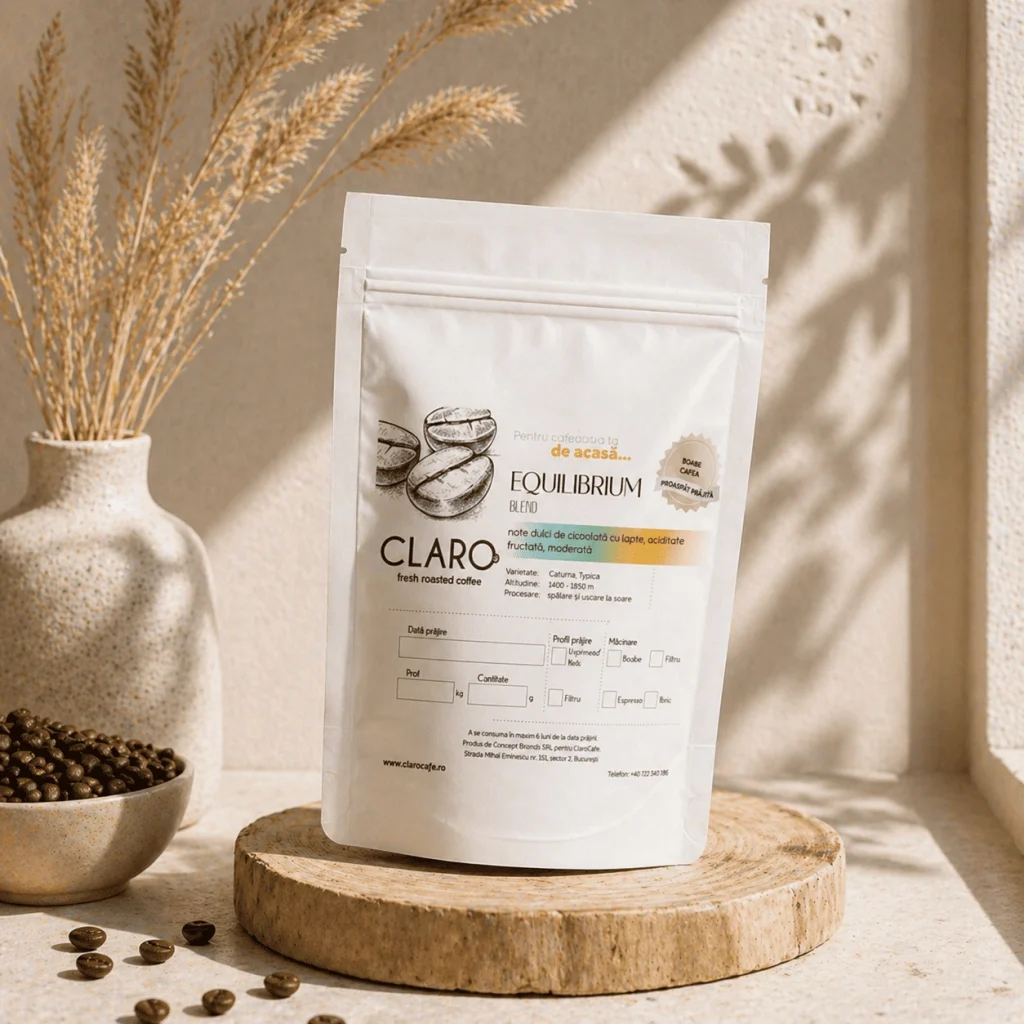
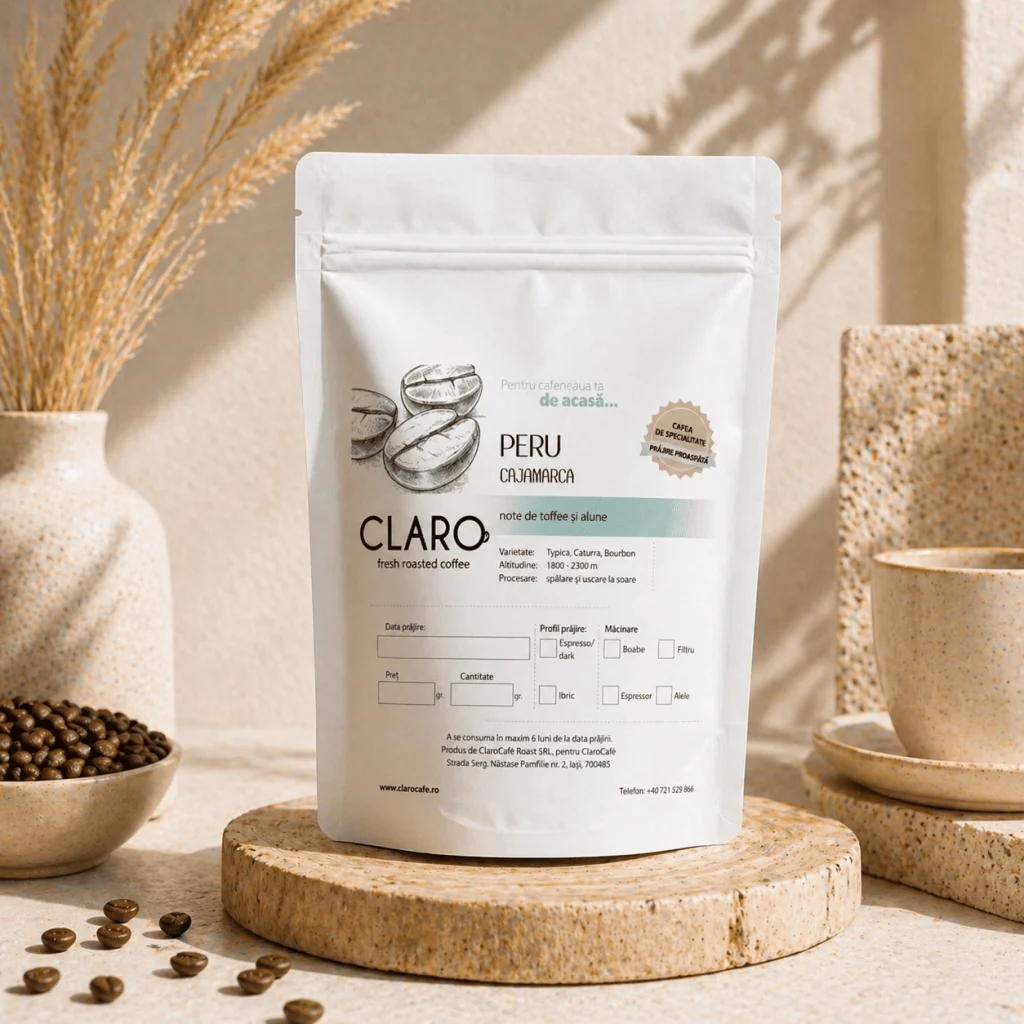
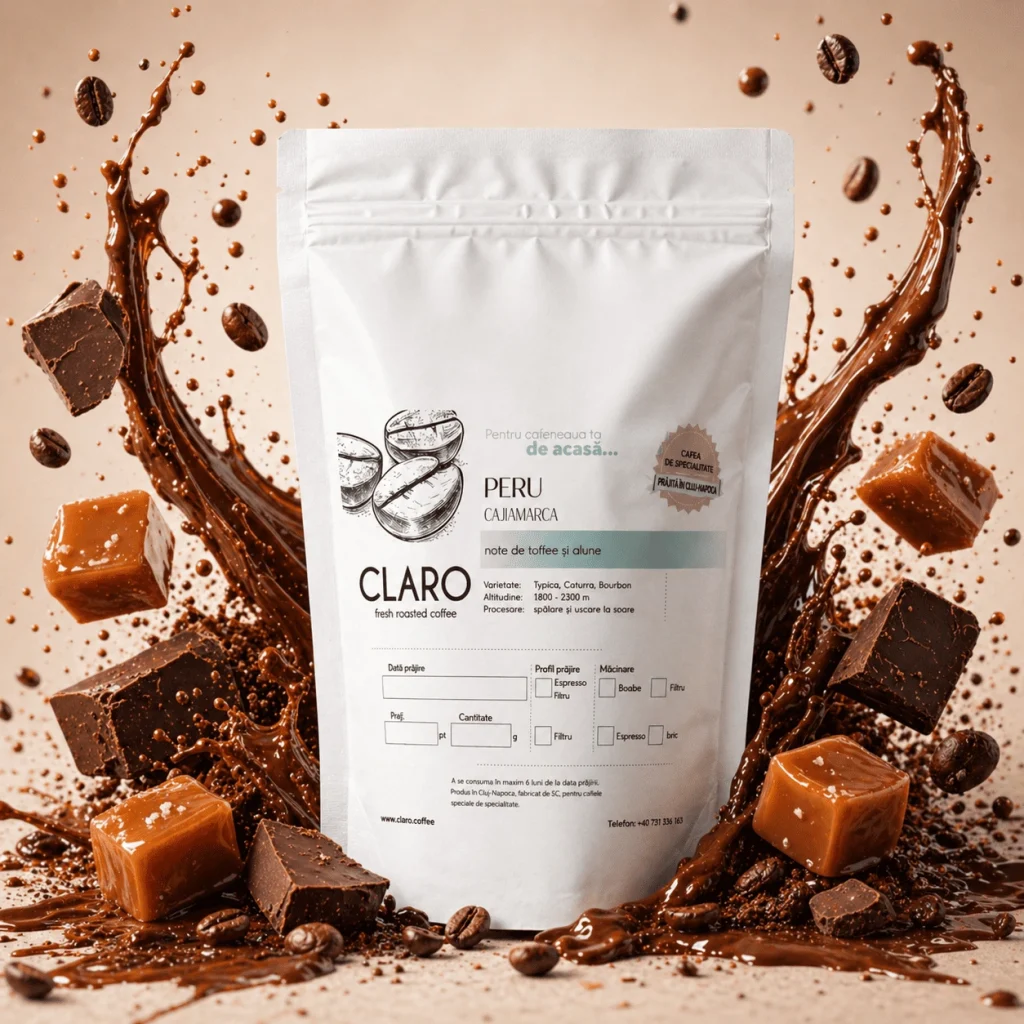
Peru Cajamarca
Peru
- Single Origin
Not rated yet · Be the first to review it
fromRON 50.00
≈ RON 185.00 / kg
You’ll be taken to the roaster’s shop to complete your purchase.
- Roaster based in
- Romania
- Ship to
- United States · Check on the roaster’s shop
Toffee sweetness, notes of hazelnut and chocolate. Specialty coffee scoring 87.25 points from Cajamarca, grown between 1,600 and 2,200 m — creamy, balanced, and forgiving to brew.
Sizes and prices
| Grind | Roast profile | Coffee Size | Per kg | Price |
|---|---|---|---|---|
| Whole Beans | Omniroast | 250g | RON 200.00 | RON 50.00 ↗ |
| Ground-Espresso | Omniroast | 250g | RON 200.00 | RON 50.00 ↗ |
| Ground-Filter | Omniroast | 250g | RON 200.00 | RON 50.00 ↗ |
| Ground (French Press) | Omniroast | 250g | RON 200.00 | RON 50.00 ↗ |
| Ground (Ibrik) | Omniroast | 250g | RON 200.00 | RON 50.00 ↗ |
| Mokapot | Omniroast | 250g | RON 200.00 | RON 50.00 ↗ |
| Whole Beans | Omniroast | 500g | RON 194.00 | RON 97.00 ↗ |
| Ground-Espresso | Omniroast | 500g | RON 194.00 | RON 97.00 ↗ |
Show all 18
| Grind | Roast profile | Coffee Size | Per kg | Price |
|---|---|---|---|---|
| Ground-Filter | Omniroast | 500g | RON 194.00 | RON 97.00 ↗ |
| Ground (French Press) | Omniroast | 500g | RON 194.00 | RON 97.00 ↗ |
| Ground (Ibrik) | Omniroast | 500g | RON 194.00 | RON 97.00 ↗ |
| Mokapot | Omniroast | 500g | RON 194.00 | RON 97.00 ↗ |
| Whole Beans | Omniroast | 1kg | RON 185.00 | RON 185.00 ↗ |
| Ground-Espresso | Omniroast | 1kg | RON 185.00 | RON 185.00 ↗ |
| Ground-Filter | Omniroast | 1kg | RON 185.00 | RON 185.00 ↗ |
| Ground (French Press) | Omniroast | 1kg | RON 185.00 | RON 185.00 ↗ |
| Ground (Ibrik) | Omniroast | 1kg | RON 185.00 | RON 185.00 ↗ |
| Mokapot | Omniroast | 1kg | RON 185.00 | RON 185.00 ↗ |
Description
Hurry! The offer ends in:
Specialty coffee
Peru Cajamarca brings toffee sweetness and notes of hazelnut to your cup
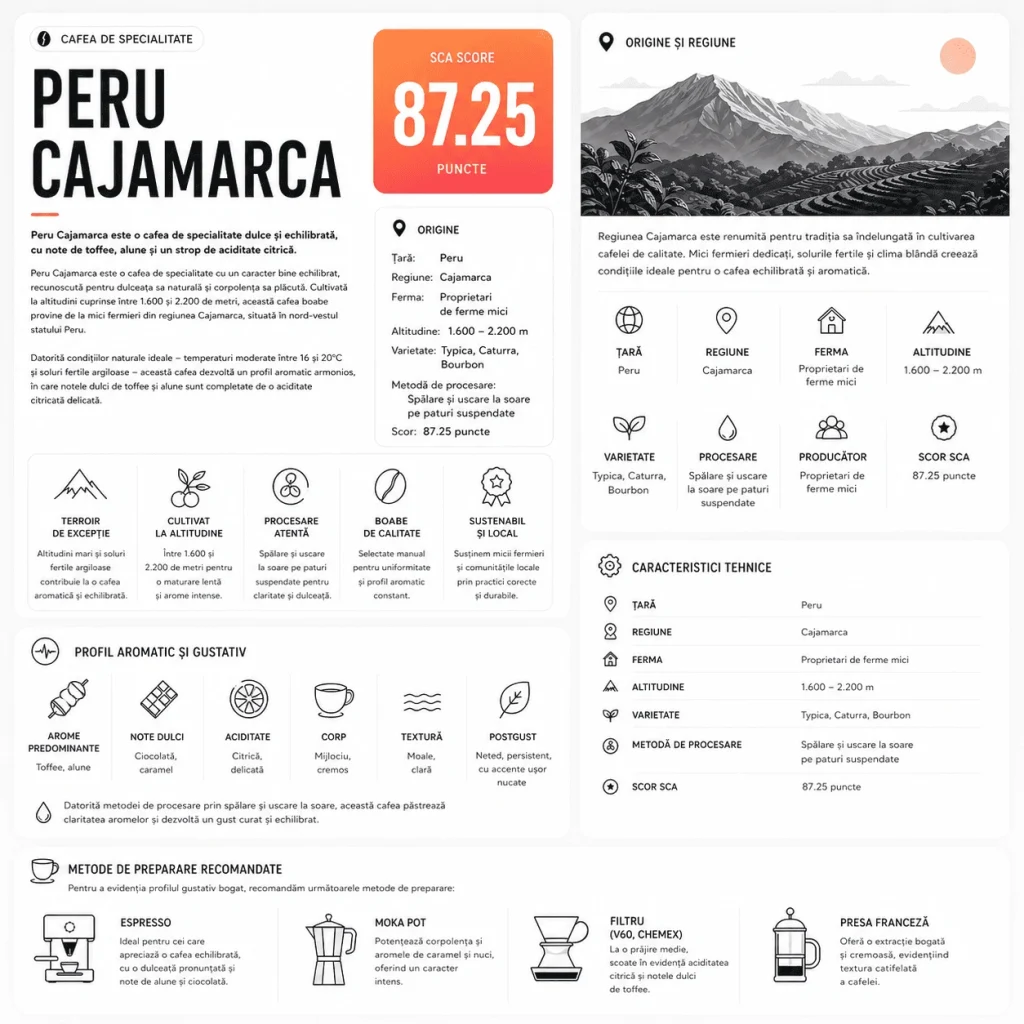
Peru Cajamarca is a specialty coffee with a classic, sweet profile. Toffee, hazelnut, chocolate, and caramel come together in a rounded cup with a medium, creamy body. Its citrus acidity is delicate, and the finish is smooth and lingering, with subtle nutty notes.
Its forgiving extraction makes it suitable for everyday brewing. The balanced profile holds up even when the grind or dose needs a few small adjustments. In an espresso machine, the sweet notes come through in both straight espresso and cappuccino or latte.
It comes from Cajamarca in northwestern Peru, where smallholder farmers organized in a cooperative grow it at elevations between 1,600 and 2,200 meters. It scores 87.25 points on the SCA scale, and its washed processing and sun-drying on raised beds contribute to its flavor clarity.
At Claro Cafe, we roast it in Romania as an omniroast. It is available in 250 g, 500 g, and 1,000 g bags, whole bean or ground to order, depending on your brewing method.
Cajamarca, Peru
1,600–2,200 m
Washed, sun-dried
SCA score: 87.25 points
Coffee character
What makes it special
Classic, sweet profile
Toffee, hazelnut, chocolate, and caramel in a rounded cup.
Delicate citrus acidity
Subtle citrus notes keep the flavor balanced.
Medium, creamy body
A smooth, velvety texture that supports the sweet notes.
Smooth, lingering finish
Subtle nutty notes that continue after the last sip.
Forgiving extraction
Consistent, enjoyable flavor without requiring very precise adjustments.
Also great with milk
Toffee, hazelnut, and chocolate pair beautifully with milk.
SCA score of 87.25 points
Origin coffee grown between 1,600 and 2,200 m.
Smallholder farmers in a cooperative
Farms in Cajamarca with shared access to processing and markets.
Traceability
Origin and technical specifications
Peru, the producer no one talks about
Peru is South America’s third-largest coffee producer, after Brazil and Colombia—and at the same time, the least known of the three. It doesn’t have Colombia’s reputation or Brazil’s volume, but it does have something few countries can claim: production dominated by smallholder farmers, at high elevations, with very little chemical intervention. The reason isn’t ideological, but practical. Farms are small and remote, at high elevations, and pesticides and fertilizers are expensive and difficult to transport there. As a result, Peru has almost naturally become one of the world’s leading sources of coffee grown without chemicals—a position other countries have had to build deliberately.
Cooperatives and why they matter
A farmer with two hectares at 2,000 meters can’t buy processing equipment, access international markets, or negotiate a fair price. On their own, they sell their crop to intermediaries at whatever price they’re offered. Farmers in Cajamarca are organized into cooperatives that completely change the equation: shared processing infrastructure, quality control, direct access to buyers, and, as a result, significantly better prices. The cooperative is why coffee from farms of just a few hectares can score 87.25 points and reach the shelves of European roasters.
Cajamarca
The Cajamarca region in northwestern Peru has a rare microclimate: steady temperatures between 16 and 20°C and fertile clay soils. The narrow temperature range and high elevation slow the ripening of coffee cherries, allowing the beans to accumulate sugars gradually—hence the natural sweetness that defines the cup.
Technical details
- Country of origin
- Peru
- Region
- Cajamarca (northwest)
- Farm
- Smallholder farms, organized in a cooperative
- Altitude
- 1,600–2,200 meters
- Varieties
- Typica, Caturra, Bourbon
- Processing method
- Washed and sun-dried on raised beds
- SCA score
- 87.25 points
- Roast profile
- Omniroast (Claro Cafe)
Altitude range
2,200 m
1,600 m
The area where Peru Cajamarca grows
In the cup
Aromatic and flavor profile
Peru Cajamarca is a coffee without rough edges. Everything is rounded, sweet, and mellow.
Toffee sets the tone—a warm, caramelized-sugar sweetness that comes through from the first sip. Hazelnut follows, the note that makes this coffee instantly recognizable: roasted and sweet, with a pastry-like depth. Chocolate and caramel round out and deepen the profile in the background.
The citrus acidity is delicate—enough to keep the cup lively, but subtle enough not to bother anyone. You won’t find tropical fruit or floral notes here: this coffee is built around sweetness and nuts, not expressiveness.
The body is medium and creamy, and the finish is smooth and lingering, with subtle nutty notes.
Dominant notes
ToffeeHazelnut
Sweet notes
ChocolateCaramel
Cup structure
SweetnessPronouncedAcidityCitrus, delicateBodyMedium, creamy
- Dominant notesToffee, hazelnut
- Sweet notesChocolate, caramel
- AcidityCitrus, delicate
- BodyMedium, creamy
- TextureSmooth, velvety
- FinishSmooth, lingering, with nutty notes
- CharacterClassic, sweet, rounded, predictable
Brewing
Recommended brewing methods
One of the most versatile coffees in the lineup—it delivers good results with any method and doesn’t require special attention.
RecommendedEspresso
The sweetness of toffee, hazelnut, and chocolate makes for a rounded, creamy espresso. Its forgiving extraction keeps the flavor balanced, and it also works well with milk. Starting point: 18 g of coffee, 36–38 g in the cup, in 25–30 seconds.
Pour-over (V60, Chemex)
Highlights delicate citrus acidity and toffee sweetness in a clearer, lighter cup. The sweet notes keep the profile balanced. Starting point: 15 g of coffee to 240 ml of water at 93–94°C, with a medium-fine grind.
French press
Produces a rich, creamy extraction that highlights the velvety texture and sweetness. Toffee and hazelnut define the profile, complemented by chocolate and caramel. The medium body supports a rounded cup with delicate acidity and a smooth, lingering, slightly nutty finish.
Turkish coffee
Highlights natural sweetness and a creamy body in a rounded, balanced cup. Notes of toffee, hazelnut, and caramel pair with the chocolate in the background. The citrus acidity remains delicate, while the smooth, slightly nutty finish carries on the coffee’s classic profile.
Moka pot
Brings out body and caramel and nut flavors for an intense, sweet character. Notes of toffee and chocolate complement the coffee’s familiar profile. The creamy texture and smooth finish, with nutty notes, maintain the balance of a concentrated, rounded cup.
Whole bean or ground to order
Choose whole beans or a grind for your brewing method: espresso, Turkish coffee, moka pot, pour-over, or French press. Peru Cajamarca is available in 250 g, 500 g, and 1,000 g bags. Choosing whole bean lets you grind the amount you need before each brew.
Frequently asked questions about Peru Cajamarca
What does it mean that it’s “forgiving to brew”?
It means the flavor stays good even when the parameters aren’t perfect. With a coffee with lively acidity, a too-short extraction is immediately noticeable—the cup turns sour. Peru Cajamarca has delicate acidity and pronounced sweetness, so there’s little to bring to the forefront if you make a small mistake with the grind or dose. In practice, it’s a coffee that turns out well even on Monday morning, when you’re not paying attention.
How does it compare with Colombia Antioquia La Gloria? They’re both sweet.
Yes, but they’re sweet in different ways. La Gloria has honey sweetness, with yellow fruits (peach, red apple), vanilla, and a rum note—it’s aromatic and gradually opens up. Peru Cajamarca has toffee and hazelnut sweetness, with chocolate and caramel—it’s nutty and warm, with no fruity notes. If you like pastry and nut flavors, choose Peru. If you want something more aromatic and fruity, choose La Gloria.
Is this a good specialty coffee for someone just starting out?
Yes, it’s probably the best introduction to the category. It has no notes that are unpleasantly surprising, requires no special equipment or technique, and its toffee and hazelnut profile is familiar to anyone who drinks coffee. At the same time, its 87.25-point score and flavor clarity clearly show the difference from commercial coffee—exactly what you want from a first step.
Why is Peruvian coffee less well known than Colombian coffee?
For commercial reasons, not because of quality. Colombia invested decades in promotion (including the famous Juan Valdez character), while Peru remained a low-profile supplier for a long time, with production fragmented among tens of thousands of smallholder farmers. Only in recent years, through cooperatives and traceability, has Peruvian coffee begun to be recognized for what it is—including coffees scoring over 87 points.
Does it go well with milk?
Very well. The toffee, hazelnut, and chocolate notes pair naturally with milk, and the creamy body remains present. It’s one of the few specialty coffees that works just as convincingly black or in a cappuccino or latte, without losing its character.
What are raised beds, and why do they matter?
They’re elevated structures where the beans dry in the sun, with air circulating freely underneath. Compared with drying on the ground, they offer much better control: even drying, no ground moisture, and no risk of mold. The result is a cleaner cup where the flavors come through clearly—part of why this coffee tastes so “clear.”
How long does it stay fresh, and how should I store it?
Freshly roasted coffee is at its best in the first 30–60 days. Keep the bag tightly sealed at room temperature, away from light and moisture—not in the refrigerator. Grind only the amount you need before each brew.
Still have questions?
See the full questions and answers page
Quick guide
Who Peru Cajamarca is for
Choose this coffee if
- You want an origin coffee that’s easy to brew
- You like toffee, hazelnut, and chocolate notes
- You drink espresso daily and want consistent results
- You drink a lot of cappuccino or latte—it’s excellent with milk
- You’re just getting started with origin coffee
- You prefer delicate, subtle acidity
- You want to support smallholder farmers organized in cooperatives
This may not be for you if
- You’re looking for fruity or floral notes (see Kenya Nyeri, Ethiopia Yirgacheffe)
- You want a coffee that challenges you and evolves in the cup (see El Salvador El Manzano)
- You prefer lively acidity and expressiveness
- You’re looking for aromatic sweetness with honey and yellow fruit (see Colombia Antioquia La Gloria)
If you prefer floral or fruity notes, the alternatives mentioned in the description are Ethiopia Yirgacheffe and Kenya Nyeri.
Claro Cafe
Why choose Peru Cajamarca from Claro Cafe
Peru Cajamarca is a specialty coffee with a sweet, balanced profile, suited to everyday brewing. Notes of toffee, hazelnut, chocolate, and caramel are supported by a creamy body and delicate citrus acidity.
It comes from smallholder farmers in Cajamarca, organized in a cooperative, who grow coffee between 1,600 and 2,200 meters. Washed processing and sun-drying on raised beds contribute to the flavor clarity of this lot, rated at 87.25 SCA points.
At Claro Cafe, we roast it fresh in Romania as an omniroast and immediately package it in bags with a degassing valve to preserve freshness.
-
Freshly roasted in Romania
The green coffee is roasted in our roastery in Romania.
-
Omniroast profile
A profile suitable for espresso, pour-over, and other brewing methods.
-
Bags with a degassing valve
Packaged immediately after roasting to preserve freshness.
You can choose 250 g, 500 g, or 1,000 g bags, whole bean or ground to order. Whether brewed black or with milk, it keeps a familiar profile built around sweetness and hazelnut notes.
Blog about coffee
A simple guide to choosing the right coffee for pour-over
Freshly roasted coffee is one of the best choices when you want to…
Read…
October 16, 2022
How to reinvent tiramisu and classic desserts with a splash of coffee
Desserts are more than simple sweet treats; they bring joy, comfort, and often,…
Read…
November 9, 2021
Cappuccino vs. Latte vs. Flat White: What’s the difference?
You’re standing at the counter of a specialty coffee shop and look up at…
Read…
Reviews
No reviews yet.
Similar coffees
From Peru, by other roasters