


Colombia | Tres Dragones
Colombia
- Roast Level: Light
- Single Origin
Colombia | Tres Dragones is a coffee from Colombia, sold by NANO Kaffee (Germany). Roast: light. The roaster’s tasting notes: dried blueberries, aged rum barrels. Price: €5.00 to €67.00, depending on the size. That is from €79.20 per kilo.
Not rated yet · Be the first to review it
from€5.00
≈ €79.20 / kg
You’ll be taken to the roaster’s shop to complete your purchase.
- Roaster based in
- Germany
- Ship to
- United States · ✓ Yes, according to the roaster’s shop
Taste profile
From the details listed by the roaster’s shop.
Tasting notes
- Dried blueberries
- Aged rum barrels
- Roast LevelLight
- LightDark
Sizes and prices
Description
High-quality specialty coffee – freshly roasted at the NANO KAFFEE roastery in Berlin Kreuzberg. A product of the highest quality. Grown, sourced, and roasted in a respectful relationship between people, plants, and the planet.
NANO KAFFEE – Conscious Coffee from Berlin.
• 100% Arabica
• Filter coffee
• hybrid dry-processed (natural, aerobic, and anaerobic)
• whole beans
• Tasting notes: dried blueberries, dark chocolate, aged rum barrels
This filter coffee also makes an excellent fruity espresso.
Stats
ORIGIN Colombia
REGION Valle del Cauca, Caedonia
ALTITUDE 1500–1800 m above sea level
FARM Café Granja La Esperanza
FOB 13,19 eur / kg
VARIETY Caturra and Colombia
Quick Info
From harvest at the perfect moment, this outstanding, often award-winning coffee goes through an extremely precise process. This includes flotation to select the densest beans, drying at 38°C for ±10 days, aerobic and anaerobic processing (24h, 72h), climate-controlled storage, and, of course, careful roasting. This selection of unique beans from a brilliant coffee is the crème de la crème. Quality, technology, craftsmanship, and passion give rise to fine notes of dried blueberries, dark chocolate, and aged rum barrels.
• World-class coffee
• Commitment to outstanding quality
• Growing and developing rare and new varieties
• Innovative fermentation methods (in this case, aerobic and anaerobic)
• Responsibility and care for farmers
* Farm that produces award-winning coffee beans
THE FARMERS – From Colombia to the world
Background
Tres Dragones comes from Potosí, the family's first farm, founded in 1945. Back then, the typically large family of 14 children did most of the farm work themselves. In the late 1990s, two brothers took over the operation and began turning Granja La Esperanza into what it is today.
Café Granja La Esperanza began its specialty coffee journey when a bold experiment succeeded: the farm grew the Geisha variety on Colombian soil. But it is not just about experiments: discipline. Innovation. Commitment. Dedication. Experience. Passion. Devotion. Craftsmanship. Consistency. Excellence. Quality. Tradition. The future. Innovation. Technology. Microbiology. Attention to detail. The list goes on ...
Café Granja is world-famous
Café Granja La Esperanza's coffees have won many prestigious awards, including the SCAA Triple Crown Award, SCAA Best Coffee of the Year, the World Barista Championship, the Good Food Award, the Roasters Choice Award, and many others ... Their profiles are recognized and highly valued around the world, and their unique beans are distributed to buyers in over 45 countries across 5 continents. For five years, Café Granja La Esperanza has also been the first Colombian farm to hold online auctions (with incredible prices, such as over 1800 €/kg in October 2025 alone).
Luis and Rigoberto Herrera and every member of their passionate team undoubtedly shape what specialty coffee is today, not only for Colombia.
NATURE – Why is Colombia so special for coffee?
Welcome to Valle de Cauca and its “Bosque de niebla,” or cloud forest, where clouds rest on the coffee trees.
The land gets plenty of sun because of its proximity to the equator. Three branches of the Andes run through it, creating a diverse microclimate while also providing nutrients from volcanic soil. Winds from the Pacific and Atlantic help keep temperatures moderate. All of this creates perfect climatic conditions for growing coffee and also results in two rainy seasons, which in turn lead to two harvest seasons (!)—a rarity in the world of coffee.
As if that weren't enough, Café Granja La Esperanza is one of the most advanced and experimental farms in the world. Many innovations have contributed to the excellence of its coffees. For example, this year about 25 varieties were grown simultaneously in Potosí. Most were, of course, for consumption, while others were grown in an effort to adapt more exotic varieties to Colombian soil or to gain a broad understanding of the Cauca Valley terroir. This approach is more reminiscent of making fine wines than typical coffee farming.
As agricultural businesses face ever-greater challenges due to the effects of climate change, it may become essential to develop varieties that can cope with future problems. Under current circumstances, adapting coffee varieties to Colombia's climate and soil conditions is quite difficult. Although Café Granja La Esperanza has already adapted hybrids, development and research are continuing, and the farm has already developed its own hybrids by manually cross-pollinating trees, such as the San Juan variety.
Although they understand the global coffee market very well and could do less while still remaining an important player, Café Granja La Esperanza is known and admired for its experiments (in addition to the exceptional taste of its coffees).
And, of course, Colombia's ecosystem and the natural wealth surrounding the farms also play an important role: 20% of the farms' land is designated as a nature reserve. Granja La Esperanza protects over 26 bird species, 14 other animal species, and 30 tree species.
IMPACT – Working with and for people
Rigoberto names three pillars on which the quality of their coffee is based: “The genetic material of the variety, the terroir, and human talent. Of these three, the people who work at Granja La Esperanza are the most important resource.”
Fair wages start with recognizing the true value of pickers. That's why hand pickers are trained to pick only the ripest cherries individually and are paid by the day. There is no daily minimum amount a picker has to deliver, and they are not paid by the weight they pick. This also results in better quality. In addition, farmers are paid 24% more than the average wage in Colombia, which is especially important considering that, according to the latest survey from 2020, more than half of Colombian coffee growers lived below the poverty line.
At Café Granja, everyone is like family. There is work for women, too. School supplies are provided, and school infrastructure is improved so children can be cared for and receive an education while their parents work.
Café Granja La Esperanza wants to create jobs, support farmers, and ultimately contribute to peace in a region where people, after falling deeply into poverty, sometimes switch from growing coffee to growing coca. This can, of course, lead to other dependencies ... and, if things get worse, people fight for left-wing guerrillas, right-wing paramilitaries, or the gunmen of the drug mafia. Whoever it is, as long as there is food for the day.
With their focus on high-quality, traceable, ethically grown beans, and by introducing exotic varieties such as Gesha and innovative growing methods, Colombian coffee producers like Café Granja La Esperanza have raised the profile of Colombian coffee on the international stage. This movement has not only revitalized Colombia's coffee industry, but also promoted sustainable practices and fair trade, giving small farmers and cooperatives in the country more economic opportunities, driving the rebirth of the National Federation of Coffee Growers of Colombia (Fedecafé), and drawing the attention of conscious coffee lovers around the world.
TASTE – Precise processes
Colombia has been growing coffee since the early 19th century. It is known for its full body, lively acidity, and rich aftertaste.
Café Granja has been part of the story for about eight decades and continues to demonstrate its expertise.
In addition to excellent geographic conditions and the continuous development of growing practices, Tres Dragones goes through a special process to become a unique coffee. The cherries are individually picked at optimal ripeness and sorted by flotation, keeping only the densest fruit. Before fermentation, the Brix value is measured to determine the sugar concentration. The first fermentation is a 24-hour aerobic fermentation (open tanks, with oxygen), which gets enzymatic activity underway and lays the foundation for flavor development. In the second fermentation, the cherries undergo a 72-hour anaerobic fermentation (closed tanks, without oxygen), increasing complexity and deepening the aromatic structure. To stabilize them, the cherries are dried in mechanical dryers (called “silos” at Café Granja) at a constant temperature of 38°C for 8–12 days. Finally, they are stored under climate-controlled conditions at 18–19°C to preserve their freshness and protect their aromatic integrity.
The laboratory team of Q Grader experts checks and analyzes every batch, ensuring the quality, homogeneity, and stability of the protocols and processes.
A very specific process that results in precisely crafted notes of dried blueberries, dark chocolate, and aged rum barrels.
Commitment to quality, innovative fermentation methods, and the cultivation of rare varieties.
Something special for anyone who wants to enjoy a sip of world-class quality.
FUN FACT: THREE DRAGONS?
After a devastating fire in 2017 left the farm in Potosí in ruins, the Herrera brothers looked for a glimmer of hope on the horizon and were able to redesign and reorganize their production facility from scratch. From then on, three mechanical dryers—the Tres Dragones—were used to find new ways to further enhance the natural notes in the profile of Tres Dragones coffee.
-
High-quality specialty coffee – freshly roasted at the NANO KAFFEE roastery in Berlin Kreuzberg.
A product of the highest quality. Grown, sourced, and roasted in a respectful relationship between people, plants, and the planet.
NANO KAFFEE – Conscious Coffee from Berlin.
Questions about Colombia | Tres Dragones
What does Colombia | Tres Dragones taste like?
The roaster’s tasting notes: dried blueberries, aged rum barrels. Flavour groups: fruity.
Where does Colombia | Tres Dragones come from?
It comes from Colombia.
What roast level is Colombia | Tres Dragones?
Roast level: light.
How much does Colombia | Tres Dragones cost?
Price: €5.00 to €67.00, depending on the size. That is from €79.20 per kilo. Prices come from the shop and can change; the shop has the current ones.
Where can I buy Colombia | Tres Dragones?
In the online shop of NANO Kaffee: the prices on this page link to it. According to its shop, it delivers to Germany, Austria, Belgium, Bulgaria, Canada, Czechia and 25 other countries. Cafendo does not sell coffee itself.
Answers built from the shop’s own data and the Cafendo catalog.
Reviews
No reviews yet.
If you like this coffee, try these
Picked from other roasters for a shared origin, process, roast, tasting notes and price. Coffees that the same people saved or rated highly count the most.
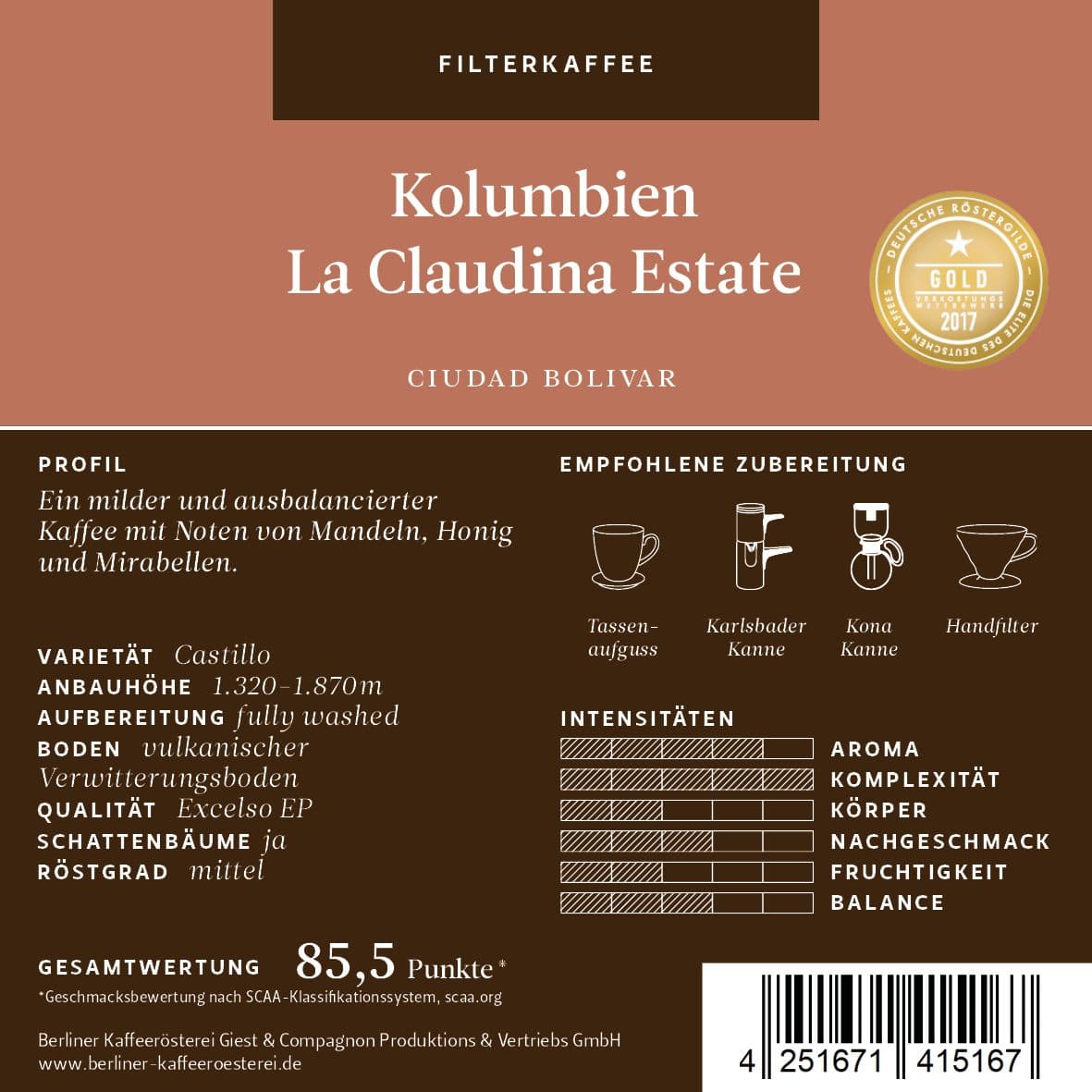
Berliner Kaffeerösterei
Colombia La Claudina Estate
$8.25
MediumWhy: ColombiaFruitySimilar price

Docent Coffee
Epiphany
$9.00
MediumWhy: ColombiaFruitySimilar price

Snowy Elk Coffee Co.
Moose Bell Espresso Sample
$7.50
MediumWhy: ColombiaFruitySimilar price

The Bean Specialty Coffee
Columbia Excelso
RON 38.00
MediumWhy: ColombiaFruitySimilar price
GavinaCommercial brand
COLOMBIA SUPREMO COFFEE
$8.10
MediumWhy: ColombiaFruitySimilar price
MalongoCommercial brand
COFFEE BEANS COLOMBIA IGP
$5.90
MediumWhy: ColombiaFruitySimilar price
MalongoCommercial brand
COLOMBIA PGI GROUND COFFEE
$8.60
MediumWhy: ColombiaFruitySimilar price
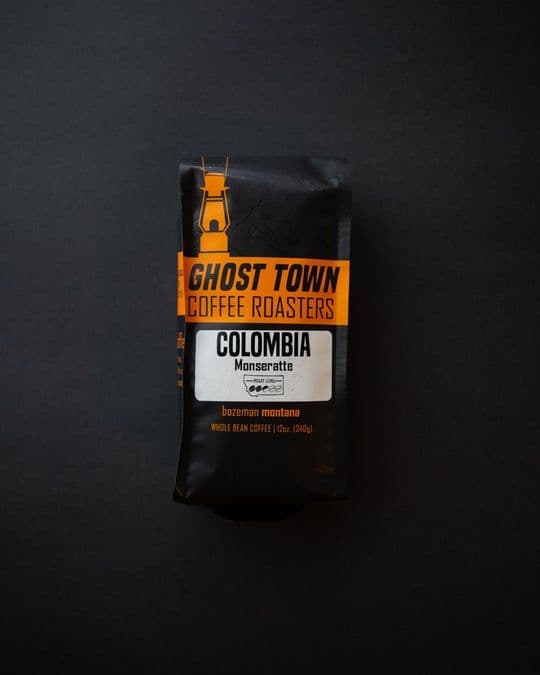
Ghost Town Coffee
Colombia - Monserrate
$11.41
LightWhy: ColombiaFruitySame roast


