
Coffee origin
 Coffee from Cuba
Cafendo lists 15 coffees with beans from Cuba, from 11 roasters in 8 countries. 13 of them are single origins; the others are blends with beans from other countries too.
Most frequent in the roasters' tasting notes of 8 single origins:
- earthy, woody and herbal 38%
- apple, grape and dried fruit 25%
- spice 25%
- vanilla 25%
- chocolate 13%
Roasters with coffee from Cuba
- Berliner Kaffeerösterei(Germany)
- Kahwa Coffee(United States)
- Bertazzo(Italy)
- Caffitaly Moldova(Moldova)
- Contego(Romania)
- El-Cafetal(Romania)
- Holmen Coffee(Finland)
- Le Piantagioni Del Caffè(Italy)
Cuba at a glance
- Growing regions
- Sierra Maestra
- Harvest
- September – January
- Species
- Arabica and Robusta
Sources: Wikipedia: Coffee production in Cuba
15 products · Ship to United States: roasters based there come first, then those whose shop says it delivers there

Kahwa Coffee
Kahwa Cuban Coffee Grounds, Cubano Dark Roast Espresso Blend, Ground Coffee, 1 lb Bag
$0.00
Dark
Kahwa Coffee
Kahwa Cuban Coffee Beans, Cubano Dark Roast Espresso Blend, Whole Bean Coffee, 2 lb Bag
$0.00
Dark
MacBeans
CUBA - Serrano Superior
£16.00
Light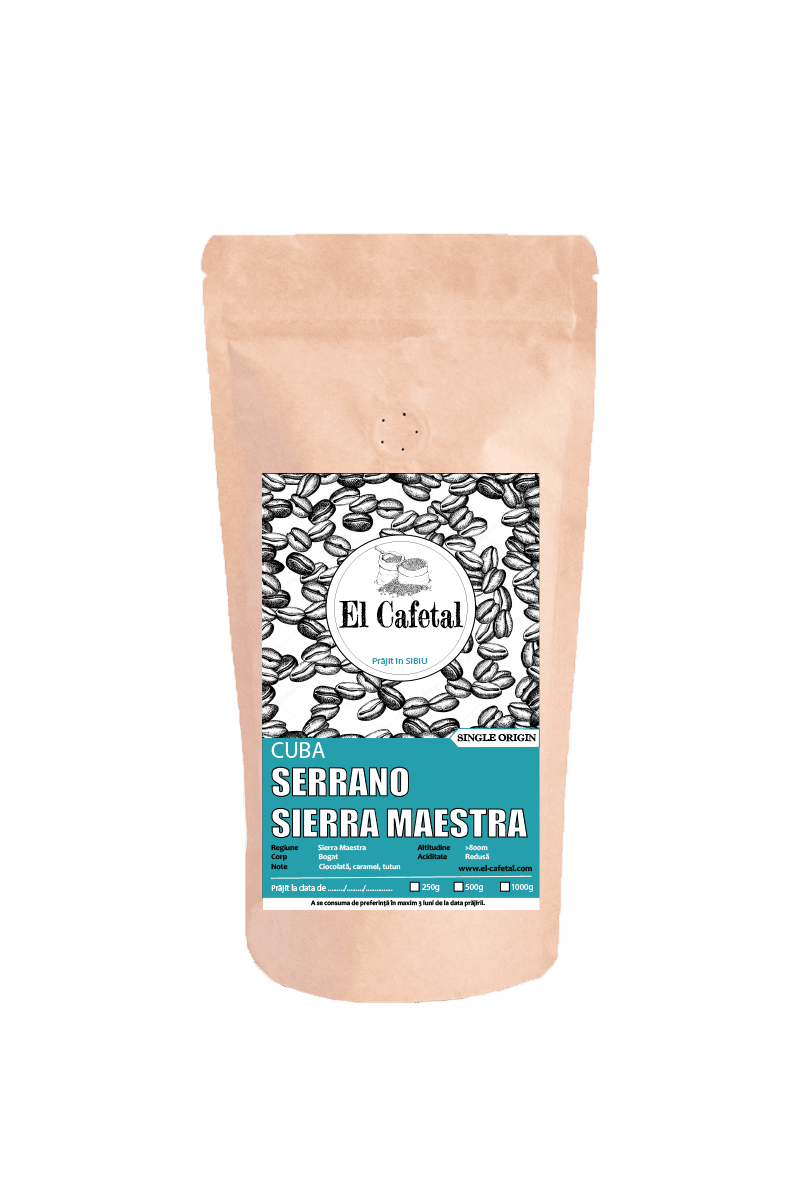
El-Cafetal
CUBA SERRANO SIERRA MAESTRA
RON 51.00
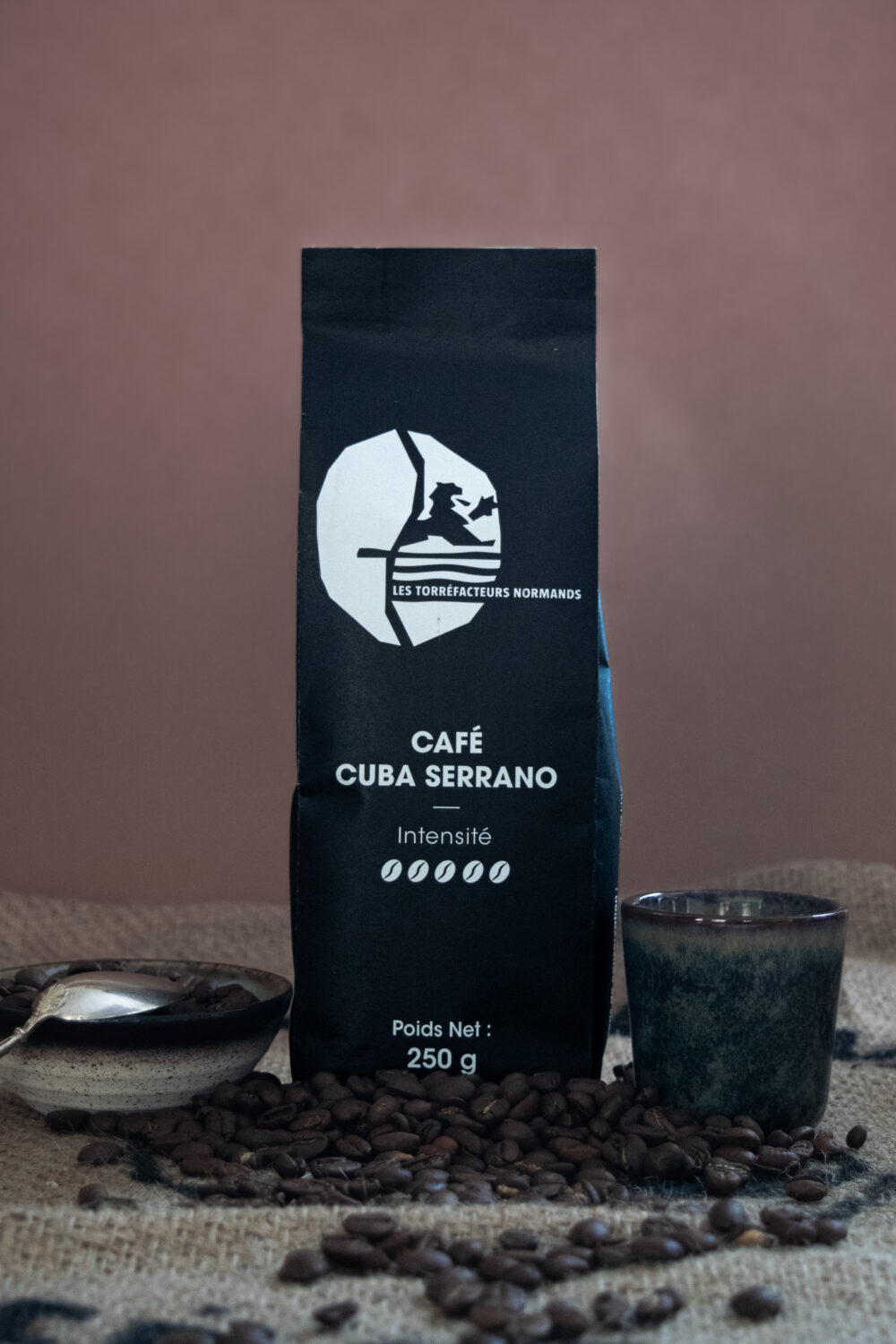
Les Torréfacteurs Français
Le café Cuba Serrano
€7.20
Contego
Coffee Fresh Prajita Cuba Serrano Lavado
$7.48
Medium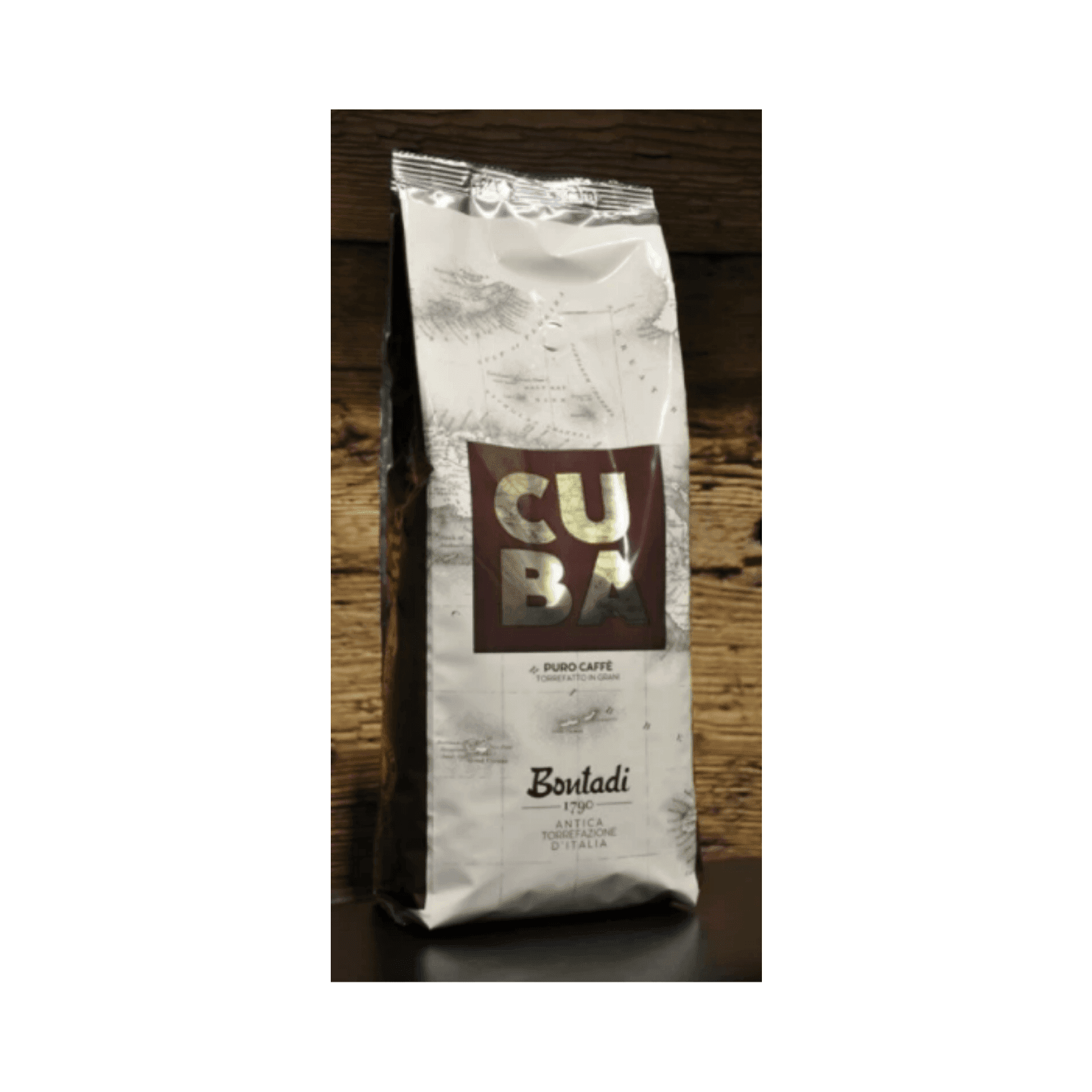
Bertazzo
Caffè Bontadi Cuba
$36.30
Medium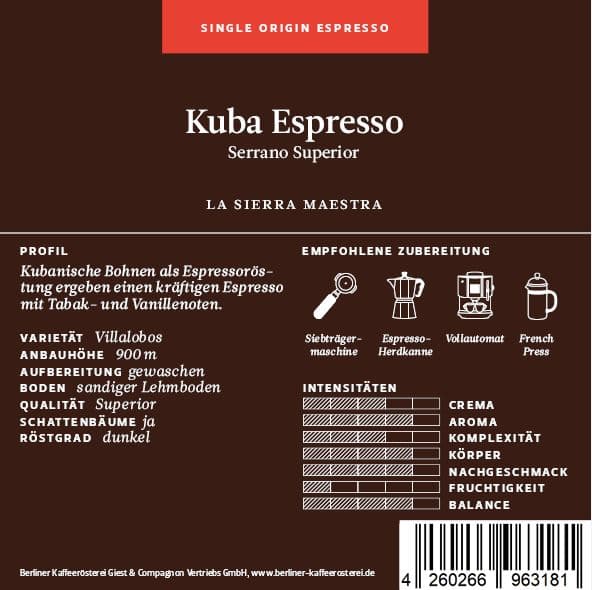
Berliner Kaffeerösterei
Cuba espresso
$8.45
Medium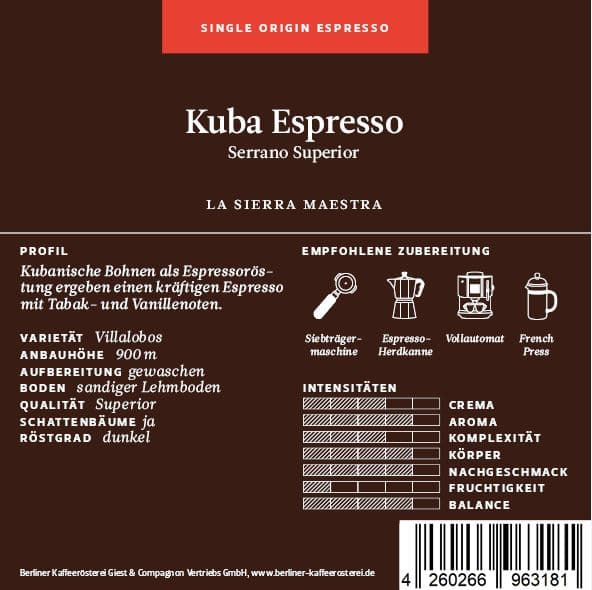
Berliner Kaffeerösterei
Kuba Espresso
$8.45
Medium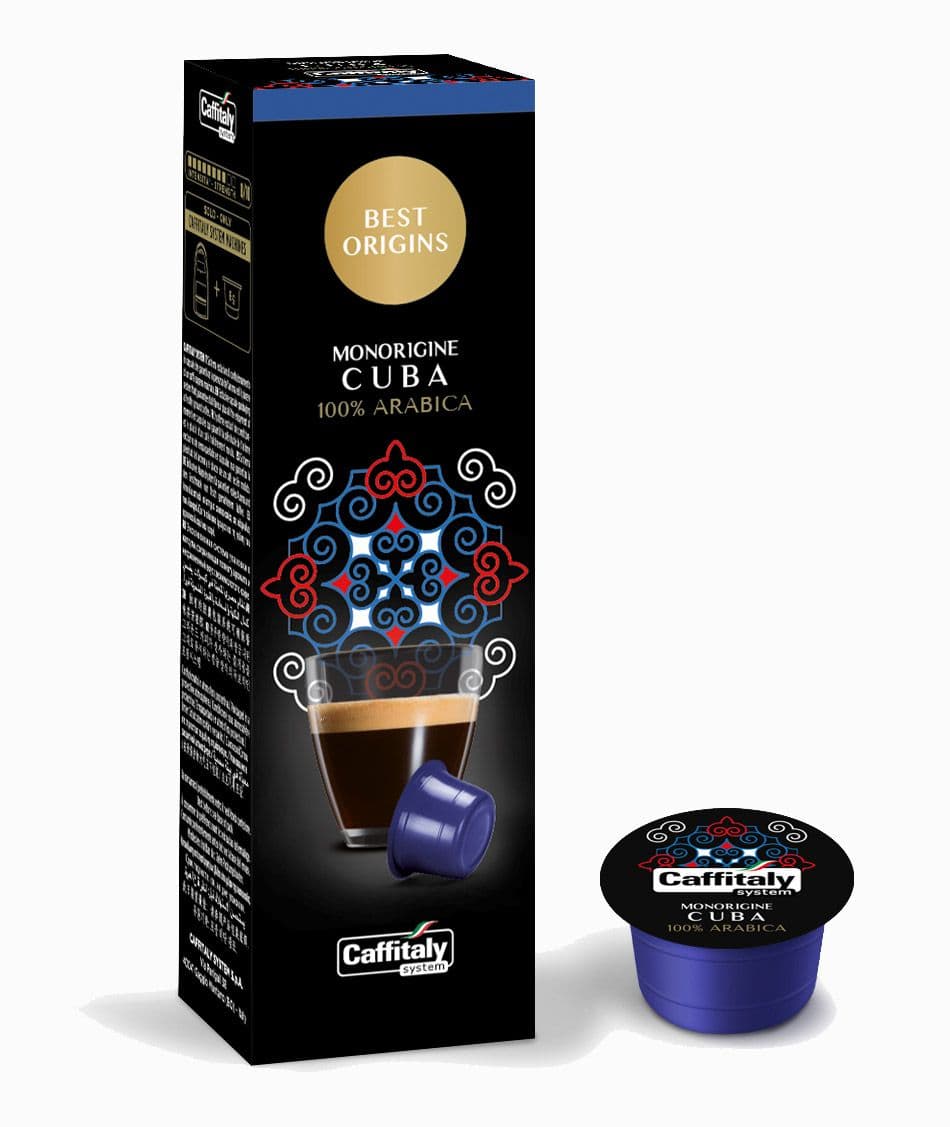
Caffitaly Moldova
Caffitaly Best Origins Monorigine Cuba
$3.97
Dark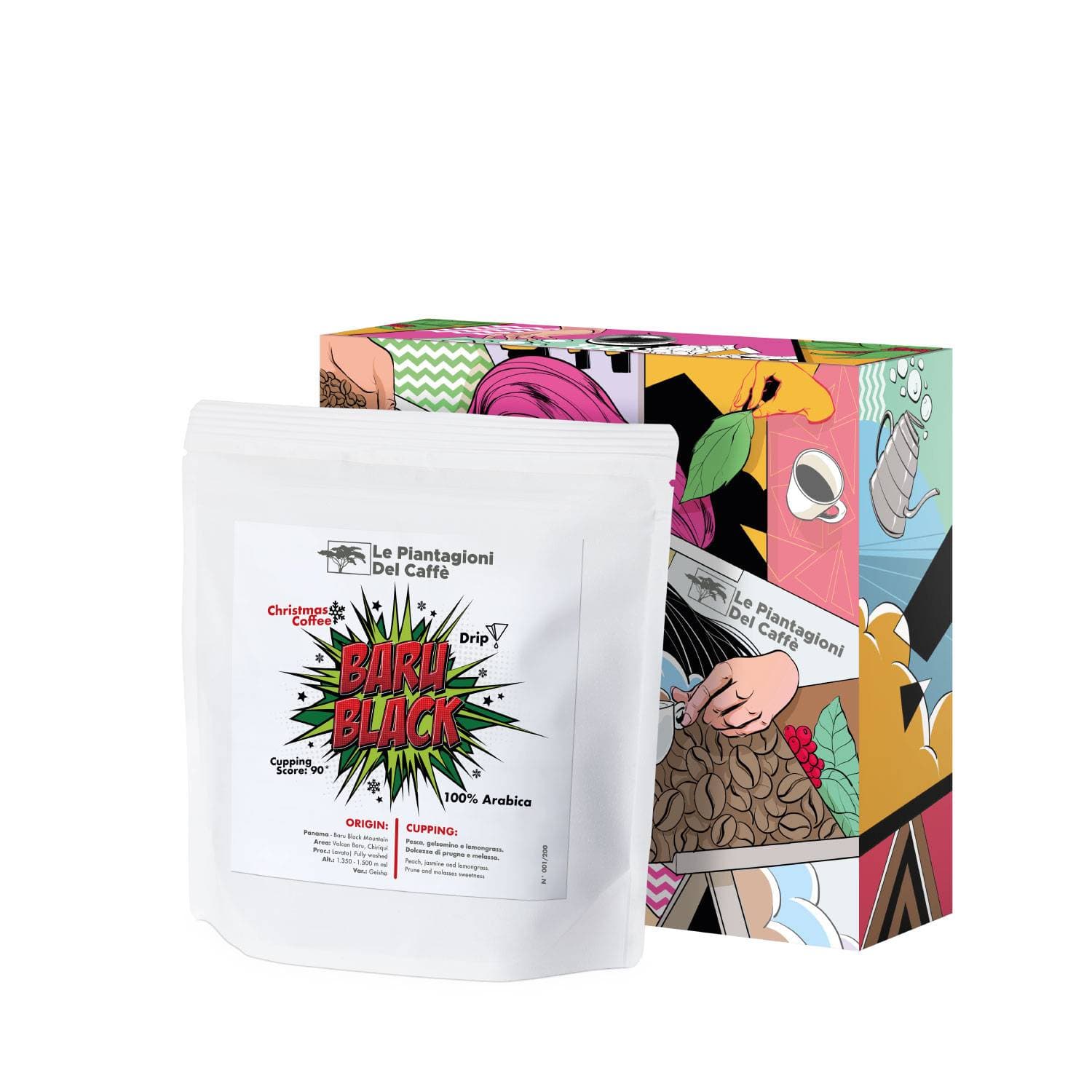
Le Piantagioni Del Caffè
BARU BLACK
$37.00
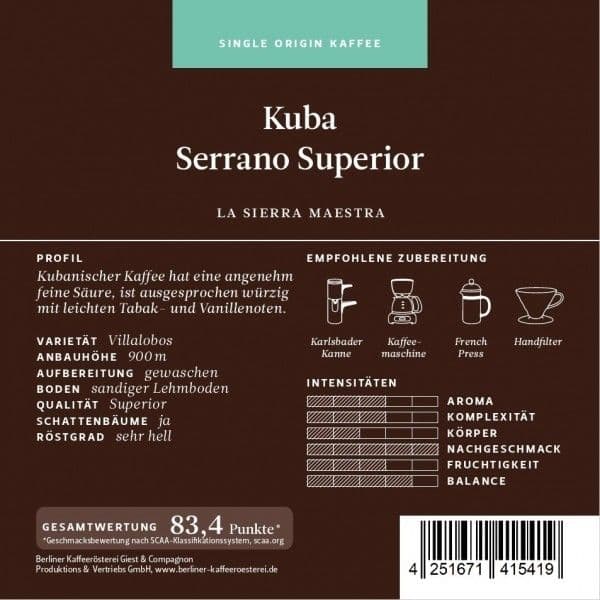
Berliner Kaffeerösterei
Cuba Serrano Superior
$7.45
Medium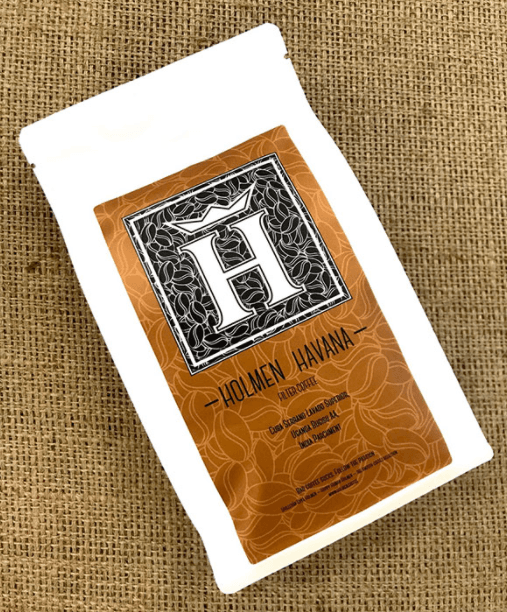
Holmen Coffee
Holmen Havana
$9.79
Medium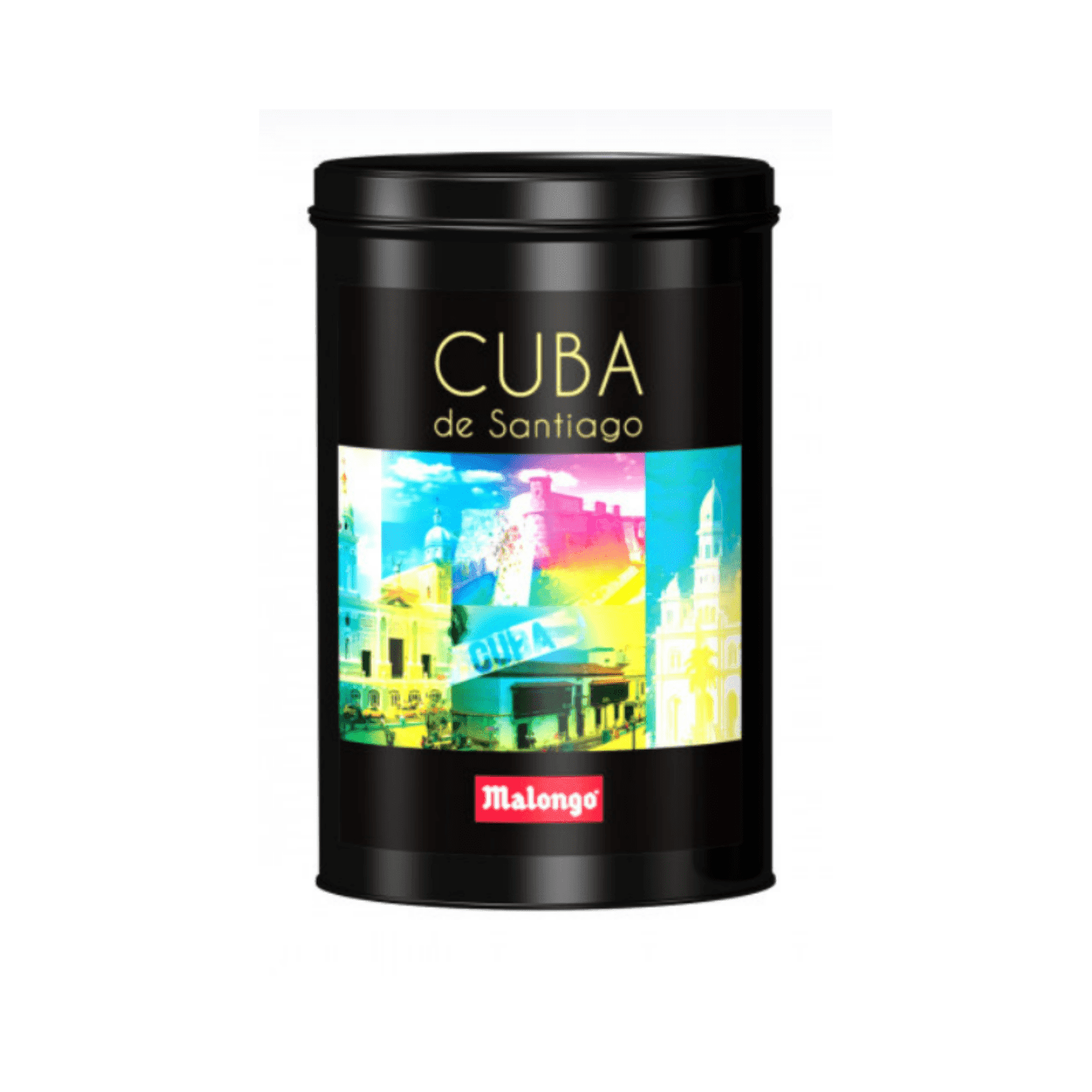
MalongoCommercial brand
CUBA SANTIAGO GROUND COFFEE
$6.30
Light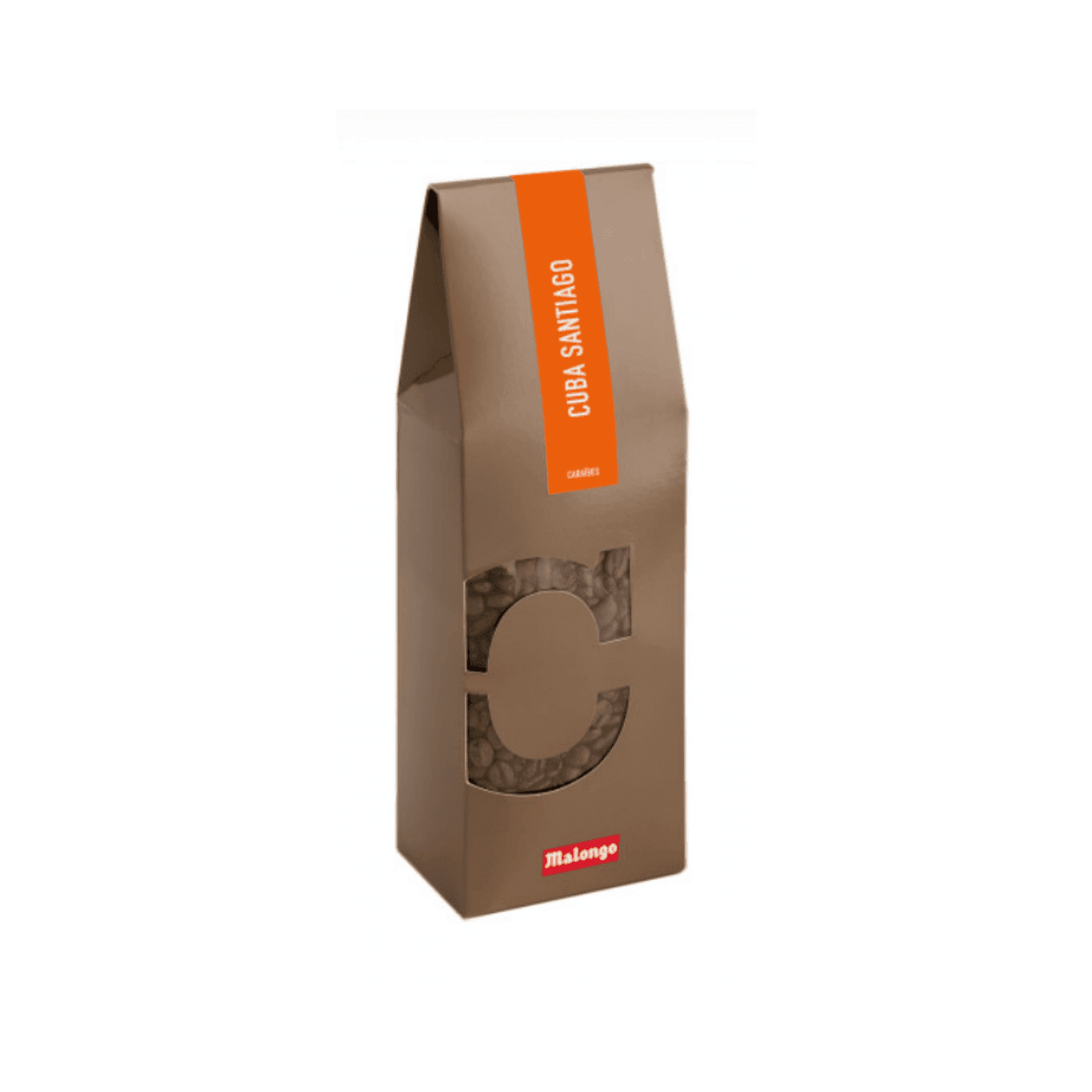
MalongoCommercial brand
COFFEE BEANS CUBA SANTIAGO
$6.20
MediumRead about coffee from Cuba
Questions about coffee from Cuba
What does coffee from Cuba taste like?
In the tasting notes roasters wrote for 8 single origins from Cuba on Cafendo, the most frequent flavours are earthy, woody and herbal (38%), apple, grape and dried fruit (25%), spice (25%), and vanilla (25%).
Where is coffee grown in Cuba?
The main growing regions are Sierra Maestra.
When is coffee harvested in Cuba?
Harvest season: September – January.
Where can I buy coffee from Cuba?
Cafendo lists 15 coffees with beans from Cuba, from 11 roasters in 8 countries. 13 of them are single origins; the others are blends with beans from other countries too. Cafendo does not sell coffee itself: each coffee links to a shop that sells it, usually the roaster’s own. The roasters with the most coffees from Cuba on Cafendo are Berliner Kaffeerösterei, Kahwa Coffee, and Bertazzo.
Coffee arrived in Cuba from the island of Hispaniola in 1748, but fleeing the Haitian revolution, until the influx of French settlers in 1791, there was little talk of the coffee industry. By 1827, there were about two thousand coffee farms on the island, and coffee became a major export, producing more money than sugar.
Castro’s revolution, between 1953 and 1961, brought with it the nationalization of coffee farms, and production fell almost immediately. Those who volunteered to drink coffee had no experience, and those who had previously worked the land fled the country in the wake of the revolution. Coffee-making struggled on the island and the incentives or incentives provided by the government did little to strengthen the industry, although production peaked in the 1970s at 30,000 tonnes (30,000 tonnes). As the Cuban coffee industry faltered, many Central American countries continued to enjoy higher and more successful exports to international markets.
The disintegration of the Soviet Union made Cuba increasingly isolated, and the trade embargo imposed on Cuba by the United States removed the potential market. Japan was the main importer of Cuban coffee, although Europe remains a strong market. The best coffees are usually exported, usually around one-fifth of total production, and the rest left for domestic consumption. Cuba’s own production does not cover domestic demand, and in 2013, the country spent nearly $ 40 million on imported coffee. Coffee imported into Cuba is not of the highest quality, so it is relatively cheap, but due to high market prices, the habit of mixing roasted peas to bulk coffee has reappeared.
"Cuanian Coffee"
A number of Cuban coffee products are widespread throughout the world, including Cortadito, Café con Leche and Café Cubano. The latter refers to an espresso that is sweetened during cooking by adding sugar to the ground coffee.
Advertising for “Cuban coffee” is not uncommon, especially in the United States and elsewhere. True Cuban coffee is illegal in the United States because of a commercial embargo, but the term is often used to describe Café Cubano. Coffees, often from Brazil, are chosen to represent the flavors we can expect from Cuba, but there are, of course, concerns about confusion among customers and improper labeling of goods.
At present, Cuban coffee production remains low at 6000-7000 tonnes per year (6600-7,700 tonnes). Most of the equipment used is old and many manufacturers still rely on mules. Roads are often severely damaged by intermittent rain and drought and are poorly maintained. Coffee is usually dried in the sun, although some mechanical drying is done and most of the coffees grown for export are washed away. Cuba’s climate and topography are well adapted to coffee growing, and its scarcity can add a lot to its value, but there are many challenges facing growers looking to make high-quality coffees.
Traceability
Cuban coffee probably cannot be traced back to a single farm and can often only be traced back to a specific region or subregion of the country.
Taste Profile
Cuban coffees have a typical island coffee profile: relatively low acidity, heavier body.