

 Monkee Koffee
INDONESIA KAWAH IJEN
Indonesia
- Natural
- Single Origin
INDONESIA KAWAH IJEN is a coffee from Indonesia, sold by Monkee Koffee (Spain). Process: natural. Variety: Komasti, Andungsari, Bourbon, Kartika. Price: €16.90 to €62.00, depending on the size. That is from €62.00 per kilo.
Not rated yet · Be the first to review it
from€16.90
≈ €62.00 / kg
You’ll be taken to the roaster’s shop to complete your purchase.
- Roaster based in
- Spain
- Ship to
- United States · Check on the roaster’s shop
Notes of plum, orange, nutmeg, vanilla, dark chocolate.
Varieties: Komasti, Andungsari, Bourbon, Kartika.
Altitude: 1100 – 1500 m.
Process: Natural.
Score: 85.75
Recommended for straight espresso and drinks with dairy or plant-based milk.
Sizes and prices
Description
Kawah Ijen: the natural from East Java grown on a volcano’s slopes
At Monkee, we present Kawah Ijen, a natural coffee produced by Kevenka on the slopes of Mount Ijen in East Java, Indonesia. A coffee with an origin as singular as its profile: spicy, dark, and fruity, born in one of the most extreme landscapes on the planet.
Mount Ijen
Kawah Ijen is an active volcano in East Java, about a three-and-a-half-hour drive from Bali. Its crater holds the world’s largest acidic lake, an impossible electric turquoise, which burns with blue fire caused by combusting sulfur. It is one of Southeast Asia’s most spectacular natural phenomena and the backdrop for this coffee.
The farmers who grow coffee on these slopes have lived for generations between the volcano and tobacco—their other main crop outside the coffee season. Many are descendants of families originally from the island of Madura, north of Java, and preserve their language and traditions in a setting that is as inhospitable as it is fertile.
Kevenka: from café to origin
Kevenka was born out of curiosity. Kevin and Kenny Soewondo, two brothers from Surabaya, started by opening a café in their city. They soon decided to roast their own coffee. And when they started asking questions about the green coffee they received, they took a step few people take: climbing the volcano and processing the coffee themselves.
Today they work with a network of up to 500 farmers across five villages around Ijen—Cucuk, Aldi, Sutrisno, Sunoto, and Lis—and have turned former rice-processing facilities into their wet mill in the village of Botolinggo. Kevin Soewondo traveled to Colombia to train as a Level 3 Q Processor, a detail that says a lot about how seriously they approach processing.
Their investment in technology is also notable: they have invested in a color-based cherry sorter that allows them to work precisely without penalizing farmers, and in a Pinhalese mechanical dryer to manage drying in an environment where humidity is a constant challenge.
The process
Kawah Ijen is a natural coffee processed with uncommon precision in Indonesia, where the wet process has historically dominated and the quality of delivered cherries has been difficult to control:
- Pickers harvest ripe cherries, which are brought to the Botolinggo center, where they are inspected and received.
- The cherries are washed and sorted by density and color using an optical sorter, removing defects with a level of precision that previously required fully manual sorting.
- Drying takes between 11 and 13 days, with support from the Pinhalese mechanical dryer when the ambient humidity requires it, always below 40 degrees to preserve the profile.
- After drying, the coffee is hulled and run through pneumatic systems, screen-size sorting, a density table, and a color sorter for final selection.
- Final quality control before packaging and export.
The result is a clean, complex natural coffee, with the fruity density of the process and a cup precision that is uncommon for coffees from this origin.
A different origin
Indonesia is not the first country that comes to mind when people talk about natural specialty coffee. The wet-hulling tradition—the process that has defined the earthy, heavy profile of Indonesian coffees for decades—remains dominant. Kevenka goes against the grain, applying processing rigor, technology, and training from Colombia in a volcanic setting where no one expected it.
Kawah Ijen is the result of this unlikely combination: a natural coffee from East Java with a Cofinet protocol, an active volcano with an optical sorter, Madurese tradition with a Q Processor. A coffee unlike anything you’ve tried from Indonesia.
Why Kawah Ijen inspires us
Because it comes from a place that shouldn’t produce coffees like this, yet does. Because behind it are two brothers who started out serving coffee and ended up climbing a volcano to understand where the coffee they served came from. And because in the cup—plum, orange, nutmeg, vanilla, dark chocolate—it’s exactly the kind of profile this extraordinary origin deserves.
| Country | Indonesia |
| Region | East Java, Botolinggo |
| Altitude | 1100 – 1500 m. |
| Varieties | Komasti, Bourbon, Andungsari, Kartika |
| Process | Natural |
| Tasting notes | Plum, orange, nutmeg, vanilla, dark chocolate |
| Roaster | Randall Coffee Roasters, special roast for Monkee Koffee on a Giesen roaster |
Questions about INDONESIA KAWAH IJEN
Where does INDONESIA KAWAH IJEN come from?
It comes from Indonesia. Altitude: 1,100–1,500 m. Variety: Komasti, Andungsari, Bourbon, Kartika.
How is INDONESIA KAWAH IJEN processed?
Processing method: natural.
How much does INDONESIA KAWAH IJEN cost?
Price: €16.90 to €62.00, depending on the size. That is from €62.00 per kilo. Prices come from the shop and can change; the shop has the current ones.
Where can I buy INDONESIA KAWAH IJEN?
In the online shop of Monkee Koffee: the prices on this page link to it. Cafendo does not sell coffee itself.
Answers built from the shop’s own data and the Cafendo catalog.
Reviews
No reviews yet.
If you like this coffee, try these
Picked from other roasters for a shared origin, process, roast, tasting notes and price. Coffees that the same people saved or rated highly count the most.

Gorilla Coffee
Aceh Gold, Sumatra
$17.00
Why: IndonesiaNaturalSimilar price
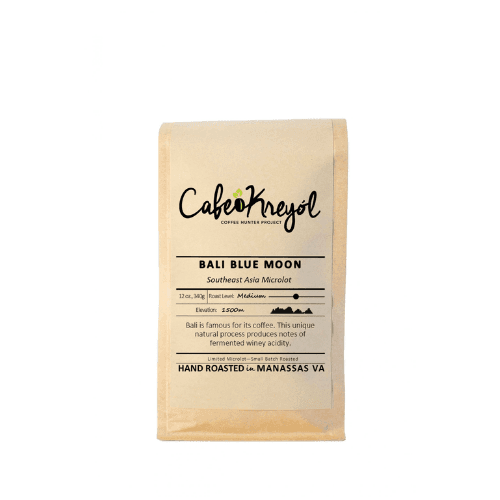
Cafe Kreyol
Bali Blue Moon - Southeast Asia Microlot Natural Process Medium Roast
$14.99
MediumWhy: IndonesiaNaturalSimilar price

Pallet Coffee Roasters
Indonesia - Wildan Mustafa - Lactic Natural
CA$27.50
Why: IndonesiaNaturalSimilar price

Succulent Coffee Roasters
Bali Kintamani Natural
$26.50
DarkWhy: IndonesiaNaturalSimilar price
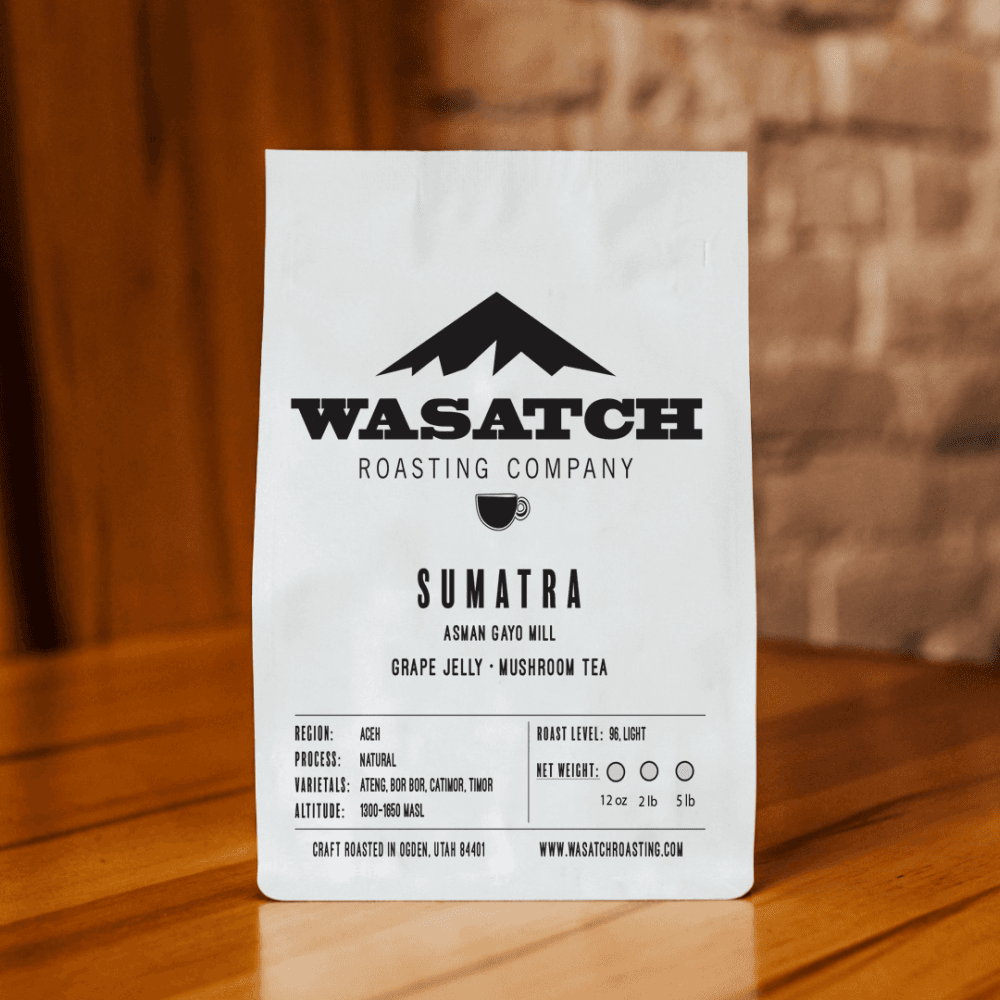
Wasatch Roasting
Sumatra-Aceh-Natural
$26.00
Why: IndonesiaNaturalSimilar price

Trianon Coffee
Sumatra Natural
$15.95
Why: IndonesiaNaturalSimilar price

Hidden Grounds Coffee
Colombia Diofanor Ruiz — La Divisa Java Natural
$28.00
Why: IndonesiaNaturalSimilar price

Drop Coffee Roasters
Las Delicias, Natural Java, Nicaragua
SEK 21.95
Why: IndonesiaNaturalSimilar price


