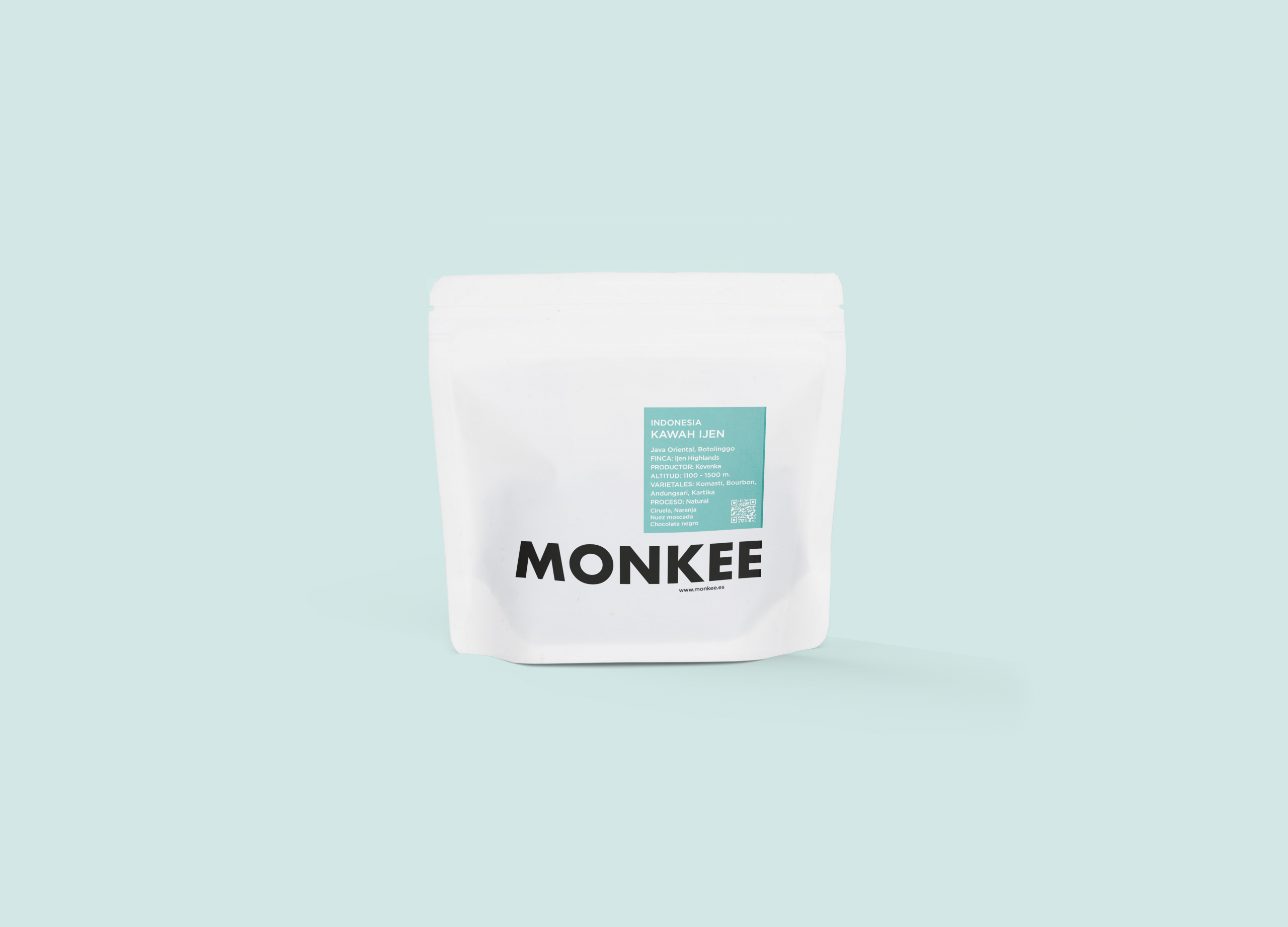
 Monkee Koffee
INDONESIA KAWAH IJEN
Indonesia
- Naturell
- Single origin
INDONESIA KAWAH IJEN er en kaffe fra Indonesia, solgt av Monkee Koffee (Spania). Foredling: naturell. Variant: Komasti, Andungsari, Bourbon, Kartika. Pris: 16,90 € til 62,00 €, avhengig av størrelsen. Det vil si fra 62,00 € per kilo.
Ikke vurdert ennå · Bli den første til å vurdere den
fra16,90 €
≈ 62,00 € / kg
Du blir sendt til brenneriets butikk for å fullføre kjøpet.
- Brenneriet holder til i
- Spania
- Send til
- Norge · Sjekk i brenneriets nettbutikk
Notes of plum, orange, nutmeg, vanilla, dark chocolate.
Varieties: Komasti, Andungsari, Bourbon, Kartika.
Altitude: 1100 – 1500 m.
Process: Natural.
Score: 85.75
Recommended for straight espresso and drinks with dairy or plant-based milk.
Størrelser og priser
Beskrivelse
Kawah Ijen: the natural from East Java grown on a volcano’s slopes
At Monkee, we present Kawah Ijen, a natural coffee produced by Kevenka on the slopes of Mount Ijen in East Java, Indonesia. A coffee with an origin as singular as its profile: spicy, dark, and fruity, born in one of the most extreme landscapes on the planet.
Mount Ijen
Kawah Ijen is an active volcano in East Java, about a three-and-a-half-hour drive from Bali. Its crater holds the world’s largest acidic lake, an impossible electric turquoise, which burns with blue fire caused by combusting sulfur. It is one of Southeast Asia’s most spectacular natural phenomena and the backdrop for this coffee.
The farmers who grow coffee on these slopes have lived for generations between the volcano and tobacco—their other main crop outside the coffee season. Many are descendants of families originally from the island of Madura, north of Java, and preserve their language and traditions in a setting that is as inhospitable as it is fertile.
Kevenka: from café to origin
Kevenka was born out of curiosity. Kevin and Kenny Soewondo, two brothers from Surabaya, started by opening a café in their city. They soon decided to roast their own coffee. And when they started asking questions about the green coffee they received, they took a step few people take: climbing the volcano and processing the coffee themselves.
Today they work with a network of up to 500 farmers across five villages around Ijen—Cucuk, Aldi, Sutrisno, Sunoto, and Lis—and have turned former rice-processing facilities into their wet mill in the village of Botolinggo. Kevin Soewondo traveled to Colombia to train as a Level 3 Q Processor, a detail that says a lot about how seriously they approach processing.
Their investment in technology is also notable: they have invested in a color-based cherry sorter that allows them to work precisely without penalizing farmers, and in a Pinhalese mechanical dryer to manage drying in an environment where humidity is a constant challenge.
The process
Kawah Ijen is a natural coffee processed with uncommon precision in Indonesia, where the wet process has historically dominated and the quality of delivered cherries has been difficult to control:
- Pickers harvest ripe cherries, which are brought to the Botolinggo center, where they are inspected and received.
- The cherries are washed and sorted by density and color using an optical sorter, removing defects with a level of precision that previously required fully manual sorting.
- Drying takes between 11 and 13 days, with support from the Pinhalese mechanical dryer when the ambient humidity requires it, always below 40 degrees to preserve the profile.
- After drying, the coffee is hulled and run through pneumatic systems, screen-size sorting, a density table, and a color sorter for final selection.
- Final quality control before packaging and export.
The result is a clean, complex natural coffee, with the fruity density of the process and a cup precision that is uncommon for coffees from this origin.
A different origin
Indonesia is not the first country that comes to mind when people talk about natural specialty coffee. The wet-hulling tradition—the process that has defined the earthy, heavy profile of Indonesian coffees for decades—remains dominant. Kevenka goes against the grain, applying processing rigor, technology, and training from Colombia in a volcanic setting where no one expected it.
Kawah Ijen is the result of this unlikely combination: a natural coffee from East Java with a Cofinet protocol, an active volcano with an optical sorter, Madurese tradition with a Q Processor. A coffee unlike anything you’ve tried from Indonesia.
Why Kawah Ijen inspires us
Because it comes from a place that shouldn’t produce coffees like this, yet does. Because behind it are two brothers who started out serving coffee and ended up climbing a volcano to understand where the coffee they served came from. And because in the cup—plum, orange, nutmeg, vanilla, dark chocolate—it’s exactly the kind of profile this extraordinary origin deserves.
| Country | Indonesia |
| Region | East Java, Botolinggo |
| Altitude | 1100 – 1500 m. |
| Varieties | Komasti, Bourbon, Andungsari, Kartika |
| Process | Natural |
| Tasting notes | Plum, orange, nutmeg, vanilla, dark chocolate |
| Roaster | Randall Coffee Roasters, special roast for Monkee Koffee on a Giesen roaster |
Spørsmål om INDONESIA KAWAH IJEN
Hvor kommer INDONESIA KAWAH IJEN fra?
Den kommer fra Indonesia. Høyde over havet: 1 100–1 500 m. Variant: Komasti, Andungsari, Bourbon, Kartika.
Hvordan er INDONESIA KAWAH IJEN foredlet?
Foredlingsmetode: naturell.
Hva koster INDONESIA KAWAH IJEN?
Pris: 16,90 € til 62,00 €, avhengig av størrelsen. Det vil si fra 62,00 € per kilo. Prisene kommer fra butikken og kan endre seg. Butikken har gjeldende priser.
Hvor kan jeg kjøpe INDONESIA KAWAH IJEN?
I nettbutikken til Monkee Koffee: prisene på denne siden lenker dit. Cafendo selger ikke kaffe selv.
Vurderinger
Ingen vurderinger ennå.
Liker du denne kaffen, prøv disse
Plukket ut fra andre brennerier etter felles opprinnelse, foredling, brenning, smaksnotater og pris. Kaffer som de samme menneskene har lagret eller vurdert høyt, teller mest.

Noble Coffee Roasting
Mokha Java {Classic Blend}
21,00 USD
Hvorfor: IndonesiaNaturellLignende pris

Gorilla Coffee
Aceh Gold, Sumatra
17,00 USD
Hvorfor: IndonesiaNaturellLignende pris
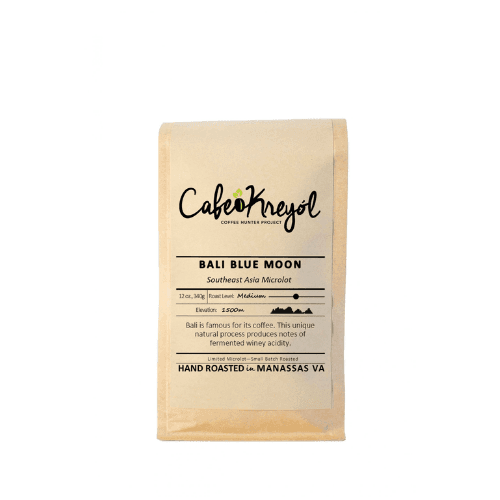
Cafe Kreyol
Bali Blue Moon - Southeast Asia Microlot Natural Process Medium Roast
14,99 USD
MiddelsHvorfor: IndonesiaNaturellLignende pris
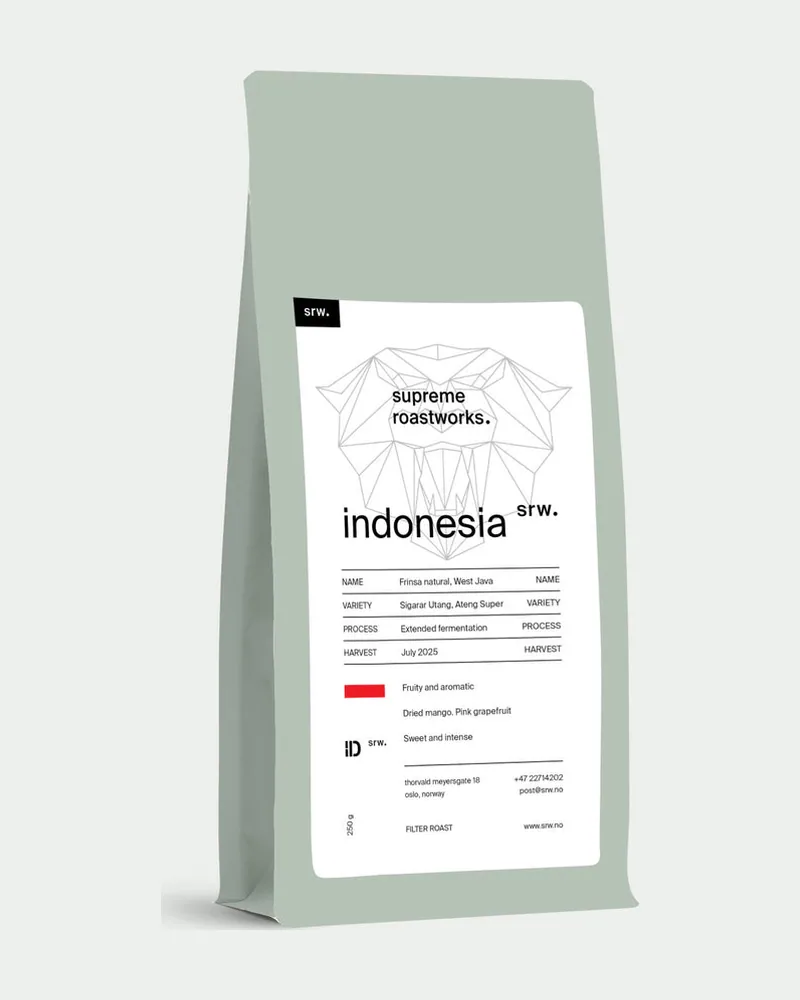
Supreme Roastworks
Indonesia, Frinsa, West Java, natural
295,00 kr
Hvorfor: IndonesiaNaturellLignende pris
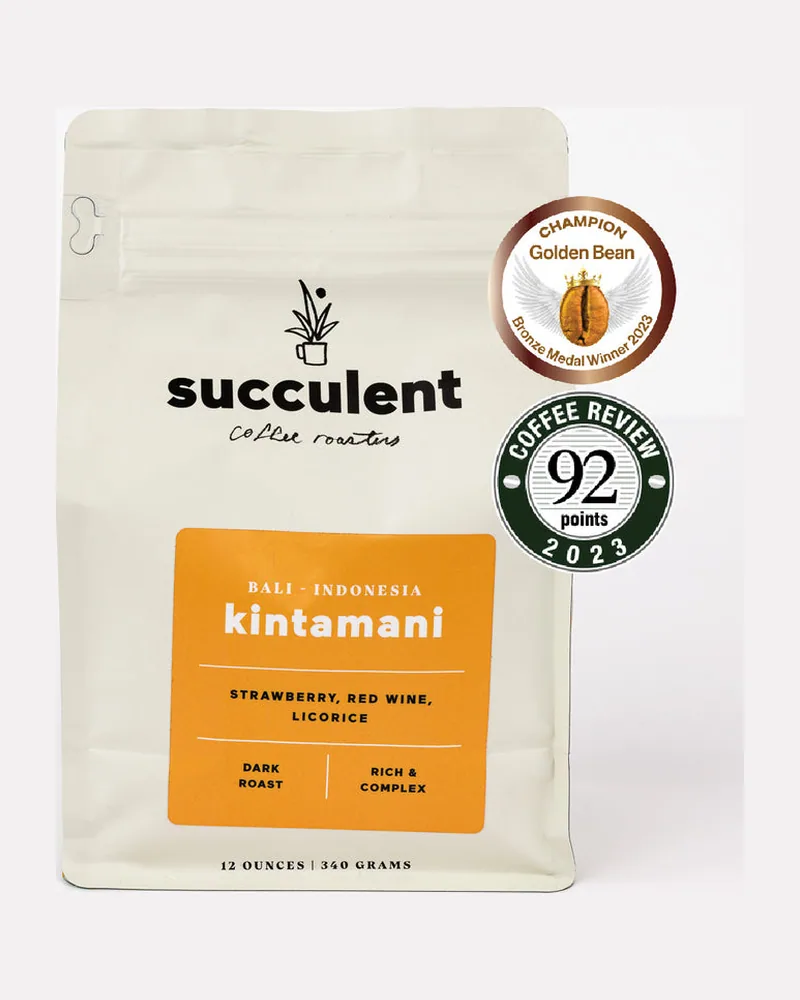
Succulent Coffee Roasters
Bali Kintamani Natural
26,50 USD
MørkHvorfor: IndonesiaNaturellLignende pris
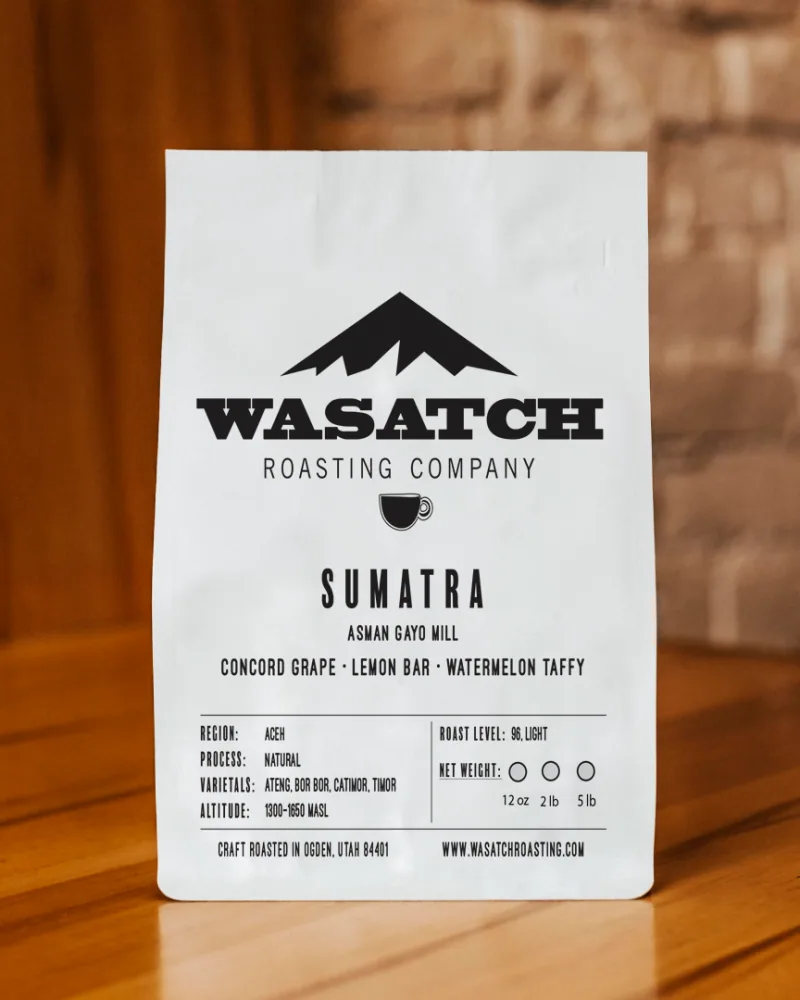
Wasatch Roasting
Sumatra-Aceh-Natural
26,00 USD
Hvorfor: IndonesiaNaturellLignende pris
Trianon Coffee
Sumatra Natural
17,00 USD
Hvorfor: IndonesiaNaturellLignende pris
Hidden Grounds Coffee
Colombia Diofanor Ruiz — La Divisa Java Natural
28,00 USD
Hvorfor: IndonesiaNaturellLignende pris