


Bolivia: Gregorio Palli, Anoxic Washed
La Paz, Bolivia
- Washed
- Single Origin
Bolivia: Gregorio Palli, Anoxic Washed is a coffee from Bolivia, sold by Has Bean (United Kingdom). Region: La Paz. Process: washed. Variety: Caturra & Catuai. The roaster’s tasting notes: brown sugar, red grape, apple, nutmeg. Price: £10.00 to £53.95, depending on the size. That is from £40.00 per kilo.
Not rated yet · Be the first to review it
from£10.00
≈ £40.00 / kg
You’ll be taken to the roaster’s shop to complete your purchase.
- Roaster based in
- United Kingdom
- Ship to
- United States · ✓ Yes, according to the roaster’s shop
Taste profile
From the details listed by the roaster’s shop.
Tasting notes
- Brown sugar
- Red grape
- Apple
- Nutmeg
Sizes and prices
| Grind | Coffee Size | Per kg | Price |
|---|---|---|---|
| Whole Beans | 220g | £67.95 | £14.95 ↗ |
| Ground-Espresso | 220g | £67.95 | £14.95 ↗ |
| Ground (French Press) | 220g | £67.95 | £14.95 ↗ |
| Green Unroasted | 220g | £45.45 | £10.00 ↗ |
| Ground for Fine Filter | 220g | £67.95 | £14.95 ↗ |
| Ground for Medium Filter | 220g | £67.95 | £14.95 ↗ |
| Ground for Coarse Filter | 220g | £67.95 | £14.95 ↗ |
| Whole Beans | 500g | £60.20 | £30.10 ↗ |
Show all 20
| Grind | Coffee Size | Per kg | Price |
|---|---|---|---|
| Ground-Espresso | 500g | £60.20 | £30.10 ↗ |
| Ground (French Press) | 500g | £60.20 | £30.10 ↗ |
| Ground for Fine Filter | 500g | £60.20 | £30.10 ↗ |
| Ground for Medium Filter | 500g | £60.20 | £30.10 ↗ |
| Ground for Coarse Filter | 500g | £60.20 | £30.10 ↗ |
| Whole Beans | 1kg | £53.95 | £53.95 ↗ |
| Ground-Espresso | 1kg | £53.95 | £53.95 ↗ |
| Ground (French Press) | 1kg | £53.95 | £53.95 ↗ |
| Green Unroasted | 1kg | £40.00 | £40.00 ↗ |
| Ground for Fine Filter | 1kg | £53.95 | £53.95 ↗ |
| Ground for Medium Filter | 1kg | £53.95 | £53.95 ↗ |
| Ground for Coarse Filter | 1kg | £53.95 | £53.95 ↗ |
Description
Bolivia: Gregorio Palli, Anoxic Washed
Sweet brown sugar fills the cup, with a pop of red grape at the start, followed by crisp apple that carries through the cup. An elegant nutmeg spice on the aftertaste makes this a complex but balanced coffee.
This Bolivian Caturra and Catuai coffee was grown by Gregorio Palli on his farm Volcan Del Tigre, before heading to the Agricafe Buena Vista mill to be processed using their Anoxic Washed technique.
A Family Story
When Gregorio was a young boy, his parents decided to move from their home in the Muñecas province of Bolivia (just north of Lake Titicaca) and travelled to the Caranavi area to provide him a better education. There was no school in their town, the roughly 100km relocation was worth it to give Gregorio a good start in life.
Gregorio is now a full-time coffee producer, living on his 12-hectare farm with his wife Daisy and his two youngest children. In his free time, Gregorio enjoys going on walks around town with his kids, swimming in the river, and playing football. He has owned his coffee farm for 35 years now and the little ones love to help their dad out when they can.
His brother Julio also runs his own coffee farm nearby, as does his daughter Nancy (one of his two grown-up children from his first marriage) who has graduated from helping on the farm to running her own. Clearly the move to Caranavi was a felicitous decision for Abuela y Abuelo Palli!
The Best Bolivian Coffee
The Caranavi province sits towards the western edge of Bolivia, on the eastern slopes of the Andes mountain range. Caranavi means "high place" in the Aymara language, one of the indigenous languages spoken in Bolivia. Caranavi province is in a transitional zone between the high Andes and the Amazon basin. It is known for its lush vegetation and has been dubbed the "Coffee Capital of Bolivia" for its ideal growing conditions and over 13,000 hectares of plantations. Caranavi is the hub for amazing Bolivian specialty coffee.
Caranavi town (the capital of the province) itself is too low in altitude to grow coffee, so the farms are all situated in the surrounding hills. The Palli family’s farms are dotted around the Copacabana colonia (the Bolivian term for small agricultural villages), as are some other Ozone favourites such as Vincent Palli and Martin Chorino. It’s safe to say the region produces some truly delicious coffees.
Tigers and Gold
Gregorio’s farm covers 12 hectares in total but only 2 hectares are currently used to grow coffee. It is named Volcán del Tigre, which translates to "Tiger’s Volcano" in English, although "tigre" is used locally to mean jaguars.
Prior to becoming the well-tended specialty coffee farm it is today, the land used to be very overgrown with wild vegetation. Local people used to say that they saw smoke rising from one of the hills in the jungle and thought it must be a volcano. Legend has it that when smoke comes from the hills, there's gold to be found there.
Around the same time, nearby residents also noticed what appeared to be a footpath running through the land. This turned out to be a tiger's path, worn into the landscape by prowling big cats. To this day, Gregorio doesn't keep animals on the farm as they might become el tigre's next meal.
He is looking to expand his coffee-growing area over more of the remaining ten hectares on his farm and is really excited about what the future at Volcán del Tigre holds.
Tomorrow Looks Bright
Gregorio’s farm is part of the Sol de la Mañana project, run by our Bolivian exporting partners Agricafe. He says he's already learned a great deal about sowing coffee and fighting coffee pests. He's had issues in the past with leaf rust, borer beetle, and mycena citricolor, but thanks to the programme he's been able to get them all under control.
When growing coffee on such a small plot of land, even a small portion of the coffee harvest being lost to pests can be devastating to a producer, so ensuring harvests remain unspoiled is vital to maintaining a stable income.
The programme provides training in coffee agronomy to small producers. Meaning "The Sun of Tomorrow", this programme supports small local producers to increase their long-term efficiency and quality of production so that they can become sustainable.
The Los Rodriguez farms play into this, with the varietals, techniques, and processing methods they develop being passed on to the Sol de la Mañana producers. Farmers receive support in understanding not just coffee agronomy but cupping, coffee markets, and much more.
The coffee from these producers is delivered to Agricafe’s Buena Vista mill in the evening and processed there. Each lot is rigorously separated, measured, and controlled to ensure the very best quality coffee.
What Is An Anoxic Washed Coffee?
So how was this coffee processed, you ask? This is an Anoxic Washed lot. Both anaerobic and anoxic are ways of saying "without oxygen". Depending on the context, the words can mean different things. Sometimes when you see these terms they’re indicative of totally different processes, while other times they simply refer to a different tweak of the method within the same system.
In this case, "Anaerobic" refers to the more traditional method of producing coffees where oxygen is limited during fermentation. That entails creating a sealed environment (in a plastic bag or fermenting vessel) with coffee cherries in water and allowing the yeast and other microorganisms present to consume all available oxygen before switching to anaerobic fermentation.
"Anoxic" is a new variation on this goal from the Los Rodriguez team and Adrian, who is in charge of the Buena Vista wet mill. It involves the same initial steps of placing the cherries into a fermenter, but then a low-pressure CO₂ flush is applied to remove oxygen from the system. This creates an environment without free oxygen from the very beginning.
Because there is no free oxygen in the system to allow yeast or bacterial growth to begin naturally, a viable yeast population must be added to facilitate fermentation. In this case, the population is grown from a sample isolated from a coffee cherry from one of the Rodriguez farms.
Compared to Carbonic Maceration, the difference is that the CO₂ is not under high pressure. It is simply being used to displace the free O₂.
This process is the end result of the La Linda "Experimental" Washed coffee that we bought last year. This year we see it producing very fruit-forward coffees which are nonetheless very clean. The profile that results from this type of processing is very different to a typical washed coffee, a fascinating variation that tastes a lot closer to what you’d traditionally expect from a natural.
Traceability
- Country: Bolivia
- Department: La Paz
- Province: Caranavi
- Colonia: Copacabana
- Producer: Gregorio Palli
- Farm: Volcán del Tigre
- Elevation: 1,400 - 1,650 m.a.s.l
- Variety: Caturra & Catuai
- Processing Method: Anoxic Washed
- GPS: 15°48'56.8"S 67°31'40.9"W
Cupping Scores
Cupping Notes: Brown sugar, red grape, apple, nutmeg.
Cup of Excellence Cupping Scores
- Clean Cup: 6.5/8
- Sweetness: 6.5/8
- Acidity: 6/8
- Mouthfeel: 6/8
- Flavour: 6.5/8
- Aftertaste: 6.5/8
- Balance: 6.5/8
- Overall: 6.5/8
- Correction: +36
- Total: 87/100
If you'd like to find out more about how we score coffees, make sure to read our blog post “What Do Coffee Cupping Scores Actually Mean?” and if you'd like to try cupping yourself, we've got a guide to that too! What is Coffee Cupping.
Roasting Information
Medium Dark. Through the gap and lush, take this through the gap and to the cusp of second crack before finishing the roast.
Questions about Bolivia: Gregorio Palli, Anoxic Washed
What does Bolivia: Gregorio Palli, Anoxic Washed taste like?
The roaster’s tasting notes: brown sugar, red grape, apple, nutmeg. Flavour groups: fruity, caramel & sweet, and spicy.
Where does Bolivia: Gregorio Palli, Anoxic Washed come from?
It comes from Bolivia. Region: La Paz. Producer: Gregorio Palli. Altitude: 1,400–1,650 m. Variety: Caturra & Catuai.
How is Bolivia: Gregorio Palli, Anoxic Washed processed?
Processing method: washed.
How much does Bolivia: Gregorio Palli, Anoxic Washed cost?
Price: £10.00 to £53.95, depending on the size. That is from £40.00 per kilo. Prices come from the shop and can change; the shop has the current ones.
Where can I buy Bolivia: Gregorio Palli, Anoxic Washed?
In the online shop of Has Bean: the prices on this page link to it. According to its shop, it delivers worldwide. Cafendo does not sell coffee itself.
Answers built from the shop’s own data and the Cafendo catalog.
Reviews
No reviews yet.
If you like this coffee, try these
Picked from other roasters for a shared origin, process, roast, tasting notes and price. Coffees that the same people saved or rated highly count the most.
Ozone Coffee
Bolivia: Gregorio Palli, Anoxic Washed
£10.00£14.95
Why: BoliviaSpicy · Caramel & sweetWashed
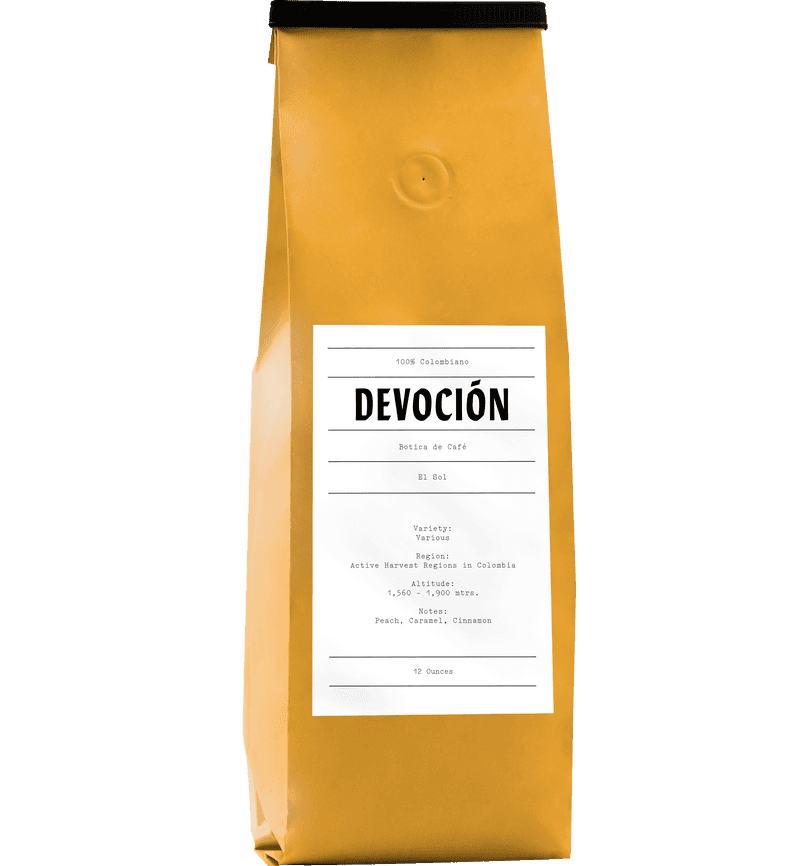
Devocion USA
EL SOL
$16.83
MediumWhy: Spicy · Caramel & sweetWashedSimilar price
Theodore's Coffee
Nicaragua, Bella Aurora, Washed,
$8.02
Why: Spicy · Caramel & sweetWashedSimilar price

Carrara Coffee Roasters
Kamwangi, Kenya - Fully Washed AB Lot
£14.00
Why: Spicy · Caramel & sweetWashedSimilar price

Quantum Coffee Roasters
Colombia, Villa Alejandra, GESHA
£12.00
MediumWhy: Spicy · Caramel & sweetWashedSimilar price

The Old Barracks Coffee Roastery
Ethiopia, Guji
€17.00
Why: Spicy · Caramel & sweetWashedSimilar price

Conscious Coffees
Guatemala | Huehuetenango
$16.95
LightWhy: Spicy · Caramel & sweetWashedSimilar price
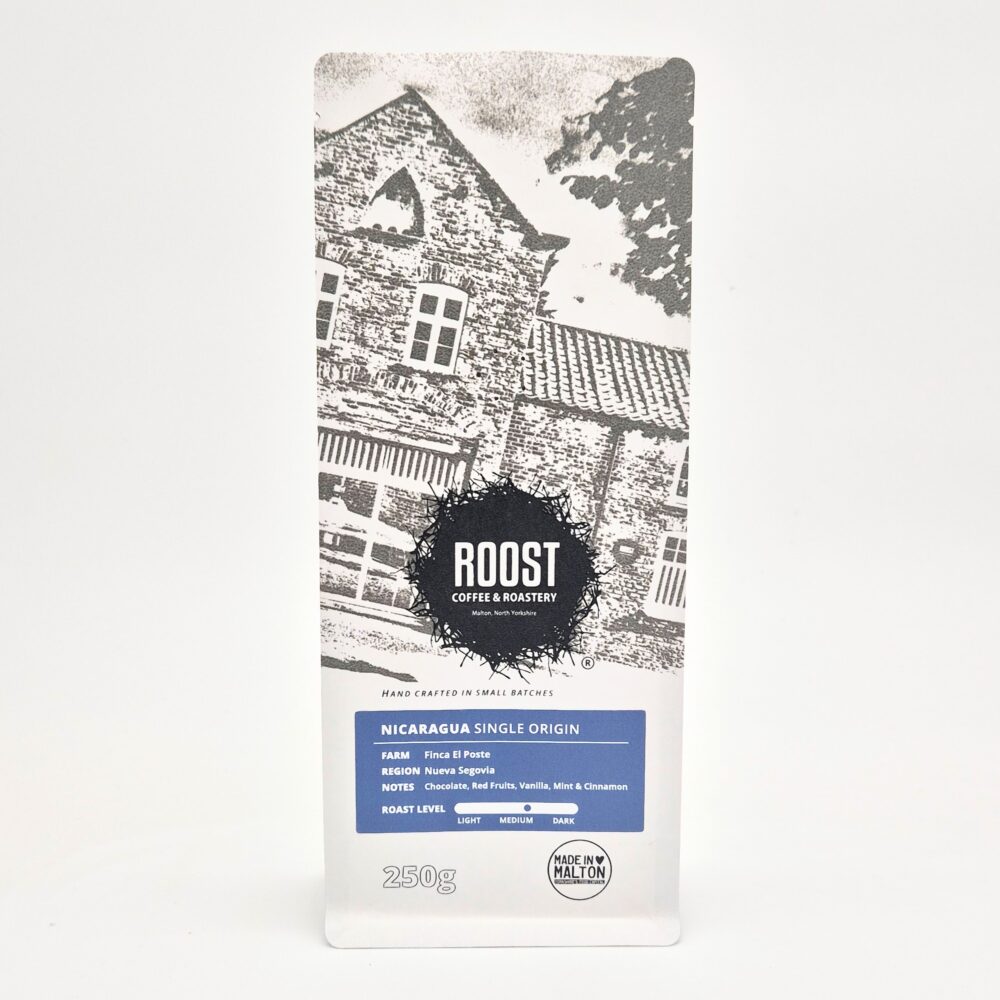
Roost Coffee
NICARAGUA | Finca El Poste
£9.50
MediumWhy: Spicy · Caramel & sweetWashedSimilar price


