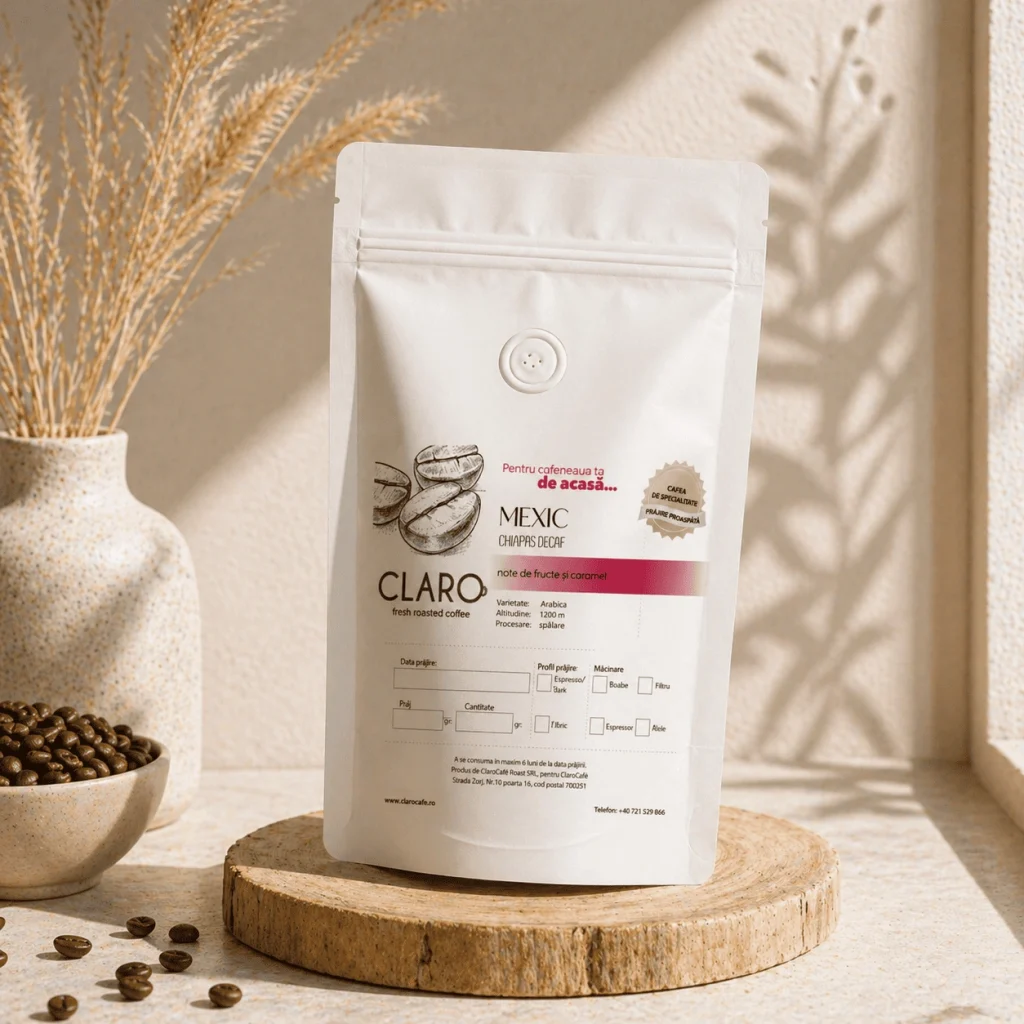
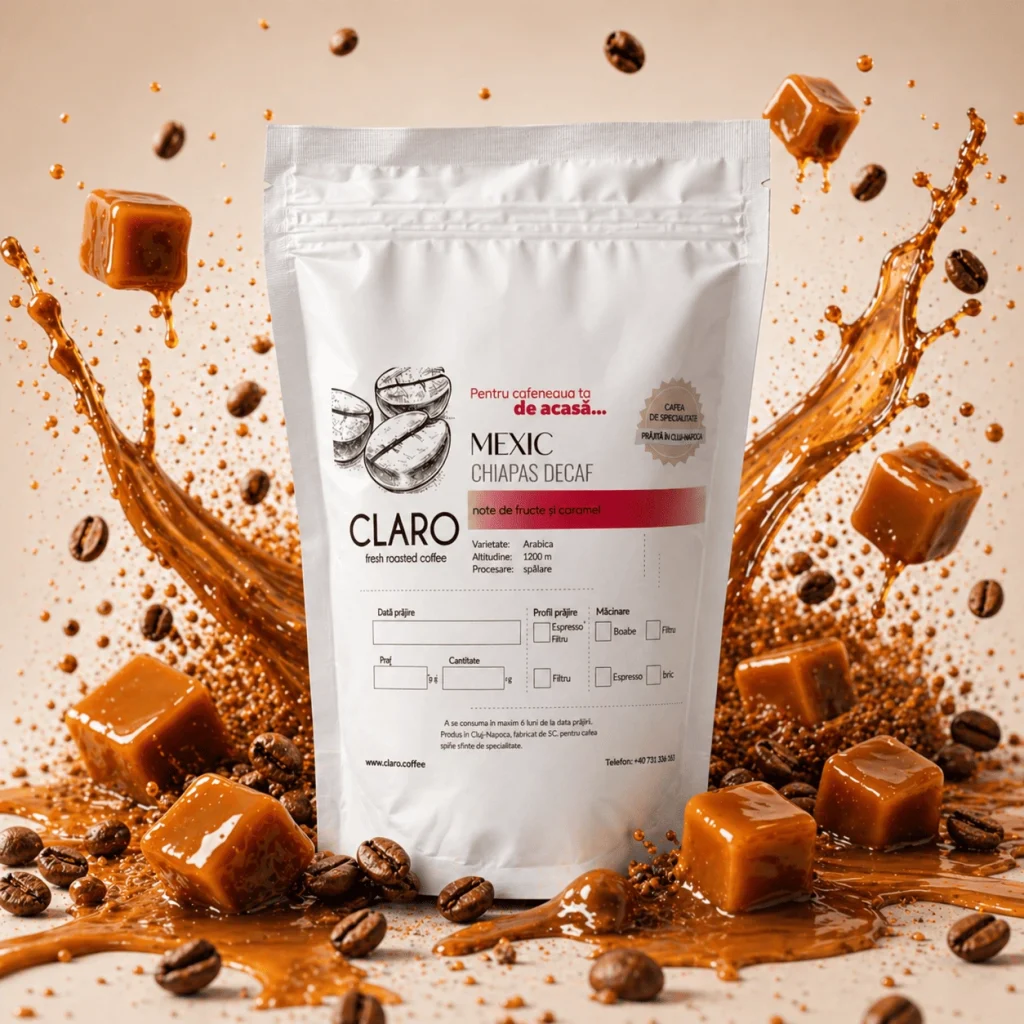
Mexic Chiapas Decaf
Chiapas, Mexico
- Washed
- Single Origin
- Decaffeinated Coffee
Not rated yet · Be the first to review it
fromRON 55.00
≈ RON 185.00 / kg
You’ll be taken to the roaster’s shop to complete your purchase.
- Roaster based in
- Romania
- Ship to
- United States · Check on the roaster’s shop
Caramel notes, smooth body, velvety finish. Specialty coffee decaffeinated using the Mountain Water Process, scored 85 points — silver medal at Golden Bean 2024.
Taste profile
From the details listed by the roaster’s shop.
Tasting notes
- Caramel
Sizes and prices
| Grind | Roast profile | Coffee Size | Per kg | Price |
|---|---|---|---|---|
| Whole Beans | Omniroast | 250g | RON 220.00 | RON 55.00 ↗ |
| Ground-Espresso | Omniroast | 250g | RON 220.00 | RON 55.00 ↗ |
| Ground-Filter | Omniroast | 250g | RON 220.00 | RON 55.00 ↗ |
| Ground (French Press) | Omniroast | 250g | RON 220.00 | RON 55.00 ↗ |
| Ground (Ibrik) | Omniroast | 250g | RON 220.00 | RON 55.00 ↗ |
| Mokapot | Omniroast | 250g | RON 220.00 | RON 55.00 ↗ |
| Whole Beans | Omniroast | 500g | RON 210.00 | RON 105.00 ↗ |
| Ground-Espresso | Omniroast | 500g | RON 210.00 | RON 105.00 ↗ |
Show all 18
| Grind | Roast profile | Coffee Size | Per kg | Price |
|---|---|---|---|---|
| Ground-Filter | Omniroast | 500g | RON 210.00 | RON 105.00 ↗ |
| Ground (French Press) | Omniroast | 500g | RON 210.00 | RON 105.00 ↗ |
| Ground (Ibrik) | Omniroast | 500g | RON 210.00 | RON 105.00 ↗ |
| Mokapot | Omniroast | 500g | RON 210.00 | RON 105.00 ↗ |
| Whole Beans | Omniroast | 1kg | RON 200.00 | RON 200.00 ↗ |
| Ground-Espresso | Omniroast | 1kg | RON 200.00 | RON 200.00 ↗ |
| Ground-Filter | Omniroast | 1kg | RON 200.00 | RON 200.00 ↗ |
| Ground (French Press) | Omniroast | 1kg | RON 185.00 | RON 185.00 ↗ |
| Ground (Ibrik) | Omniroast | 1kg | RON 185.00 | RON 185.00 ↗ |
| Mokapot | Omniroast | 1kg | RON 185.00 | RON 185.00 ↗ |
Description
Hurry! The offer ends in:
Mexico Chiapas Decaf – coffee that makes no apologies for being decaffeinated
Decaf has a bad reputation. And, to be honest, it deserved it for a long time.
The reason is less well known than it should be: the problem wasn’t decaffeination itself, but the coffee that went into the process. For decades, decaf was made from low-quality beans — the ones nobody wanted anyway — treated with harsh chemical solvents. The coffee was mediocre before the process even began. The result: flat, cardboard-like, and lacking personality. That’s where the prejudice comes from.
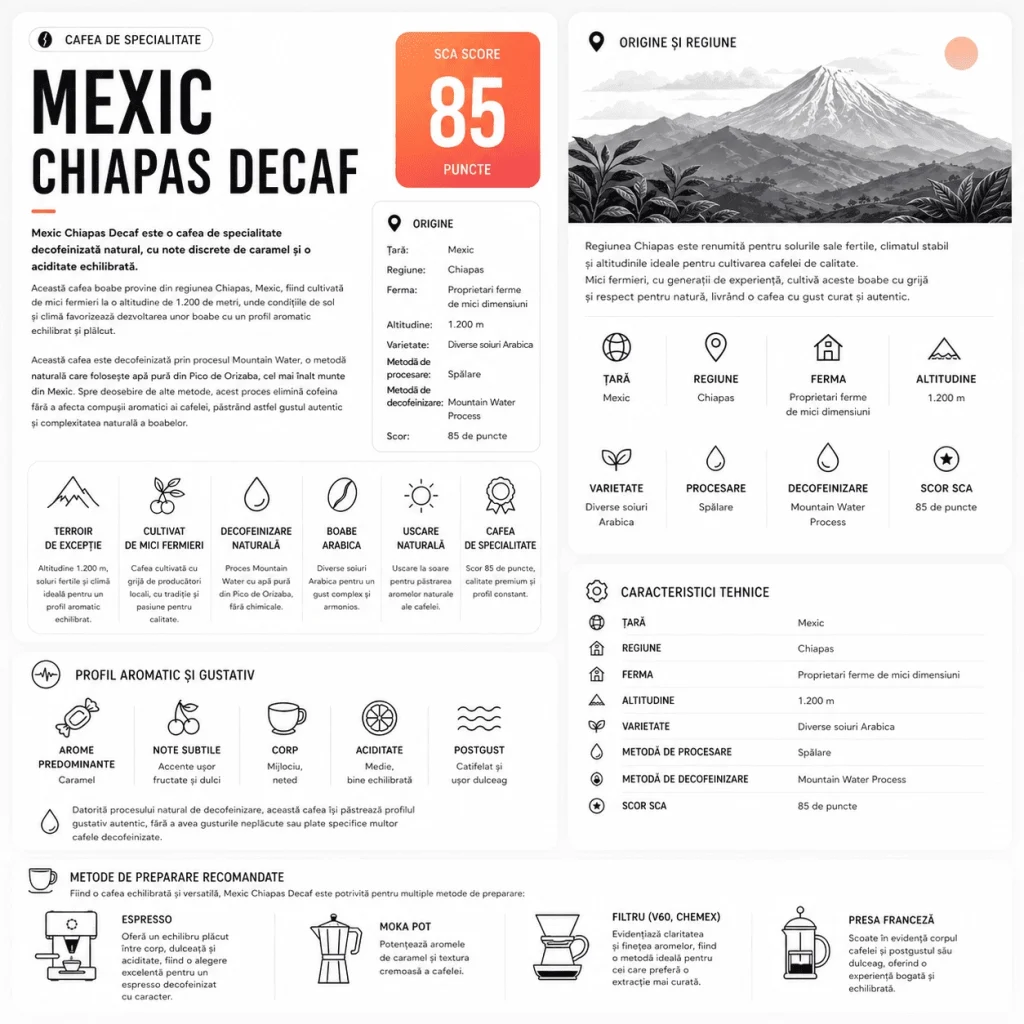
Mexico Chiapas Decaf starts from the opposite direction. It’s a specialty coffee with an SCA score of 85 points — a score many caffeinated coffees never reach — decaffeinated using the Mountain Water Process, a method that uses only water, without any chemical solvents.
What remains in the cup: subtle caramel sweetness, delicate fruity notes, balanced medium acidity, a smooth body, and a velvety finish. Nothing flat, nothing cardboard-like. A coffee you’d happily drink even if it had caffeine.
This lot’s roast earned the silver medal at Golden Bean 2024, one of the most rigorous international roasting competitions.
Roasted omni-roast at our roastery in Romania, it’s available in 250g, 500g, and 1000g bags, whole bean or ground to order.
What makes it different from ordinary decaf:
- Starts with real specialty coffee, scored 85 points by the SCA
- Decaffeinated using water only — zero chemical solvents
- Clear caramel notes and fruity accents, not a flat taste
- Smooth body and velvety finish
- Silver medal at Golden Bean 2024
- Just as good with any brewing method — including espresso
- Brings your afternoon and evening coffee back
Origin and technical details
Mountain Water Process – decaffeination with glacial water
There are three main groups of decaffeination methods. Those using chemical solvents (methylene chloride or ethyl acetate) are the cheapest and most widespread. Those using supercritical CO₂ are effective but expensive. And water-based methods — Swiss Water and Mountain Water — are the gentlest on coffee’s aromas.
The Mountain Water Process is the Mexican method, developed near Pico de Orizaba, the country’s highest mountain, whose glacial water is used in the process. Here’s how it works: green beans are soaked in water, which dissolves both the caffeine and the aromatic compounds. The water then passes through activated carbon filters that retain only caffeine molecules, leaving the aromas intact. The resulting solution, rich in aromas but caffeine-free, is reused for the next batch — allowing the beans to recover their own aromas.
The result is a coffee that retains its character. No solvents, no residues, none of that chemical taste you associate with supermarket decaf.
Chiapas and small farmers
Chiapas is Mexico’s southernmost state, on the border with Guatemala, and one of Central America’s most important coffee-growing regions. Most of the coffee here is grown by small farmers on small plots at elevations of around 1,200 meters.
The region’s profile is gentle and balanced, with natural sweetness and moderate acidity — exactly the kind of coffee that stands up well to decaffeination. A very acidic or intensely fruity coffee would lose more during the process; a balanced coffee from the outset retains its character.
Technical details:
- Country of origin: Mexico
- Region: Chiapas
- Farm: Small farms
- Altitude: 1,200 meters
- Variety: Various Arabica varieties
- Processing method: Washed
- Decaffeination method: Mountain Water Process
- SCA score: 85 points
- Award: Silver medal, Golden Bean 2024
- Roast profile: Omni-roast (Claro Cafe)
Aroma and flavor profile
Mexico Chiapas Decaf is a gentle, well-crafted coffee without extreme notes, but with character.
Caramel sets the tone — a subtle, warm sweetness that comes through from the first sip. Behind it are delicate fruity notes that bring freshness without taking center stage. Balanced medium acidity keeps everything lively, while the smooth, medium body gives the cup substance.
The finish is velvety and slightly sweet, clean, with no trace of bitterness or the dry sensation left by many decaffeinated coffees.
Tasting details:
- Dominant note: Caramel
- Subtle notes: Delicate fruity and sweet accents
- Acidity: Medium, well balanced
- Body: Medium, smooth
- Texture: Smooth, velvety
- Finish: Velvety, slightly sweet
- Character: Gentle, balanced, without extreme notes
Recommended brewing methods
Because it’s balanced and has no extreme notes, it works well with any brewing method. One thing to keep in mind: decaffeinated beans roast and behave a little differently from regular beans, so they’re worth a few adjustments at first.
Espresso
A good balance of body, sweetness, and acidity — a decaf espresso with real character, not an imitation. If you’ve had bad experiences with decaf in an espresso machine, this is where you’ll notice the difference.
Starting point: 18g dose, 36–38g in the cup, 25–30 seconds.
Pour-over (V60, Chemex)
Brings out the clarity and delicacy of the aromas — the caramel and fruity notes come through most clearly here. The right method if you want a lighter evening cup.
Starting point: 1:16 ratio (15g to 240ml), water at 93–94°C, medium-fine grind.
Turkish coffee
Highlights the delicate sweetness and smooth body, for a gentle, balanced cup with caramel notes and a velvety finish.
Moka pot
Enhances the caramel aromas and creamy texture — an intense option, but without caffeine.
French press
Brings out the body and sweet finish for a richer cup.
With milk
The caramel blends naturally with milk. A decaf cappuccino at 9 p.m. is exactly the kind of thing this coffee is for.
Frequently asked questions about Mexico Chiapas Decaf
Does decaf coffee really have no caffeine at all?
No — and it’s important to know that. International standards require at least 97% of the caffeine to be removed, which means a small residual amount remains. In practice, a cup of decaf contains around 2–5 mg of caffeine, compared with 80–120 mg in regular coffee. For the vast majority of people, including those who are sensitive, that amount is negligible. However, if you have a strict medical restriction, talk to your doctor.
Why does decaf generally taste bad?
For two historical reasons, both of which can be addressed. First, for a long time, low-quality coffee was decaffeinated — nobody wanted to “ruin” a good lot. Second, harsh chemical-solvent methods affected the aromatic compounds as well as the caffeine. A decaf made from 85-point specialty coffee using the Mountain Water Process has neither of these drawbacks.
What’s the difference between the Mountain Water Process and Swiss Water?
The principle is the same: decaffeination using only water and activated carbon filters, without chemical solvents. The difference is the location and the water. Swiss Water is the Canadian process, best known internationally. Mountain Water is its Mexican counterpart, developed near Pico de Orizaba and supplied with the mountain’s glacial water. Both are considered the gentlest methods for preserving coffee’s aromas.
What does a silver medal at Golden Bean mean?
Golden Bean is one of the largest international roasting competitions, where judges blind-taste coffees submitted by roasters from around the world. The cup alone is scored — not the brand, the story, or the packaging. A medal there recognizes the quality of the roast, not just the lot. For a decaf, which is notoriously harder to roast correctly, the 2024 award means something concrete.
Is decaf harder to roast?
Yes, considerably. Decaffeination changes the structure of the bean: it becomes more porous, changes color while still green, and conducts heat differently. The visual cues roasters rely on no longer work the same way, and the margin for error is much smaller — the beans go from under-roasted to burnt faster than regular coffee. This is also why many decafs on the market are poorly roasted.
Can I drink it in the evening without affecting my sleep?
For most people, yes — the residual caffeine is too low to affect sleep. That’s exactly the main reason this coffee exists: a good cup after dinner, without paying for it at 2 a.m. However, caffeine sensitivity varies from person to person, so it’s worth seeing how you react.
How long does it stay fresh, and how should I store it?
Like any freshly roasted coffee, it’s at its best during the first 30–60 days. Keep the bag tightly sealed at room temperature, away from light and moisture — not in the refrigerator. Decaffeination does not affect its shelf life.
Still have questions?
See the full questions and answers page
Who Mexico Chiapas Decaf is for
Choose this coffee if:
- You want a good coffee in the afternoon or evening, without disrupting your sleep
- You’re sensitive to caffeine but don’t want to give up flavor
- You’ve tried decaf and been disappointed — you’ll notice the difference here
- You drink several cups a day and want to alternate with a caffeine-free one
- You’re looking for a gentle, balanced profile with caramel and sweetness
- You want a coffee that everyone will enjoy, including guests who avoid caffeine
This might not be for you if:
- You’re looking for extreme or exotic notes (see El Salvador El Manzano)
- You want a fruity and vibrant coffee (see Kenya Nyeri)
- You need the effects of caffeine in the morning — then choose anything else
Why choose Mexico Chiapas Decaf from Claro Cafe
A good decaf requires more attention than regular coffee, not less. Decaffeinated beans are difficult to roast, leave little room for error, and show every mistake immediately. The silver medal at Golden Bean 2024 says exactly that: the coffee was well roasted and blind-judged alongside hundreds of others.
At Claro Cafe, we roast it fresh in Romania in an omni-roast style and immediately pack it in bags with one-way degassing valves to preserve freshness.
It’s not a compromise. It’s the coffee you put on the table at seven in the evening, when you’re in the mood for a good cup and not a sleepless night. Open the bag and it smells exactly like freshly roasted coffee — because that’s what it is.
Coffee blog
How chocolate, fruit, or caramel notes develop in roasted coffee
Freshly roasted coffee isn’t just coffee that has just come out of the roaster,…
Read more…
June 18, 2023
The creamy showdown: Cappuccino vs. Latte – which do you like better?
Welcome to the fascinating world of coffee, where two famous drinks – cappuccino…
Read more…
March 25, 2026
Your coffee at home can be much better with a few simple changes
Specialty coffee can be one of the simplest changes you can make…
Read more…
Reviews
No reviews yet.
Similar coffees
From Mexico, by other roasters
Biotiva
Coffee L'Italiano
$12.50
Dark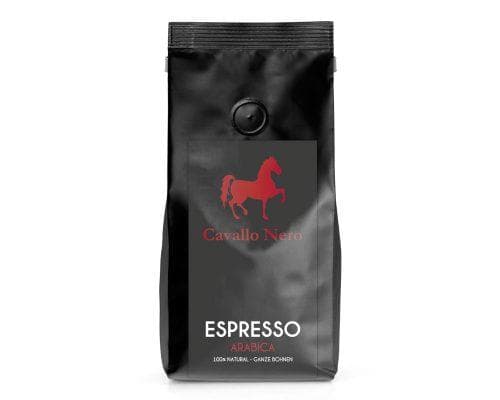
Biotiva
Cavallo Nero Espresso Arabica
$12.50
Very dark
Dinzler Kaffeerösterei
DINZLER organic coffee Mexico Chiapas Fairtrade
$9.00
Light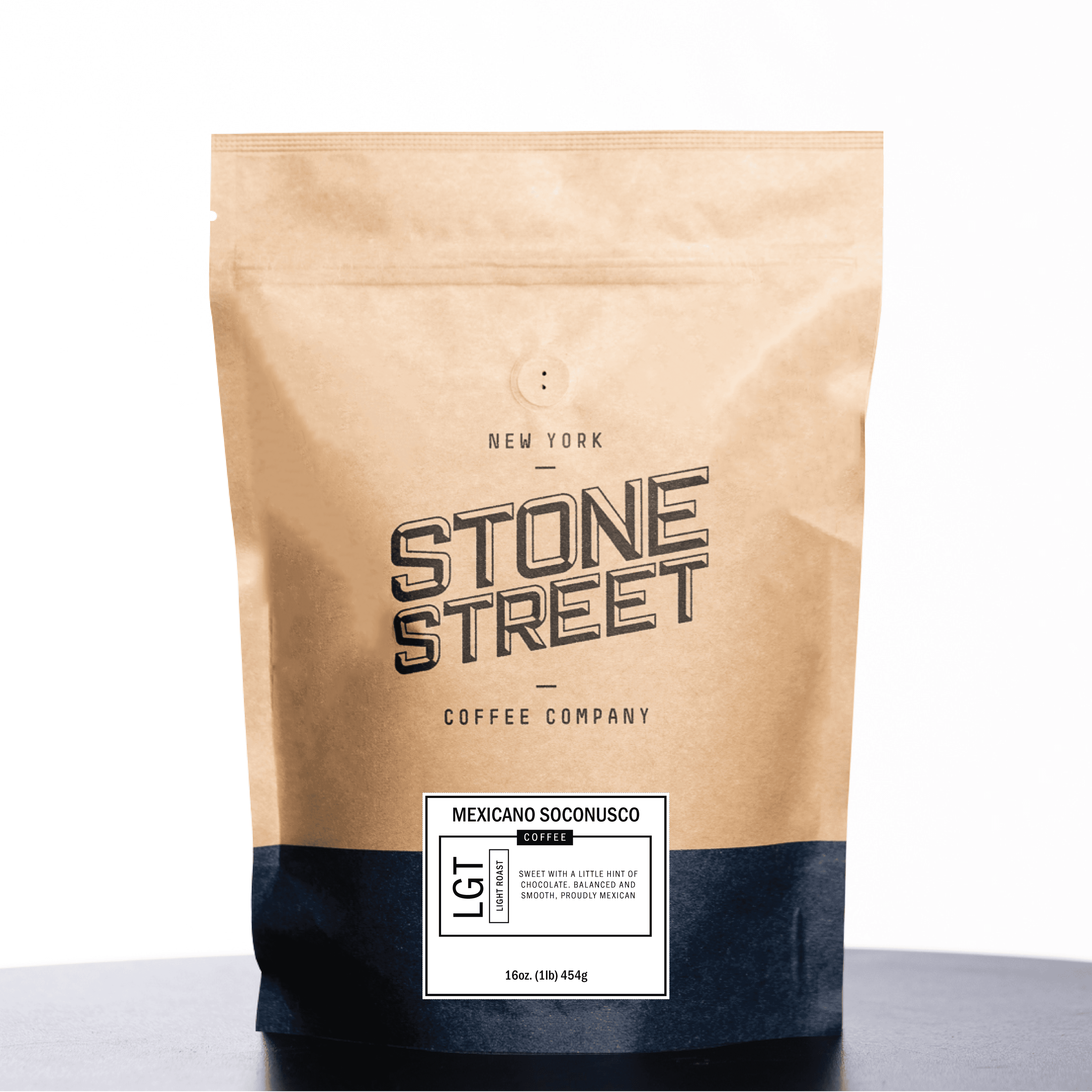
Stone Street Coffee
MEXICO SOCONUSCO
$13.29
Light
Good Coffee Roasters
Mexico San Pedro Yosotatu
$15.90
Light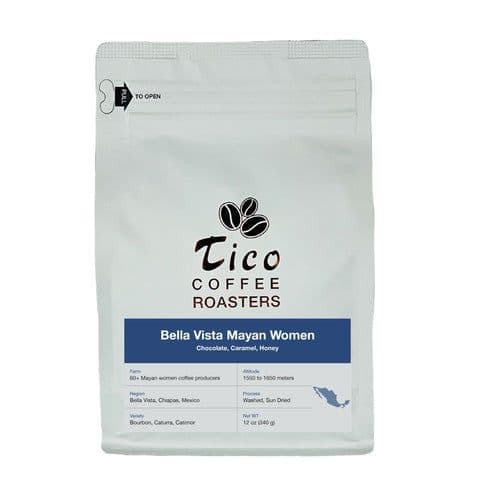
Tico Coffee Roasters
Mexico Bella Vista Mayan Women
$17.64
Medium
Metric Coffee
Mexico Ernesto Perez Orea Natural
$14.07
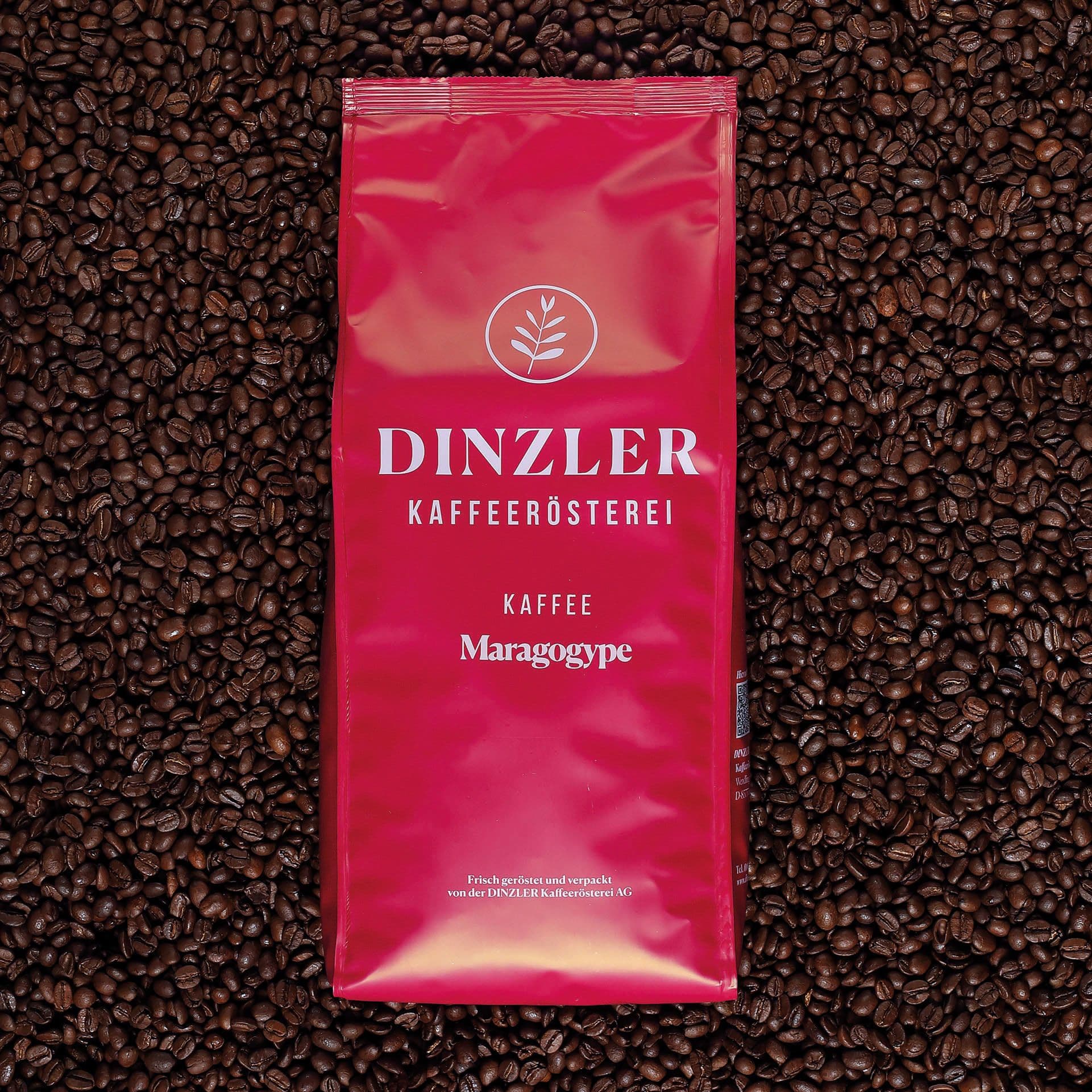
Dinzler Kaffeerösterei
DINZLER Coffee Maragogype
$8.00
Medium