


Cindy Li, Thanaka Coffee (Anaerobic Slow Dry Natural)
- Anaerobic
- Blend
Cindy Li, Thanaka Coffee (Anaerobic Slow Dry Natural) is a coffee sold by Parchmen & Co (Singapore). Process: anaerobic. Price: SGD 8.00 to SGD 70.00, depending on the size. That is from SGD 70.00 per kilo.
Not rated yet · Be the first to review it
fromSGD 8.00
≈ SGD 70.00 / kg
You’ll be taken to the roaster’s shop to complete your purchase.
- Roaster based in
- Singapore
- Ship to
- United States · Check on the roaster’s shop
Sizes and prices
| Grind | Coffee Size | Per kg | Price |
|---|---|---|---|
| Whole Beans | 50g | SGD 160.00 | SGD 8.00 ↗ |
| Ground-Espresso | 50g | SGD 160.00 | SGD 8.00 ↗ |
| Ground (Moka) | 50g | SGD 160.00 | SGD 8.00 ↗ |
| Ground-Filter | 50g | SGD 160.00 | SGD 8.00 ↗ |
| Ground (French Press) | 50g | SGD 160.00 | SGD 8.00 ↗ |
| Whole Beans | 150g | SGD 80.00 | SGD 12.00 ↗ |
| Ground-Espresso | 150g | SGD 80.00 | SGD 12.00 ↗ |
| Ground (Moka) | 150g | SGD 80.00 | SGD 12.00 ↗ |
Show all 25
| Grind | Coffee Size | Per kg | Price |
|---|---|---|---|
| Ground-Filter | 150g | SGD 80.00 | SGD 12.00 ↗ |
| Ground (French Press) | 150g | SGD 80.00 | SGD 12.00 ↗ |
| Whole Beans | 250g | SGD 80.00 | SGD 20.00 ↗ |
| Ground-Espresso | 250g | SGD 80.00 | SGD 20.00 ↗ |
| Ground (Moka) | 250g | SGD 80.00 | SGD 20.00 ↗ |
| Ground-Filter | 250g | SGD 80.00 | SGD 20.00 ↗ |
| Ground (French Press) | 250g | SGD 80.00 | SGD 20.00 ↗ |
| Whole Beans | 500g | SGD 72.00 | SGD 36.00 ↗ |
| Ground-Espresso | 500g | SGD 72.00 | SGD 36.00 ↗ |
| Ground (Moka) | 500g | SGD 72.00 | SGD 36.00 ↗ |
| Ground-Filter | 500g | SGD 72.00 | SGD 36.00 ↗ |
| Ground (French Press) | 500g | SGD 72.00 | SGD 36.00 ↗ |
| Whole Beans | 1kg | SGD 70.00 | SGD 70.00 ↗ |
| Ground-Espresso | 1kg | SGD 70.00 | SGD 70.00 ↗ |
| Ground (Moka) | 1kg | SGD 70.00 | SGD 70.00 ↗ |
| Ground-Filter | 1kg | SGD 70.00 | SGD 70.00 ↗ |
| Ground (French Press) | 1kg | SGD 70.00 | SGD 70.00 ↗ |
Description
Direct trade with Cindy Li
If southern Shan State nurtures Myanmar’s most iconic specialty coffee terroir, then Pyin Oo Lwin is the knowledge center that keeps pushing Myanmar’s specialty coffee forward. Located in the northeastern highlands of Mandalay Region, this mountain town has over a century of coffee‑growing history. It is home to Myanmar’s coffee research institutions, agricultural education centers, nurseries, demonstration farms, and the earliest farmers and estate owners exposed to specialty coffee concepts. Many new techniques, new varieties, and new processing methods sprouted here before gradually influencing the entire Myanmar coffee industry.
Pyin Oo Lwin sits at 1,000–1,300 metres, surrounded by forests and rolling hills. Once a British colonial summer retreat, it still retains extensive forest cover, forming a microclimate distinct from other Myanmar origins. Average temperature is around 20°C year round, with strong diurnal shifts. Rainy season lasts from May to October; dry season from November to March. This rhythm allows coffee trees to grow vigorously during rains and slowly accumulate sugars during the dry months. Many estates still practice shade‑grown cultivation, preserving native trees and allowing coffee to coexist with forest ecology. Coffee grows alongside avocado, silver oak, legumes, birdsong and insects - it is a truly living coffee forest. Such an environment promotes “slow‑ripening” characteristics that give Pyin Oo Lwin coffees their clean cup profile, good sweetness, gentle acidity and refined layers.
Tracing back in history, arabica was introduced here by the British in the late 19th century. What began as small colonial trials gradually spread to surrounding villages. After a century, coffee became a key livelihood crop for many families. In the past decade, as global specialty‑coffee demand rose, the region shifted from volume production to quality‑focused farming. Farmers learned selective picking, varietal management, cupping, batch traceability, and diverse processing methods. Coffee evolved from a simple crop into a knowledge‑driven craft.
Thanaka Coffee is a Taiwan‑based specialty‑coffee brand built around a deep emotional connection to Myanmar’s land, culture, and coffee heritage. Its identity is rooted in founder Cindy Li’s childhood memories of watching her family harvest, dry, and roast coffee in their backyard in Myanmar. Cindy herself is born in Myanmar, ethnically Chinese and culturally Myanmese. It introduces Myanmar’s highland terroirs - Pyin Oo Lwin, Ywangan, Hopong - to Taiwanese consumers and beyond. Thanaka is Myanmar’s traditional natural skincare paste made from tree bark. Thanaka Coffee adopts this traditional symbol as its logo, done with warm brushstrokes and coffee‑cherry red.
Just like other coffee farms in Pyin Oo Lwin, Thanaka Coffee is constantly learning and improving. In late 2023, Thanaka Coffee invited Taiwanese processing expert Chen Shi‑Wen to Pyin Oo Lwin for technical exchange. His years of practical experience helped the region understand fermentation management, drying control, and quality traceability from a more complete perspective. More estates began adopting specialty‑processing mindsets. By 2025, the work advanced into micro‑lot management. This year also includes whey‑fermentation experiments with Tsai Hsing‑Pu, exploring new flavor possibilities through different microbial ecosystems.
Myanmar has highly favorable, dry, sunny weather during the harvest months of December to March. Such an environment allows naturally processed coffee, producing an even more layered profile when the coffee is dried slowly.
In September 2026, Parchmen & Co introduced two coffees from Thanaka Coffee - Anaerobic Slow Dry Natural and Champagne-yeast fermentation. The former coffee was done atSin Gyaung Lay, whereas the latter coffee was done at Nyaung Ne.
Roast Level
The variety is a catimor, which is a disease-resistent, high yielding coffee created in Portugal in 1959 by crossing the Caturra variety with the Timor Hybrid (Híbrido de Timor). Digging further into its lineage, the Timor Hybrid is a natural, spontaneous cross between C. arabica and C. canephora (Robusta) that was discovered in 1927 on a Typica coffee plantation in what is now East Timor. Its flavour is a combination of Arabica's acidity with Robusta's strong disease resistance and characteristic earthy and herbaceous profile.
We intend to feature the arabica characteristics and suppress the earthy notes. To achieve this, we end the roast at a lower temperature coupled with a low temperature delta after 1st crack, on a low ROR while maintaining a crack time of over 1 min (and corresponding DTR) so as to lengthen the afterflavour.
Brew Flavour
Grind size, brewer, kettle, filter paper, water characteristics, speed and height of pour - all these factors and probably more affect the final cup. We are cognizant that brew recipe can only serve as a guide.
We are using the Abaca paper on a Timemore Crystal Eye dripper, at 15g @ 700 μm to 220ml to brew this coffee. To contextualise the grind size, it is in between salt and sugar.
Since 2026, we have been experimenting with 2-part pour, using 2 temperatures. Our method is seldom practised in cafes as it is unfriendly towards training for the brewer's cup competition requiring serving 3 coffees simultaneously.
Our method is simple, as follows:
A shorter 1st part at a higher temperature followed by a longer 2nd part at a lower temperature. This is in recognition that enzymatic chemical compounds are smaller molecules that are easily extractable; these compounds produce our favorite notes of fruits and flowers, and are the first to be extracted. The first brewing water has to fight the interference of the escaping roasting gases that are getting out of the coffee particles as the water is trying to get in. A higher water temperature carries more energy to maximise the extraction of these enzymatic compounds. However, this first part will be more sour as it consists predominantly of easily extractable acids.
Subsequently, the longer time lapsed after the start of brewing allow capillary actions and diffusion to bring chemical compounds that are deeper inside the coffee particle to the surface to be eroded by the fresh brewing water. Again, the enzymatic smaller molecules will be more mobile and first to be extracted, contributing to the flavour profile of the brew. Adding to this will be the heavier and less mobile compounds, contributing sweet and then bitter notes to the brew. But because the human tongue is approximately 1 million times more sensitive to bitterness than sweetness, we choose to use a lower temperature but at a longer time (higher volume) to achieve a delicate flavour balance.
On a 7-day-old roast, the dry fragrance is like a rum barrel, with sweetness. On a 14-day-old roast, the dry fragrance changed to a chocolatey sweetness. On the brew, the common theme is sugar browning characteristics layered with acidity from berries and citrus fruits. The rum profile in a fresher roast turns to dark chocolate when older. The raspberry tone turns to citrus fruits like lime and honeydew when older. As the coffee cools, more layers could be detected, ranging from monkfruit (luo han guo) to caramel.
This is our brew recipe, with 2 pours:
0th sec - Add 80g of 92°C water
(Within 5 days of roast) 45th sec for 30 sec - Add 140g of 86°C water to reach 220g
(After 5 days of roast) 30th sec for 30 sec - Add 140g of 86°C water to reach 220g
Bypass 5-10g if needed
Savouring our world in a cup!
Enjoy!
Questions about Cindy Li, Thanaka Coffee (Anaerobic Slow Dry Natural)
How is Cindy Li, Thanaka Coffee (Anaerobic Slow Dry Natural) processed?
Processing method: anaerobic.
How much does Cindy Li, Thanaka Coffee (Anaerobic Slow Dry Natural) cost?
Price: SGD 8.00 to SGD 70.00, depending on the size. That is from SGD 70.00 per kilo. Prices come from the shop and can change; the shop has the current ones.
Where can I buy Cindy Li, Thanaka Coffee (Anaerobic Slow Dry Natural)?
In the online shop of Parchmen & Co: the prices on this page link to it. Cafendo does not sell coffee itself.
Reviews
No reviews yet.
If you like this coffee, try these
Picked from other roasters for a shared origin, process, roast, tasting notes and price. Coffees that the same people saved or rated highly count the most.

Theodore's Coffee
ANAEROBIC NATURAL GUAVA BANANA, COLOMBIA
$9.44
Why: AnaerobicSimilar price
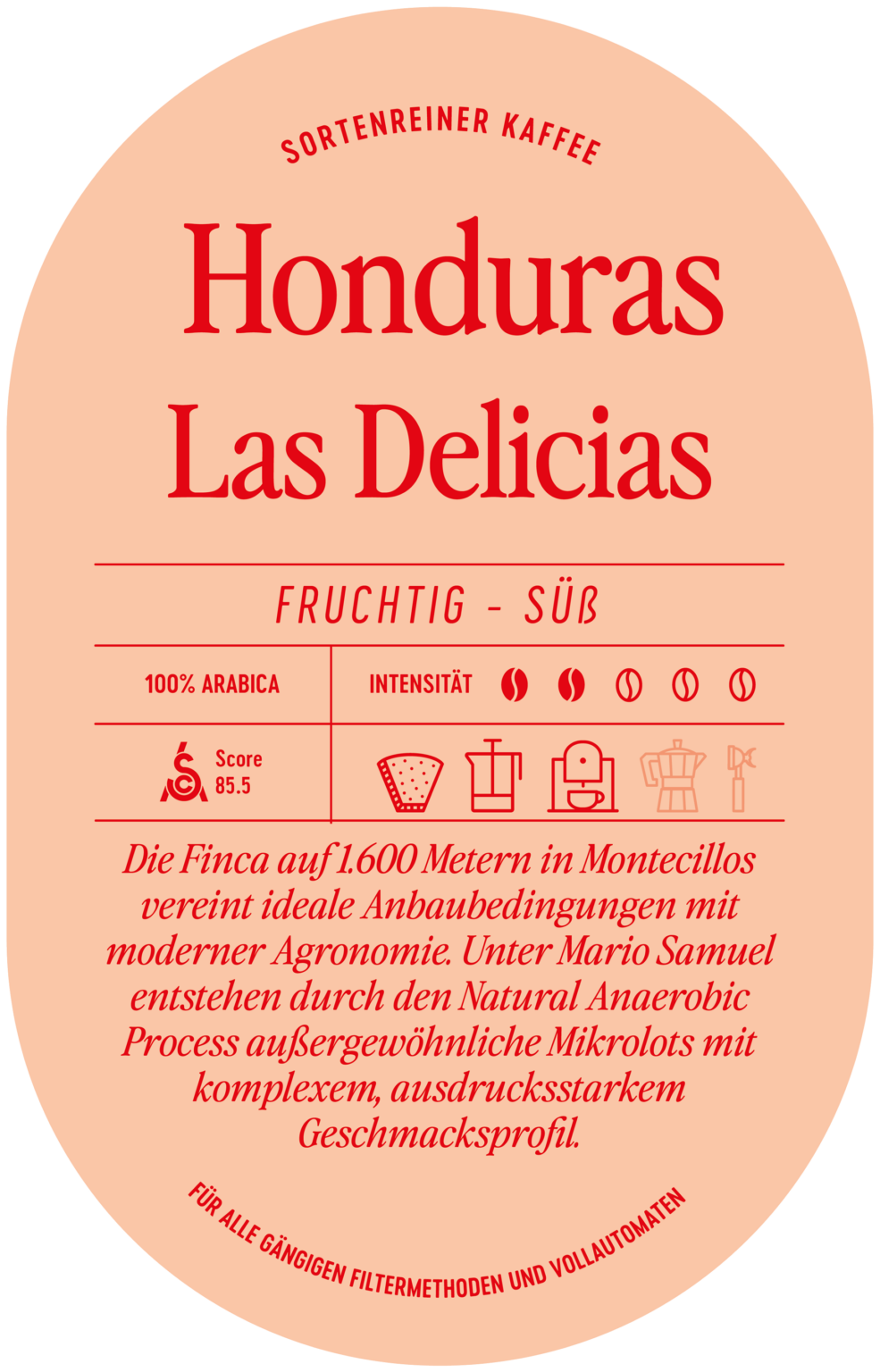
Mueller Kaffee
Honduras Las Delicias Natural Anaerobic
€11.50
Why: AnaerobicSimilar price

NANO Kaffee
Honduras | Mandarino [organic]
€5.00
LightWhy: AnaerobicSimilar price

Raefen Coffee Roasters
Costa Rica Finca San Juanillo
CA$10.00CA$20.00
Why: AnaerobicSimilar price

ManCoCo
Peru - Marcos Herrera Bourbon
£10.00
Why: AnaerobicSimilar price
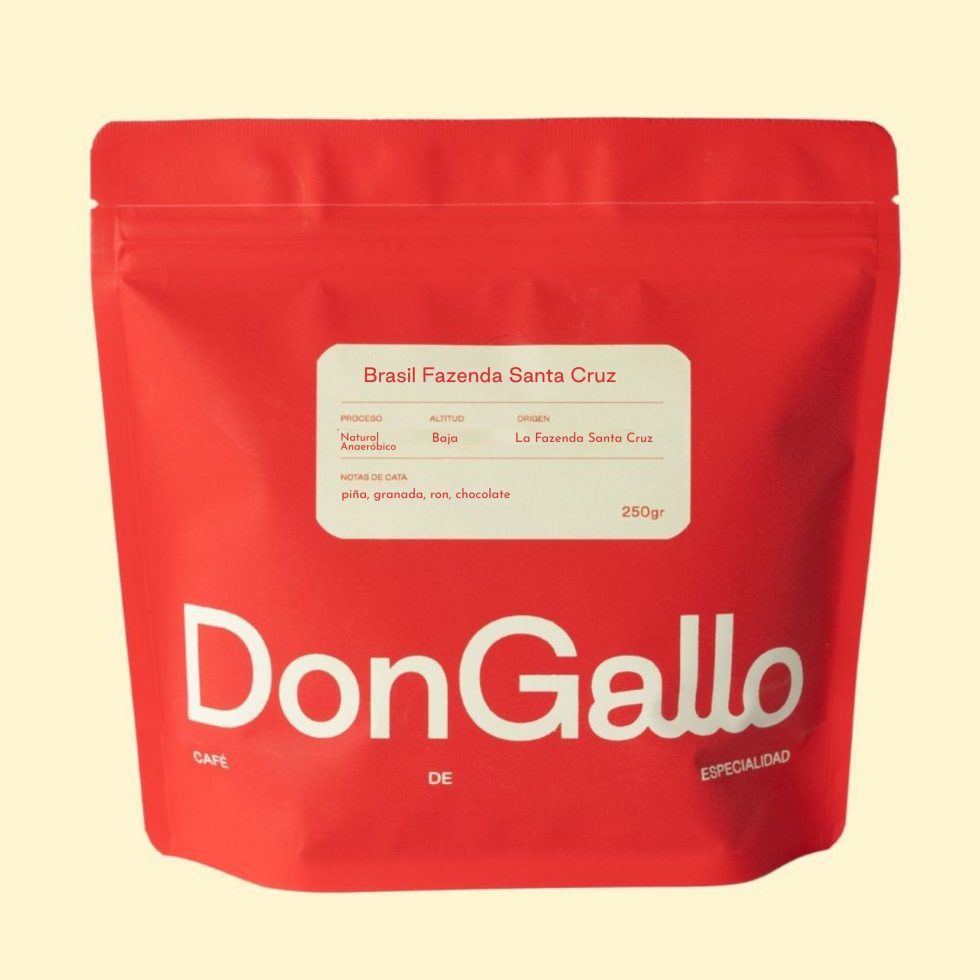
Don Gallo Café
Brasil Fazenda Santa Cruz
€9.95
Why: AnaerobicSimilar price

Pablo & Rusty's
La Divisa | Anaerobic Natural I Gesha I Filter
A$13.00
Why: AnaerobicSimilar price

Homeground Coffee Roasters
Aquiares Estate, F1 Centroamericano, Anaerobic Natural, Costa Rica (In-store)
SGD 13.00
Why: AnaerobicSimilar price


