Ozone Coffee
Costa Rica: Arbar, San Roque Kenya
Western Valley, Kenya, Costa Rica
- Honey
- Blend
Costa Rica: Arbar, San Roque Kenya er en kaffe fra Kenya og Costa Rica, solgt av Ozone Coffee (Storbritannia). Region: Western Valley. Foredling: honey. Variant: San Roque Kenya. Brenneriets smaksnotater: lemon, lime, white sugar, apricot. Pris: 9,00 £ til 53,95 £, avhengig av størrelsen. Det vil si fra 35,20 £ per kilo.
Ikke vurdert ennå · Bli den første til å vurdere den
fra9,00 £14,95 £
≈ 35,20 £ / kg
Du blir sendt til brenneriets butikk for å fullføre kjøpet.
- Brenneriet holder til i
- Storbritannia
- Send til
- Norge · ✓ Ja, ifølge brenneriets nettbutikk
Smaksprofil
Fra opplysningene som brenneriets butikk har oppgitt.
Smaksnotater
- Lemon
- Lime
- White sugar
- Apricot
Størrelser og priser
| Malegrad | Innhold | Per kg | Pris |
|---|---|---|---|
| Hele bønner | 220g | 67,95 £ | 14,95 £ ↗ |
| Malt til espresso | 220g | 67,95 £ | 14,95 £ ↗ |
| Malt til French press | 220g | 67,95 £ | 14,95 £ ↗ |
| Green Unroasted | 220g | 40,91 £ | 9,00 £ ↗ |
| Ground for Fine Filter | 220g | 67,95 £ | 14,95 £ ↗ |
| Ground for Medium Filter | 220g | 67,95 £ | 14,95 £ ↗ |
| Ground for Coarse Filter | 220g | 67,95 £ | 14,95 £ ↗ |
| Hele bønner | 500g | 60,20 £ | 30,10 £ ↗ |
Vis alle 20
| Malegrad | Innhold | Per kg | Pris |
|---|---|---|---|
| Malt til espresso | 500g | 60,20 £ | 30,10 £ ↗ |
| Malt til French press | 500g | 60,20 £ | 30,10 £ ↗ |
| Ground for Fine Filter | 500g | 60,20 £ | 30,10 £ ↗ |
| Ground for Medium Filter | 500g | 60,20 £ | 30,10 £ ↗ |
| Ground for Coarse Filter | 500g | 60,20 £ | 30,10 £ ↗ |
| Hele bønner | 1kg | 53,95 £ | 53,95 £ ↗ |
| Malt til espresso | 1kg | 53,95 £ | 53,95 £ ↗ |
| Malt til French press | 1kg | 53,95 £ | 53,95 £ ↗ |
| Green Unroasted | 1kg | 35,20 £ | 35,20 £ ↗ |
| Ground for Fine Filter | 1kg | 53,95 £ | 53,95 £ ↗ |
| Ground for Medium Filter | 1kg | 53,95 £ | 53,95 £ ↗ |
| Ground for Coarse Filter | 1kg | 53,95 £ | 53,95 £ ↗ |
Beskrivelse
Costa Rica: Arbar, San Roque Kenya, Honey
Bright and crisp from the first sip, there's a lively zing of lemon and lime balanced by a delicate white sugar sweetness. As the coffee cools, the citrus softens and a gentle apricot note begins to emerge on the finish. Clean, refreshing and beautifully elegant throughout.
A familiar face from a familiar family
If you’ve been drinking with us for a while, the Arrieta Barboza family will need no introduction. We’ve been buying from their Arbar micromill in Lourdes de Naranjo, in Costa Rica’s Western Valley, since 2013, and their Kenya lots have become some of the coffees we look forward to most each year. We’ve had their Kenya as a honey and as a natural before, and San Roque Kenya from Allan Oviedo’s Don Joel micromill too. This year’s honey lot is the cleanest and sweetest version we’ve had from Arbar, scoring higher on both counts than the last. We've also got a naturally processed version still to release too, how exciting!
We don’t often lean in one set direction when it comes to brewing methods, but for this coffee we wanted to make an exception. We think it’s at its best as a filter. The San Roque Kenya, grown at 1,600 metres in the Western Valley, brings the lemon and lime. The slow, closely watched honey process at Arbar brings the white sugar sweetness. Brewed as a filter, it’s reminiscent of sugar-coated lemon and lime fruit jellies, with apricot joining the citrus as it cools. If you're an espresso brewer, don't let this put you off - it makes a delicious fruit-forward espresso too! With the lemon and lime giving it plenty of citric pop and the white sugar pulling it towards candied lemons and limes.
The Arrieta Barboza family
The name ARBAR is a blend of Carlos ARrieta and Maria BARboza, the couple at the heart of the operation. Their family home sits in the middle of El Manantial, the largest of their five farms, with the drying beds, depulper and nursery laid out around the house. The other four farms, El Oasis, La Casa, La Isla and Don Pedro, each have their own microclimate and varietal focus, and all of their coffee comes back to the same small mill to be processed.
It wasn’t always this way. For years Carlos sent his cherries to a local cooperative and never met a buyer. That changed in 2013, when a sample labelled simply “Carlos Arrieta” turned up on the cupping table at the offices of our exporting partners, Exclusive Coffees, and stood out immediately. A year later the family were processing their own coffee, and we’ve been buying from them ever since.
Our Green Buyer Roland first visited in 2015, the year he sat on the Costa Rica Cup of Excellence jury. He didn’t speak Spanish yet, and Carlos and Maria don’t speak English, but before any introductions had been made Carlos gave him an enormous hug and told him he was one of them now, and that this was his home. That’s pretty much how it’s been ever since.
It’s very much a family effort. Maria leads much of the processing and roasts coffee for the local market on a small roaster at the back of the house, a skill she learned as a child roasting beans over a fire with her dad. Carlos splits his time between the farms and the mill. Their son Nacho has developed a real interest in cupping and quality control, while Esteban works for Exclusive Coffees and has recently bought a plot of land of his own, right next door to El Oasis. Seeing the next generation choose coffee as a career is about the best sign there is that a relationship is working.
Why Kenya, and why here
When you’re selling cherries into a cooperative, it makes sense to grow safe varieties like Caturra, Catuai and Villa Sarchi: resilient, productive and reliably good in the cup. Once the family began selling directly to us at prices that reflected their quality, they had room to take a few risks. One of those was small plantings of more unusual varieties, including Geisha and Kenya.
That gamble has paid off. Their La Casa farm is now planted mainly with Geisha and Kenya, two varieties that need more looking after than Caturra or Catuai but thrive in its particular conditions, and Kenya also grows on La Isla alongside Villa Sarchi, Geisha and Ethiopia.
The family farm mostly organically, though they aren’t certified. Fruit trees are planted among the coffee for shade, soil health and food for the family, and there are sheep, goats, chickens and fish on the land too. It’s as close to self-sufficient as a coffee farm gets.
The San Roque Kenya varietal
Kenya (sometimes written Kenia, or even Quenya, in Spanish) has a slightly mysterious backstory. In Costa Rica, the name San Roque Kenya, or SR Kenya, is used for all of the country’s Kenya coffee. The San Roque part most likely refers to where the original seedlings came from, though the trail goes cold quickly. Our best guess is that it descends from SL28, or possibly SL34, the Kenyan varieties behind the juicy acidity, citrus and blackcurrant of the best Kenyan coffees.
What’s much less mysterious is how it performs. It’s harder work and less productive than Caturra or Catuai, though far less fussy than Geisha, and it seems very happy at the medium altitudes of the Western Valley. Lots from the region have placed among the top spots in competition over the last few years. Allan Oviedo’s honey-processed San Roque Kenya, which we bought last season, placed third in the Traditional Semi-Washed, Honey and Natural category at the 2024 Costa Rica Cup of Excellence. The two lots above it were both Geishas, and it finished just over half a point behind second.
Across all the San Roque Kenya lots we’ve tasted from different Western Valley farms, one thing crops up almost every time: a crisp, zingy lime. It’s there again here, joined this year by lemon, and it’s the backbone of the cup.
Honey processing at Arbar
Honey processing sits between washed and natural. The cherries are depulped to remove the skin, but some or all of the sticky mucilage is left clinging to the bean as it dries slowly on raised beds. That mucilage brings extra sweetness and body to the cup, while the removal of the skin keeps things cleaner and brighter than a natural.
It also uses far less water than fully washed processing, which matters in this part of Costa Rica, where water is scarce. The trade-off is that it needs constant attention to avoid over-fermentation, with the coffee turned regularly on the beds as it dries. Maria and Carlos handle it all themselves, a few steps from their kitchen.
Traceability
- Country: Costa Rica
- Region: Western Valley
- Area: Lourdes de Naranjo
- Producer: The Arrieta Barboza family
- Micromill: Arbar
- Elevation: 1,600 m.a.s.l.
- Varietal: San Roque Kenya
- Process: Honey
Cupping Scores
Cupping notes: Lemon and lime, white sugar, apricot.
Cup of Excellence Cupping Scores
- Clean cup: 7/8
- Sweetness: 7/8
- Acidity: 7/8
- Mouthfeel: 6/8
- Flavour: 6/8
- Aftertaste: 6/8
- Balance: 6/8
- Overall: 6.5/8
- Correction: +36
- Total: 87.5/100
If you’d like to find out more about how we score coffees, make sure to read our blog post “What Do Coffee Cupping Scores Actually Mean?” and if you’d like to try cupping yourself, we’ve got a guide to that too! What is Coffee Cupping.
Roasting Information
Medium - keep this nice and steady and you're looking for mid-way through the gap, keeping the coffees flavours crisp, clean and bright.
Spørsmål om Costa Rica: Arbar, San Roque Kenya
Hvordan smaker Costa Rica: Arbar, San Roque Kenya?
Brenneriets smaksnotater: lemon, lime, white sugar, apricot. Smaksgrupper: fruktig og sitrus.
Hvor kommer Costa Rica: Arbar, San Roque Kenya fra?
Den kommer fra Kenya og Costa Rica. Region: Western Valley. Produsent: The Arrieta Barboza family. Høyde over havet: 1 600 m. Variant: San Roque Kenya.
Hvordan er Costa Rica: Arbar, San Roque Kenya foredlet?
Foredlingsmetode: honey.
Hva koster Costa Rica: Arbar, San Roque Kenya?
Pris: 9,00 £ til 53,95 £, avhengig av størrelsen. Det vil si fra 35,20 £ per kilo. Prisene kommer fra butikken og kan endre seg. Butikken har gjeldende priser.
Hvor kan jeg kjøpe Costa Rica: Arbar, San Roque Kenya?
I nettbutikken til Ozone Coffee: prisene på denne siden lenker dit. Ifølge butikken sin leverer de over hele verden. Cafendo selger ikke kaffe selv.
Vurderinger
Ingen vurderinger ennå.
Liker du denne kaffen, prøv disse
Plukket ut fra andre brennerier etter felles opprinnelse, foredling, brenning, smaksnotater og pris. Kaffer som de samme menneskene har lagret eller vurdert høyt, teller mest.
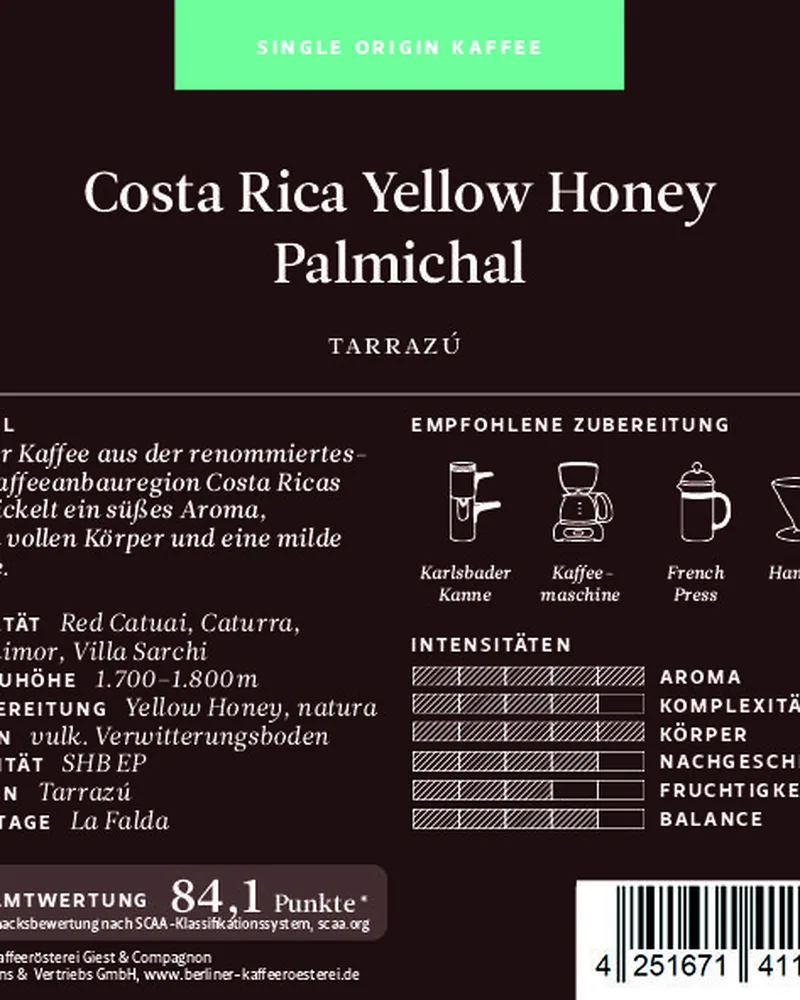
Berliner Kaffeerösterei
Costa Rica SHB Yellow Honey Palmichal La Falda Estate
8,25 USD
MiddelsHvorfor: Costa RicaSitrus · FruktigHoney
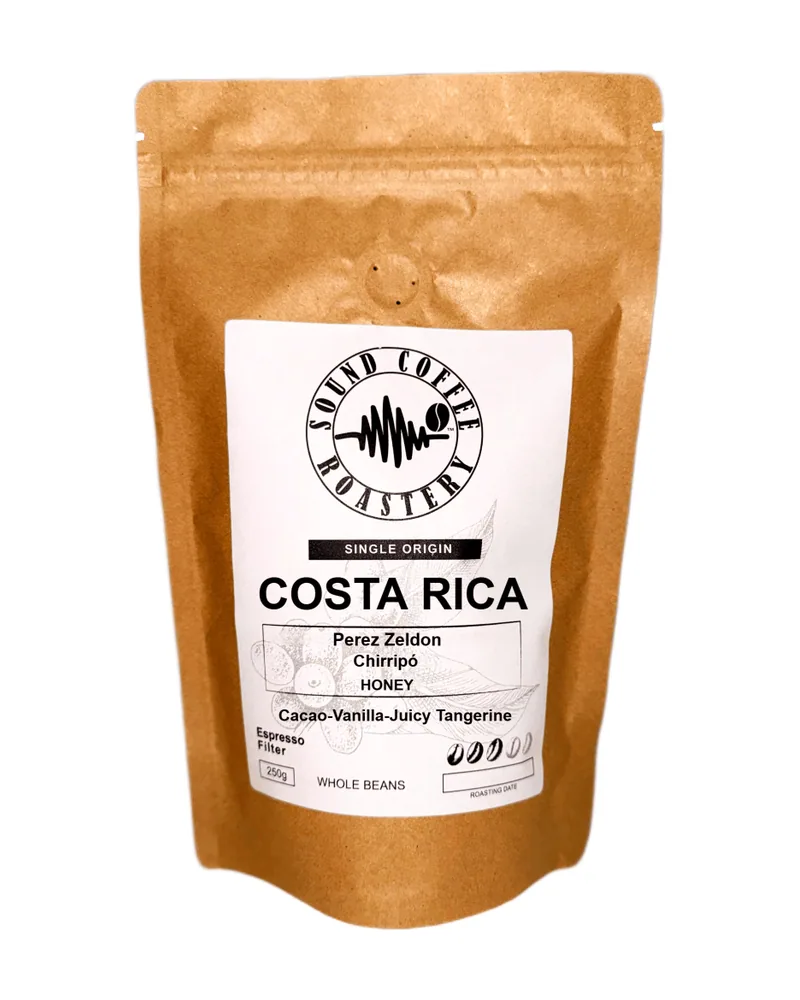
Sound Coffee
Costa Rica Perez Zeldon Honey
9,00 €
Hvorfor: Costa RicaSitrus · FruktigHoney
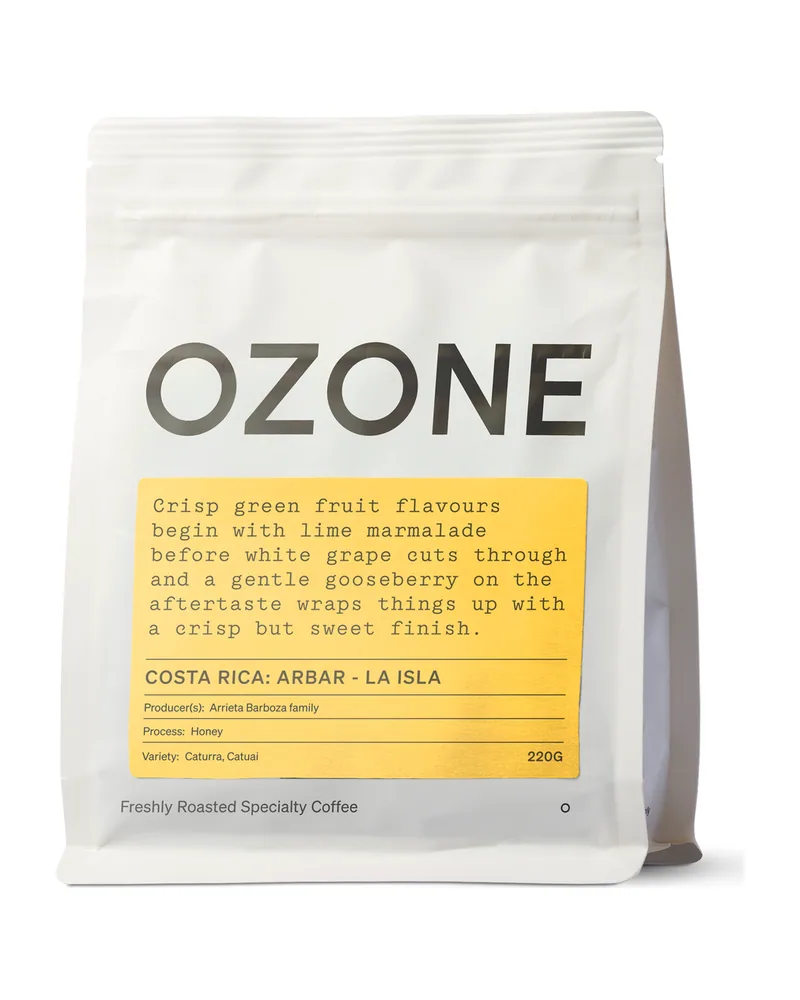
Has Bean
Costa Rica: Arbar - La Isla
9,00 £11,95 £
Hvorfor: Costa RicaSitrus · FruktigHoney
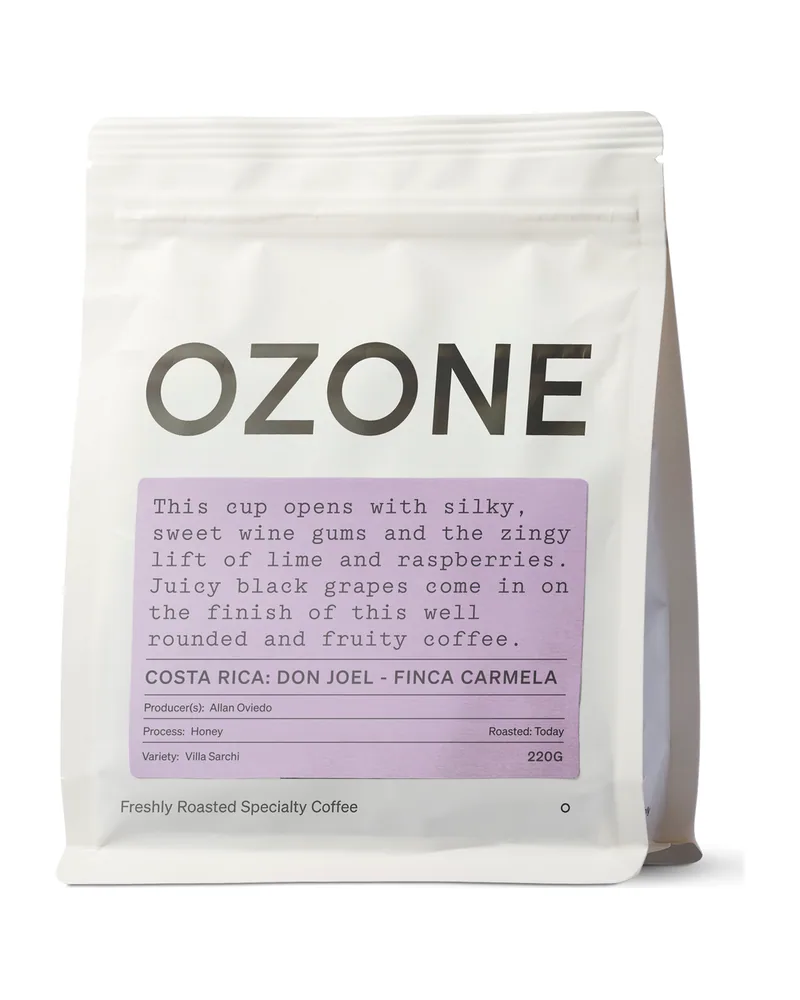
Has Bean
Costa Rica: Don Joel - Finca Carmela
9,80 £11,95 £
Hvorfor: Costa RicaSitrus · FruktigHoney
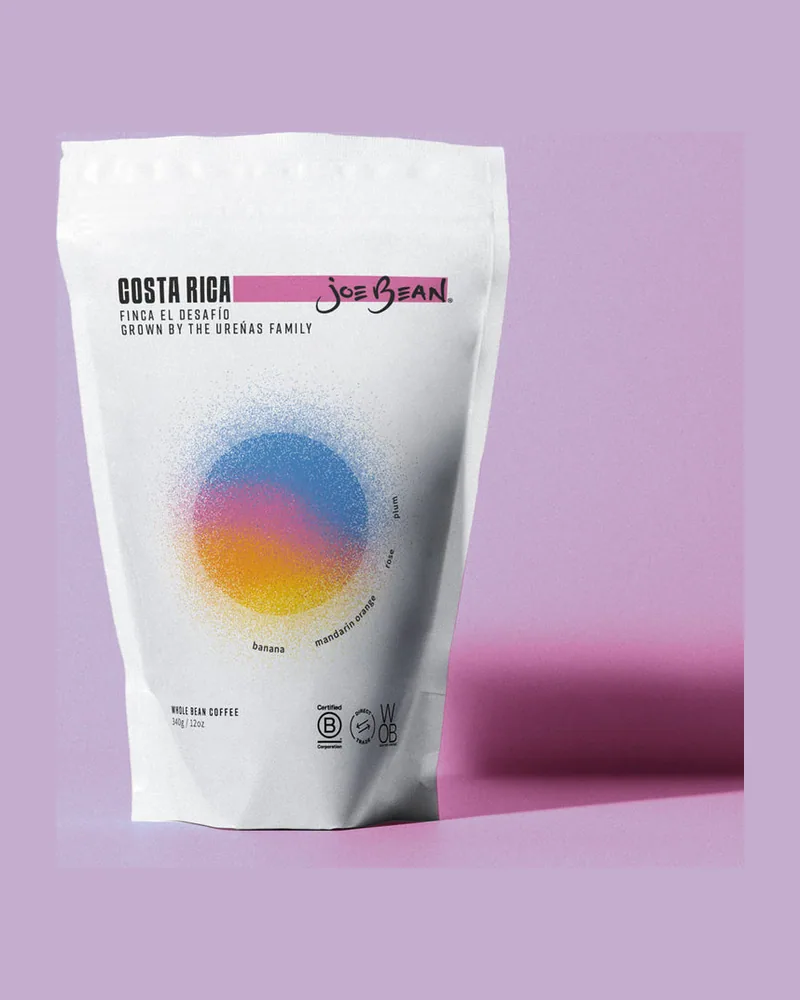
Joe Bean Roasters
COSTA RICA FINCA EL DESAFIO
12,00 USD
Hvorfor: Costa RicaSitrus · FruktigHoney
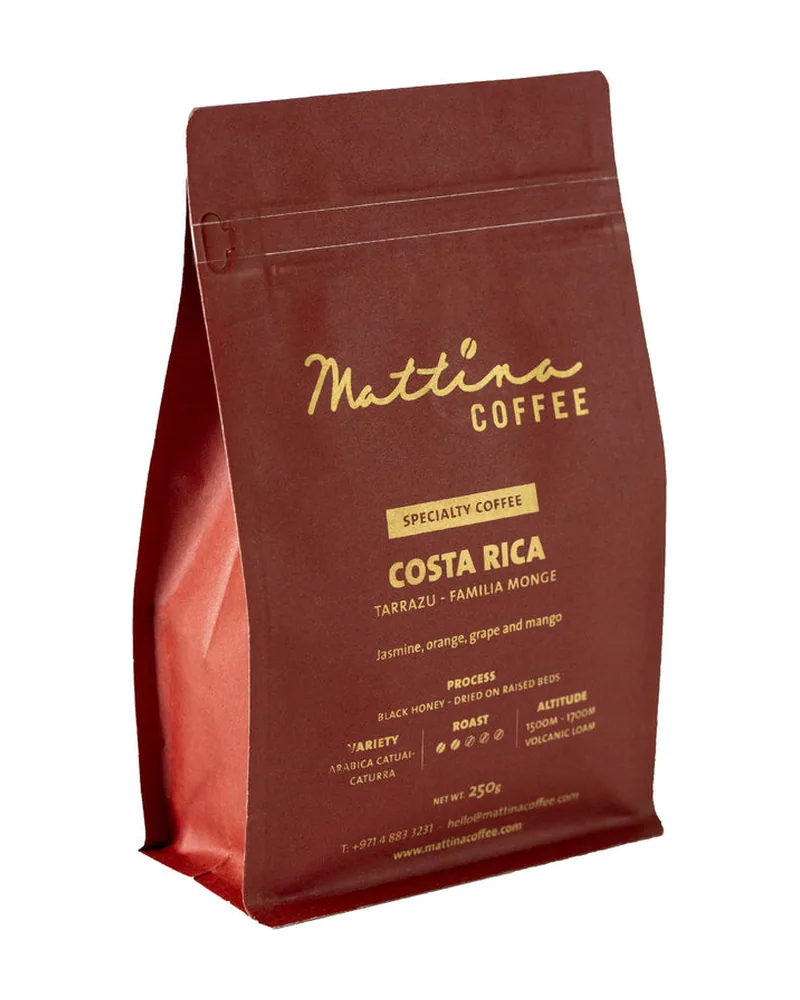
Mattina Coffee
Costa Rica Tarrazu Familia Monge Micro Lot - Natural
65,00 AED
Hvorfor: Costa RicaSitrus · FruktigHoney
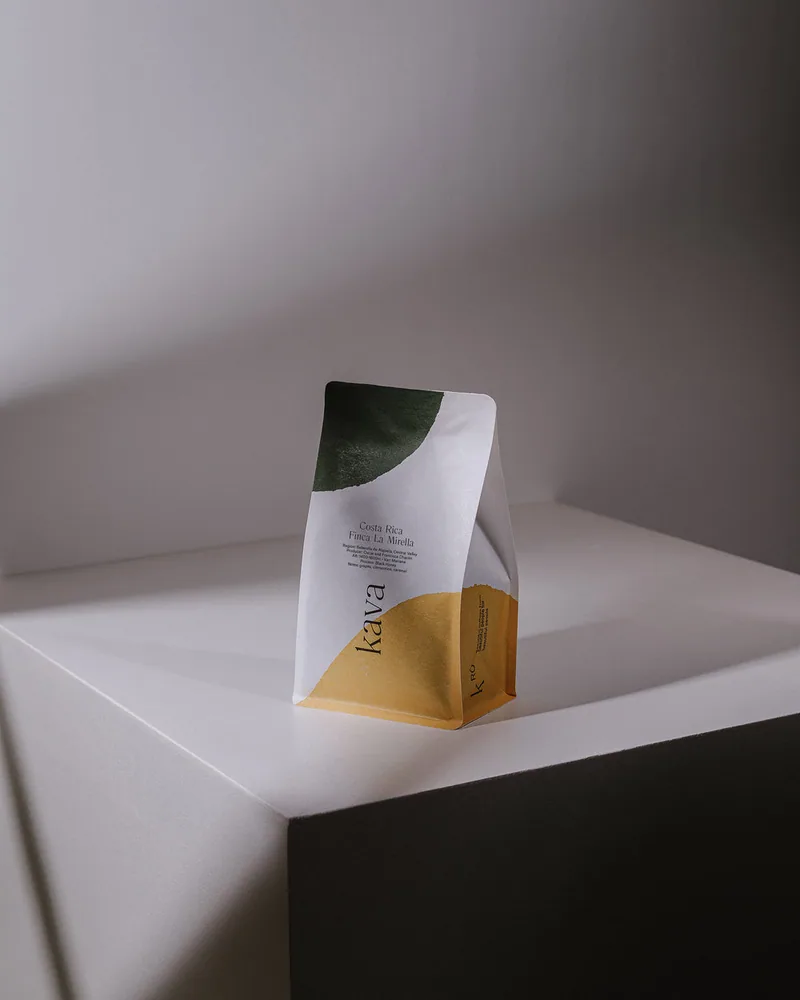
Kava Family
Costa Rica | Finca La Mirella
17,00 €
Hvorfor: Costa RicaSitrus · FruktigHoney
The Crackpots Coffee Roaster
Costa Rica Brunca Chirripo Las Torres Honey
67,00 MYR
Hvorfor: Costa RicaSitrus · FruktigHoney