Ozone Coffee
Decaf
Sul de Minas, Brasilien
- Naturlig
- Single origin
- Koffeinfri
Decaf er en kaffe fra Brasilien, som sælges af Ozone Coffee (Storbritannien). Område: Sul de Minas. Forarbejdning: naturlig. Varietet: Mundo Novo, Yellow Catuai, Yellow Catucai. Risteriets smagsnoter: walnut, cocoa nib, hazelnut. Pris: 9,80 £ til 49,50 £, afhængigt af størrelsen.
Endnu ikke bedømt · Vær den første til at anmelde den
fra9,80 £14,95 £
Du føres til risteriets webshop for at gennemføre dit køb.
- Risteri med base i
- Storbritannien
- Levér til
- Danmark · ✓ Ja, ifølge risteriets webshop
Smagsprofil
Ud fra de oplysninger, risteriets webshop har angivet.
Smagsnoter
- Walnut
- Cocoa nib
- Hazelnut
Størrelser og priser
| Formaling | Pris |
|---|---|
| Hele bønner | 14,95 £ ↗ |
| Green Unroasted 220g | 9,80 £ ↗ |
| Ground for Espresso 220g | 14,95 £ ↗ |
| Ground for Fine Filter 220g | 14,95 £ ↗ |
| Ground for Medium Filter 220g | 14,95 £ ↗ |
| Ground for Coarse Filter 220g | 14,95 £ ↗ |
| Ground for French Press 220g | 14,95 £ ↗ |
| Ground for Espresso 500g | 29,50 £ ↗ |
Vis alle 18
| Formaling | Pris |
|---|---|
| Ground for Fine Filter 500g | 29,50 £ ↗ |
| Ground for Medium Filter 500g | 29,50 £ ↗ |
| Ground for Coarse Filter 500g | 29,50 £ ↗ |
| Ground for French Press 500g | 29,50 £ ↗ |
| Green Unroasted 1kg | 39,20 £ ↗ |
| Ground for Espresso 1kg | 49,50 £ ↗ |
| Ground for Fine Filter 1kg | 49,50 £ ↗ |
| Ground for Medium Filter 1kg | 49,50 £ ↗ |
| Ground for Coarse Filter 1kg | 49,50 £ ↗ |
| Ground for French Press 1kg | 49,50 £ ↗ |
Beskrivelse
Ozone Decaffeinated Single Origin
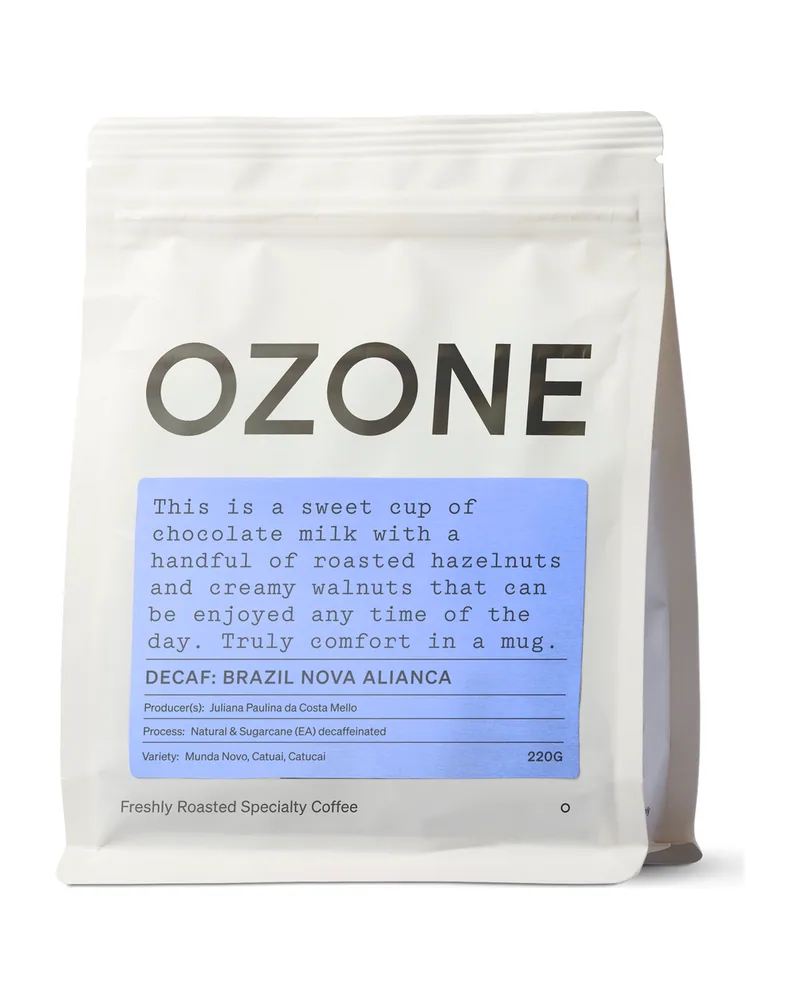
This is a sweet cup of chocolate milk with a handful of roasted hazelnuts and creamy walnuts that can be enjoyed any time of the day. Truly comfort in a mug.
Here at Ozone, we’re always on the lookout for tasty decaf. It can be a little tricky to get hold of, but we aim to have at least one decaf available at all times, and which coffee that is will change throughout the year. If you subscribe to Decaf, you’ll always receive our current fresh decaf, so the farm in your bag will evolve as new coffees come in.
We were one of the first roasters in the UK to move to Colombian decaf, when the ethyl acetate (EA) plant in Colombia started turning out genuinely great coffee. For most of the last ten years our decaf range has been exclusively Colombian, because in blind tastings the EA decafs simply proved more delicious than the CO₂ or Swiss Water options available. The catch? Colombia is a producing country, so decaffeinating anything other than Colombian coffee there was super tricky, and we had to work within those limits.
Ask us for an all-rounder – good any time of day, crowd-pleasing, easy to work with – and nine times out of ten we’ll point you towards Brazil. Bonus points if you remember this one: we once ran a CO₂ decaf of Cachoeira da Grama, and it was really good. We’ve been looking for a way to bring Brazil back into our decaf line-up ever since.
That chance came when we were introduced to EA decaffeination in Bremen, Germany. Finally, we could try what we’d always wanted: EA decaf on a great Brazilian coffee.
The Decaffeination Process
EA decaf uses ethyl acetate, a compound found naturally in fruit like bananas and apples, and in sugarcane, which is where the “sugarcane decaf” name comes from. In Bremen, the green beans are first steamed to open them up, then washed with a solution of water and EA, which bonds with the caffeine and draws it out. More steam removes any remaining EA, and the beans are dried back to their original moisture. What’s left keeps its sweetness, body and origin character. All the flavour, none of the buzz.
Why EA decaf?
Here’s the thing: every decaf method is a balancing act between taking the caffeine out and leaving everything else in. EA is highly selective, so it goes after the caffeine and leaves more of the good stuff behind. In our blind tastings it’s consistently held on to more sweetness and origin character than CO₂ or Swiss Water decafs – which is why it’s been our go-to for the best part of a decade.
From a food miles point of view, the extra step adds very little. The coffee travelled from Brazil straight to Germany, part of it was decaffeinated there, and then it all came on to us in the UK together.
Coffee Information - Brazil: Fazenda Cruz Alta
Juliana Paulino da Costa Mello is the 5th generation of her family to be involved in coffee production and together with her husband, agronomist Flavio, owns 150 hectares of land in the region. The area used to be one huge farm but was split up, and surrounding farms are all now owned by members of Juliana's family.
Roland, our Green Buyer had the pleasure of visiting them last summer. They witnessed first-hand that with careful organising and an understanding of long-term sustainability, the farm plants native trees and fruit trees to promote biodiversity. This attention to detail carries through in the care of their plants, with careful measuring of many variables to assess plant health used to guide pruning, planting and harvesting.
- Country: Brazil
- Region: Sul de Minas
- Municipality: Monte Santo de Minas
- Farm: Nova Aliança
- Producers: Juliana Paulina da Costa Mello
- Varieties: Mundo Novo, Yellow Catuai, Yellow Catucai
- Process: Natural
- Elevation: 1,000 - 1,100 m.a.s.l.
- Farm Size: 110 hectares
- Decaffeination: Sugarcane (EA) Decaffeination
Cupping Scores
Tasting notes: Walnut, cocoa nib, hazelnut.
Cup of Excellence Cupping Scores
- Clean Cup: 6/8
- Sweetness: 6.5/8
- Acidity: 6/8
- Mouthfeel: 6/8
- Flavour: 6/8
- Aftertaste: 6/8
- Balance: 6.5/8
- Overall: 6/8
- Correction: (+36): +36
-
Total: 85/100
Roast Information
Medium: through the gap and let this develop a little in the gap, but don´t let the appearance catch you out, this needs pushing up to the edge of second crack to get the best from it.
A Note on Decaf Visual Roast Colour From Our Roasting Team
The decaffeination process, including Ethyl Acetate (EA), alters the physical structure of green coffee beans. EA decaf beans tend to:
- Lose some natural moisture
- Become more porous and fragile
- Develop a darker hue even before roasting
Because of these changes, decaf beans absorb heat differently during roasting. They often darken more quickly, and their colour progression can be misleading - turning brown or even dark brown well before reaching first crack. This means a medium roast decaf can visually resemble a dark roast regular coffee, even though the internal development is quite different.
Additionally, EA-decaffeinated beans may develop a shiny surface at lighter roast levels due to changes in oil migration and surface texture. While shinier, oilier beans are often associated with darker roasts in regular caffeinated coffee, in this case, it's a result of the decaffeination process, not necessarily the roast level.
Spørgsmål om Decaf
Hvordan smager Decaf?
Risteriets smagsnoter: walnut, cocoa nib, hazelnut. Smagsgrupper: chokolade og nøddeagtig.
Hvor kommer Decaf fra?
Den kommer fra Brasilien. Område: Sul de Minas. Producent: Nova Aliança. Højde: 1.000–1.100 m. Varietet: Mundo Novo, Yellow Catuai, Yellow Catucai.
Hvordan er Decaf forarbejdet?
Forarbejdningsmetode: naturlig.
Hvad koster Decaf?
Pris: 9,80 £ til 49,50 £, afhængigt af størrelsen. Priserne kommer fra webshoppen og kan ændre sig; webshoppen har de aktuelle.
Hvor kan jeg købe Decaf?
I webshoppen hos Ozone Coffee: priserne på denne side linker dertil. Ifølge webshoppen leverer den til hele verden. Cafendo sælger ikke selv kaffe.
Anmeldelser
Ingen anmeldelser endnu.
Hvis du kan lide denne kaffe, så prøv disse
Udvalgt blandt andre risterier ud fra fælles oprindelse, forarbejdning, ristning, smagsnoter og pris. Kaffe, som de samme personer har gemt eller bedømt højt, tæller mest.

Camberley Coffee Club
Brazil Swiss Water Decaf
9,61 US$
MørkHvorfor: BrasilienNøddeagtig · ChokoladeNaturlig
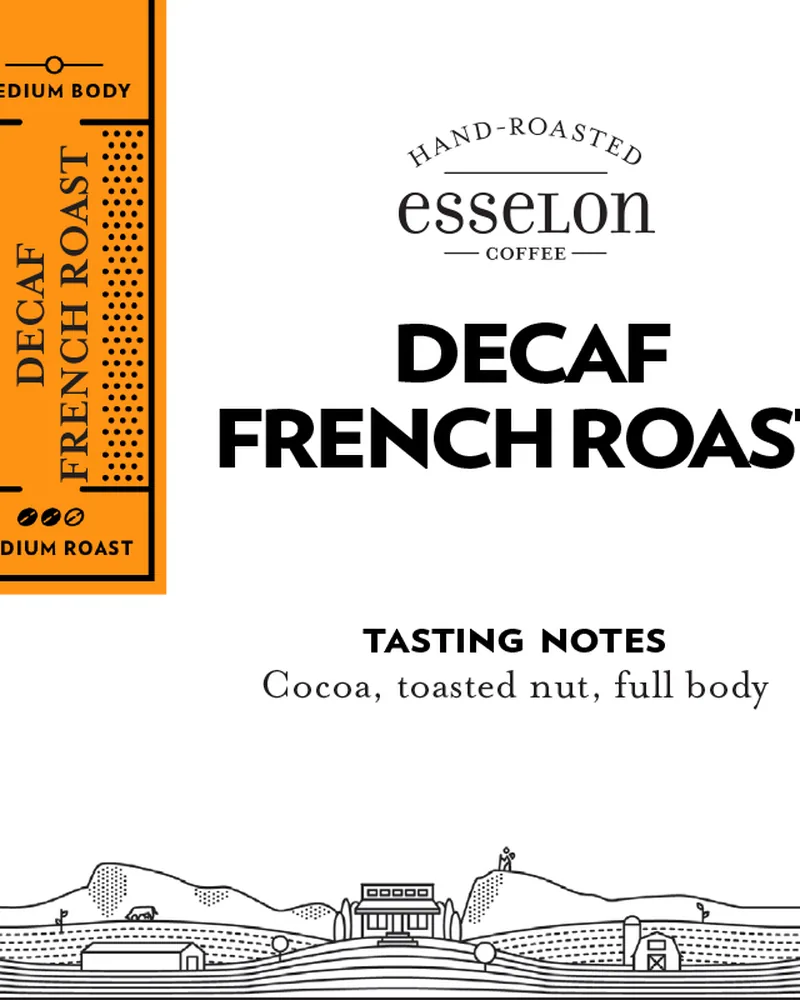
Esselon
Decaf French Roast
16,00 US$
MediumHvorfor: BrasilienNøddeagtig · ChokoladeNaturlig
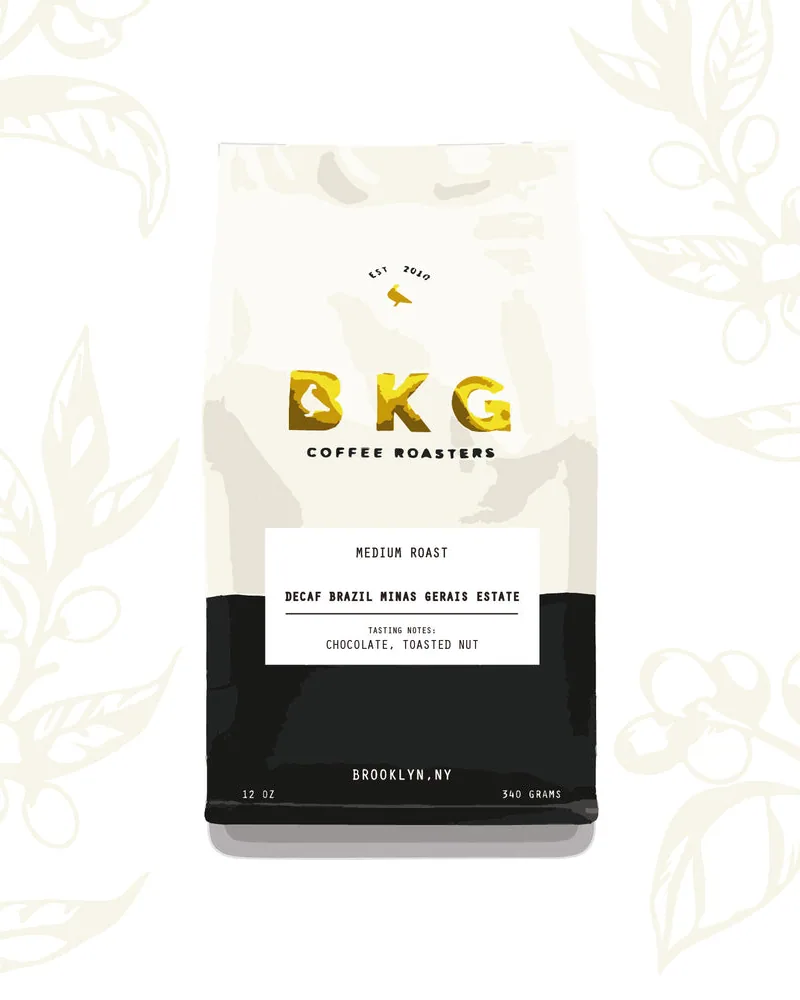
BKG Coffee Roasters
Decaf Brazil Minas Gerais Estate
17,95 US$
MediumHvorfor: BrasilienNøddeagtig · ChokoladeNaturlig
Has Bean
Decaf
9,80 £14,95 £
Hvorfor: BrasilienNøddeagtig · ChokoladeNaturlig
Cover Bridge Coffee
DECAF- Brazil- Swiss Water Process
20,25 US$
Hvorfor: BrasilienNøddeagtig · ChokoladeNaturlig
Gegrond
Brazil Swiss Water Decaf
200,00 ZAR
Hvorfor: BrasilienNøddeagtig · ChokoladeNaturlig
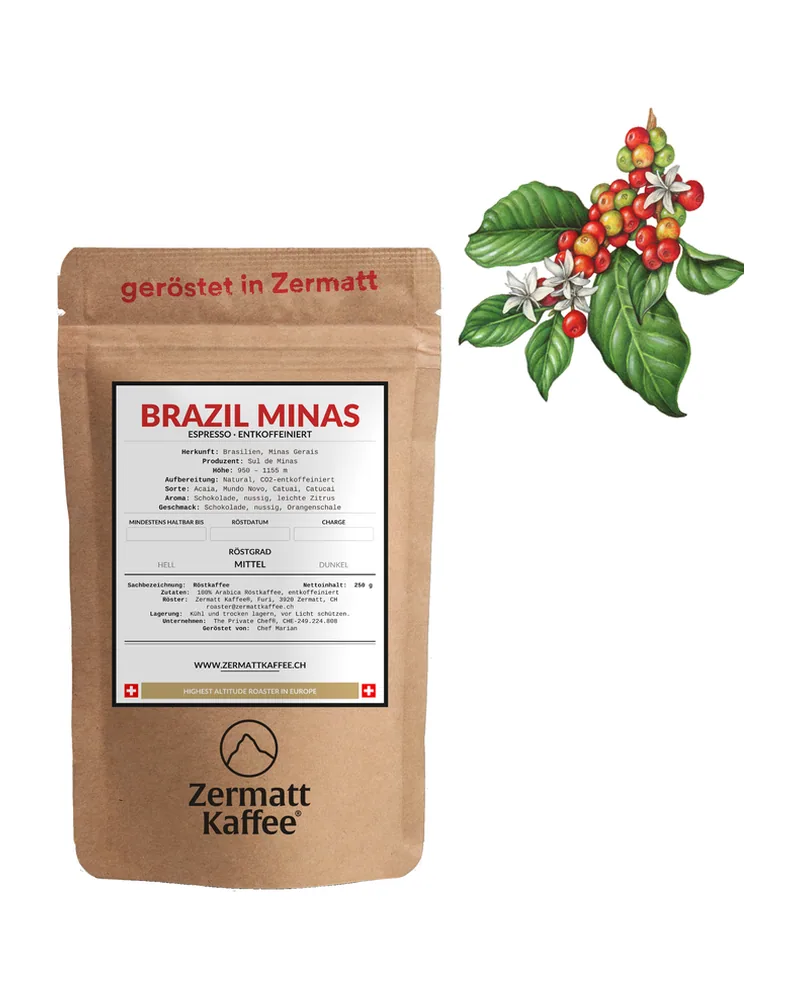
Zermatt Kaffee
Brazil Minas Decaffeinated Omni Roast
13,00 CHF
Hvorfor: BrasilienNøddeagtig · ChokoladeNaturlig
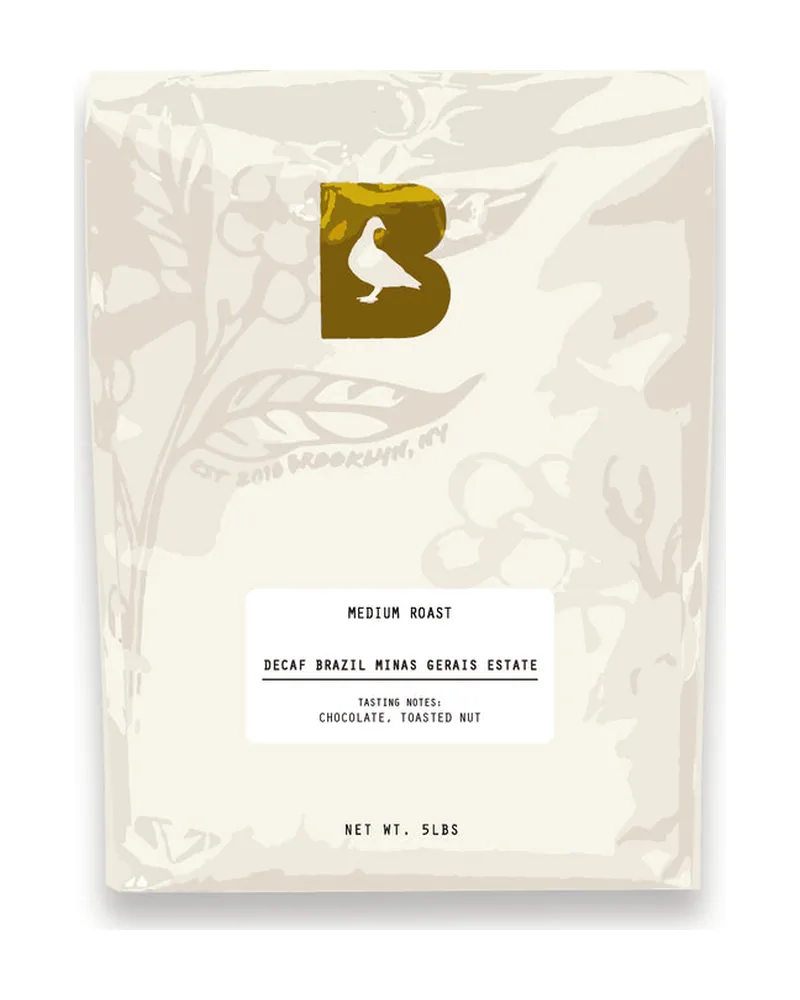
BKG Coffee Roasters
Decaf Brazil Minas Gerais Estate - Bag
89,95 US$
MediumHvorfor: BrasilienNøddeagtig · ChokoladeNaturlig