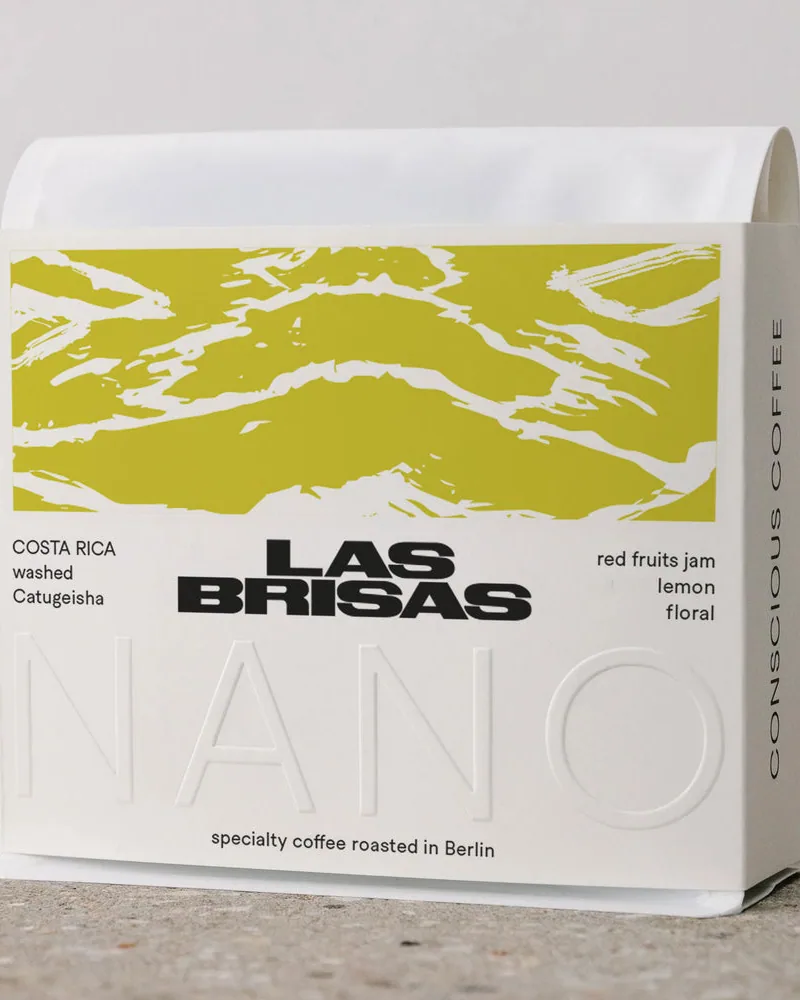
NANO Kaffee
Ethiopia | Guji Grade 1 [organic]
Guji, Odo Shakiso, Tero, Etiópia
- Nível de torra: Clara
- Natural
- Origem única
Ethiopia | Guji Grade 1 [organic] é um café de Etiópia, vendido por NANO Kaffee (Alemanha). Região: Guji, Odo Shakiso, Tero. Processo: natural. Variedade: Heirloom, Grade 1. Torra: clara. Preço: de 5,00 € a 63,00 €, consoante o tamanho. Isso equivale a partir de 71,20 € por quilo.
Ainda sem classificação · Seja o primeiro a avaliá-lo
de5,00 €
≈ 71,20 € / kg
Vai ser levado à loja da torrefação para concluir a compra.
- Torrefação sediada em
- Alemanha
- Enviar para
- Portugal · ✓ Sim, segundo a loja da torrefação
Perfil de sabor
A partir dos dados indicados pela loja da torrefação.
- Nível de torraClara
- LeveEscuro
Tamanhos e preços
Descrição
100% organic
100% Arabica
Whole beans.
This coffee is a product of the highest quality, grown and roasted in respectful harmony between people and nature—that’s what NANO KAFFEE stands for.
Stats
ORIGIN: Ethiopia
REGION: Guji, Odo Shakiso, Tero
ALTITUDE: 1,800-2,200 masl
FARM/GROWER: Dimtu Tero
IMPORTER: InterAmerican Coffee
FOB: 10.36 EUR / kg
VARIETY: Heirloom, Grade 1
PROCESSING: natural
FLAVOR: Earl Grey, caramelized peach, coffee blossom
Quick info
Dimtu Tero is a major force behind the rise of the Guji region in Ethiopia. Its sustainable farming practices, genuine responsibility toward farmers, and coffee beans that are given extra time to develop their flavor through moderate temperatures and natural drying all contribute. The result: a wonderful peach aroma with floral notes and a distinctive, sparkling mouthfeel.
Packaging note:
The product image shows the 250-g package. The 60-g and 1,000-g sizes come in coffee bags with a front label and no sleeve.
The farmers
Dimtu Tero is a renowned coffee farm in the Guji Zone of the Oromia Region in southern Ethiopia. It is known for producing high-quality specialty coffee and contributes to Guji’s growing reputation as a source of some of Ethiopia’s finest coffees.
Although coffee plays a central role in Guji culture, it took years for the people of Guji to begin growing coffee as a cash crop. Dimtu Tero was founded as part of a social shift in Ethiopia, when many Ethiopians chose to preserve and promote the country’s rich coffee heritage and keep the value added within the country.
Dimtu Tero is a 151-hectare “semi-forest farm,” where coffee plants and a wide variety of shade trees grow and thrive side by side.
Nature
Dimtu Tero is one with the forests of Guji; you can hardly tell where the farm begins or ends. This is partly due to Ethiopia’s tradition of growing coffee plants among a wide variety of shade trees, and partly to the farm’s founder, Getachew Zeleke, who is committed to leaving nature as undisturbed as possible.
Thanks to organic coffee farming, the farm has received NOP, EU, and JAS certification—a rarity for Ethiopian coffee farms.
There are thousands of wild coffee varieties in Ethiopia’s mountain forests, most of which have yet to be documented. Although the Jimma Agricultural Research Center is working to classify these wild varieties, the terms “heirloom” or “landrace” are still often used as umbrella terms for coffee varieties that have not yet been fully studied.
Bordering the Yirgacheffe and Sidama regions, Guji shares the same climatic conditions, even though the landscapes are quite different.
The soils in Guji are volcanic and rich in minerals, making them ideal for demanding Arabica plants. The elevation can reach up to 2,200 meters above sea level, which means cooler temperatures and a longer development period for the coffee cherries. This allows more complex flavors and aromas to develop. With 1,200-2,000 mm of rainfall per year, conditions are ideal for growing coffee overall.
The impact
The most common way to run a private washing station in Ethiopia is to buy coffee cherries from nearby farmers, process them, and sell them again. It’s a quick business. Things work a little differently at Dimtu Tero Farm. Its goal is to ensure the highest quality through sustainable farming and traceability. Smallholder farmers must undergo a comprehensive review, registration, and mapping of their farms, and take part in training on agronomy and coffee processing before their harvests can be included in the lots. Through this demanding process, smallholder farmers benefit from higher prices for higher-quality cherries. Dimtu Tero also provides financing for harvests, pays for certifications, and distributes seedlings and coffee sacks for transport.
Thanks to organic coffee farming, the farm has received NOP, EU, and JAS certification—a rarity for Ethiopian coffee farms.
Dimtu Tero makes sure that everyone benefits from the advantages of coffee marketing. Local structures are strengthened, the local environment is protected, and farmers in the region can increase their income.
The taste
There are over 1,000 different wild varieties, but because of their wild growing methods, it is rare for a coffee to be attributed to a specific variety. They are therefore grouped under the umbrella term “Heirloom” and are known for their natural, bold character. Flavor differences are typically defined by the region of origin, with floral or berry notes depending on the region.
Thanks to moderate temperatures, consistent rainfall, and fertile volcanic soils, conditions are ideal and encourage the development of distinctive flavors and aromas.
What’s more, these beans are Grade 1 quality. That means they are the first beans selected and have no primary defects and very few secondary defects. Grade 1 is the highest quality level—the crème de la crème, so to speak. The beans are also selected for uniform size, which is especially helpful during roasting because it allows for a very even roast.
At Dimtu Tero, only the ripest cherries are hand-picked and then dried in their fruit for up to 20 days before being hulled. This process uses very little water and emphasizes the sweet, fruity flavors in the coffee, as the beans are exposed to the fruit’s natural sugars for a longer period.
Our roast highlights the characteristic sweetness with a wonderful cherry aroma, represents the region through its floral notes, and showcases the rise of the Guji region with a distinctive, sparkling mouthfeel.
Fun fact
13 months of sunshine? The Ethiopian calendar differs considerably from the Gregorian calendar, with an extra month, resulting in a 13-month year.
—
This coffee is a product of the highest quality, grown and roasted in respectful harmony between people and nature—that’s what NANO KAFFEE stands for.
Organic certification: DE-ÖKO-070
Perguntas sobre Ethiopia | Guji Grade 1 [organic]
De onde vem Ethiopia | Guji Grade 1 [organic]?
Vem de Etiópia. Região: Guji, Odo Shakiso, Tero. Altitude: 1800–2200 m. Variedade: Heirloom, Grade 1.
Como é processado Ethiopia | Guji Grade 1 [organic]?
Método de processamento: natural.
Que nível de torra tem Ethiopia | Guji Grade 1 [organic]?
Nível de torra: clara.
Quanto custa Ethiopia | Guji Grade 1 [organic]?
Preço: de 5,00 € a 63,00 €, consoante o tamanho. Isso equivale a partir de 71,20 € por quilo. Os preços vêm da loja e podem mudar; a loja tem os preços atuais.
Onde posso comprar Ethiopia | Guji Grade 1 [organic]?
Na loja online de NANO Kaffee: os preços desta página ligam a ela. Segundo a sua loja, entrega em Alemanha, Áustria, Bélgica, Bulgária, Canadá, Chéquia e 25 outros países. A Cafendo não vende café.
Avaliações
Ainda sem avaliações.
Se gosta deste café, experimente estes
Escolhidos entre outras torrefações por origem, processo, torra, notas de prova e preço em comum. Os cafés que as mesmas pessoas guardaram ou classificaram bem contam mais.
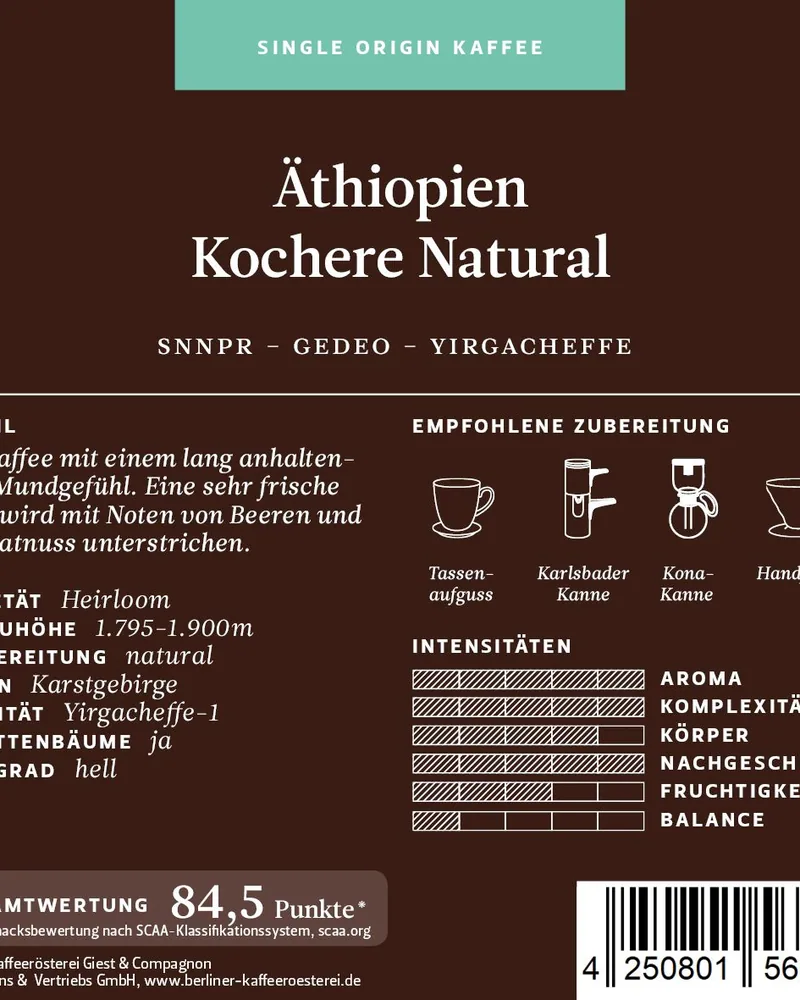
Berliner Kaffeerösterei
Ethiopia Kochere Natural
8,45 US$
ClaraPorquê: EtiópiaNaturalPreço semelhante
Black Sheep
ETHIOP DJIMMAH NATURAL
7,47 US$
ClaraPorquê: EtiópiaNaturalPreço semelhante
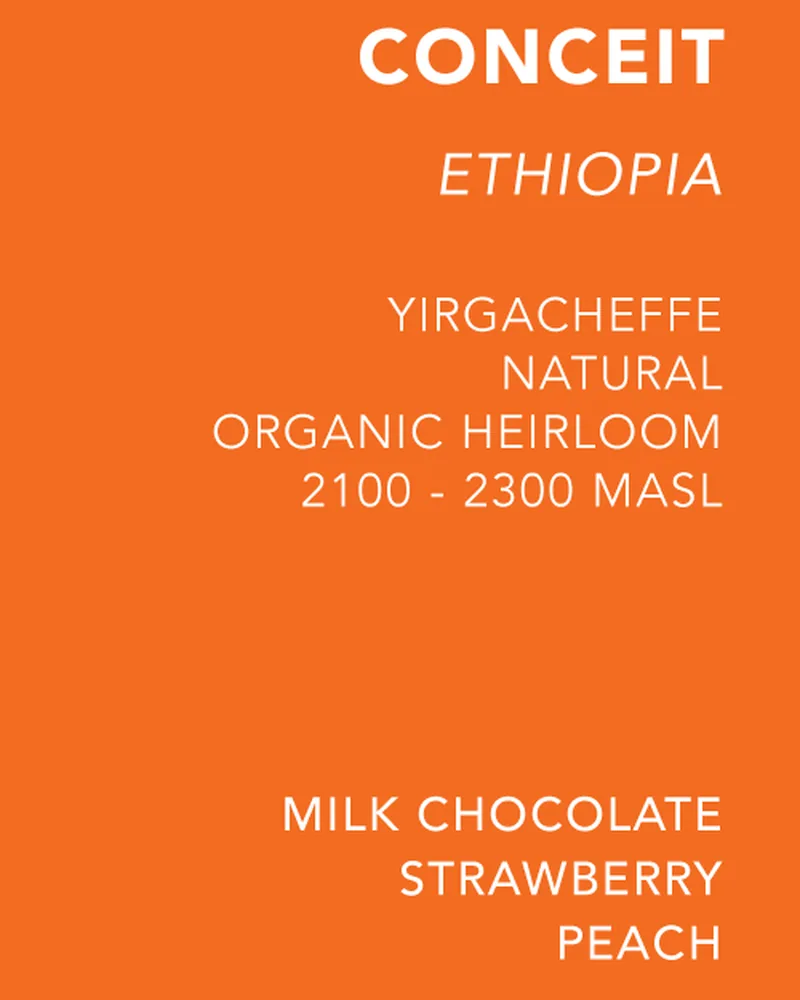
Docent Coffee
Conceit
9,00 US$
ClaraPorquê: EtiópiaNaturalPreço semelhante
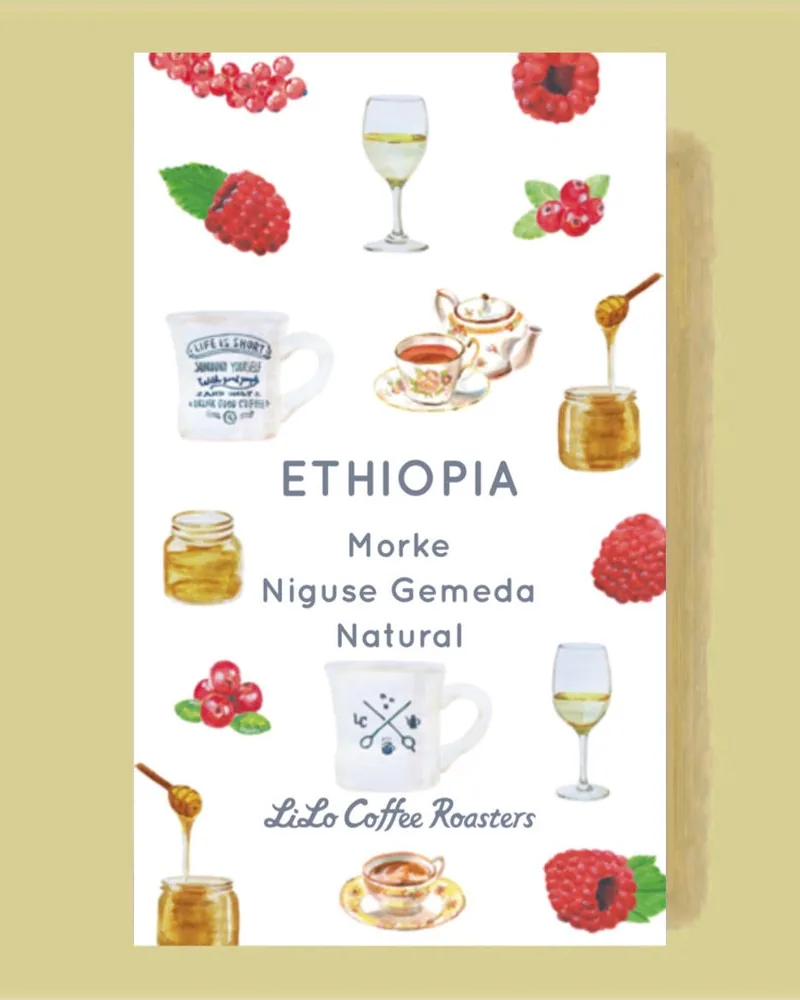
LiLo Coffee Roasters
ETHIOPIA Morke Niguse Gemeda Natural
1050 JP¥
ClaraPorquê: EtiópiaNaturalPreço semelhante
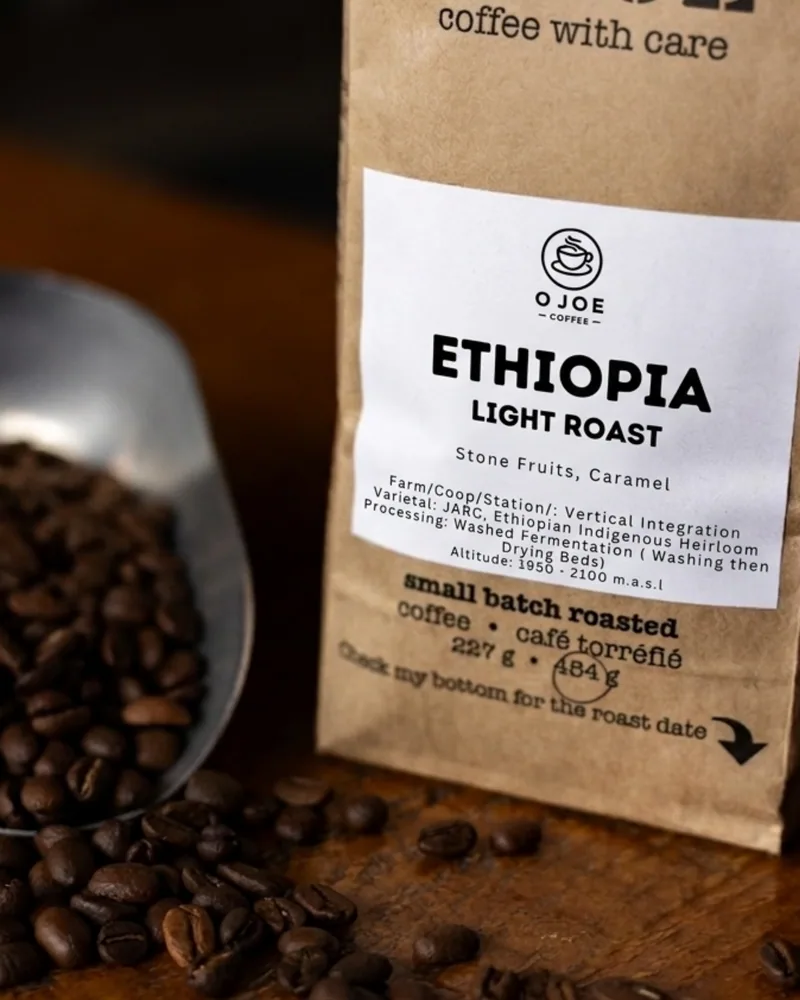
O Joe Coffee
Ethiopia • Yirgacheffe Worka Sakaro • Light Roast
8,00 CA$
ClaraPorquê: EtiópiaNaturalPreço semelhante
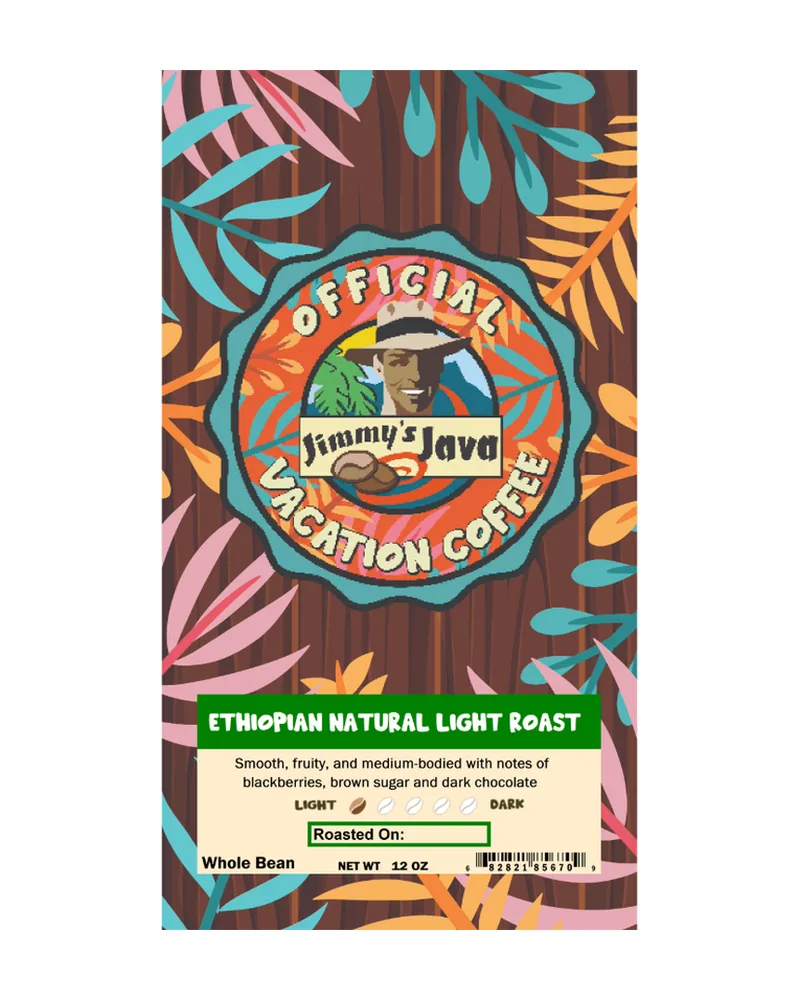
Jimmy's Java
Bag of Ethiopian Natural Limu-Nigusse Lema Light Roast Coffee
4,95 US$
ClaraPorquê: EtiópiaNaturalPreço semelhante
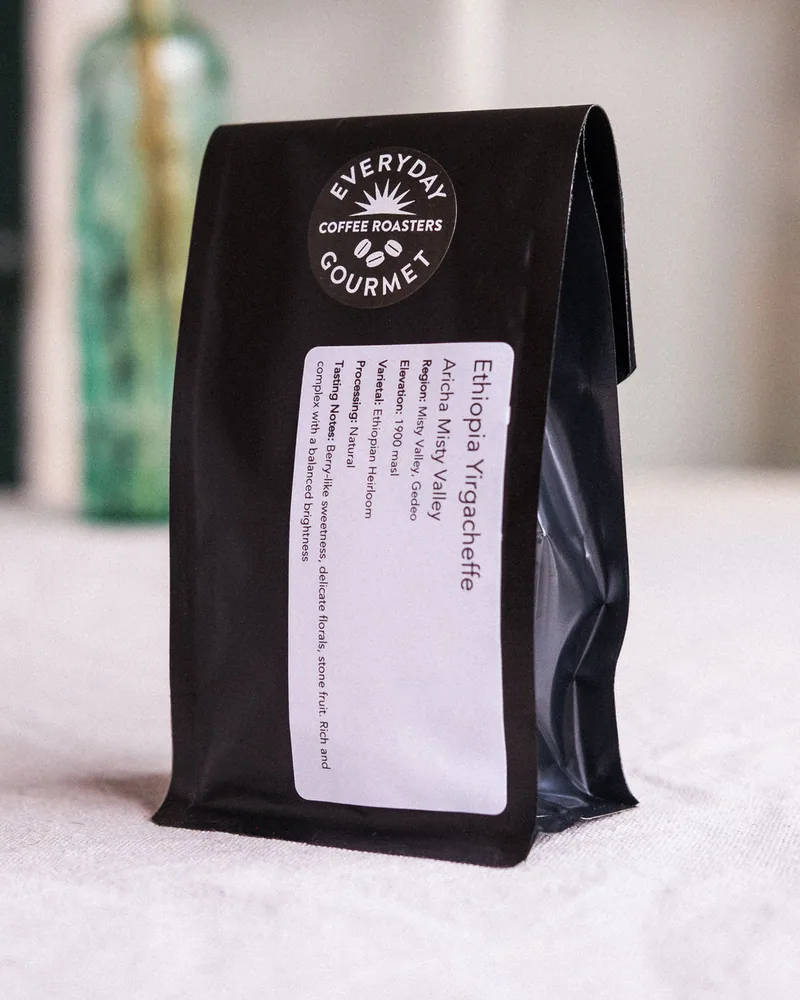
Everyday Gourmet Coffee Roasters
Ethiopia Yirgacheffe Aricha Misty Valley Natural
10,00 CA$
ClaraPorquê: EtiópiaNaturalPreço semelhante

Fellow
Onyx - Ethiopia Negusse Nare Bombe Natural
8,79 US$
MédiaPorquê: EtiópiaNaturalPreço semelhante