Tomassi Coffee
Perù: Pituco Geisha Natural
Tabaconas, Cajamarca, Peru
- Naturlig
- Single origin
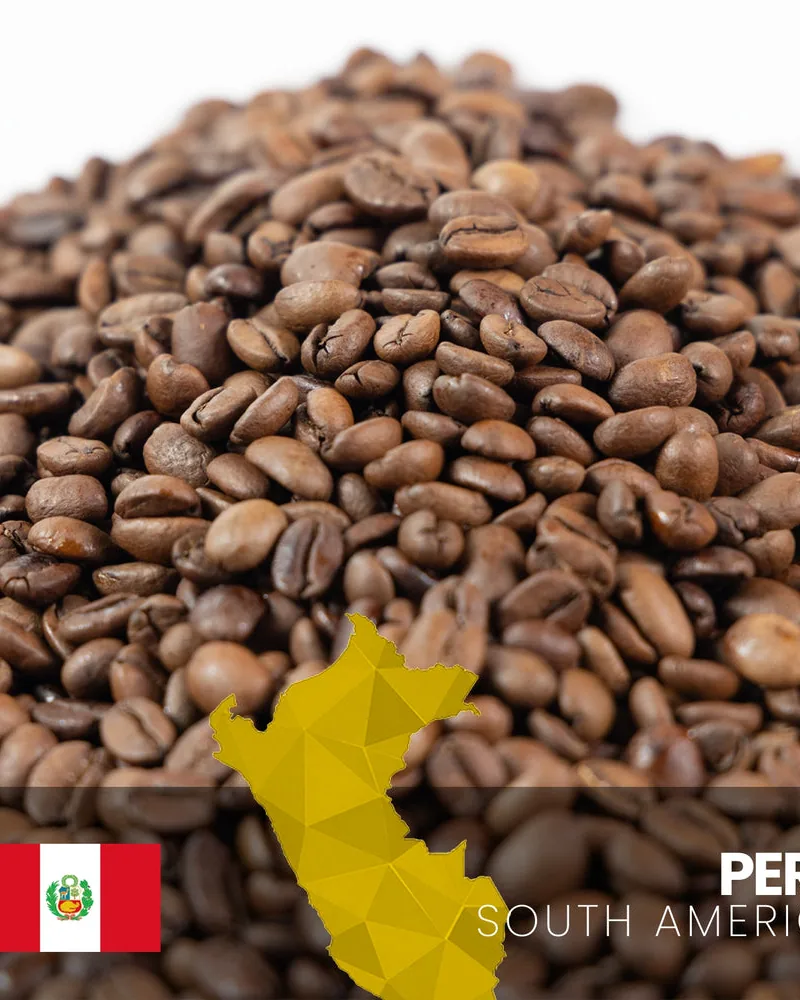
Perù: Pituco Geisha Natural er en kaffe fra Peru, som sælges af Tomassi Coffee (Italien). Område: Tabaconas, Cajamarca. Forarbejdning: naturlig. Varietet: Geisha. Pris: 40,00 € til 168,00 €, afhængigt af størrelsen. Det svarer til fra 160,00 € pr. kilo.
Endnu ikke bedømt · Vær den første til at anmelde den
fra40,00 €
≈ 160,00 € / kg
Du føres til risteriets webshop for at gennemføre dit køb.
- Risteri med base i
- Italien
- Levér til
- Danmark · ✓ Ja, ifølge risteriets webshop
Størrelser og priser
| Formato | Tostatura | Indhold | Formaling | Pr. kg | Pris |
|---|---|---|---|---|---|
| Grani | Chiara | 250g | – | 160,00 € | 40,00 € ↗ |
| Grani | Media | 250g | – | 160,00 € | 40,00 € ↗ |
| – | Chiara | 250g | Formalet til espresso | 160,00 € | 40,00 € ↗ |
| – | Media | 250g | Formalet til espresso | 160,00 € | 40,00 € ↗ |
| – | Chiara | 250g | Formalet til mokakande | 160,00 € | 40,00 € ↗ |
| – | Media | 250g | Formalet til mokakande | 160,00 € | 40,00 € ↗ |
| – | Chiara | 250g | Formalet | 160,00 € | 40,00 € ↗ |
| – | Media | 250g | Formalet | 160,00 € | 40,00 € ↗ |
Vis alle 16
| Formato | Tostatura | Indhold | Formaling | Pr. kg | Pris |
|---|---|---|---|---|---|
| Grani | Chiara | 1kg | – | 168,00 € | 168,00 € ↗ |
| Grani | Media | 1kg | – | 168,00 € | 168,00 € ↗ |
| – | Chiara | 1kg | Formalet til espresso | 168,00 € | 168,00 € ↗ |
| – | Media | 1kg | Formalet til espresso | 168,00 € | 168,00 € ↗ |
| – | Chiara | 1kg | Formalet til mokakande | 168,00 € | 168,00 € ↗ |
| – | Media | 1kg | Formalet til mokakande | 168,00 € | 168,00 € ↗ |
| – | Chiara | 1kg | Formalet | 168,00 € | 168,00 € ↗ |
| – | Media | 1kg | Formalet | 168,00 € | 168,00 € ↗ |
Beskrivelse
Tasting profile: Strawberry, raspberry, red cherry, apricot, jasmine, marzipan, honey, milk chocolate
Variety: Geisha
Process: Natural
Country: Peru
Region: Tabaconas, Cajamarca
Altitude: 1,830 m
Farm: Finca La Chirimoya (Edilberto Bermeo)
Roasting: We roast it after you place your order. The date is on the bag.
Peru shouldn’t produce a Geisha like this.
La Chirimoya is a ten-hectare farm located at 1,830 meters in the district of Tabaconas, in the north of the country. It is cultivated by Edilberto Bermeo using certified organic practices.
Peru is known primarily for balanced washed coffees and small-scale production, rarely for lots of this caliber. This natural Geisha stands apart, and it’s the kind of coffee that redefines expectations for an entire origin.
Origin
Cajamarca is Peru’s northernmost region, stretching toward the border with Ecuador. Tabaconas is a mountain district characterized by cloud forests and some of the richest biodiversity in South America.
The farm is located at 1,830 meters on clay soil. This is a high elevation even by Peruvian standards, with marked temperature swings between day and night: the plant’s cycle slows, fruit ripening takes longer, and with it comes an increase in sugars and aromatic compounds.
The farm’s small size is part of the result. Ten hectares are an area a producer can walk every day, plant by plant, and in a crop where selection determines the final quality, this matters more than any technical equipment.
The harvest is manual and selective: Bermeo returns to the same plant several times over the course of several weeks, picking only cherries at their optimal ripeness. This is the least visible step in the entire supply chain, and it is the one that determines everything else, because with a variety like Geisha and natural processing, every unripe or overripe fruit affects the final profile.
Variety
Geisha is the most talked-about variety in specialty coffee, and not always for good reason: grown in unsuitable conditions, it remains simply an expensive, low-yielding plant.
Originally from Ethiopia and brought to Central America via Costa Rica, it gained international recognition in Panama in the early 2000s. It is fragile, disease-sensitive, requires altitude and shade, and yields significantly less than a Caturra on the same land. For a small producer, it is a gamble that only makes sense if the final quality is genuinely high.
But when the conditions are right, it expresses a floral clarity that no other variety can match. At this altitude, with these temperature swings, all the conditions are in place.
Process
The processing is natural: the oldest method and, at the same time, the most delicate to manage.
The cherries are not pulped but dried whole, with the flesh still attached to the bean. For weeks, the fruit continues to transfer sugars and aromatic compounds to the seed inside: the red-fruit notes found in the cup come directly from this step.
It is also the process with the smallest margin for error. A day of unusual humidity, a layer of cherries that is too thick, or a missed turn is enough for fermentation to go beyond control and for the profile to shift toward alcoholic, acetic, or moldy notes. This is why fully successful naturals remain relatively rare.
This lot was monitored day by day until drying was complete, and the result speaks for itself.
In the cup
Strawberry opens the profile in a clear and immediately recognizable way. Then come raspberry and red cherry, with apricot bridging the fruity and sweeter notes.
Jasmine emerges in the aroma even before the first sip. The finish brings marzipan, honey, and a touch of milk chocolate that ties everything together and extends the finish.
The sweetness is pronounced, the body velvety, and the clarity absolute: the profile never loses definition. As it cools, the cup comes closer to an infusion of red berries, and that is probably when it is at its best.
Why choose it
Because it shows that a Geisha of this caliber doesn’t necessarily depend on sophisticated infrastructure. There are no instrumentally controlled fermentations, drying technologies, or the infrastructure of a model farm: there are ten hectares, an in-depth knowledge of every plant, and impeccable management of harvesting and drying. The result stands up to comparison with lots at much higher prices.
It is also the coffee for anyone who has never found in Geisha what it is said to offer, judging it subtle or more interesting on the nose than on the palate: here, the variety’s floral clarity rests on sweetness and body that make for a complete cup.
Recommended preparation: filter, as is.
Let it cool as you drink: the profile changes noticeably from the first sip to the last.
Spørgsmål om Perù: Pituco Geisha Natural
Hvor kommer Perù: Pituco Geisha Natural fra?
Den kommer fra Peru. Område: Tabaconas, Cajamarca. Producent: Finca La Chirimoya (Edilberto Bermeo). Højde: 1.830 m. Varietet: Geisha.
Hvordan er Perù: Pituco Geisha Natural forarbejdet?
Forarbejdningsmetode: naturlig.
Hvad koster Perù: Pituco Geisha Natural?
Pris: 40,00 € til 168,00 €, afhængigt af størrelsen. Det svarer til fra 160,00 € pr. kilo. Priserne kommer fra webshoppen og kan ændre sig; webshoppen har de aktuelle.
Hvor kan jeg købe Perù: Pituco Geisha Natural?
I webshoppen hos Tomassi Coffee: priserne på denne side linker dertil. Ifølge webshoppen leverer den til hele verden. Cafendo sælger ikke selv kaffe.
Anmeldelser
Ingen anmeldelser endnu.
Hvis du kan lide denne kaffe, så prøv disse
Udvalgt blandt andre risterier ud fra fælles oprindelse, forarbejdning, ristning, smagsnoter og pris. Kaffe, som de samme personer har gemt eller bedømt højt, tæller mest.

KB Coffee Roasters
Peru - Rigoberto Mayta - Gesha Naturel
28,00 €
Hvorfor: PeruNaturligLignende pris
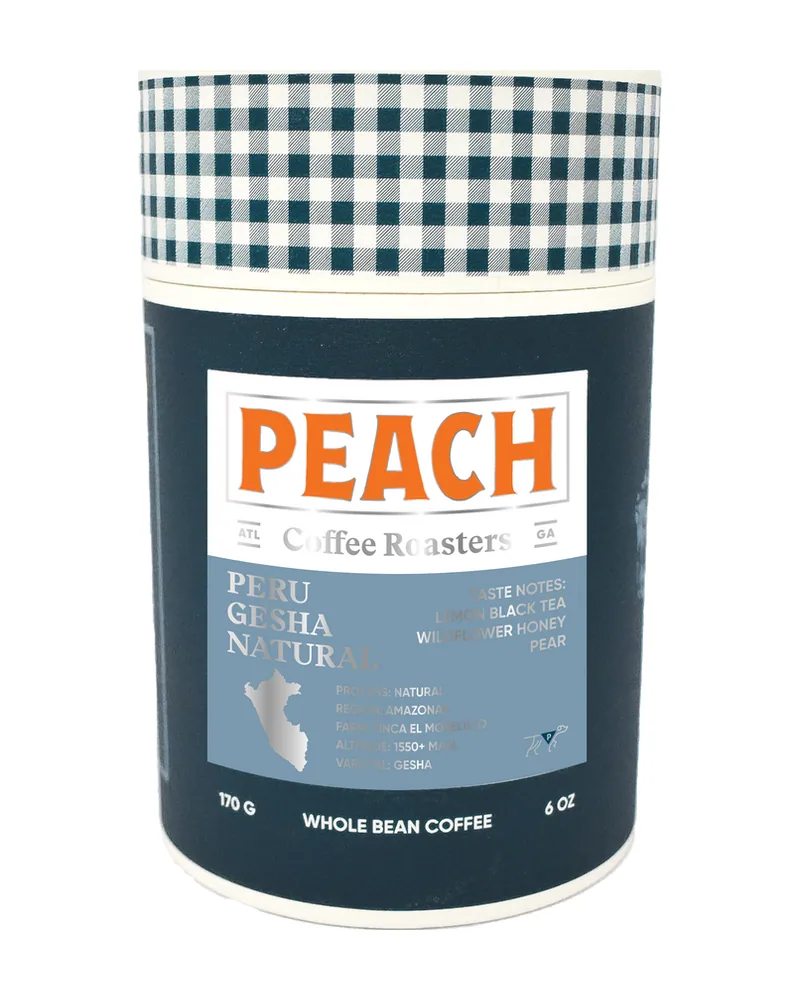
Peach Coffee
Peru Gesha Natural - Medium-Light Roast - Single Origin
31,00 US$
LysHvorfor: PeruNaturligLignende pris
Sulalat
La Encantada Natural - Cup of Excellence Peru
100,00 SAR
Hvorfor: PeruNaturligLignende pris

Falcon Micro
Marino Guevara Aljandria, El Higuerón, Peru | Natural FSC-9523
16,00 £
Hvorfor: PeruNaturlig

Falcon Micro
Bellavista, Huabal, Peru | Natural FSC-8628
16,50 £20,00 £
Hvorfor: PeruNaturlig
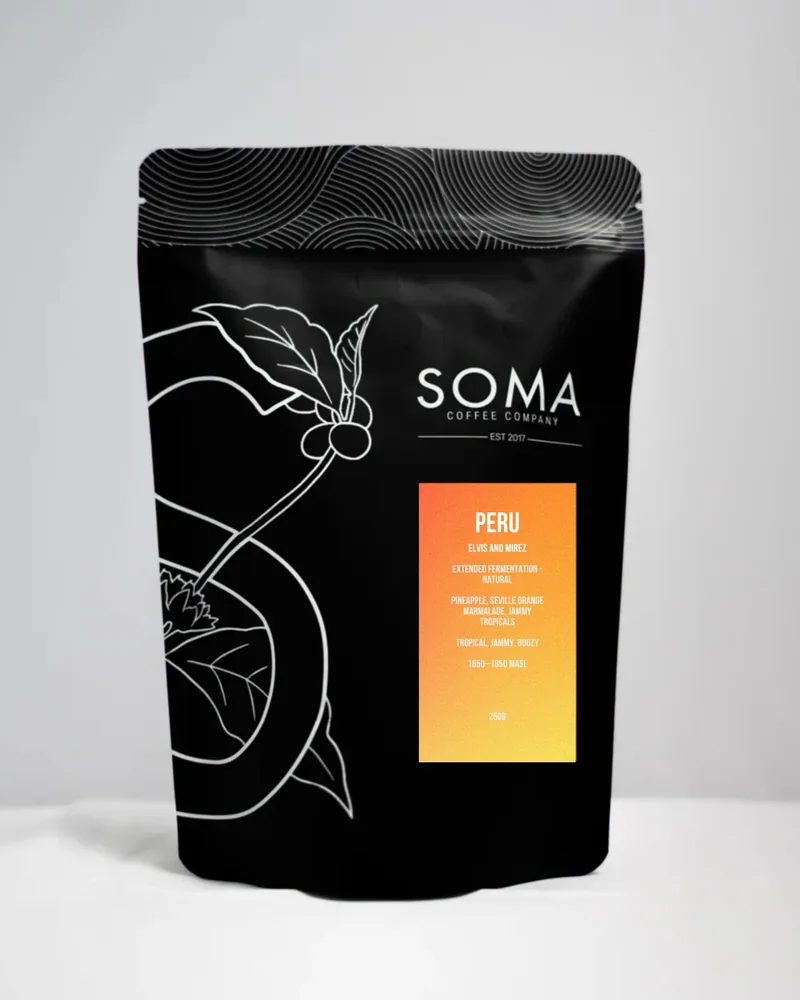
Soma Coffee Company
PERU – ELVIS & MIREZ
15,00 €
Hvorfor: PeruNaturlig
Coffee Exchange
Peru Cafe Canchaque – Natural, American
24,25 US$
Hvorfor: PeruNaturlig
Owl Eye Coffee
Peru Natural Huabal
5,50 US$
Hvorfor: PeruNaturlig