Presta costa rosters
Ethiopia Koke - Honey Process
Yirgacheffe, Etiopien
- Honey
- Single origin
Ethiopia Koke - Honey Process er en kaffe fra Etiopien, som sælges af Presta costa rosters (Tucson, USA). Område: Yirgacheffe. Forarbejdning: honey. Varietet: Kurume, Dega, Wolisho. Pris: 24,00 US$ til 130,00 US$, afhængigt af størrelsen. Det svarer til fra 57,32 US$ pr. kilo.
Endnu ikke bedømt · Vær den første til at anmelde den
fra24,00 US$
≈ 57,32 US$ / kg
Du føres til risteriets webshop for at gennemføre dit køb.
- Risteri med base i
- USA
- Levér til
- Danmark · Ikke angivet af risteriets webshop
Størrelser og priser
| Indhold | Pr. kg | Pris |
|---|---|---|
| 10oz | 84,66 US$ | 24,00 US$ ↗ |
| 2lb | 73,85 US$ | 67,00 US$ ↗ |
| 5lb | 57,32 US$ | 130,00 US$ ↗ |
Beskrivelse
Region: Yirgacheffe
Farm: Smallholder Farms
Process: Honey
Varieties: Kurume, Dega, Wolisho
Elevation: 1800 meters
Coffee Production in Yirgacheffe:
Coffee grown in the many districts and kebeles of the Gedeo Zone is often referred to as Heirloom varieties, many of which were propagated and distributed to farmers in the last 40 years. Read more about common Ethiopian coffee varieties. Trees grow in red brown fertile soil under the shade of many tree species including Bibira, Cordia Africana, and the subsistence crop Ensete ventricosum.
In the southern region of Ethiopia, farmers pick coffee selectively, harvesting only ripe cherries individually by hand. Pickers rotate among the trees every eight to ten days, choosing only the cherries which are at peak ripeness. Many pickers average approximately 100 to 200 pounds of coffee cherries a day, which will produce 20 to 40 pounds of coffee beans. Each worker’s daily haul is carefully weighed, and each picker is paid on the merit of his or her work. The day’s harvest is then transported to the processing plant.
Washing Stations:
This lot of Koke Honey was sourced from a total of around 1200 smallholder farmers from Birbes Kela, Koke, Konga, Wedessa, and Tisho kebeles bring their harvested cherries for processing at the Koke and Birbes Kele washing stations.
Ally has a long-standing relationship with the Koke washing station, which was built in 2011 and has seen many improvements since 2015, when the washing station staff began providing guidance to contributing producers regarding steps to increase coffee quality.
The Birbes Kela washing station, located in the Birbes Kela kebele, is owned and operated
by Semira Negash. The site was founded in 2020 and operates as a vertically integrated
partner of Tracon, one of our exporting partners in Ethiopia. Shortly after opening her
washing station, Semira quickly established herself as a producer of high-quality coffees
with a strong placement in Ethiopia’s 2021 Cup of Excellence.
Honey Processing:
Harvested cherries are fermented in-cherry for two days prior to being pulped. The pulped coffee is then dried on raised beds to its optimal humidity.
Region Description:
Literally translated as “Land of Many Springs,” Yirgacheffe has the ideal topography, elevation, and water sources to produce and process exceptional coffees. Yirgacheffe is one of the woredas, a district like a municipality or county that includes many towns, of the Southern Nations, Nationalities, and Peoples Region (SNNPR) of Ethiopia. Yirgacheffe is part of the Gedeo Zone of SNNPR and the Yirgacheffe woreda is bordered to the south by Kochere, to the west by Oromia Zone, to the north by Wenago, to the east by Bule, and to the southeast by Gedeb. The Yirgacheffe woreda is 409km from Ethiopia’s capital of Addis Ababa and has a population of almost 200,000 people, less than 10% of whom live in cities.
Coffee farmers in Yirgacheffe are typically multi-generational, small-scale landholders, sometimes with only a few acres of land. Most coffees in Yirgacheffe are sold as cherry to centralized washing stations that help further separate flavor profiles. Many farmers also grow the subsistence crop enset ventricosum, also known as false banana. Yirgacheffe is considered by many to be the birthplace of coffee and the coffee trees grown in the region are a naturally occurring mix of heirloom varietals cultivated among other species in coffee gardens and coffee forests. Washed Coffee was introduced to Ethiopia in the 1970’s, and Yirgacheffe was the location of the first wet processing mill.
Spørgsmål om Ethiopia Koke - Honey Process
Hvor kommer Ethiopia Koke - Honey Process fra?
Den kommer fra Etiopien. Område: Yirgacheffe. Producent: Smallholder Farms. Højde: 1.800 m. Varietet: Kurume, Dega, Wolisho.
Hvordan er Ethiopia Koke - Honey Process forarbejdet?
Forarbejdningsmetode: honey.
Hvad koster Ethiopia Koke - Honey Process?
Pris: 24,00 US$ til 130,00 US$, afhængigt af størrelsen. Det svarer til fra 57,32 US$ pr. kilo. Priserne kommer fra webshoppen og kan ændre sig; webshoppen har de aktuelle.
Hvor kan jeg købe Ethiopia Koke - Honey Process?
I webshoppen hos Presta costa rosters: priserne på denne side linker dertil. Ifølge webshoppen leverer den inden for USA. Cafendo sælger ikke selv kaffe.
Anmeldelser
Ingen anmeldelser endnu.
Hvis du kan lide denne kaffe, så prøv disse
Udvalgt blandt andre risterier ud fra fælles oprindelse, forarbejdning, ristning, smagsnoter og pris. Kaffe, som de samme personer har gemt eller bedømt højt, tæller mest.
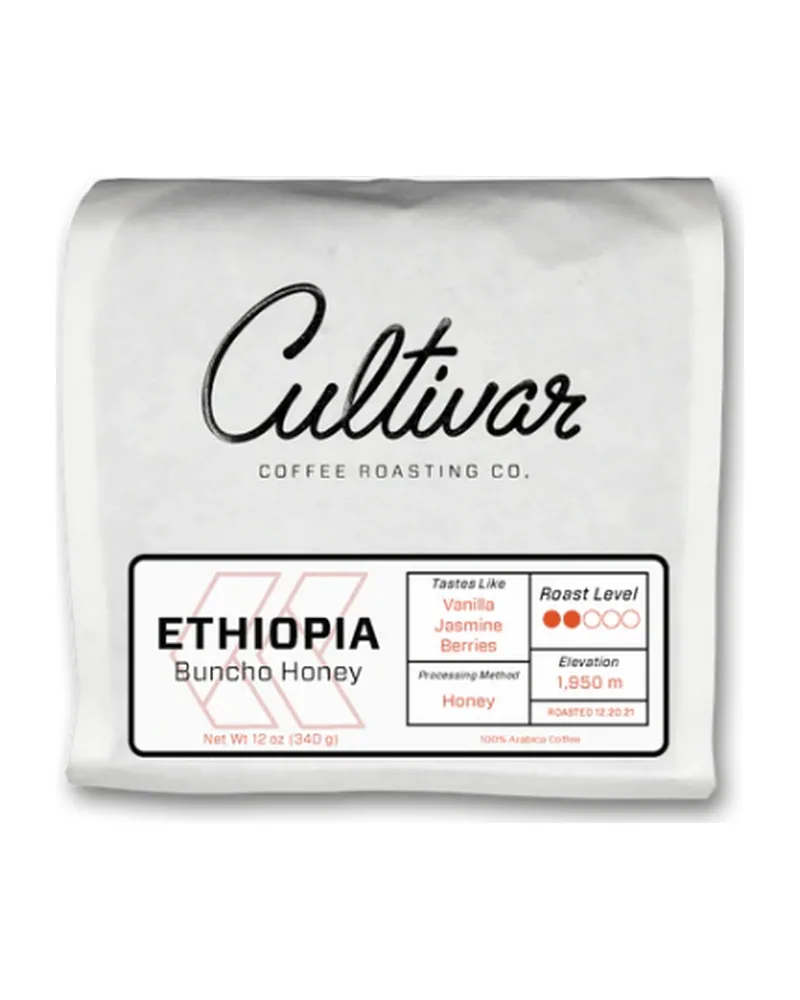
Cultivar Coffee
ETHIOPIA BUNCHO HONEY
17,77 US$
MediumHvorfor: EtiopienHoneyLignende pris
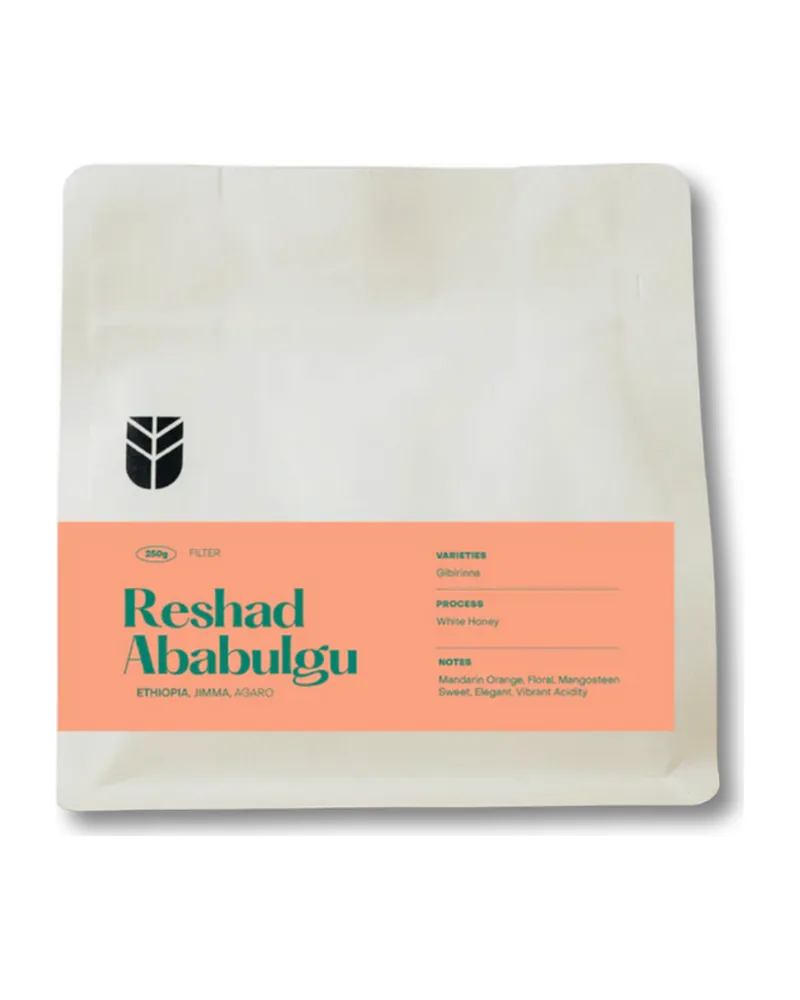
The Right Roast
Reshad Ababulgu Ethiopia White Honey
18,50 £
Hvorfor: EtiopienHoneyLignende pris
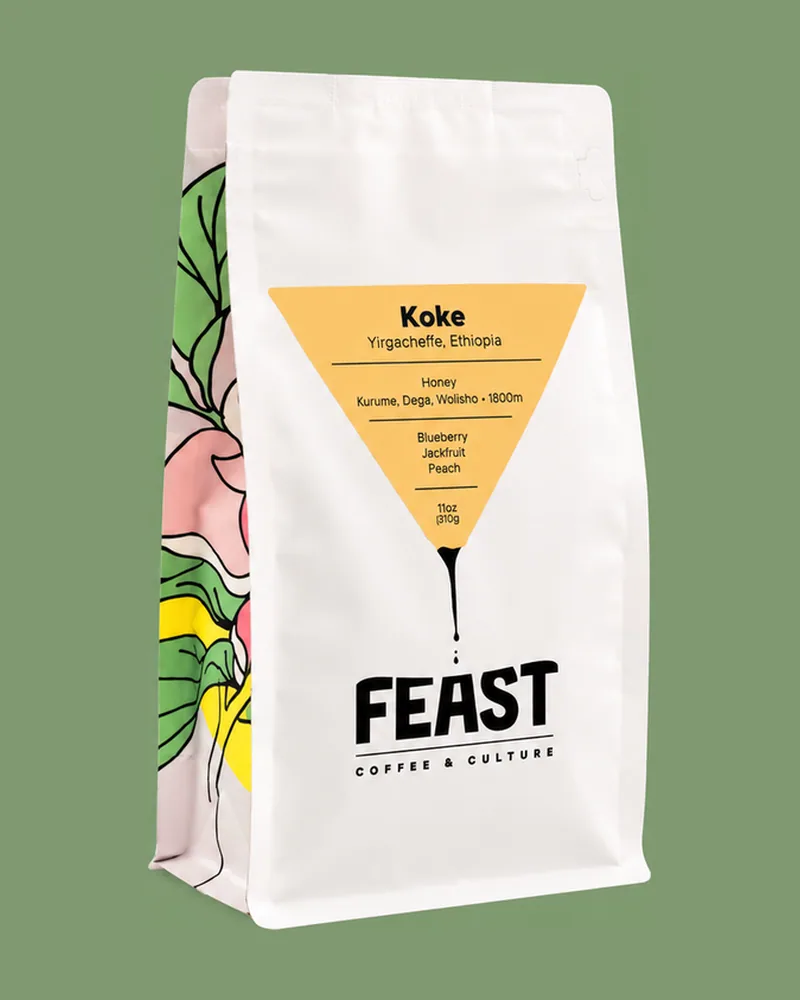
Feast Coffee
Koke | Ethiopia | Honey
26,00 US$
Hvorfor: EtiopienHoneyLignende pris
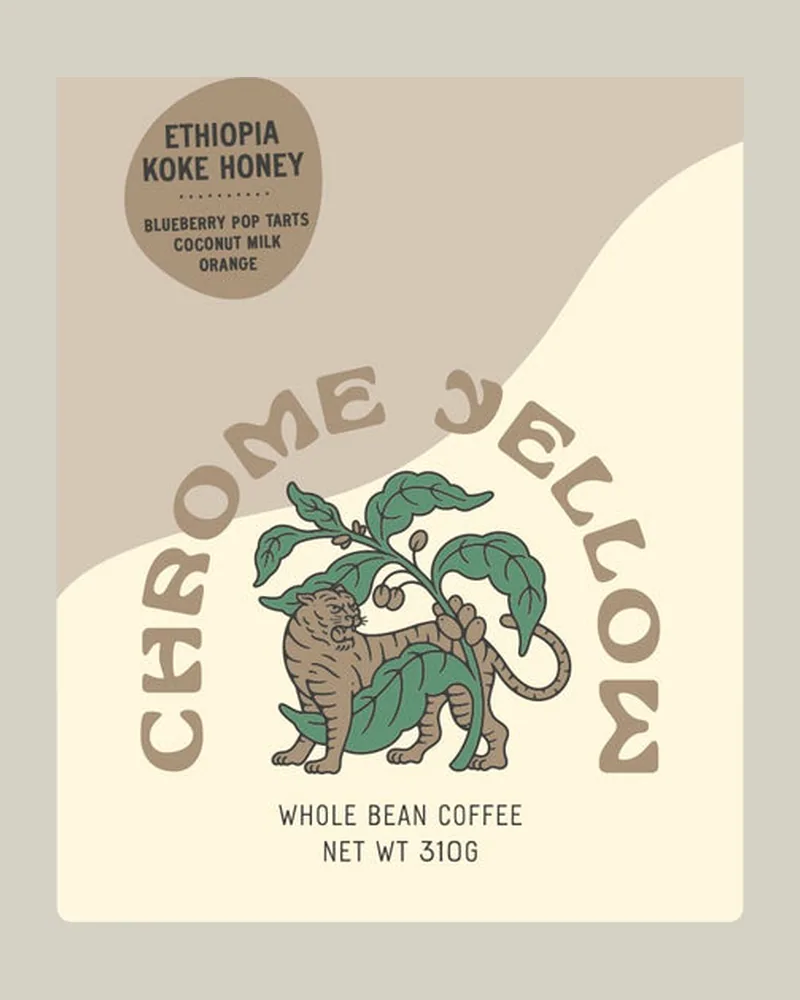
Chrome Yellow
Ethiopia Koke Honey
24,00 US$
Hvorfor: EtiopienHoneyLignende pris
Paradigm Spark
Murago - Ethiopia Black-honey
35,00 CA$
Hvorfor: EtiopienHoneyLignende pris
French Truck Coffee
Ethiopia Honey
28,00 US$
Hvorfor: EtiopienHoneyLignende pris
Campbell & Syme
LALESA (BH), ETHIOPIA
16,50 £
Hvorfor: EtiopienHoneyLignende pris

MABÓ Coffee Roasters
NAZIMU ABAMECHA, Ethiopia (Honey)
79,00 RON
Hvorfor: EtiopienHoneyLignende pris